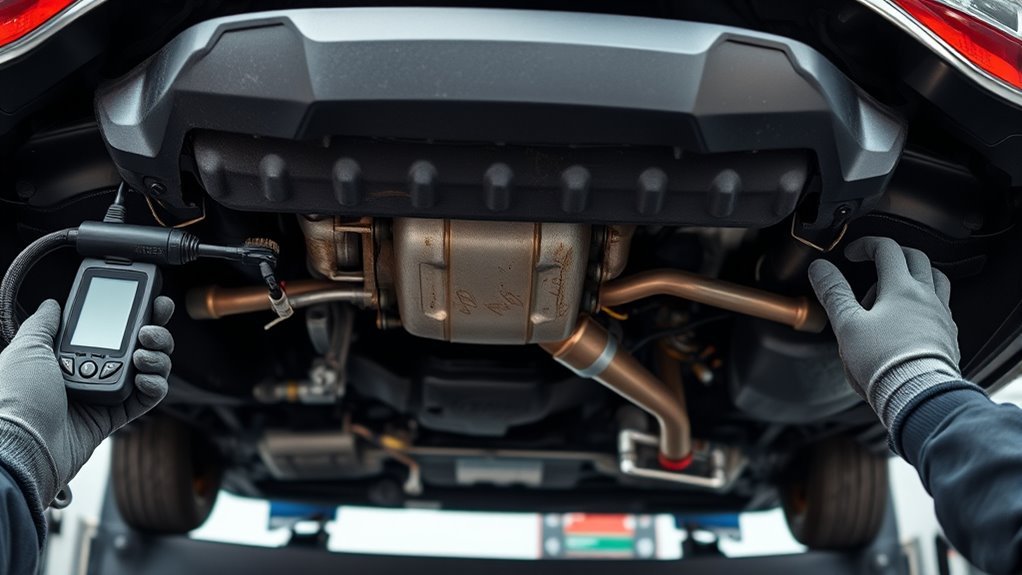
A Hyundai Sonata P0420 code means the engine control module has judged the Bank 1 catalytic converter’s efficiency to be below its calibrated threshold. It does not prove the converter itself is bad. Exhaust leaks, misfires, fuel-mixture problems, sensor faults, oil or coolant contamination, and some model-specific issues can trigger or contribute to the same code.
Quick Answer
Start by scanning all stored and pending codes and saving freeze-frame data. Repair active misfire or rich/lean faults, check for exhaust leaks, then compare upstream and downstream O2 or air-fuel sensor behavior. If the rear signal closely follows the front after the catalyst is hot and other faults are ruled out, the converter is the leading suspect.
Last checked: October 5, 2026. Dates and figures were verified against official sources.
Key Takeaways
- P0420 is a catalyst-monitor result, not a command to replace the catalytic converter.
- On systems with conventional narrowband O2 sensors, a healthy downstream signal is normally steadier and less active than the upstream signal.
- Misfires, incorrect fuel mixture, exhaust leaks, and oil or coolant entering the exhaust should be corrected before installing a new converter.
- Certain 2011–2014 Sonata YF models with the 2.4L GDI engine have a Hyundai technical bulletin specifically addressing P0420.
- Check emissions warranty coverage and state converter rules before paying for replacement.
What P0420 Means on a Hyundai Sonata
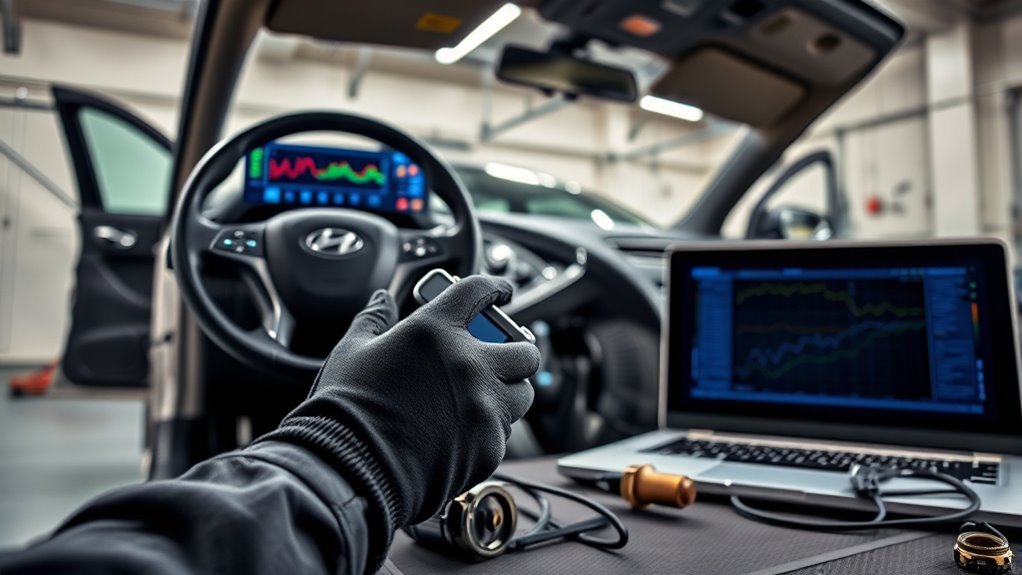
P0420 stands for Catalyst System Efficiency Below Threshold, Bank 1. The ECM sets it when the catalyst-monitoring system decides the converter is no longer storing and processing oxygen well enough under the conditions required for the monitor to run.
Bank 1 means the cylinder bank containing cylinder 1. An inline-four Sonata has only one cylinder bank. Older V6 Sonata models have two banks, so use engine-specific service information before assuming which converter or sensor is involved.
The code can appear with few drivability symptoms. However, a restricted converter, severe misfire, or another engine fault can also cause hesitation, rough running, poor acceleration, or loss of power. Hyundai warns in its Sonata owner’s manual that driving with the malfunction indicator lamp on can affect drivability and fuel economy and that catalytic-converter damage may result in reduced engine power.
What to Check Before Replacing the Catalytic Converter
Do not replace the catalytic converter just because P0420 is stored. First check for other trouble codes, exhaust leaks, misfires, incorrect fuel mixture, sensor or wiring faults, and evidence that the engine is burning oil or coolant.
If another engine code is present, diagnose that problem first. A misfire or excessively rich condition can send unburned fuel into the converter and overheat it. Oil or coolant entering the exhaust can contaminate the catalyst and damage a replacement converter if the underlying engine problem is left unresolved.
Also inspect the exhaust between the engine and the downstream sensor. A leak can introduce extra oxygen and distort the readings used by the catalyst monitor.
How Your Sonata’s Catalytic Converter and O2 Sensors Work
The catalytic converter reduces harmful exhaust pollutants, while sensors before and after it help the ECM control the engine and monitor converter performance. P0420 appears when the relationship between those sensor signals indicates that the converter is not performing as expected.
Catalytic Converter Function
The converter uses a coated internal substrate to promote chemical reactions that reduce hydrocarbons, carbon monoxide, and oxides of nitrogen in the exhaust. It also stores and releases oxygen as exhaust mixture changes.
Age can reduce catalyst performance, but converters can also be damaged by repeated misfires, an overly rich mixture, oil consumption, coolant entering the combustion chamber, overheating, impact damage, or a physically broken substrate.
If the internal substrate melts or breaks apart, the converter may become restricted. That can produce noticeable loss of power in addition to P0420.
Oxygen Sensor Interaction
The upstream sensor measures exhaust before the catalytic converter. The downstream sensor monitors exhaust after the converter, allowing the ECM to judge how effectively the catalyst is storing oxygen and processing exhaust gases.
On older systems that use conventional narrowband oxygen sensors, the upstream signal normally changes rapidly as the ECM adjusts fuel mixture. A healthy converter smooths those changes, so the downstream signal should be considerably steadier.
If the downstream waveform starts following the upstream waveform closely, catalyst oxygen-storage capacity may be poor. This is the opposite of the original article’s explanation. Technical guidance from Walker Exhaust’s P0420 diagnostic procedure likewise uses a relatively steady rear sensor signal as one indicator of proper converter operation.
Do not apply generic narrowband voltage rules to every Sonata. Some newer engines use air-fuel-ratio sensors upstream, and their scan-tool data does not behave like an older 0-to-1-volt oxygen sensor. Identify the sensor type and use the correct specifications for the model year and engine.
Common Causes of P0420 on Sonata Models
The leading possibilities are a degraded catalytic converter, an exhaust leak, an engine problem that has damaged the converter, or incorrect sensor data. The right order is to test the engine and exhaust system before condemning an expensive converter.
Faulty Oxygen Sensor or Sensor Circuit
A faulty upstream or downstream sensor can contribute to P0420, but replacing an oxygen sensor without testing it is not a reliable diagnostic strategy. Check its live response, heater-related codes, wiring, connector condition, and the surrounding exhaust system first.
A sensor contaminated by oil, coolant, or heavy deposits may respond incorrectly. However, cleaning an oxygen sensor is not a dependable permanent repair for a failed or contaminated sensor. Replace it only when testing supports that diagnosis.
Exhaust Leak Inspection
An exhaust leak near the monitored converter or oxygen sensors can affect the oxygen content reaching the sensor and cause misleading catalyst-monitor readings. Inspect the manifold, flex section, flanges, welds, gaskets, sensor ports, and pipe connections.
Warning: Exhaust components can remain hot after the engine is shut off. Let the system cool before touching it. If you must raise the vehicle, use the correct lift points and properly rated jack stands on a solid, level surface; never work underneath a vehicle supported only by a jack.
A smoke test is useful for finding a small leak that is difficult to see. Repair any confirmed leak before deciding that the catalytic converter has failed.
Engine Misfires, Fuel Problems, and Oil or Coolant Consumption
Misfires and incorrect air-fuel mixture can damage the converter as well as trigger misleading catalyst-monitor results. If P0300 or a cylinder-specific P030x code is present, solve the misfire before continuing with P0420 diagnosis.
- Inspect spark plugs and ignition coils when misfire data points toward an ignition problem.
- Check fuel trims and diagnose rich or lean operation instead of immediately replacing the converter.
- Investigate leaking injectors or other fuel-delivery faults when supported by test results.
- Check for abnormal engine oil or coolant consumption that could contaminate the catalyst.
If the engine is burning oil or coolant, replacing the converter without fixing the engine can lead to another catalyst failure.
Special Note for Certain 2011–2014 Sonata 2.4L GDI Models
Certain 2011–2014 Sonata YF vehicles with the 2.4L GDI engine have model-specific Hyundai guidance. Hyundai Technical Service Bulletin 16-FL-005 addresses P0171/P0420 and an ECM software update.
For vehicles covered by that bulletin, Hyundai directs technicians to replace the applicable catalyst and perform the ECM update when P0420 is present. The bulletin does not apply to every Sonata, so verify the model, engine, VIN, and current Hyundai service information before using that repair path.
How to Diagnose a Hyundai Sonata P0420 Code Step by Step
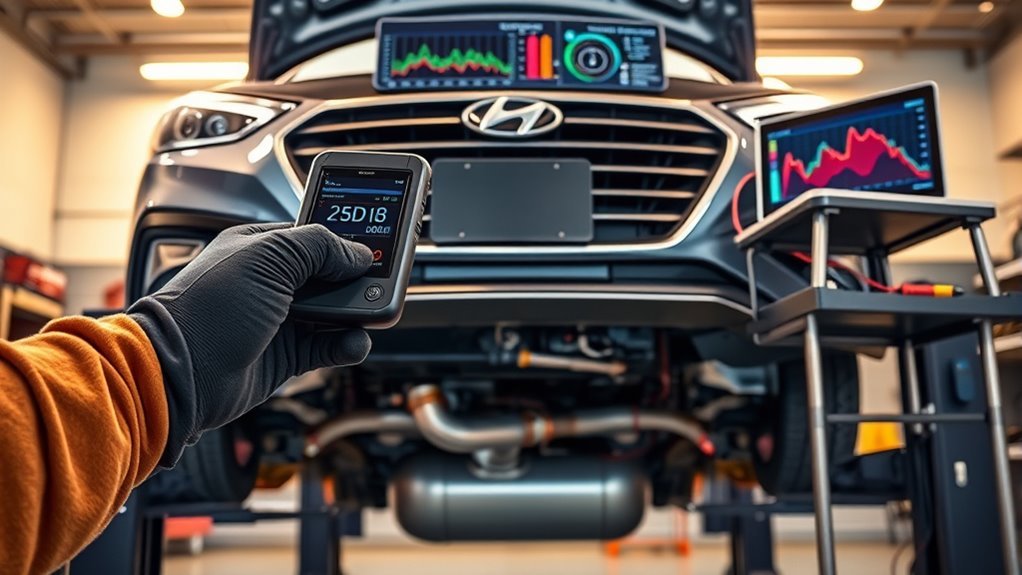
A good P0420 diagnosis moves from engine faults and leaks to sensor data and finally the converter itself. This reduces the chance of replacing an expensive part that was damaged by another problem or was never faulty.
- Scan every module and save the data. Record stored, pending, and permanent engine codes plus freeze-frame information before clearing anything.
- Deal with other engine codes first. Diagnose active misfire, rich/lean, fuel-control, sensor-heater, and related engine faults before evaluating catalyst efficiency.
- Check oil and coolant condition. Look for abnormal consumption, fouled plugs, exhaust smoke, or other evidence that contaminants are reaching the converter.
- Inspect for exhaust leaks. Check the manifold, flex pipe, flanges, gaskets, welds, and sensor mounting areas. Use a smoke test if necessary.
- Graph the relevant sensors. With the engine and catalyst at operating temperature, compare upstream and downstream activity using a scan tool that can display live data. Use model-specific specifications because sensor design varies by year and engine.
- Test a questionable sensor before replacing it. Check wiring, connector condition, heater faults, and sensor response. A multimeter or oscilloscope may be useful depending on the circuit and sensor type.
- Confirm converter failure or restriction. If the rear signal closely follows the front after other faults are corrected, catalyst degradation becomes more likely. If the engine has significant power loss, a shop can also test exhaust backpressure to determine whether the converter or another exhaust component is restricted.
A temperature comparison across the converter can provide supporting information, but temperature alone should not be used to condemn the part. Exhaust load, mixture, converter design, and measurement location all affect temperature readings.
Pro Tip: Save freeze-frame data before clearing P0420. It shows the conditions under which the ECM detected the fault and can help you reproduce the problem instead of guessing.
P0420 Fixes: What Actually Solves the Code
The permanent fix depends on what testing finds. Clearing the code can confirm whether a fault returns, but clearing it does not repair an exhaust leak, sensor fault, engine problem, or damaged converter.
- Exhaust leak found: repair the leak, then rerun the catalyst monitor.
- Misfire or fuel-control problem found: repair that fault first and verify normal engine operation.
- Sensor or wiring fault confirmed: repair the circuit or replace the failed sensor.
- Oil or coolant contamination found: correct the engine problem before installing another converter.
- Converter efficiency or restriction confirmed: replace the correct converter and verify that the underlying cause has been resolved.
Do not treat catalytic-converter cleaners as proof of a repair. An additive cannot restore a melted substrate, replace missing catalyst material, or fix a converter chemically contaminated by oil or coolant.
Likewise, do not use oxygen-sensor spacers, electronic simulators, or other devices intended to hide a catalyst fault. The U.S. EPA’s emissions guidance explains that removing or rendering required emissions-control equipment inoperative is prohibited under federal law.
Parts, Costs, Warranty, and Emissions Rules
Before buying a catalytic converter, check warranty coverage and the emissions rules where the vehicle is registered. The correct converter depends on the Sonata’s model year, engine, emissions certification, and exhaust configuration.
The original article estimated roughly $500–$2,500+ plus labor for converter-related repair, with some oxygen-sensor repairs around $150–$300. Treat those only as broad budgeting figures; actual parts and labor vary substantially by engine, converter location, emissions certification, and local labor rates.
Hyundai’s current federal emissions warranty information lists the original catalytic converter, engine control module, and onboard emissions diagnostic device among the major emissions components covered for 8 years or 80,000 miles, whichever comes first. Other warranty provisions can vary by model, state, in-service date, and vehicle history, so confirm eligibility before authorizing a repair.
| Option | Pros | Cons |
|---|---|---|
| OEM | Designed for the exact original application; straightforward fitment when the correct VIN-specific part is used | Can cost more and availability varies |
| Aftermarket | Can reduce upfront parts cost and may offer more sourcing choices | Must match the exact vehicle and emissions application; quality and OBD compatibility vary |
| CARB-approved aftermarket | Provides an approved replacement option where California requirements apply | Must have the correct Executive Order approval for the exact application and may cost more |
For a vehicle subject to California requirements, use the California Air Resources Board aftermarket catalytic-converter database to confirm that the converter’s Executive Order covers the exact vehicle application. Do not assume that a converter described simply as “universal” or “CARB compliant” is legal for every Sonata.
How to Reduce the Chance of P0420 Returning
The best prevention is keeping the engine from sending excessive fuel, oil, coolant, or abnormal exhaust into the converter. A replacement catalyst can fail again if the condition that damaged the first one remains.
- Follow the correct engine-oil and filter maintenance schedule.
- Repair misfires promptly instead of continuing to drive with rough running.
- Investigate abnormal oil or coolant consumption.
- Use the correct fuel specified for the vehicle.
- Maintain spark plugs and other scheduled ignition components at the proper interval for your model.
- Repair exhaust leaks before they affect sensor readings or worsen.
- Avoid repeatedly running the fuel level extremely low, which Hyundai warns can contribute to misfire and catalyst damage.
You do not need aggressive “Italian tune-up” driving to prevent P0420. Normal operation, correct maintenance, and early repair of engine faults are safer ways to protect the converter.
Frequently Asked Questions
What is the most common cause of P0420 on a Hyundai Sonata?
A worn or contaminated catalytic converter is a common cause, but P0420 alone does not prove the converter is bad. Check for exhaust leaks, misfires, rich or lean operation, sensor faults, and oil or coolant contamination before replacing it.
Can I drive my Hyundai Sonata with a P0420 code?
If the check engine light is steady and the engine runs normally, drive only as needed and arrange diagnosis soon. If the engine misfires, loses noticeable power, overheats, or the warning light flashes, stop driving when safe and have the car inspected to avoid further catalyst or engine damage.
Can I unclog a catalytic converter without removing it?
There is no dependable in-car cleaner that repairs a melted, broken, or chemically contaminated catalyst. If restriction is caused by a failed converter, the lasting repair is to correct the root cause and replace the damaged converter; fuel additives should not be treated as a confirmed P0420 fix.
Is P0420 expensive to fix on a Hyundai Sonata?
It can be, because the correct repair may range from a leak or sensor repair to catalytic-converter replacement. The original article’s rough figures were $150–$300 for oxygen-sensor work and about $500–$2,500+ for converter-related repair, but labor, model year, engine, and emissions certification can change the quote.
Does P0420 mean the downstream O2 sensor is bad?
No. The downstream sensor is part of the catalyst monitor, but the code means the ECM saw catalyst efficiency below its threshold. Replace a sensor only if its response, heater, wiring, or circuit tests show a fault.
What does Bank 1 mean on a Sonata P0420 code?
Bank 1 is the cylinder bank that contains cylinder 1. Inline-four Sonata engines have only one cylinder bank, while older V6 Sonata engines have two banks, so use the engine-specific service information before locating the monitored converter.
Is there a Hyundai bulletin for some 2011–2014 Sonata P0420 cases?
Yes. Hyundai TSB 16-FL-005 applies to certain 2011–2014 Sonata YF models with the 2.4L GDI engine and directs an ECM update plus catalyst replacement when P0420 is present. Applicability is vehicle-specific, so confirm it by VIN with Hyundai service information.
Conclusion
A Hyundai Sonata P0420 code should lead to testing, not an automatic catalytic-converter purchase. Check other codes, engine condition, exhaust leaks, and sensor behavior first; then replace the converter only when the evidence supports it. Owners of certain 2011–2014 2.4L GDI models should also check the Hyundai bulletin, and any owner should verify emissions warranty coverage before paying for a major repair.
Sources
- Hyundai Sonata Owner’s Manual: MIL warnings, drivability, fuel economy, and possible catalytic-converter damage.
- Walker Exhaust P0420 Diagnostic Guide: upstream/downstream sensor behavior and converter diagnostic workflow.
- Hyundai Technical Service Bulletin 16-FL-005 via NHTSA: P0171/P0420 ECM update and catalyst replacement guidance for certain 2011–2014 Sonata 2.4L GDI models.
- U.S. Environmental Protection Agency: federal emissions warranty and emissions-control tampering information.
- Hyundai USA Warranty Coverage: federal emissions coverage for catalytic converters, ECM, and OBD-II components.
- California Air Resources Board: approved aftermarket catalytic-converter applications and Executive Orders.