
When your RAV4’s traction (slip) light flashes, it’s actively preventing wheel spin; when it stays solid, it’s warning of an ABS/traction fault. You should slow down, avoid sudden inputs, and pull over if instability continues. Use an OBD-II scanner to check ABS/VSC codes (e.g., C1234, C1201) and inspect wheel-speed sensors, steering-angle sensor, wiring, or the PCM. DIY sensor swaps are cheaper; dealers cost more. Keep caution—more specific diagnostics and fixes follow.
What the RAV4 Slip/Traction-Control Light Means

When the RAV4’s traction-control (or “slip”) light flashes, the system’s actively working to prevent wheel spin in low-traction conditions like rain or snow; if it stays solid, you’ve likely got a fault in the traction control or ABS that needs checking. You’ll want to understand traction control functionality: flashing means the system’s intervening—cutting power or braking a wheel—to keep you moving, which is normal and liberating when roads are dicey. A steady light, though, signals a persistent fault that reduces safety and autonomy; you shouldn’t ignore it. System calibration issues, like a misaligned steering angle sensor or wheel-speed sensor error, can trigger false alerts even on dry pavement, so don’t assume it’s just a quirk. Regular maintenance and diagnostic scans will reveal whether it’s a sensor, wiring, or module fault. Take control: get a calibrated diagnostic check, resolve sensor or ABS faults, and restore full traction control functionality so you can drive confidently.
Immediate Steps When Your RAV4 Slip Light Appears
When the slip light comes on, first scan road conditions and adjust for ice, rain, or loose gravel. Slow down gradually and avoid sudden steering or braking so the system can stabilize traction. If the light stays on or you feel unstable, pull over safely and have the vehicle inspected.
Check Road Conditions
Noticing the slip light? Check the road surface and weather conditions immediately to judge whether traction loss is environmental or mechanical. If roads are wet or icy, the light may mean the system is intervening; a flashing light shows active correction. On dry pavement, a persistent or solid light suggests a malfunction that limits your freedom to drive safely—get it checked.
| What to scan | What it means | Your action |
|---|---|---|
| Wet/icy patches | Reduced grip; TCS active | Stay steady; avoid sudden moves |
| Loose gravel | Intermittent slip | Maintain control; change lane if safe |
| Dry road + light on | Possible system fault | Inspect sensors; schedule service |
| Light stays after clear | Ongoing issue | Don’t ignore; seek repair |
Maintain sensor checks to avoid surprises and reclaim control.
Reduce Speed Gradually
If the slip light comes on, ease off the accelerator and let your RAV4 slow down gradually to keep traction and steering control. You’re aiming to restore vehicle stability without panicking: reduce speed smoothly, avoid abrupt braking or sharp steering, and keep minor inputs predictable so you don’t worsen traction loss. Scan the road for hazards—wet patches, ice, gravel—and adapt your pace to match conditions. Maintain a steady, modest speed until the warning clears or conditions improve. If the slip light stays on after normal driving resumes, treat it as a potential malfunction requiring diagnostics. Don’t ignore persistent warnings; seek professional checks to regain full control and preserve your freedom to drive safely.
Pull Over Safely
Because the traction control light can signal reduced grip or a system fault, pull over to a safe spot away from traffic as soon as conditions allow to assess the situation. Check road surface—if it’s slippery, treat traction as compromised and prioritize controlled braking and steering. Execute an emergency stopping procedure only if needed, using steady pressure and avoiding sudden inputs. When stopped in safe parking, turn off the engine and restart; this simple reset often clears transient faults. If the light stays on after restart, use a diagnostic tool to read fault codes or arrange immediate professional service. Persistent warnings mean unresolved safety risk; don’t push freedom at the cost of neglect—get a qualified mechanic to inspect before driving confidently again.
Common RAV4 Causes: Wheel Sensors, Steering-Angle, PCM, and Wiring
When your RAV4’s traction control light comes on without obvious cause, start by checking wheel speed sensors, the steering-angle sensor, the PCM, and wiring because they’re the most common culprits; dirty or failing wheel sensors often send incorrect speed signals, a miscalibrated steering-angle sensor can trigger false ABS/VSC alerts, a faulty PCM can misprocess sensor data, and loose or corroded wiring can sever those signals. You’ll want to verify sensor calibration for the steering-angle unit and perform a wiring inspection at each wheel hub and harness connector. Clean or replace contaminated wheel sensors, and confirm the steering sensor is centered after any alignment or suspension work. If wiring looks brittle, corroded, or loose, secure or replace connectors to restore reliable signal paths. Finally, don’t ignore intermittent faults—those are often wiring or PCM issues. Regular maintenance frees you from recurring alerts and keeps traction control behaving predictably so you stay in control.
How to Diagnose: Read Codes, Scanners to Use, and Common Codes Explained
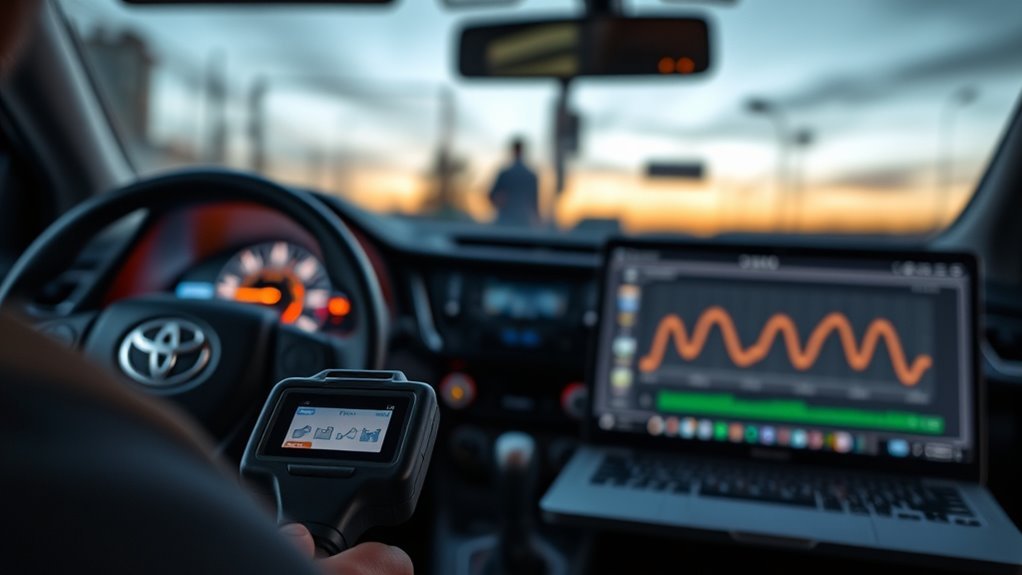
Start by plugging an OBD-II scanner into your RAV4’s diagnostic port and reading the ABS/VSC codes—this gives you the clearest starting point for traction control faults. You want OBD II Scanners that read ABS/VSC modules, or use free code reading at parts stores like AutoZone to pull Diagnostic Codes. Note persistent lights still mean professional attention.
- Visualize the scan: a C1234 points to a wheel speed sensor fault—dirty or damaged sensor/wiring.
- Imagine C1201: brake switch or circuit malfunction affecting traction control logic.
- Picture undefined codes: consult the service manual or a mechanic for context-specific interpretation.
Use the codes to guide targeted checks: inspect sensors, connectors, and steering-angle inputs. Don’t ignore unresolved codes; they limit your freedom and safety. Read codes, act decisively, and liberate your driving by turning data into clear, effective steps toward a safe RAV4.
Repair Options and Typical Costs (DIY vs. Shop vs. Dealer)
You can often fix simple causes like a bad wheel speed sensor yourself for under $200 if you have basic tools and the right part. Independent shops usually charge moderate labor and diagnostic fees and can match dealer-quality repairs for less, while dealerships commonly bill higher labor rates and parts markup. If multiple warning lights are present or diagnostics are unclear, get a professional check to avoid escalating damage and towing costs.
DIY Repair Costs
Deciding whether to fix a traction control issue yourself or pay a shop comes down to parts cost, tools, and diagnostic needs: you’ll weigh Sensor Calibration needs and a clear Cost Comparison to free yourself from recurring shop visits. DIY wheel speed sensor replacement typically runs $50–$150 for parts and basic tools. You’ll save money if you use online guides and forums, and proper sensor calibration during maintenance can prevent $100–$200 in future bills.
- Buy sensor + basic tools: $50–$150 — empowering, hands-on.
- Local shop: $150–$300 — quicker, costs more for labor.
- Dealer diagnostic: $200–$500 — specialized, pricier.
Be honest about your skills; DIY saves money but requires patience and accuracy.
Shop Vs Dealer
Although both independent shops and dealers can fix a RAV4’s traction control, your choice should hinge on cost, diagnostic needs, and warranty preferences. You’ll find shop advantages in lower diagnostics and minor repair costs—typically $100–$200 for sensor swaps and basic fixes—plus personalized service and faster turnaround. Dealers charge more, often over $200, because of higher labor rates and OEM parts, but dealer warranties can deliver peace of mind and protect long-term reliability. DIY saves labor but demands diagnostic tools and competence; if you’re confident, it’s the cheapest route. Prioritize prompt repairs to avoid escalating damage. Choose an independent shop for savings and empowerment, a dealer if you value covered repairs, or DIY only if you’re prepared and equipped.
Safety: Can You Drive With the RAV4 Slip Light On and When to Get Help?
Wondering whether it’s safe to keep driving with the RAV4 slip light on? You can drive short distances at low speeds if the light is steady, but treat it as a warning sign: the traction control or ABS may be compromised, reducing traction safety in slick conditions. If the light flashes while accelerating, that’s the system actively intervening—still expect reduced margin for error.
- Imagine wet roads where the system won’t assist—you’re more likely to lose grip and need immediate caution.
- Picture a steady light on a cold morning—you should get a diagnostic check before relying on the vehicle.
- Envision a flashing light on an icy hill—stop, regroup, and avoid risky maneuvers until resolved.
Seek professional help promptly if the light stays on after normal driving, or if you notice ABS faults, unusual braking, or persistent instability. Regular maintenance frees you to drive confidently and protects your liberty on the road.
Frequently Asked Questions
What Should I Do if the Traction Control Light Comes On?
Check road conditions first; if the traction control dashboard warning stays on, pull over safely, restart the car, then get a diagnostic scan. Don’t ignore it—you’ll protect handling, safety, and your freedom on the road.
Why Is My Traction Control Light Staying on My Toyota?
Your traction control light’s staying on because traction control sensors, ABS faults, or a miscalibrated steering angle sensor are faulting; use diagnostic tools to read codes, then fix sensors or wiring so you regain confident, liberated control.
Conclusion
When that RAV4 Slip/Traction-Control light flickers on, don’t freeze — act. First pull over safely, restart the engine, and check for obvious issues like a loose gas cap or damaged wheel sensor wiring. If the light stays, scan for codes or get roadside help; minor fixes are affordable, but ignored faults can hide costly steering, ABS, or PCM problems. Drive cautiously if needed, but get it diagnosed promptly — because the next turn could tell you everything.