If your RAV4 squeaks over bumps, it’s probably the front stabilizer‑bar bushings—common on 2019–2021 Japan‑built models—where dried or cracked rubber lets metal rub. Inspect the bushings for cracks, hardening or binding, then try a silicone‑safe lubricant; if noise drops, bushing wear is confirmed. Replace any loose or damaged bushings, links or mounts—polyurethane lasts longer but raises NVH. Follow a VIN‑informed dealer inspection and ask about Toyota Tech Tip TT072423 to learn repair and cost options.
Is the RAV4 Squeak Coming From the Sway Bar?
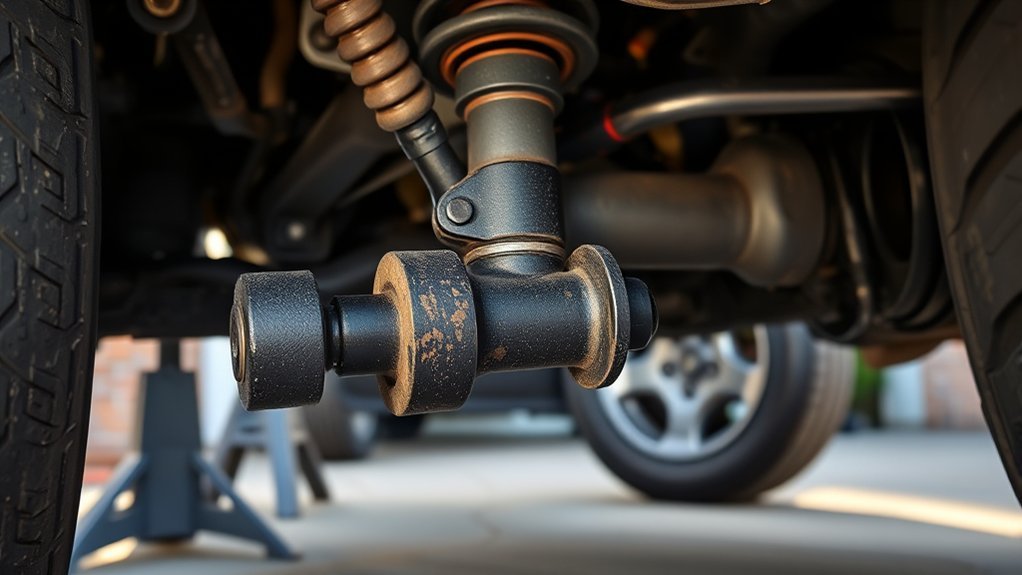
Wondering whether that persistent RAV4 squeak is coming from the sway bar? You’ll want to focus on front stabilizer bar bushings—on many 2019–2021 RAV4s (notably Japan-built units) the squeak causes trace back to worn or dried-out bushings. Those components let the sway bar pivot and absorb vibration; when bushing materials crack or harden, metal-on-rubber noise appears over bumps. You inspect by looking for visible cracks, deformation, or dryness and by checking sway bar links for looseness that can mimic bushing noise. If a silicone-safe lubricant quiets the sound temporarily, you’ve confirmed the source; lubrication proves diagnostic but often isn’t permanent. Plan for replacement when lubrication fails: parts typically run $20–$50, plus shop labor if you don’t do it yourself. This approach frees you from guessing—diagnose methodically, pick the correct bushing material replacement, and reclaim control of your ride.
Inspect the Front Sway‑Bar Bushings Step‑by‑Step
If the squeak you traced to the front stabilizer area didn’t stop with a quick lube test, inspect the front sway‑bar bushings systematically: park on level ground, support the vehicle with jack stands, and visually examine each bushing for cracking, hardening, deformation, or contamination. Work methodically from one side to the other. Verify the bushing permits the sway bar to pivot smoothly; any binding, visible splits, or brittle texture indicates replacement. Check for grease loss or grit embedded in the rubber—contamination defeats noise reduction and accelerates wear. While focused on bushings, palpate the sway bar and mounts for play; minor link looseness or damaged strut mounts can mimic bushing noise. If lubrication eliminated the squeak previously, you’ve pinpointed the source; if not, record observed defects and plan parts replacement. Expect bushing kits to cost roughly $20–$50; factor shop labor if you choose professional service. Act decisively—restore control and silence the suspension so you can drive free.
Quick Lube Test to Confirm the Sway‑Bar Bushing
Start by visually inspecting the sway‑bar bushings for cracks, dryness, or contamination and confirm the sway‑bar links are tight. With the vehicle stationary, apply a silicone‑safe lubricant directly to the bushing contact area. If the squeak stops, the bushing is likely the culprit—treat this as a temporary fix and plan to replace the bushings for a long‑term solution.
Visual Bushing Inspection
Anyone working on a 2019–2021 Toyota RAV4 should first perform a close visual check of the front stabilizer bar bushings for cracks, dryness, or visible wear, since these defects commonly cause squeaks on Japan-built models; apply a silicone-safe lubricant to the bushings and sway-bar links to see if the noise stops (confirming the bushings as the source), and while you’re there verify sway-bar link tightness because looseness can also contribute to suspension noise. Inspect bushing types—solid rubber, urethane, or OEM compound—note deterioration patterns and mounting deformation. Target obvious noise causes: torn boots, hardening, or separation. If visual and quick-lube tests clear the bar, shift focus to strut mounts and bump stops. Regular inspection and timely lubrication keep you free from repetitive shop visits.
Apply Silicone Lube
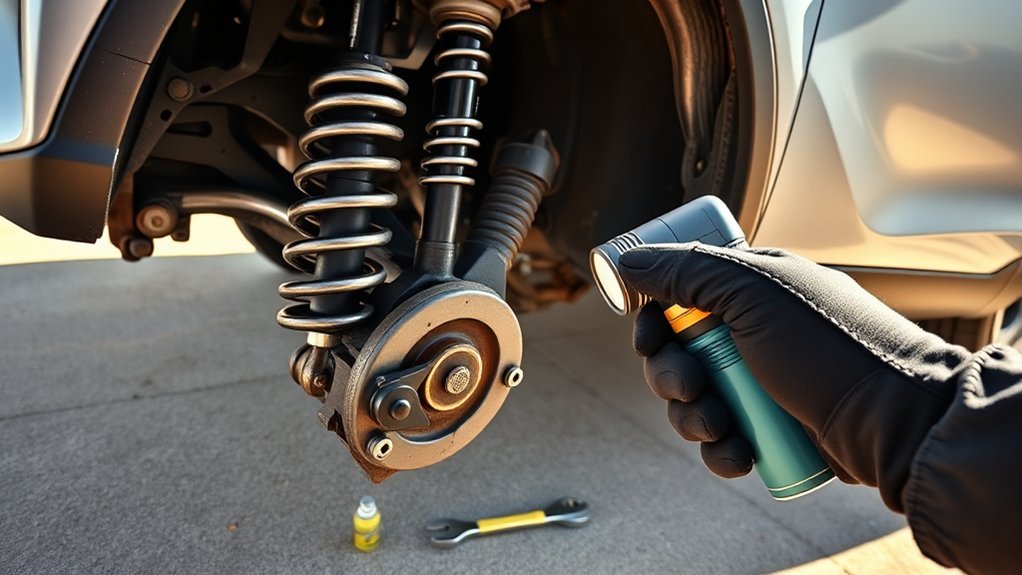
Grab a silicone-safe spray and apply it directly to the front sway‑bar bushings and the sway‑bar link pivots to run a quick diagnostic: spray the contact faces, work the steering or bounce the wheel, and listen. If the squeak diminishes or disappears, you’ve isolated one of the common squeak causes to stick‑slip at the bushings. Silicone lube reduces friction without degrading rubber, so it’s ideal for this temporary test. Note the result: if noise stops, plan bushing replacement or thorough cleaning—lubrication techniques here are diagnostic, not permanent fixes. If noise persists, continue inspection of links and mounts. Repeat maintenance lubrication periodically to prevent recurrence and extend suspension life while you reclaim control over your ride.
When to Replace Bushings, Links, or Strut Mounts
When persistent clunks or squeaks continue after lubrication, check the front stabilizer bar bushings, sway bar links, and strut mounts for visible cracking, hardening, looseness, or play, because those symptoms indicate it’s time to replace the affected parts. You want reliable steering and freedom from noise; bushing lifespan varies, but replacement signs are clear: cracks, drying, or loss of elasticity. Inspect links for play and mounts for bearing noise or vertical movement.
| Component | What to look for |
|---|---|
| Bushings | Cracks, hardening, separation |
| Sway bar links | Looseness, worn ball joints |
| Strut mounts | Noise, vertical play |
| Outcome | Eliminate squeaks and clunks |
Replace any part showing these faults rather than delaying service. Quick replacement restores performance, prevents secondary damage, and frees you from recurring suspension noise. Prioritize components with obvious wear to maintain control and vehicle integrity.
DIY Costs and Parts for Lubing or Replacing Bushings
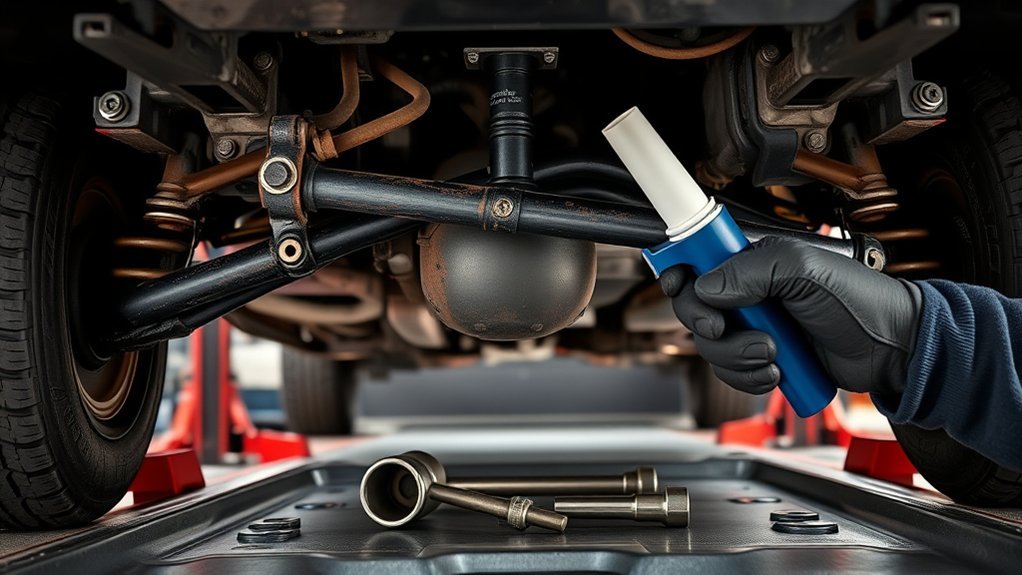
You’ll need a silicone-safe lubricant and basic hand tools to lube the front stabilizer bar bushings, which you can buy for under $10 and apply in a single afternoon. If lubrication doesn’t stop the squeak, expect replacement bushings to cost about $20–$50 for parts, plus any hardware you might choose to renew. Professional parts-and-labor replacement runs roughly $100–$200, with more extensive repairs (including related components) potentially reaching ~$500.
Parts Needed
If you want a quick, low-cost fix, start with a silicone-safe lubricant (under $10) to quiet worn stabilizer bushings; it’s a temporary but effective measure while you determine if replacement is required. For parts, you’ll need the lubricant, basic hand tools, jack stands, and replacement bushings if wear is evident. Front stabilizer bar bushings cost $20–$50; choose bushing materials (rubber, polyurethane) based on noise control versus stiffness. Polyurethane lasts longer but can transmit more road feedback; rubber isolates noise better. If you prefer a pro, budget $100–$200 for shop work; full system replacement can approach $500. Follow maintenance tips: inspect regularly, act early to prevent secondary wear, and keep parts and tools organized for efficient DIY liberty.
DIY Lubrication Cost
Having checked parts and tools, you can move on to cost specifics for lubing or replacing the front stabilizer bushings on a 2019–2021 RAV4. For a straightforward squeaking diagnosis and basic lubrication methods, DIY materials (spray silicone or white lithium grease) run under $10. If lubrication doesn’t hold, replacement bushings cost $20–$50 each. Professional work ranges higher, so weigh freedom vs. convenience.
- DIY lubrication materials: <$10 — fast, reversible, liberating.
- Replacement parts: $20–$50 — durable, slightly more commitment.
- Shop service estimate: $100–$200 — parts and labor.
- Full repair variance: $100–$500 — depends on scope.
Address the squeak early to avoid cascading wear and higher future costs.
Bushing Replacement Price
One quick check you should do before buying parts is a visual inspection of the front stabilizer bushings for cracks, flattening, or dry rot, since lubrication under $10 can silence minor squeaks but failed or split bushings need replacement. If lubrication fails, expect DIY replacement bushings to cost $20–$50; shop service runs $100–$200 for parts and labor. Full suspension renewal for lasting relief can approach $500. Consider bushing lifespan and bushing materials (rubber vs. polyurethane) when choosing parts—polyurethane lasts longer but transmits more NVH.
| Item | Typical Cost |
|---|---|
| Lubricant | <$10 |
| DIY bushing | $20–$50 |
| Shop replace | $100–$200 |
| Full renewal | ~$500 |
What to Tell Your Dealer: VIN, Tech Tip, and Expected Fixes
When you call the dealer, give your VIN up front—especially if it starts with “J”—and mention Toyota Tech Tip TT072423 so they know this is the known front stabilizer bushing squeak; the tech will likely inspect the front stabilizer bar bushings for drying or contamination and discuss lubrication vs. replacement options and costs. Use clear dealer communication and frame the visit as suspension maintenance, not a brake fault.
- State VIN and TT072423 so service advisors pull the correct bulletin and vehicle build data.
- Request a focused inspection of front stabilizer bar bushings for drying, debris, or missing grease.
- Ask for lubrication first (DIY under $10) and a shop quote for bushing replacement (up to ~$500), including parts, labor, and warranty.
- Confirm expected outcomes: noise elimination, longevity, and whether root-cause contamination was addressed.
Be decisive: choose the fix that frees you from recurring noise and prevents further suspension wear.
Frequently Asked Questions
Can I Fix Squeaky Suspension Myself?
Yes — you can fix squeaky suspension yourself. Use suspension maintenance tips and DIY repair techniques: inspect stabilizer bar bushings, apply silicone-safe lubricant, test noise, then replace worn bushings or links to reclaim control and save money.
Is There a Recall on Toyota RAV4 Suspension?
No, there isn’t a recall on RAV4 suspension; you’ll find a tech tip instead. You’ll address suspension noise through Toyota maintenance procedures targeting stabilizer bar bushings to restore comfort and free your driving experience.
Conclusion
You’ve likely tracked the squeak to the sway‑bar bushings, but don’t assume—test it. Jack the front, bounce and listen; apply a quick lube to the bushing and retest to confirm diagnosis. If noise stops, clean and relube or fit new OEM‑style bushings; if it persists, inspect links and strut mounts next. Expect modest DIY cost and bring VIN and symptoms to the dealer if uncertain—technical clarity speeds correct repairs.