You’ll press Recirc in your Sonata to cool the cabin faster, block exhaust and pollution in traffic, and cut AC load for better fuel economy; it seals outside air and cycles cabin air through the evaporator, reducing compressor run time. Don’t use it in cold or humid conditions where fogging or stale air becomes an issue—switch to fresh-air or Auto/AQS to clear moisture. Keep an eye on the cabin filter and AQS sensor for proper behavior, and more practical tips follow.
Quick Answer: When to Press Recirculation in a Sonata
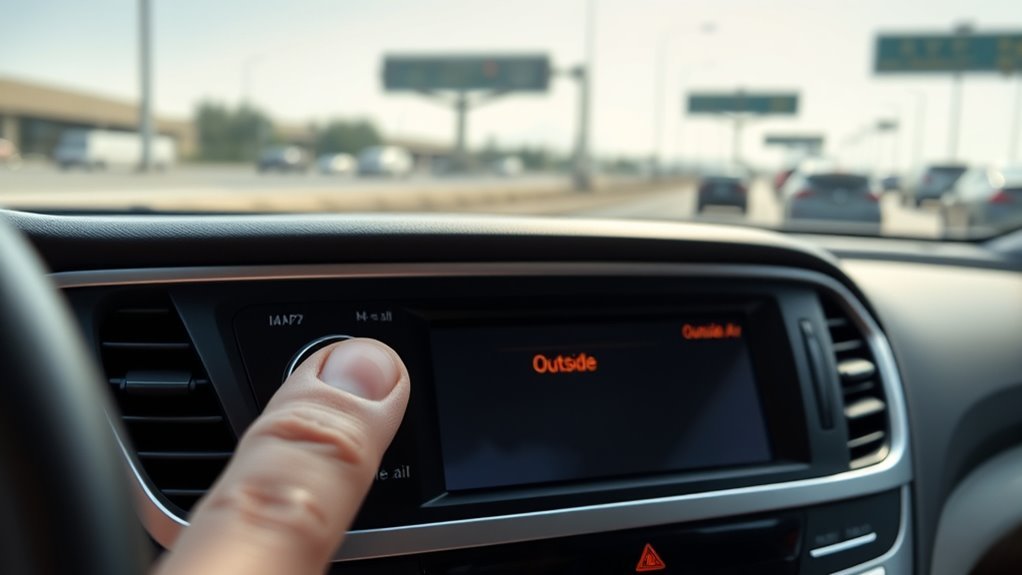
Wondering when to hit the recirculation button in your Hyundai Sonata? You press it in hot weather to cool the cabin faster by recycling chilled air, improving climate control response and reducing AC load. Engage recirculation in dense traffic or near pollution sources to protect interior air quality from exhaust fumes and allergens. When the AC’s on, recirculation optimizes cooling efficiency and can save fuel by lowering compressor demand. Don’t use it in cold conditions—moisture can accumulate and fog windows, degrading visibility and safety. On long trips, you’ll periodically switch to fresh air to prevent carbon dioxide buildup and maintain alertness. Use the button strategically: it’s a liberation tool for comfort, efficiency, and control of your cabin environment.
How Sonata Recirculation Mode Works
Now that you know when to use recirculation, here’s how it actually works: the Sonata seals off outside air and routes cabin air through the HVAC system so the AC cools already-conditioned air faster, reducing compressor load and lowering cabin temperature more quickly. You’ll hear the blend-door actuators reposition to close the fresh-air intake while internal fans keep circulating cabin air through the evaporator and heater core as needed. That circulation benefits cooling speed and fuel-efficient operation, a core recirculation benefit. Use it in traffic or near pollution sources to preserve air quality inside. Monitor humidity and window clarity; you’ll switch it off in cold, damp conditions to avoid fogging. Diagnostic indicators are minimal; behavior is automatic on newer models.
What the Sonata’s A (AQS) / Auto Button Actually Does
Although it runs automatically, the Sonata’s A (AQS) / Auto button fundamentally hands control of the fresh-air/recirculation intake to an air-quality sensor: you rely on that sensor to detect pollutants (CO, CO2, HC) and switch to recirculation to protect the cabin. You get AQS benefits in reduced pollutant ingress without constant manual input. The system continuously monitors outside air and reopens fresh-air mode when readings drop, preserving healthy air quality inside. If your model lacks automatic AQS, you’ll need to choose modes yourself. Perceived malfunctions usually stem from expected automatic switching—don’t fight it; diagnose by observing when the mode changes relative to ambient conditions. Use this behavior to reclaim control over cabin breathing.
Where the AQS Sensor, Pollen Filter, and Vents Are Located
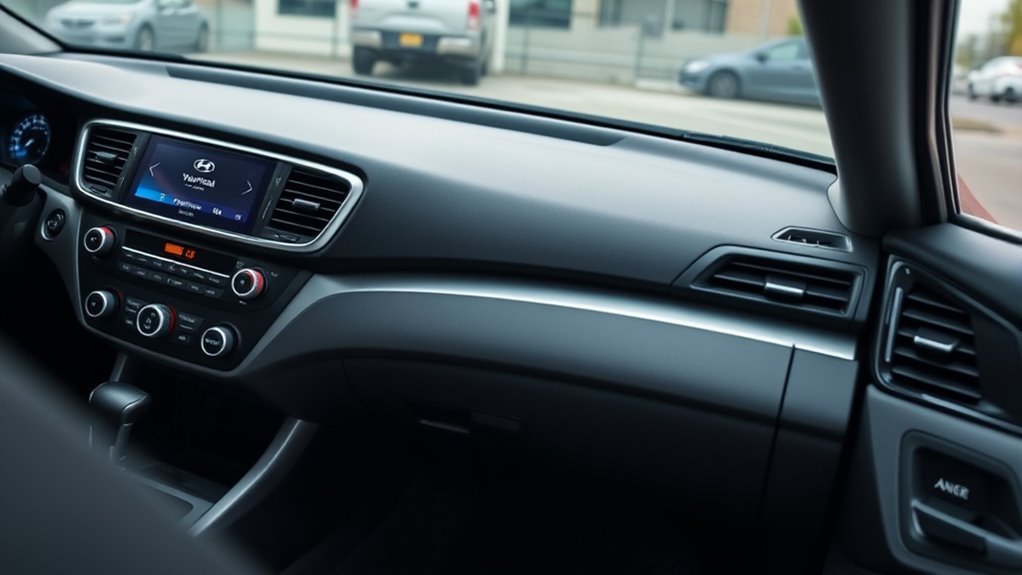
Understanding where the AQS, pollen filter, and vents sit will help you diagnose why the system chooses recirculation or struggles to move air. The AQS lives at the Sonata’s front, sampling exterior air and triggering recirculation when pollutants appear; inspect it for damage as part of sensor maintenance. The pollen filter sits in the cabin air intake duct—accessible behind the glovebox or under the cowl—so a clogged filter will cut airflow and mimic actuator or vent faults. Vents are distributed across the dash, center, and rear to equalize cabin flow; confirm vent placement and actuator operation when diagnosing uneven delivery. Use these location checks to reclaim control of cabin air, prioritize simple fixes, and avoid needless component replacements.
When to Use Recirculation for Fastest Cooling
When you fire up the AC on a hot day, set the system to recirculation to cool the cabin fastest by continuously reusing the already-cooled interior air; this reduces compressor load, improves efficiency, and prevents warm outside air from undermining temperature targets. Use recirculation benefits immediately after startup to drop cabin temperature quickly and sustain cabin comfort. Engage it during dense traffic or near pollution sources to block contaminated air and keep the HVAC operating within ideal thermal and load parameters. In heatwaves, recirculation lowers compressor duty cycle, improving fuel economy and component longevity. For diagnostic clarity: if cooling stalls, confirm recirculation is active and vents sealed. Switch modes only when prolonged use risks air stagnation; prioritize fast cooling first.
When Not to Use Recirculation (Fogging, Cold Weather, Long Drives)
Don’t use recirculation when you see window fogging or during cold starts, because trapped moisture will condense and impair visibility. For long drives, switch to fresh-air mode periodically to flush CO2 and keep passengers alert. Also avoid recirculation when you need rapid cabin heating or max defog—outside air is required for effective dehumidification and warming.
Fogging And Visibility Risks
If you run recirculation in cold weather or for long stretches, moisture and exhaled CO2 can accumulate, fogging the windows and reducing visibility and alertness. You should switch to outside-air mode to enable fogging prevention and visibility enhancement; outside air reduces cabin humidity and disperses CO2, restoring clear sightlines and cognitive sharpness. Diagnose cabin conditions: check mirror edges, windshield banding, and driver drowsiness indicators. Maintain liberation from stagnant air by forcing periodic fresh-air cycles.
- Monitor window film and localized fog formation.
- Detect passenger complaints of stale air or headaches.
- Use outside-air to accelerate defogging and lower relative humidity.
- Schedule manual fresh-air intervals on long trips.
- Prefer outside-air in cold starts to prevent interior condensation.
Long-Drive Air Renewal
Because prolonged recirculation traps exhaled CO2 and moisture, you should alternate to fresh-air mode on long drives and in cold conditions to prevent window fogging, reduced visibility, and passenger drowsiness. On extended trips, stagnant cabin air degrades air quality and lowers alertness; switch periodically to fresh air to restore oxygen levels and sustain passenger comfort. In cold or damp weather, fresh-air with max defog clears humidity faster than recirculation. Monitor window clarity and occupant alertness; if fog or lethargy appears, engage outside air and high blower briefly. Adopt this simple routine to reclaim control of your environment and maintain safe visibility.
| Trigger | Action |
|---|---|
| Fogging | Use fresh-air + max defog |
| Drowsiness | Alternate to outside air |
How Sonata Recirculation Affects AC Load and Fuel Use
When you engage recirculation in the Sonata, the system reuses cooler cabin air so the AC compressor cycles less frequently and under lower load. That reduced compressor workload translates to measurable fuel savings, especially during short trips or stop-and-go traffic. Monitor cabin CO2 and switch to fresh air periodically to balance efficiency with occupant comfort and alertness.
Reduced Compressor Workload
Although recirculation cuts off outside air, it keeps the Sonata’s HVAC compressor from working as hard by feeding cooler cabin air back through the evaporator, so the system reaches target temperatures faster and cycles less frequently. You’ll notice tangible reductions in compressor duty when you close the outside intake: lower head pressures, fewer clutch engagements, and steadier evaporator temperatures. This isn’t about recirculation myths — it’s measurable compressor efficiency improvement under load. Use recirculation tactically to relieve the system without compromising ventilation needs.
- Faster cooldown reduces compressor runtime
- Lower thermal load limits compressor current draw
- Reduced humidity intake eases evaporator work
- Less frequent cycling decreases mechanical wear
- Consistent cabin temps stabilize system control
Improved Fuel Efficiency
Having the compressor run less often also lowers the engine load and fuel draw, so using recirculation in the Sonata can directly improve fuel efficiency. You’ll reduce AC energy demand by keeping cooled cabin air in circulation, which lowers compressor duty cycles and yields measurable fuel savings—especially in hot, stop-and-go conditions. Diagnostics show up to a 10% improvement versus fresh-air mode by cutting the thermal load on the system. You’ll also lessen component wear, preserving system performance and sustained economy. In dense traffic recirculation minimizes pollutant intake, preserving cabin air quality while avoiding unnecessary compressor work. Operate recirculation strategically: engage during highway or congested runs, disable briefly to refresh cabin air when needed, and monitor system response for ideal liberation and efficiency.
Signs Recirculation Is Causing Fogging or Stale Air
If your Sonata’s windows start fogging or the cabin smells stale, recirculation mode may be trapping humidity and contaminants instead of letting fresh air in. You’ll want to recognize clear diagnostic signs so you can restore breathable, liberated cabin air. Fogging causes include trapped moisture during cold or wet weather; stale air shows as reduced fresh airflow and persistent odors. Prolonged use can raise CO2, producing drowsiness and reduced alertness. HVAC strain or temperature control issues while in recirculation can also indicate compromised air quality.
- Persistent window fogging in humid or cold conditions
- Noticeable lack of fresh air or lingering odors
- Passengers feeling fatigued or drowsy
- AC struggling to maintain set temperature
- Increased cabin humidity or discomfort
Recirculation Troubleshooting and Quick Fixes (Filters, Sensors, Resets)
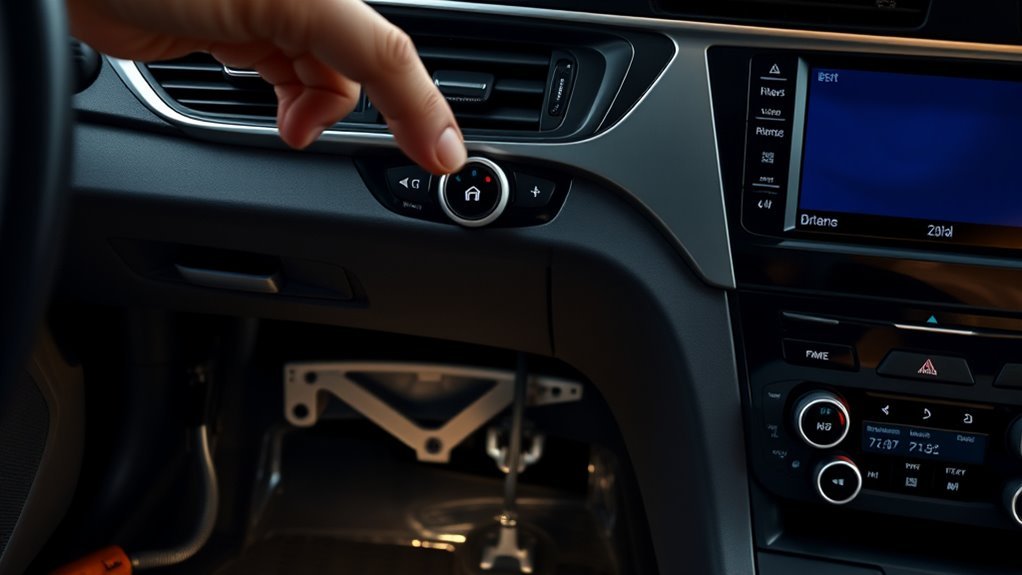
Check the cabin air filter first—visually inspect for clogging and replace it if airflow is reduced or odor persists. Verify the air quality sensor and recirculation switch by cycling modes and observing indicator response; recalibrate or replace the sensor if it fails to change states. If electronics behave erratically, perform a system reset by disconnecting the battery for a few minutes, then re-test and consult the manual or a technician for unresolved faults.
Filter Inspection And Replacement
When you notice weak airflow or persistent odors, inspect the cabin air filter and recirculation components for clogs, damage, or sticking flaps; a clogged filter often reduces recirculation effectiveness and should be replaced per schedule. You’ll perform filter maintenance to restore airflow optimization, remove debris, and verify the recirculation flap moves freely. Replace the filter yearly or every 15,000 miles, or sooner if contaminated. Avoid touching sensors; just visually confirm they’re unobstructed. Use genuine or equivalent filters and follow the slot orientation. Keep records to resist neglect.
- Locate and remove cabin air filter per manual
- Visually inspect for dirt, mold, or tears
- Replace with specified part and orientation
- Check recirculation flap for free movement
- Test mode operation after replacement
Sensor Calibration And Resets
Although a dirty or miscalibrated air-quality sensor often causes erratic recirculation behavior, you can usually narrow the fault down with a few targeted checks and resets. Inspect and clean the sensor area; debris degrades sensor performance and yields false recirculation triggers. Replace the cabin air filter if buildup restricts flow—filters and sensors work together to maintain correct readings. If symptoms persist, perform a climate-control reset by disconnecting the battery for several minutes to force sensor recalibration. Use an OBD-II or HVAC diagnostic tool to read fault codes tied to air-quality or HVAC modules; diagnostics reveal electronic faults beyond mechanical causes. Finally, consult Hyundai’s manual for model-specific calibration techniques and stepwise procedures before ordering parts or seeking dealer intervention.
Practical Toggling Tips for Short Trips, Long Drives, and Traffic
If you want the fastest cooling on short trips, flip the Sonata’s recirculation mode on right after you start the AC to maximize cooled air and reduce compressor load. You’ll overcome common recirculation myths by using it briefly to drop cabin temperature and save fuel; treat this as part of routine AC maintenance. For longer runs, plan periodic fresh-air intervals to purge CO2 and maintain alertness.
- Short trips: recirculate immediately for rapid cooling and lower compressor strain.
- Long drives: switch to fresh air every 20–30 minutes to prevent drowsiness and stale air.
- Traffic/congestion: engage recirculation to block exhaust and pollutants.
- Hot conditions: prioritize recirculation until target temp stabilizes.
- Cold/wet: avoid recirculation to prevent window fog and visibility loss.
Frequently Asked Questions
When Should I Use Recirculation Mode?
Use recirculation when you want faster cooling, improved climate control, or to protect air quality in heavy traffic or near exhaust; avoid it in cold weather, and periodically switch to fresh air on long drives to stay alert.
Does Recirculation Mode Use More Gas?
No — recirculation mode usually improves fuel efficiency by reducing AC compressor load; you’ll save gas while it recycles cabin air, though you should monitor air quality and avoid prolonged use when fresh ventilation’s essential.
How to Properly Use the Recirculation Button?
Use recirculation for recirculation benefits: cool cabin faster in heat, block pollutants and odors, and boost climate control efficiency. Don’t overuse in cold or long drives; periodically switch to fresh air to avoid fogging and CO2.
Conclusion
Use recirculate when you need quick cooling, to keep fumes out, or when traffic holds you in place; switch to fresh air to clear fog or stale odor. Check and replace the cabin filter, keep the AQS sensor unobstructed, and reset the climate system if controls act erratically. Think of recirculate like a temporary sealed chamber—fast and efficient but not for long-term use. Toggle based on conditions to balance comfort, visibility, and engine load.