2026 Hyundai Sonata Interior Dimensions: Quick Verdict
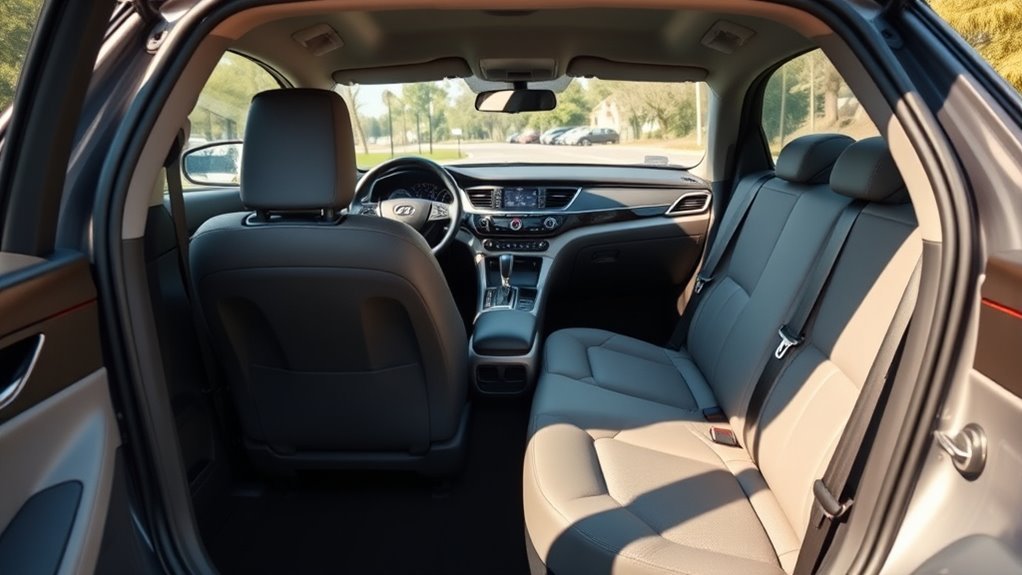
The 2026 Hyundai Sonata interior dimensions include a 104.4-cu-ft passenger cabin, 46.1 inches of front legroom, 34.8 inches of rear legroom, and a 15.6-cu-ft trunk. Headroom depends on trim: Hyundai lists 40.0/37.8 inches front/rear for SE, Blue Hybrid, and SEL Sport, while N Line, SEL Hybrid, and Limited Hybrid are listed at 38.4/37.4 inches. That makes the Sonata especially generous for front-seat legroom, but the rear seat is not class-leading for knee room. Families and taller buyers should test the exact trim because roof hardware, seat position, and child-seat installation can change usable space.
Last updated: August 8, 2026. Dimensions and seating details were checked against Hyundai USA’s 2026 Sonata specifications.
| 2026 Sonata interior spec | Hyundai-listed measurement | What it means |
|---|---|---|
| Passenger volume | 104.4 cu ft | Roomy midsize-sedan cabin overall |
| Front legroom | 46.1 in | A strong point for long-legged drivers |
| Rear legroom | 34.8 in | More limited than the front; test with tall rear passengers |
| Headroom | 40.0/37.8 or 38.4/37.4 in front/rear | Varies by trim |
| Shoulder room | 57.9/56.1 in front/rear | Useful width for two adults in back |
| Hip room | 54.6/54.4 in front/rear | Helps explain usable seat width |
| Trunk capacity | 15.6 cu ft | Competitive everyday sedan cargo space |
| Seating capacity | 5 | Two front seats plus a three-position rear bench |
How Much Front Headroom and Legroom Does the 2026 Sonata Have?
Every 2026 Sonata trim lists 46.1 inches of front legroom, which is one of the cabin’s clearest advantages for tall or long-legged drivers. Headroom needs a trim-specific answer. Hyundai lists 40.0 inches of front headroom on SE, Blue Hybrid, and SEL Sport, while N Line, SEL Hybrid, and Limited Hybrid are listed at 38.4 inches.
Do not treat the published headroom number as the literal gap between your hair and the roof. Seat height, seatback angle, torso length, and where you position the steering wheel all change real-world fit. On a test drive, set the seat for proper pedal reach first, then check whether you still have comfortable head clearance and a natural view of the instrument panel.
| Feature | Measurement | Buyer check |
|---|---|---|
| Front legroom | 46.1 in | Set pedals and steering reach before judging comfort |
| Front headroom | 40.0 or 38.4 in | Confirm the exact trim before comparing |
| Front shoulder room | 57.9 in | Check elbow room with a front passenger |
| Front hip room | 54.6 in | Useful for judging seat-area width |
[Products Worth Considering]

This Yangday steering wheel cover is designed for a custom fit on select Toyota models, helping improve grip, comfort, and control during everyday driving. Its breathable leather construction and non-slip inner lining offer a secure feel, while the sport-inspired design adds a stylish upgrade to the car interior. The cover is easy to install and helps protect the original steering wheel from heat, wear, and seasonal discomfort.
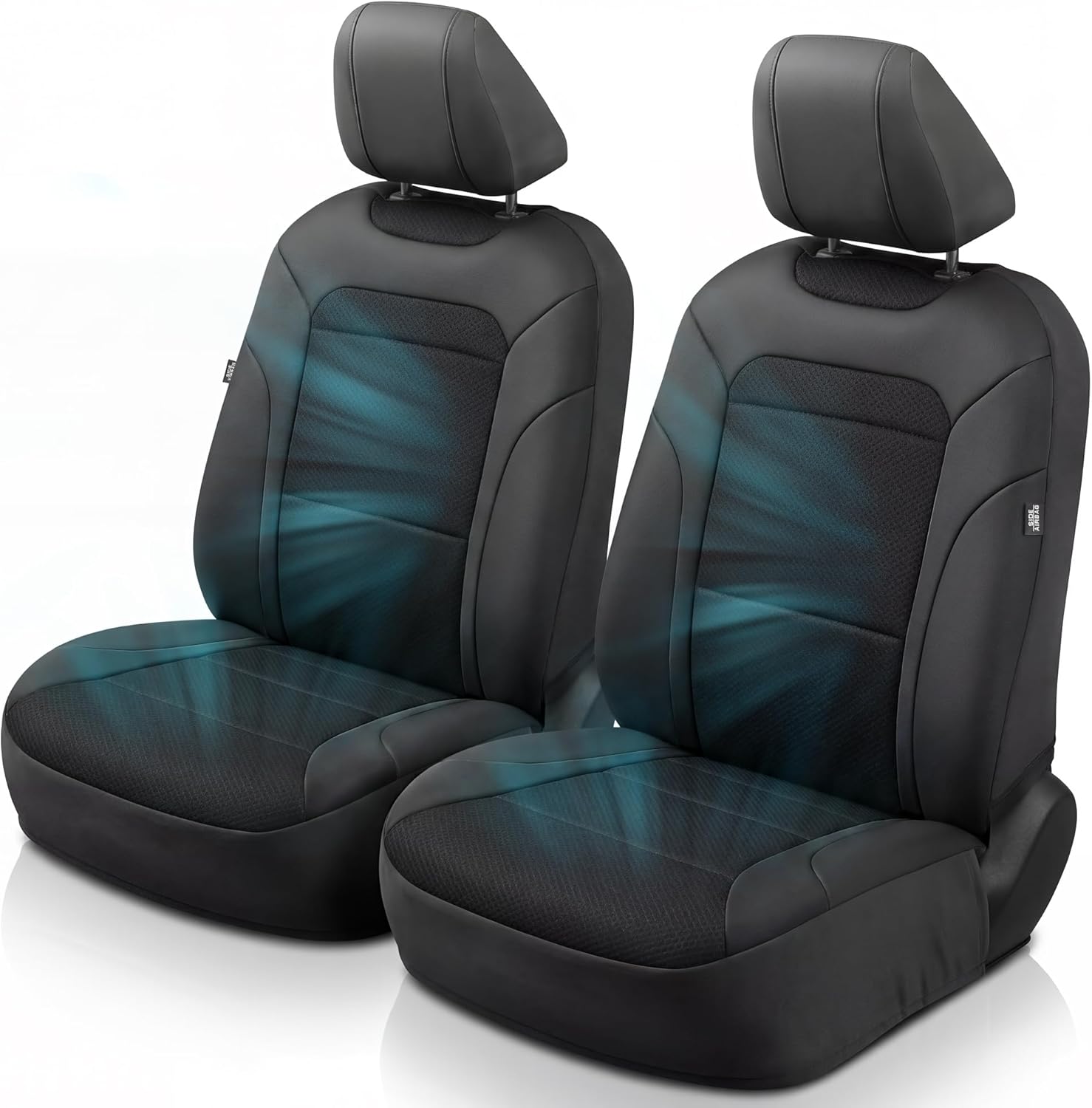
This custom-fit front seat cover set is designed for select Toyota models to improve comfort and help keep drivers cool on daily commutes and long road trips. The breathable mesh and faux leather construction offers easy cleaning, stain resistance, and a supportive feel, while the sponge padding adds cushioning and reduces fatigue. Built-in storage pockets and a stretch-fit design make it practical, tidy, and simple to install without interfering with seat adjustments.

This microfiber leather steering wheel cover adds a sleek black look while improving grip and comfort for everyday driving. Its anti-slip rubber lining helps keep the cover secure, while the durable, protective design helps guard against wear, scratches, heat, and sun exposure. Made for standard steering wheels, it offers a snug fit and easy maintenance for a cleaner, more comfortable driving experience.
How Much Rear Headroom and Legroom Does the 2026 Sonata Have?
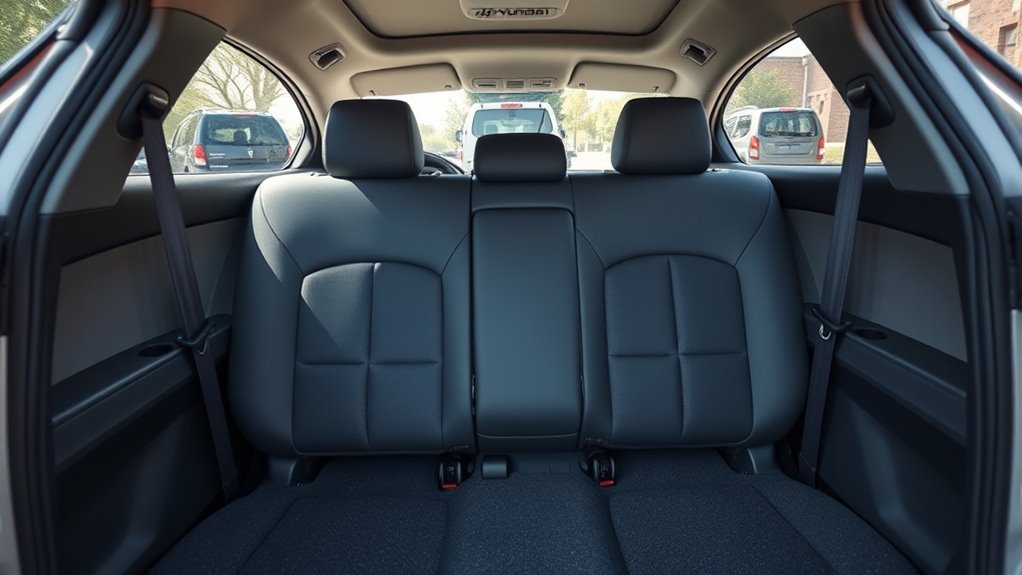
The 2026 Sonata provides 34.8 inches of rear legroom. Rear headroom is 37.8 inches on SE, Blue Hybrid, and SEL Sport, and 37.4 inches on N Line, SEL Hybrid, and Limited Hybrid. Hyundai also lists 56.1 inches of rear shoulder room and 54.4 inches of rear hip room.
The important trade-off is that the Sonata prioritizes the front row more than the rear row. A tall driver can use a large share of the 46.1-inch front-legroom range, which can make knee space behind that seat feel tighter. If adults frequently ride in back, put your normal driver in position first and then have the tallest rear passenger sit directly behind that seat. That test is more useful than judging the rear bench while the front seat is pushed forward.
What Does 104.4 Cu Ft of Passenger Volume Actually Mean?
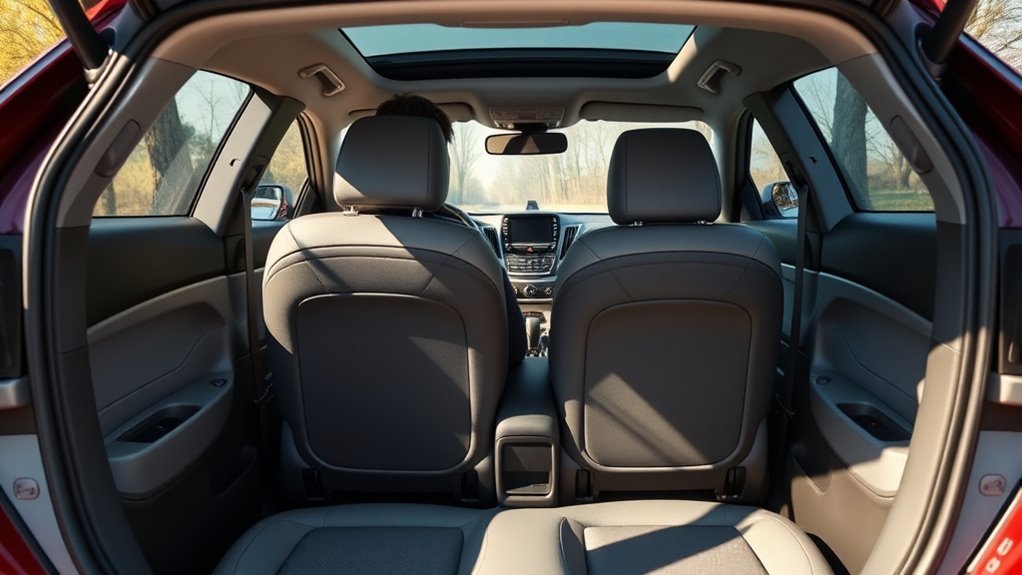
Hyundai lists 104.4 cubic feet of passenger volume for every 2026 Sonata trim. That number is useful for comparing overall cabin size, but it should not be divided by five to estimate “space per passenger.” Passenger volume is an aggregate interior measurement; it does not tell you how much knee, head, shoulder, or hip room one person actually gets.
For real-world fit, the more useful numbers are 46.1 inches of front legroom, 34.8 inches of rear legroom, 57.9/56.1 inches of front/rear shoulder room, and 54.6/54.4 inches of front/rear hip room. Those measurements reveal why the Sonata feels generous up front while rear legroom can be a deciding factor for families carrying tall teenagers or adults.
Why “Per-Person Cabin Volume” Can Be Misleading
Dividing 104.4 cubic feet by five gives 20.88 cubic feet, but that figure has little practical value because a car’s interior is not divided into five equal boxes. The dashboard, center console, roof shape, seat tracks, door trim, and seatback positions all affect where the usable space is located.
A better comparison uses the dimensions that correspond to your body and seating position. Tall drivers should prioritize front headroom and legroom. Families should compare rear legroom, rear shoulder room, child-restraint fit, and how much front-seat travel remains with a rear-facing child seat installed. Three-adult rear-seat use makes shoulder and hip room more relevant than total passenger volume.
What Passenger Space Means for Cargo Flexibility
The Sonata separates its 104.4-cu-ft passenger area from a 15.6-cu-ft trunk, so using the trunk does not take away normal seating space. All 2026 trims list a 60/40 split fold-down rear seat, which lets you extend longer cargo into the cabin while keeping part of the rear bench available.
Cubic-foot ratings still do not reveal the trunk opening’s exact width, height, or the shape around the wheel housings. If you routinely carry a stroller, wheelchair, large cooler, golf bag, or another bulky item, measure that item and test it through the trunk opening before buying.
| Cargo feature | Practical outcome |
|---|---|
| 15.6-cu-ft trunk | Useful everyday luggage and grocery capacity |
| 60/40 split rear seat | Lets longer items share space with a rear passenger |
| Separate trunk | Keeps routine cargo outside the passenger compartment |
Trunk Capacity and Practical Cargo Use (15.6 Cu Ft)
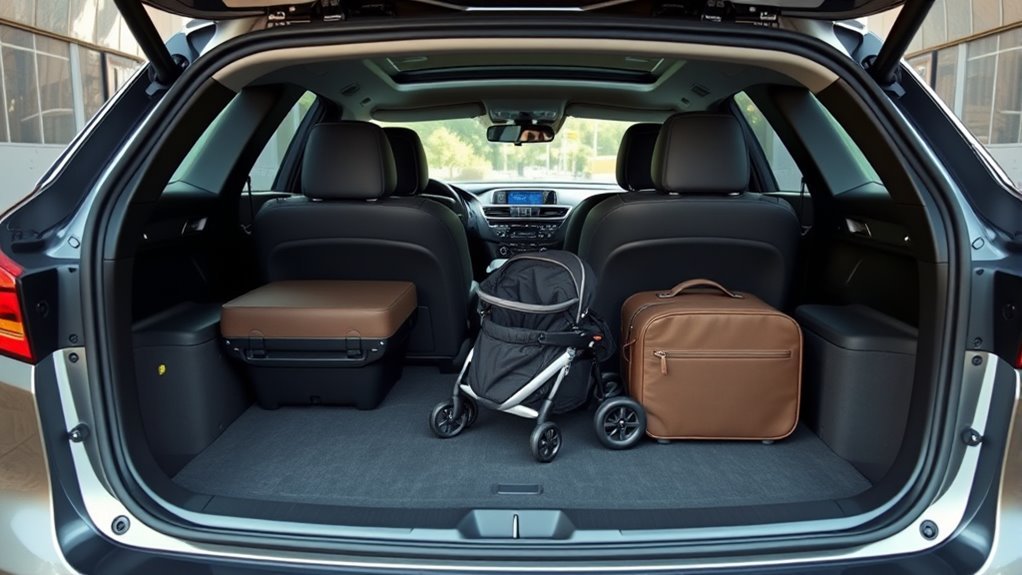
Hyundai’s current U.S. specification lists the 2026 Sonata trunk at 15.6 cubic feet. That corrects the 16.0-cu-ft figure often rounded in third-party listings. The rating is large enough to make the Sonata useful for routine family and road-trip cargo, but volume alone cannot guarantee that a particular bulky item will pass through the opening.
- For luggage: test your largest suitcase or travel bag if trunk fit is a purchase priority.
- For strollers: check both folded length and height, not only cubic-foot capacity.
- For long items: use the standard 60/40 split-folding rear seat and confirm the seatback opening is wide enough.
- For family trips: load the actual child-seat, stroller, and luggage combination before assuming all three will fit comfortably.
2026 Sonata vs. Elantra SE: Interior and Cargo Comparison
The larger Sonata does not win every rear-seat measurement. Hyundai lists the 2026 Sonata with 104.4 cu ft of passenger volume and 15.6 cu ft of trunk capacity, versus 99.4 cu ft and 14.2 cu ft for the 2026 Elantra. The Sonata also has much more front legroom at 46.1 inches versus 42.3 inches. However, the Elantra lists 38.0 inches of rear legroom, compared with the Sonata’s 34.8 inches.
| 2026 interior measurement | Sonata | Elantra SE |
|---|---|---|
| Passenger volume | 104.4 cu ft | 99.4 cu ft |
| Front legroom | 46.1 in | 42.3 in |
| Rear legroom | 34.8 in | 38.0 in |
| Front shoulder room | 57.9 in | 56.5 in |
| Rear shoulder room | 56.1 in | 55.6 in |
| Trunk capacity | 15.6 cu ft | 14.2 cu ft |
That makes the Sonata the better choice for drivers who value front-seat stretch-out space, overall cabin volume, shoulder room, and a larger trunk. The Elantra can make more sense when rear legroom is the main concern. Hyundai’s current 2026 Elantra specifications confirm those measurements.
[Products Worth Considering]

These custom-fit front seat covers are designed for a wide range of Toyota models, helping protect your upholstery from daily wear, scratches, pet claw marks, and spills. The thicker foam padding and heavier faux leather surface provide a smoother look and added support, while the quick-install design helps most users complete setup in minutes. They also refresh older interiors with a classic style that blends protection and a clean factory-inspired appearance.
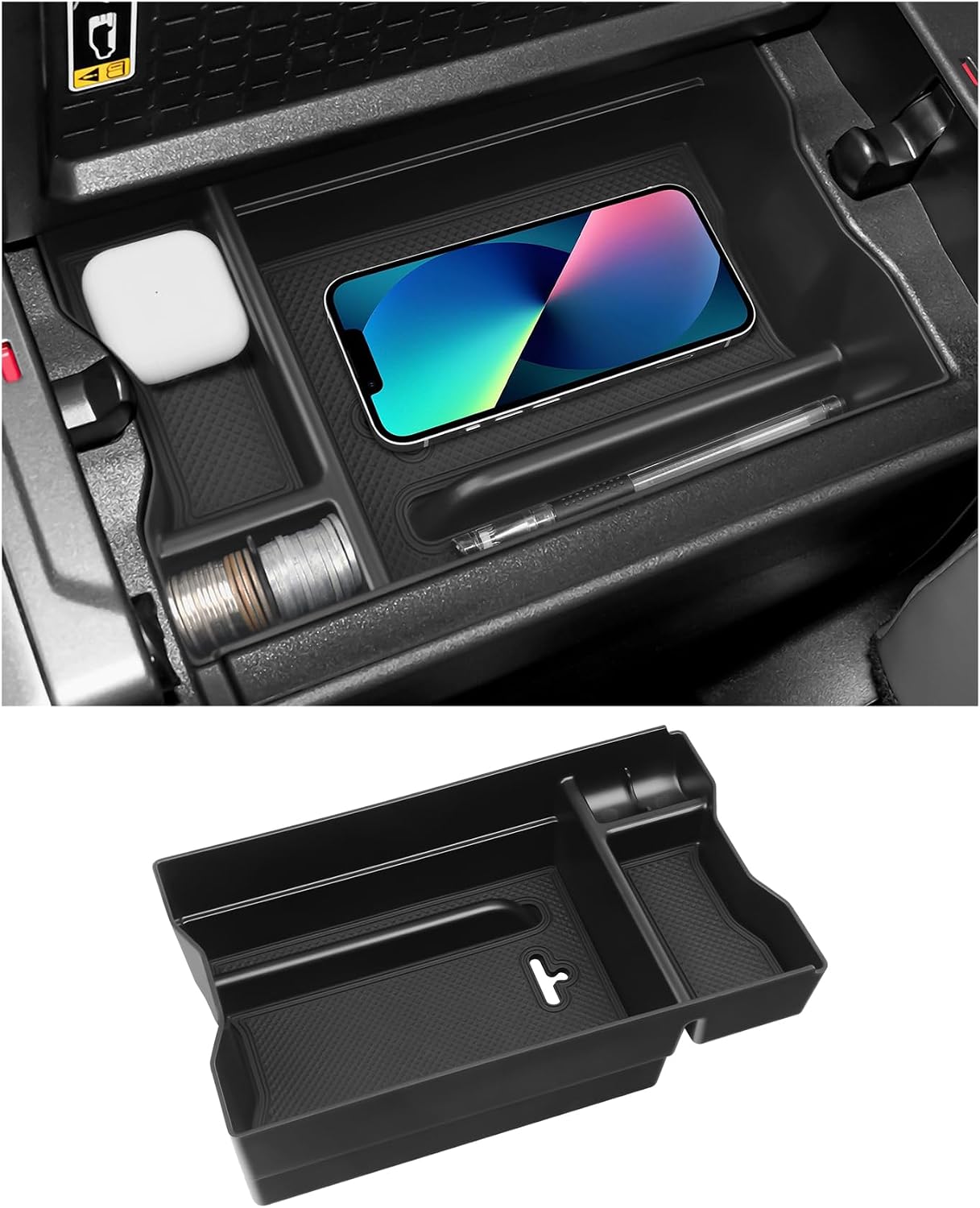
This center console organizer adds a convenient secondary storage layer to compatible Toyota RAV4 hybrid models, helping keep sunglasses, keys, coins, phones, and other small items neatly arranged. Built from durable ABS plastic with a matte finish, it fits directly into the armrest area for quick, tool-free installation and easy removal. Non-slip rubber mats help reduce sliding and noise while maximizing usable storage space inside the console.

This center console armrest cover is designed to fit the 2026 Toyota RAV4 for added comfort and a cleaner interior look. Made with breathable vegan leather and a thick cushioned feel, it helps reduce arm fatigue on long drives while protecting the console from pet paws, dirt, and sticky fingerprints. The band-secured design installs easily with no tools required and blends with the OEM-style interior.
Which 2026 Sonata Trims Change Seating Materials and Comfort?
The 2026 Sonata lineup is simpler than the original draft suggested. Hyundai lists Premium Cloth seating surfaces on SE, Blue Hybrid, SEL Sport, and SEL Hybrid. The N Line uses N unique sport seats with microfiber inserts, while the Limited Hybrid uses leather seating surfaces. Hyundai does not list leatherette as the standard seating surface for the current U.S. Sonata trims.
| Trim | Seating surface | Driver-seat adjustment |
|---|---|---|
| SE | Premium Cloth | 6-way adjustable driver’s seat |
| Blue Hybrid | Premium Cloth | 6-way adjustable driver’s seat |
| SEL Sport | Premium Cloth | 8-way power driver’s seat with power lumbar |
| SEL Hybrid | Premium Cloth | 8-way power driver’s seat with power lumbar |
| N Line | N unique sport seats with microfiber inserts | 8-way power driver’s seat with power lumbar |
| Limited Hybrid | Leather | 8-way power driver’s seat with power lumbar |
For comfort, trim differences matter more than upholstery alone: SE and Blue Hybrid use a 6-way driver’s seat, while SEL Sport, SEL Hybrid, N Line, and Limited Hybrid add an 8-way power driver’s seat with power lumbar.
Real-World Rear-Seat Comfort: Who Fits Best?
The rear seat is best judged as a two-adult-friendly bench with a usable center position, not as proof that three adults or three child seats will always fit comfortably. The 34.8-inch rear-legroom figure is the main limitation, especially behind a tall driver. Rear shoulder room is a more generous 56.1 inches, so width is less restrictive than knee room for many passengers.
Adult Comfort Assessment
Average-height adults should find the rear seat workable for normal trips, but tall passengers need a test drive because the front seat can consume rear knee clearance. The correct rear headroom figure is 37.8 inches on SE, Blue Hybrid, and SEL Sport and 37.4 inches on N Line, SEL Hybrid, and Limited Hybrid. That is lower than the 38.4-inch rear-headroom claim in the original draft.
- Rear legroom: 34.8 in on every trim.
- Rear headroom: 37.8 or 37.4 in depending on trim.
- Rear shoulder room: 56.1 in.
- Rear hip room: 54.4 in.
Child Seat Compatibility
The Sonata’s dimensions can help with child-seat planning, but they cannot confirm that one, two, or three specific restraints will fit. Seat shell width, rear-facing recline angle, front-seat position, belt-buckle location, and approved LATCH or seat-belt installation positions all matter. Hyundai lists LATCH lower anchors and upper tether anchors for the Sonata, but you should use only the anchor locations and installation methods approved in the exact owner’s manual for your vehicle and in the child-restraint manufacturer’s instructions.
A practical dealership test is to bring the actual rear-facing seat, forward-facing seat, or booster you expect to use. Install it correctly, move the front seats to normal driving positions, and confirm that doors close, buckles remain accessible, and the restraint does not depend on unapproved shared anchors. Use Hyundai’s digital owner’s manual for model-specific safety instructions.
| Child-seat concern | What to verify |
|---|---|
| Rear-facing clearance | Front passenger or driver can still sit correctly |
| LATCH position | Use only positions approved in the owner’s manual |
| Three-across fit | Test the exact restraint widths and buckle access |
| Top tether | Route and attach exactly as the restraint and vehicle manuals specify |
Long-Trip Suitability
For road trips, the Sonata’s strongest comfort case is in the front row: 46.1 inches of front legroom gives the driver and front passenger substantial adjustment range. In back, 34.8 inches of legroom means comfort depends more heavily on how far the front seats are moved rearward. The standard 60/40 split rear seat and 15.6-cu-ft trunk help when balancing passengers with luggage.
- Tall driver: prioritize the 46.1-inch front-legroom advantage and verify headroom on the exact trim.
- Tall rear passenger: test behind the normal driver position rather than behind an artificially forward seat.
- Family travel: install child restraints before evaluating remaining passenger and cargo space.
- Heavy packer: test the actual largest bags because trunk volume does not reveal opening dimensions.
Installing Child Seats and Using the 60/40 Rear Seat Safely
Do not use the 34.8-inch rear-legroom number as proof that a child restraint will fit. Install the restraint according to both manuals, then set the front seat to a safe driving or passenger position. For a rear-facing restraint, confirm the required clearance or permitted contact with the front seat based on the child-seat manufacturer’s instructions.
The Sonata’s 60/40 split-folding rear seat is useful for long cargo, but keep cargo separated from child-restraint hardware and do not route a tether around luggage. If you fold one side of the rear seat while a child restraint remains installed on the other side, confirm that the folded seatback, cargo, and restraint do not interfere with each other. Secure loose objects so they cannot become projectiles during hard braking or a crash.
[Products Worth Considering]

This frameless convex blind spot mirror helps expand your field of view for safer lane changes, passing, and merging. The HD glass design offers a clear, wide-angle rear view, while the swivel mount supports flexible positioning for cars, SUVs, trucks, vans, and RVs. Easy to install and built for all-weather use, it is a practical upgrade for everyday driving confidence.

This microfiber leather steering wheel cover adds a comfortable grip and a clean, upgraded look to your car interior. Designed for middle-size steering wheels, it helps protect the wheel from wear while offering skidproof, heat-resistant performance for more confident driving. It is easy to install and remove, making it a practical choice for everyday use.
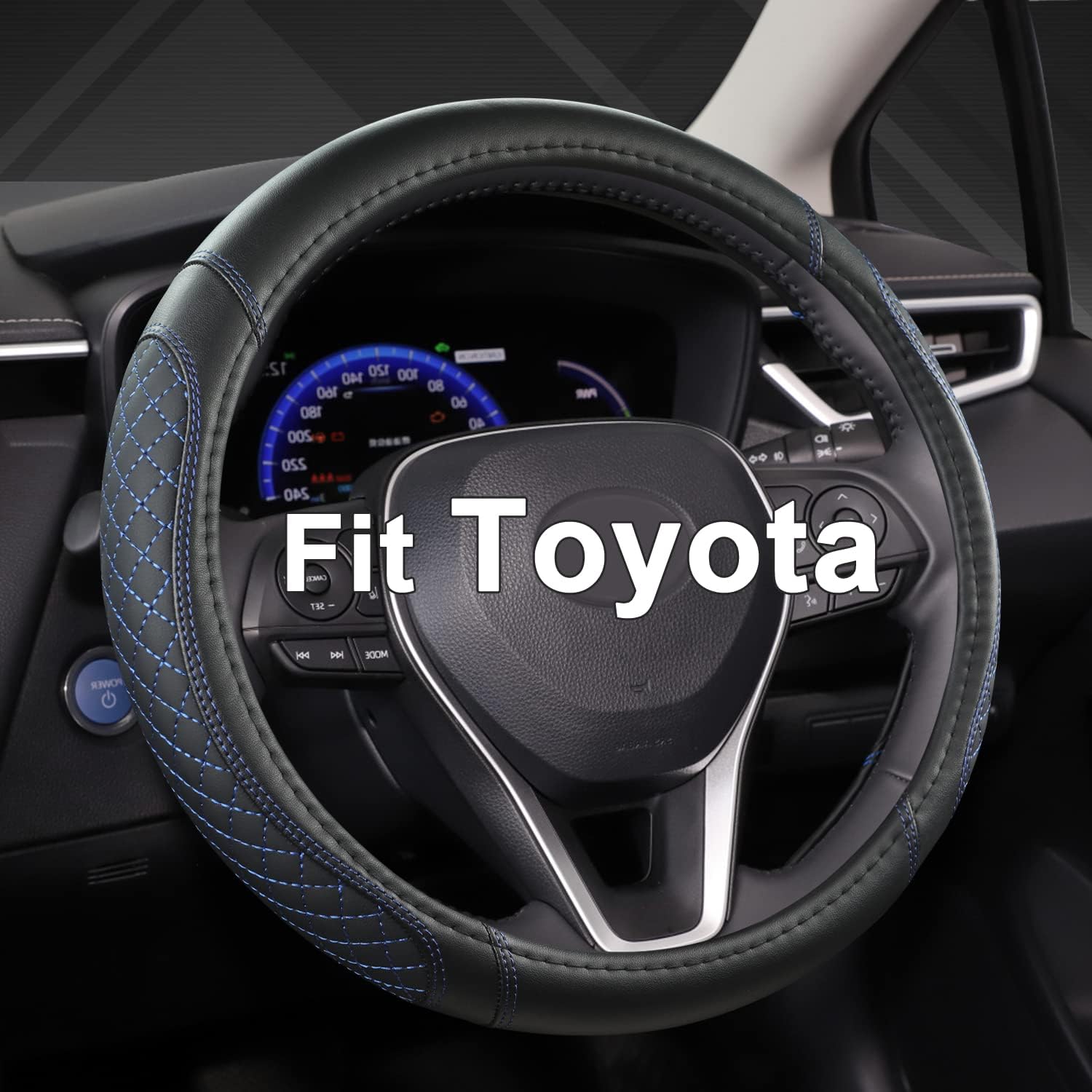
This custom-fit steering wheel cover is designed for select Toyota models and sized for standard steering wheels to help improve grip and comfort while driving. Made with soft microfiber leather and a non-slip rubber inner ring, it adds control, protects your wheel, and brings a stylish diamond-quilted look to your car interior. Installation is simple and tool-free, making it an easy upgrade for everyday driving.
Test-Drive Checklist for Checking Headroom, Legroom, and Family Fit
Manufacturer dimensions are comparison tools, not a substitute for sitting in the exact trim. Use this checklist to turn the published numbers into a real fit test.
Set the driver’s seat correctly first. Then judge rear-seat space, child-seat clearance, and cargo fit with the car configured the way your household will actually use it.
- Driver position: adjust the seat for full pedal control, a comfortable knee bend, and proper steering-wheel reach.
- Headroom: check hair, head, and torso clearance without reclining the seat farther than you normally would.
- Rear knee room: leave the driver’s seat in that real position, then sit directly behind it.
- Exact trim: remember that Hyundai lists 40.0/37.8-inch headroom on SE, Blue Hybrid, and SEL Sport, but 38.4/37.4 inches on N Line, SEL Hybrid, and Limited Hybrid.
- Child restraints: bring the actual seat when possible and follow the vehicle and restraint manuals.
- Cargo: test the largest stroller, suitcase, mobility aid, or hobby gear you routinely carry.
- 60/40 folding: confirm the split you plan to use still leaves the passenger positions you need.
Frequently Asked Questions
How Much Legroom Does a 2026 Hyundai Sonata Have?
The 2026 Hyundai Sonata has 46.1 inches of front legroom and 34.8 inches of rear legroom on every trim. The large front figure favors tall drivers, while rear-seat shoppers should test space behind their normal driver position.
Is the Hyundai Sonata a Midsize or Full-Size Sedan?
The Hyundai Sonata is a midsize sedan. For 2026 it combines 104.4 cubic feet of passenger volume with a 15.6-cu-ft trunk and seating for five.
How Much Trunk Space Does the 2026 Hyundai Sonata Have?
Hyundai lists 15.6 cubic feet of trunk capacity for the 2026 Sonata. All trims also list a 60/40 split fold-down rear seat for carrying longer items.
Does 2026 Sonata Headroom Vary by Trim?
Yes. Hyundai lists 40.0/37.8 inches of front/rear headroom for SE, Blue Hybrid, and SEL Sport, and 38.4/37.4 inches for N Line, SEL Hybrid, and Limited Hybrid. Check the exact trim rather than assuming one headroom figure applies to the whole lineup.
Is the 2026 Sonata Roomier Than the Elantra?
Overall, yes: the Sonata has more passenger volume, front legroom, shoulder room, and trunk capacity. But the 2026 Elantra has more listed rear legroom—38.0 inches versus 34.8 inches in the Sonata—so rear-passenger priorities can change which car feels roomier.
Can Three Child Seats Fit in a Hyundai Sonata?
Do not assume three child seats will fit from cabin width alone. Three-across compatibility depends on the exact restraint widths, buckle access, approved seating positions, and installation method. Test the actual seats and follow both the Hyundai owner’s manual and each child-restraint manufacturer’s instructions.
Conclusion
The 2026 Hyundai Sonata is spacious where many drivers notice it most: 46.1 inches of front legroom, 104.4 cu ft of passenger volume, and a 15.6-cu-ft trunk. The key caveat is rear space. Rear legroom is 34.8 inches, and headroom varies by trim, so taller passengers and families should not buy from the headline cabin-volume number alone.
For the best fit, compare the exact trim, set the front seats to your real driving positions, sit in the rear, install your actual child restraint if relevant, and test your largest regular cargo item. That gives you a much more reliable answer than any single cubic-foot or legroom specification.