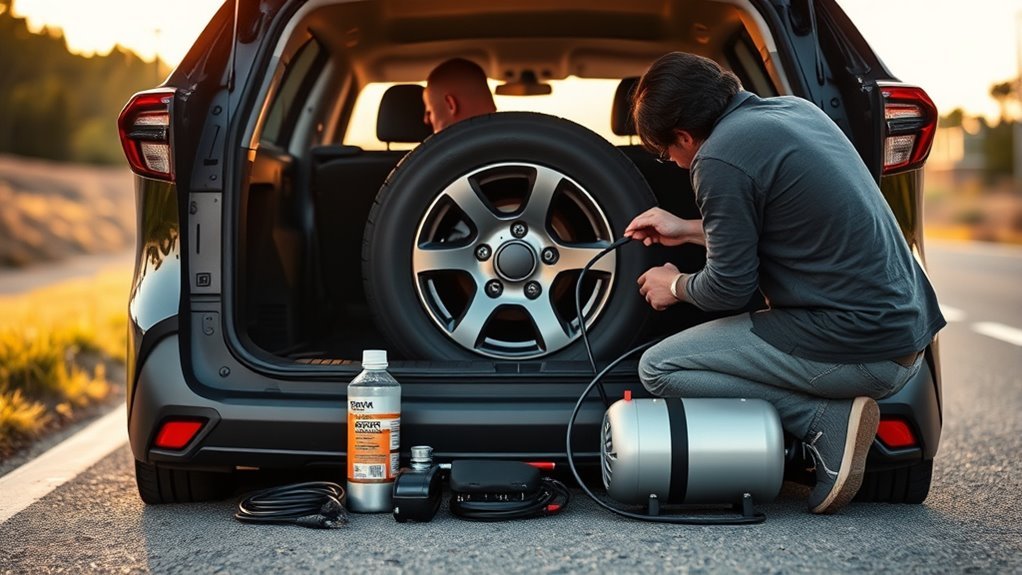
You can fix small punctures (under 4 mm) with the RAV4’s sealant bottle and compressor by stopping safely, engaging the parking brake, and confirming the rim and valve are undamaged. Screw the sealant tightly to the valve, connect the compressor to the 12V socket, run the engine or keep hybrid ready on, then inflate within ten minutes while monitoring the gauge. Drive gently up to 2–3 miles at under 50 mph, recheck pressure, and follow up at a Toyota center for inspection if you want full procedure details.
Can I Use the Toyota RAV4 Tire Repair Kit?
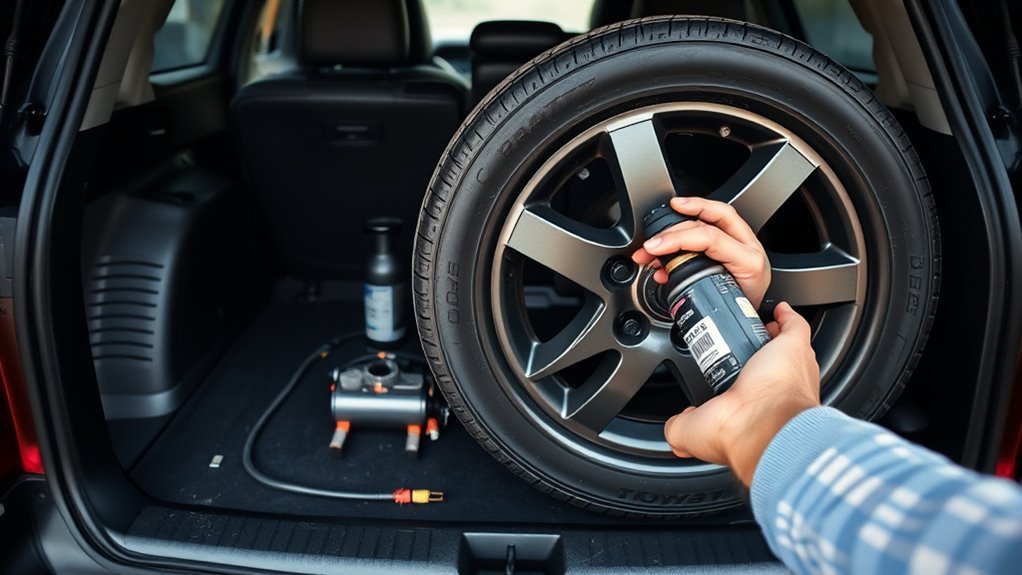
Can you use the Toyota RAV4 Tire Repair Kit? Yes — if the puncture is under 4 mm and the rim’s intact. Inspect the damage visually; don’t attempt repair for sidewall tears or rim distortion. Retrieve the kit (compressor and sealant), place the vehicle on level ground, engage parking brake, and keep the engine running or hybrid ready light on while you run the compressor.
Connect the sealant hose to the tire stem, follow kit flow-direction markings, and operate the compressor until the gauge reaches the recommended pressure. These procedural steps replace roadside wheel changes, saving weight and improving fuel efficiency. After sealing and inflating, drive 2–3 miles at reduced speed (under 50 mph) to distribute sealant evenly, then proceed to a Toyota center for inspection.
Use tire maintenance tips and puncture prevention techniques thereafter: maintain proper pressure, inspect tread, avoid debris, and choose defensive routes. This preserves mobility and affirms your autonomy on the road.
Stop Safely and Check: Valve, Hole Size, Rim Damage
After you’ve pulled over to a safe spot and set the parking brake, switch on your hazard lights and inspect the tire immediately. You’ve secured a safe location; begin a focused tire assessment. Confirm the valve isn’t leaking by listening or feeling for air. If the tire’s been flat a long time, note that sealing may fail.
- Measure hole size: visually estimate or use a probe; do not use the repair kit if the puncture exceeds 4 mm.
- Inspect rim condition: look for bends, cracks or corrosion that will prevent a proper seal or make driving unsafe.
- Confirm recent flat time: prolonged deflation can deform the bead or inner structure, invalidating the kit.
If any check fails — hole >4 mm, rim damaged, or long-term flat — don’t attempt the kit. Seek professional repair or replacement to regain freedom of safe mobility.
Attach the RAV4 Tire Repair Kit: Sealant Bottle & Compressor
Start by firmly attaching the sealant bottle to the tire valve, making certain the connector is tight and sealed so no product leaks during application. Secure the bottle with steady pressure and confirm the coupling seats fully; different sealant types may have varied nozzle fittings, so match components before you proceed. Plug the compressor into the car’s auxiliary socket and verify power: keep the engine running or the hybrid ready light on to guarantee consistent compressor operation. Inspect compressor features—pressure gauge, on/off switch, and hose routing—so you control the flow without improvisation. Begin the transfer sequence only when connections are verified; a loose connection wastes sealant and freedom. Monitor the process visually and by gauge readout, keeping the cycle short and controlled. Once the sealant is delivered and connections are stable, disconnect per kit instructions, reinstall the valve cap, and place the sticker on the wheel and A-pillar to indicate sealant use.
Inflate, Test Pressure, and Stay Within the 10‑Minute Limit
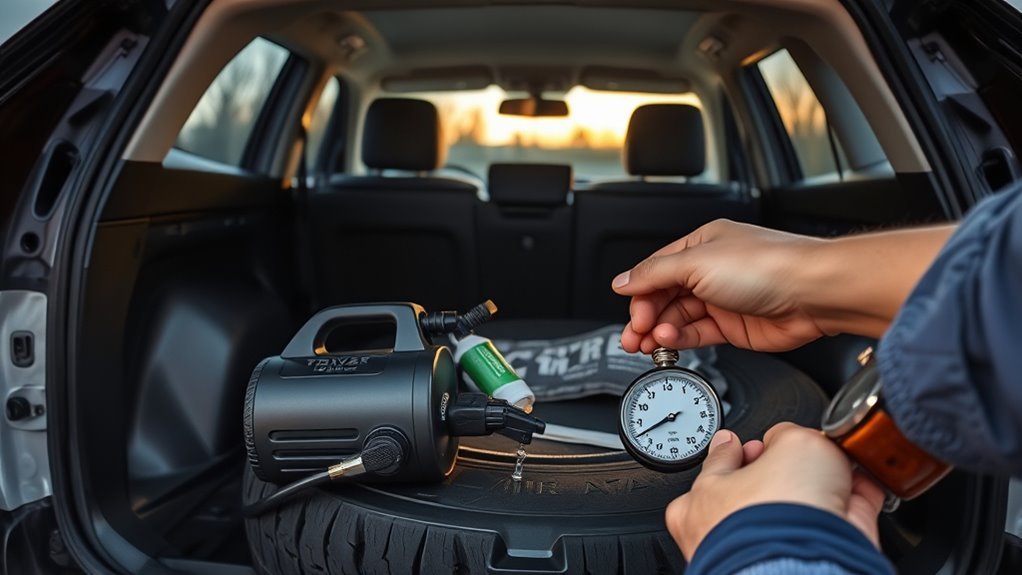
Start the engine (or guarantee the hybrid ready light is on) before you operate the compressor. Monitor the pressure gauge and press the compressor’s yellow button to read accurate pressure as you go, aiming to reach the required minimum. Keep inflation under ten minutes to guarantee proper sealant distribution and, if you don’t reach minimum pressure, contact the AA for recovery.
Start Engine Before Inflating
Before you inflate the tire, run the engine (or verify the hybrid “ready” light is on) so the compressor gets full power; then connect the compressor, press the yellow button to check pressure, and monitor the gauge as you inflate. Confirm engine readiness to maximize compressor efficiency and prevent battery drain. Work deliberately and stay within the 10‑minute inflation window.
- Connect compressor, tighten hose, reinstall valve cap after sealant removal.
- Press yellow button to test pressure; watch gauge and hold steady until target reached.
- If minimum pressure isn’t reached within 10 minutes, stop and contact the AA for recovery.
You’ll act decisively, secure mobility, and avoid wasted effort by following this procedural checklist.
Monitor Pressure Regularly
When inflating, keep the engine running (or the hybrid ready light on) and use the compressor’s yellow test button to check pressure frequently, stopping once the gauge shows the required minimum; the compressor should reach that pressure within 10 minutes, so monitor elapsed time and halt attempts and call the AA for recovery if you don’t hit the minimum within that window. You’ll attach the hose, start the compressor, and watch the gauge continuously: this is disciplined tire maintenance. Press the yellow test button at intervals to confirm attained pressure; don’t rely on feel. If you reach minimum, shut off, remove the hose, reinstall the valve cap, and stow equipment. If you can’t reach pressure in the allotted time, stop and summon professional recovery.
Adhere To Ten‑Minute Limit
Because the compressor draws power from the running engine (or the hybrid ready light), keep it on and begin inflation immediately, watching the gauge and using the compressor’s yellow test button to confirm pressure — you must reach the required minimum within 10 minutes; if you don’t, stop and call the AA for recovery. Stay focused: this is about effective tire maintenance and swift action.
- Start compressor while engine/ready light is on; follow inflation techniques and monitor gauge continuously.
- Use the yellow test button after inflation to verify you’ve met the required minimum; reinstall valve cap after removing sealant bottle.
- If pressure isn’t reached within 10 minutes, cease attempts and contact the AA for recovery — avoid damaging the compressor or worsening the tire.
Act decisively to maintain mobility and freedom.
Drive 2–3 Miles, Then Recheck Pressure and Tire Condition
Drive 2–3 miles at under 50 mph and drive gently so the sealant can spread evenly inside the tire. When you stop, check the pressure immediately using the compressor’s yellow button to confirm it’s within the recommended range. Visually inspect the tire for cuts, bulges, or other abnormalities and contact the AA if you find any damage.
Check Pressure Immediately
After driving 2–3 miles to let the sealant spread, stop and immediately check the tire pressure using the compressor’s yellow button to confirm it meets the minimum required level. You’ll use the pressure gauge built into the compressor; note the reading and compare it to the vehicle’s specified minimum. If the reading’s low, call the AA for recovery — don’t push beyond 50 mph or keep driving aggressively. Maintain a liberating mindset: control the situation, not the hazard.
- Verify pressure gauge reading and log value.
- If below minimum, request AA recovery; avoid further risk.
- If adequate, continue gently to a Toyota center for full tire maintenance inspection.
Inspect Tire For Damage
1–2 miles is enough to let the sealant spread, so proceed at a slow, steady pace while monitoring the tire’s behavior and keeping speeds well below 50 mph. Drive 2–3 miles, observing steering, vibration, and handling; you’re performing essential tire maintenance and asserting control. After that distance, stop safely and use the compressor’s yellow button to recheck pressure. Compare the reading to the minimum requirement; if pressure’s adequate, perform a visual inspection for cuts, bulges, nails, or abnormal wear. Follow safety precautions: avoid high speeds, don’t overload the vehicle, and wear gloves if you remove debris. If the tire shows damage or pressure remains low, don’t improvise repairs—contact the AA for professional assistance to reclaim your freedom on the road.
Troubleshoot Pressure Loss and When to Call Recovery or Toyota
If the compressor won’t bring the tire up to the minimum pressure when you check with the yellow button, stop and call the AA for recovery rather than continuing to drive. Perform pressure troubleshooting by rechecking with the yellow button; if pressure remains below minimum, don’t drive. If the puncture is larger than 4 mm or the rim is damaged, arrange recovery assistance immediately.
- Recheck pressure: use yellow button, confirm reading; if low, inspect visually for damage.
- Drive test: if you must, limit speed to 50 mph and go 2–3 miles only; reassess tire condition.
- Call for help: contact the AA for recovery or Toyota if pressure stays low, damage is evident, or puncture >4 mm.
You’ll act decisively and preserve control: avoid further damage, avoid roadside risk, and get professional inspection at a Toyota center. Follow these steps to secure mobility and liberate yourself from escalation.
Frequently Asked Questions
How Long Can You Drive After Using a Tyre Repair Kit?
You can drive 2–3 miles after using the tire repair kit; don’t exceed 50 mph. You’ll monitor tire safety, respect repair limits, and inspect for damage—if concerned, stop and call the AA for professional assistance.
Conclusion
You can use the RAV4 tire repair kit for small punctures only—follow the checklist, attach the sealant bottle and compressor exactly as instructed, and inflate to the recommended PSI. Stop, inspect valve and rim, and don’t exceed the 10‑minute sealant run time. Drive 2–3 miles, recheck pressure and condition, and troubleshoot any loss. If pressure drops or damage is obvious, call recovery or Toyota—don’t gamble with your safety; one wrong move could wreck your day.