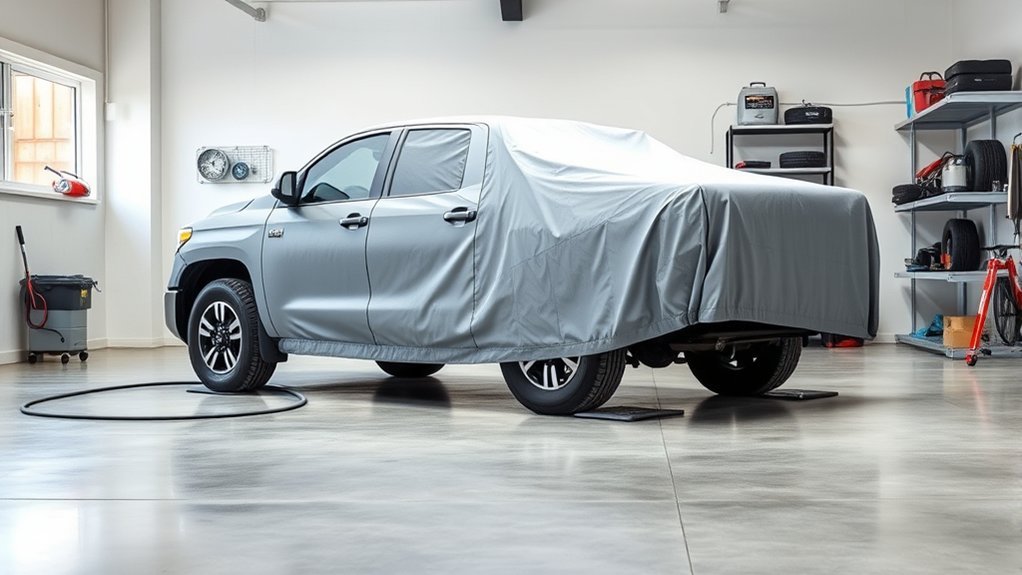
When storing your Toyota Tundra long-term, prep it methodically: change oil and fluids, fill the tank with Top Tier ethanol-free fuel and stabilizer, and disconnect the battery or hook up a trickle charger. Inflate tires to about 45 psi and cover the truck with a waterproof, UV-safe cover; seal vents and use rodent deterrents. Start and run the engine periodically, keep insurance and registration sorted, and follow a checklist so it’s ready when you return—more detailed steps follow.
Immediate Prep Checklist for Tundra Storage
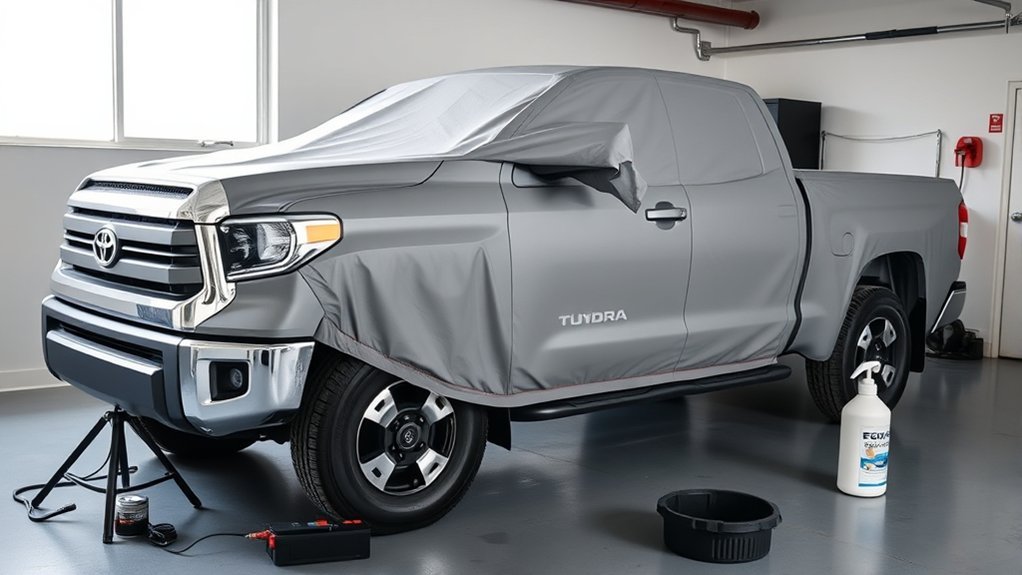
Before you tuck your Tundra away, take a few targeted steps to lock in reliability and prevent damage: change oil, coolant, and brake fluid so contaminants won’t corrode systems during storage duration. Fill the gas tank, add a fuel stabilizer, and use Top Tier, ethanol-free fuel where possible to keep lines and injectors clean. Disconnect the battery or hook up a trickle charger to stop drain and preserve battery life. Inflate tires to 45 psi to avoid flat spots and consider tire covers for UV protection. Clean the truck inside and out, remove perishables, and seal vents to discourage pests; place deterrents like mothballs in the cab and engine bay to block rodents. Secure parking with locks, an alarm, or wheel locks to enhance vehicle security and deter theft while you’re free to pursue other goals. These steps give you a concise, practical checklist so your Tundra waits ready when you return.
Tundra Engine, Fluids & Fuel Care
When you store your Tundra, treat the engine and fluids as your first line of defense: perform an oil change with fresh oil to remove contaminants that could corrode internals while it sits. Top off coolant and brake fluid to prevent moisture buildup and corrosion, and verify levels are within spec. Fill the tank with Top Tier fuel, add the correct fuel stabilizer, and mix—this preserves fuel quality for up to two years and stops varnish and gumming. Start the truck every couple weeks and run it 15–20 minutes to circulate oil, keep seals pliable, and maintain lubrication; this also helps the charging system. You’ll either disconnect the battery or attach a smart trickle charger to avoid drainage during storage. These steps in routine engine maintenance keep you free from avoidable repairs and give you confidence when you reclaim the road—practical, deliberate measures that protect performance without tying you down.
Battery, Tires & Brake Protection
Although the engine gets most attention, you’ll also need to protect the battery, tires and brakes to avoid surprises when you return: disconnect the negative battery terminal to prevent drainage, and hook up a battery maintainer if you have power. Run the engine about 15 minutes monthly to circulate fluids and help battery maintenance if a maintainer isn’t available. Inflate tires to 45 psi before storage to reduce flat spots, then check pressure and condition periodically. Shield brakes from rust by covering wheels with plastic bags and, if possible, taking a short drive every few weeks to exercise pads and keep components lubricated. For extended storage, inspect the battery periodically and be prepared to replace it on retrieval to guarantee reliable starting. These steps free you from avoidable setbacks: secure charge, firm tires, and rust-free brakes let you reclaim mobility on your schedule without extra hassle.
Weather & Pest Protection (Covers, Drains, Deterrents)
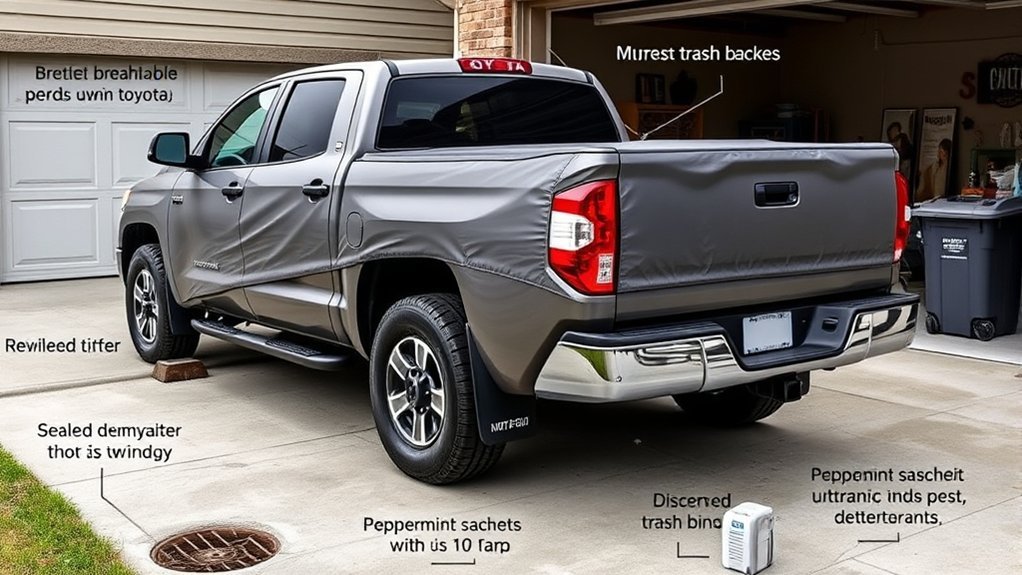
Choose a high-quality, waterproof cover that fits snugly to keep out moisture and UV while allowing some breathability to prevent trapped condensation. Clear sunroof drains and inspect door and hatch seals so water can’t pool or seep into the cabin and cause mold or rust. Place rodent deterrents in the cab and engine bay, check for animal activity regularly, and refresh repellents and wheel covers every six months for ongoing protection.
Cover Selection & Fit
Anyone storing a Tundra outdoors should use a high-quality, weatherproof cover sized for the truck and fitted snugly to prevent water pooling and wind lift. Choose breathable car cover materials per fitment guidelines so moisture won’t trap under the fabric. Fit snugly around mirrors and tailgate; secure straps prevent flapping and tear-through. Place natural rodent deterrents inside the cab and around the frame, and refresh them every six months.
| Feature | Purpose | Action |
|---|---|---|
| Weatherproof fabric | Rain/UV protection | Pick outdoor-rated cover |
| Breathable layers | Prevent mold/rust | Use ventilated materials |
| Secure straps | Prevent wind lift | Fasten undercarriage straps |
| Pest deterrents | Keep rodents out | Replace biannually |
Inspect the cover periodically and adjust tension to maintain protection and freedom from maintenance surprises.
Drain & Seal Maintenance
When you store your Tundra, sealing and maintaining drains is as important as picking a good cover: clogged sunroof and cowl drains let water pool and invite rust, mold, or even interior flooding. You’ll use a waterproof cover, but you must also do routine drain cleaning and seal inspection. Clear leaves and debris from sunroof drains, cowl channels, and around tires; run water through each drain to confirm flow. Inspect rubber seals on doors, trunk, and sunroof for cracks or hardening; replace or treat them to keep moisture and pests out. Cover wheels with plastic to limit brake rust. Work steadily, set a schedule, and you’ll free yourself from future corrosion and interior damage while your Tundra rests.
Rodent & Insect Deterrents
Although you’ll be protecting the Tundra from the elements with a waterproof cover, you also need to block pests and reduce interior humidity to prevent nests and chewed wiring. Seal openings in the cabin and engine bay so rodents can’t exploit gaps; inspect drain plugs and access panels. Use mothballs around the perimeter and in discreet containers inside the cab as a chemical deterrent, and refresh them every six months. Place moisture-absorbent packs and dryer sheets to lower humidity and disrupt nesting habits—these act as simple scent barriers and make the interior less inviting. Regularly check the storage site for animal activity, replace deterrents on schedule, and keep vegetation trimmed so you reclaim control and protect wiring and trim.
Insurance, Registration & Storage Costs
If you’re putting your Tundra into long-term storage, you’ll want to sort insurance and registration before you lock the doors. Tell your insurer the vehicle will be stored; you may qualify for insurance discounts but keep the policy active to cover theft, fire, or damage—homeowners insurance often won’t. Check registration requirements in your state: some jurisdictions let you mark a vehicle inactive to avoid fees, others don’t.
Budget realistically. Expect roughly $800 for insurance over two years and about $150 per month for storage, which adds to approximately $3,600 for parking. Factor in maintenance and incidental costs; total two-year expenses can reach about $5,350. Keep clear records of notifications to your insurer and DMV, policy terms, and storage receipts. This lets you minimize wasted payments, protect your asset, and stay compliant without sacrificing freedom. Review policies annually and adjust coverage or registration choices as laws or your plans change.
Getting Your Tundra Back on the Road
When you’re ready to bring your Tundra out of storage, start by reconnecting the battery and charging it to full capacity. Check and change the oil and filter, then inspect and top off coolant, transmission, and brake fluids. Finish with a thorough test drive to clear the brakes, verify systems like A/C and engine performance, and look for any critter damage or debris.
Reconnecting The Battery
Before you reconnect the battery, make sure your Tundra is clean and dry so terminals won’t corrode and connections will be secure. Start with basic battery maintenance and terminal cleaning: remove any crust or residue, wear gloves, and use a wire brush or terminal cleaner. If the battery was stored separately, check voltage with a multimeter and top it up with a charger if it’s low. Reconnect the positive (+) terminal first, then attach the negative (–) terminal to prevent shorts. Tighten clamps snugly—don’t overdo it. Start the engine and let it idle for a few minutes so systems and electronics reinitialize. After driving, inspect connections for corrosion and tightness; regular checks keep you free to move when you choose.
Fluid Checks And Changes
With the battery reconnected and the engine run briefly, move on to fluid checks and any needed changes so your Tundra will run reliably after storage. Check oil, coolant, brake fluid, transmission fluid, and windshield washer reservoir against the maintenance schedule. If you changed oil before storage, confirm level and color; if stored over three months, change oil again to remove contaminants. Top off coolant and brake fluid to recommended marks and inspect for leaks. Add a fuel stabilizer to a full tank to prevent degradation for up to two years and protect fuel system components. Fill washer fluid with quality solution to prevent freezing and keep visibility clear. Treat fluid types deliberately to regain freedom on the road.
Test Drive And Inspection
Start by reconnecting the battery or fuses and ensuring the battery holds a charge—use a dedicated charger or tester if needed—then verify all fluid levels (oil, coolant, brake fluid) and top them to spec. Check tire pressure and inspect for flat spots or damage. Start the engine, listen for unusual noises, and monitor for leaks. Drive at least 30 minutes to fully warm the engine and confirm brake functionality and HVAC performance.
| Check | Action |
|---|---|
| Battery | Verify charge, secure connections |
| Fluids | Confirm levels, top to spec |
| Tires | Adjust PSI, inspect wear |
| Drive | 30+ min, warm engine |
| Observe | Leaks, noises, brake response |
If you find issues, address them immediately so your Tundra stays free and ready.
Frequently Asked Questions
How to Store a Truck for 6 Months?
Change fluids, add fuel stabilizer, inflate tires to 45 psi for tire care, disconnect or hook up a battery maintainer for battery maintenance, cover the truck, check registration/insurance, and inspect periodically to protect your freedom to go.
Should I Have a Tundra for a Long-Term Vehicle?
Yes — you’ll get Tundra benefits and long term reliability if you value durability, towing and space. You’ll budget for maintenance and fuel, but you’ll gain freedom, confidence and resale strength that supports lasting ownership.
Should I Put My Car on Blocks for Storage?
Yes — you should put it on blocks to aid tire maintenance and prevent flat spots; inflate tires to about 45 psi, avoid jackstands to protect suspension support, and check pressure periodically so your vehicle stays ready and free.
Conclusion
You’ve prepped your Tundra methodically, but remember: an ounce of prevention is worth a pound of cure. Recheck fluids, top off fuel, disconnect or maintain the battery, inflate and rotate tires, and secure brakes and pest barriers before covering. Confirm insurance and registration, note storage costs, and document procedures. When it’s time to drive, follow the reactivation checklist—inspect, reconnect, and test—so your truck starts reliable and ready, not surprised.