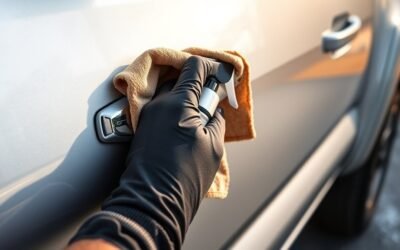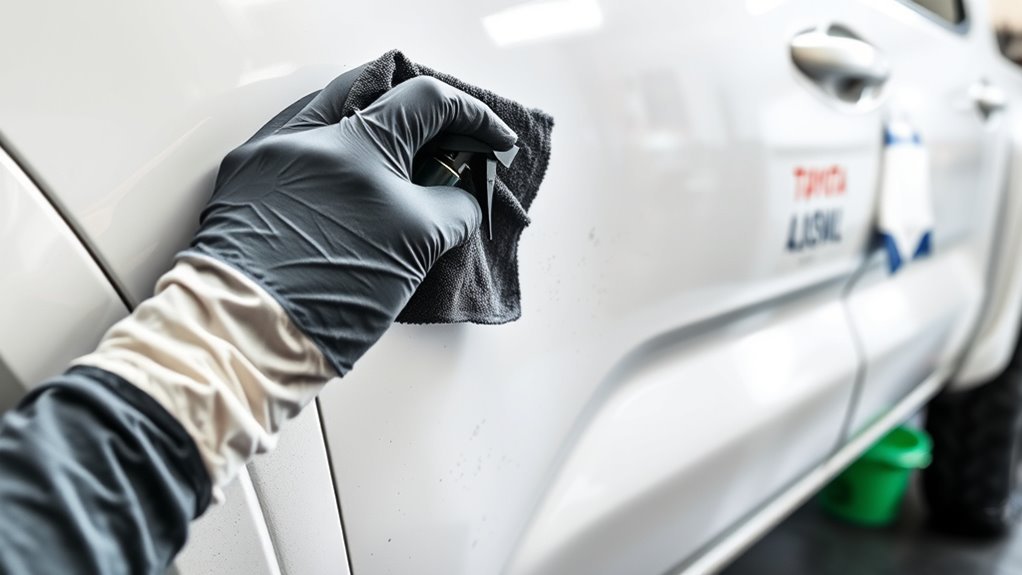
You can quickly remove road tar from your Toyota Tacoma by washing the panel, masking nearby trim, and testing a remover on a hidden spot; spray Turtle Wax Bug & Tar (or WD‑40 if needed), let it sit briefly, then wipe gently with a microfiber cloth using light pressure to avoid swirls. Rinse, repeat for stubborn spots, then wash, clay if needed, and reapply wax or sealant to protect the paint — keep going for detailed steps and comparisons.
Quick Fix: Remove Fresh Tar From Tacoma Paint
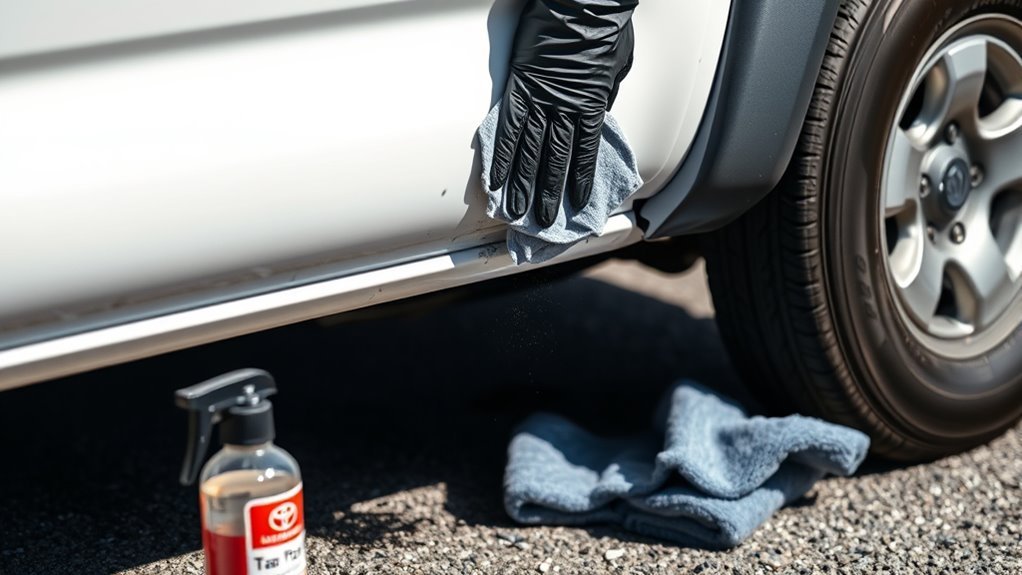
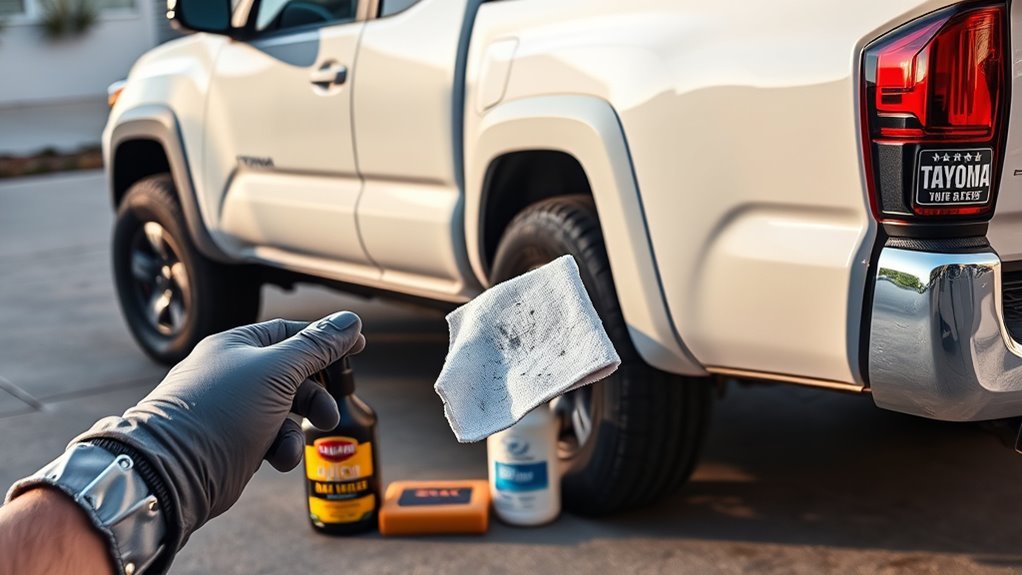
If you catch fresh tar on your Tacoma, act quickly: spray Turtle Wax Bug and Tar Remover onto the spot, let it cling for a few minutes, then wipe gently with a microfiber cloth to lift the tar without scratching the paint. You’ll work deliberately: target the blemish, let the product loosen the bond, and use light pressure to avoid swirl marks. If Turtle Wax isn’t on hand, you can substitute WD-40—spray, wait, then rub softly until the tar breaks free. After removal, wash the area with soap and water to remove any solvent residue. Finish by reapplying a quality wax or paint sealant to restore protection and shine; this step closes the loop between tar removal techniques and tar prevention methods. You’ll free your Tacoma from sticky deposits while asserting control over maintenance, keeping the finish resilient and ready for the road without needless fuss.
Prep First: Wash, Mask, and Test a Small Area
Start by washing your Tacoma thoroughly to remove grit that could scratch the paint when you work on tar spots. Mask the surrounding panels and trim with painter’s tape so solvents like Turtle Wax Bug and Tar Remover or WD-40 only contact the affected area. Test your chosen product on a small, hidden spot and let it sit a few minutes to confirm it won’t harm the finish before treating visible tar.
Wash Thoroughly First
Before you tackle stubborn tar, wash your Toyota Tacoma thoroughly with a gentle car soap and soft sponge to remove grit that could scratch the paint during treatment. You’ll clear surface contaminants so cleaning techniques work efficiently and won’t embed particles under tar removers. Rinse well, concentrate on tar‑prone zones, and repeat if water beads or dirt remains. Let the panel dry completely; moisture dilutes products and hides residue. Once dry, you’re ready to test a removal product on a small, inconspicuous patch to confirm compatibility with your paint protection. This stepwise, product-aware approach frees you from guesswork and reduces risk—practical liberation that preserves finish integrity and prepares the vehicle for safe, targeted tar removal.
Mask Surrounding Areas
1. Mask surrounding areas before you apply any tar remover. You’ve washed and dried the panel, so use precise masking techniques: lay masking paper over trim, badges, and adjacent panels, securing edges with painter’s tape. Make tape application tight but gentle—press edges down to prevent seepage without lifting delicate paint. Work methodically from the center outward, covering only what’s necessary to stay efficient and liberated from worry. Wear gloves and stay in a ventilated space while masking. Inspect the surface for stray moisture or gaps; reapply tape if any edge lifts. This disciplined prep keeps solvents confined to the target zone and protects finishes, chrome, and rubber, letting you proceed confidently to the next step without risking collateral damage.
Test Product On Paint
With the area masked and cleaned, you’ll want to test your chosen tar remover on a small, inconspicuous spot to confirm it won’t harm the Tacoma’s finish. Pick a hidden panel, apply a drop, and follow product directions for dwell time. This patch testing proves product compatibility and frees you from guesswork.
| Before | After |
|---|---|
| Anxiety | Control |
| Risk | Confidence |
| Doubt | Freedom |
After the dwell time, gently wipe and inspect for discoloration or softening. If safe, proceed to treat the tar spots; if not, choose an alternative formulated for automotive clear coat. Rinse the test area, then reapply wax or sealant to restore protection. Your careful test preserves finish and empowers decisive action.
Use Turtle Wax Bug & Tar Remover: Step-by-Step
Shake the Turtle Wax Bug & Tar Remover can well, then spray it directly onto the tar spots and let it sit for a few minutes so the solvent can penetrate the residue. You’ll be using a focused tar removal technique that frees your Tacoma’s finish without fuss. After dwell time, grab a clean microfiber cloth and wipe gently; don’t scrub hard or you’ll risk abrasion. Reapply product sparingly on stubborn patches and repeat wiping until the tar lifts away.
Once the tar’s gone, rinse the area thoroughly with water to remove any remaining solvent and loosened material. Dry with a soft towel, then restore protection by reapplying a quality wax or sealant—this final step locks in shine and resistance. These product recommendations and steps keep you efficient and empowered: precise actions, minimal waste, clear results, and your paint liberated from sticky road grime.
Use WD‑40 Safely When You Have No Specialty Product
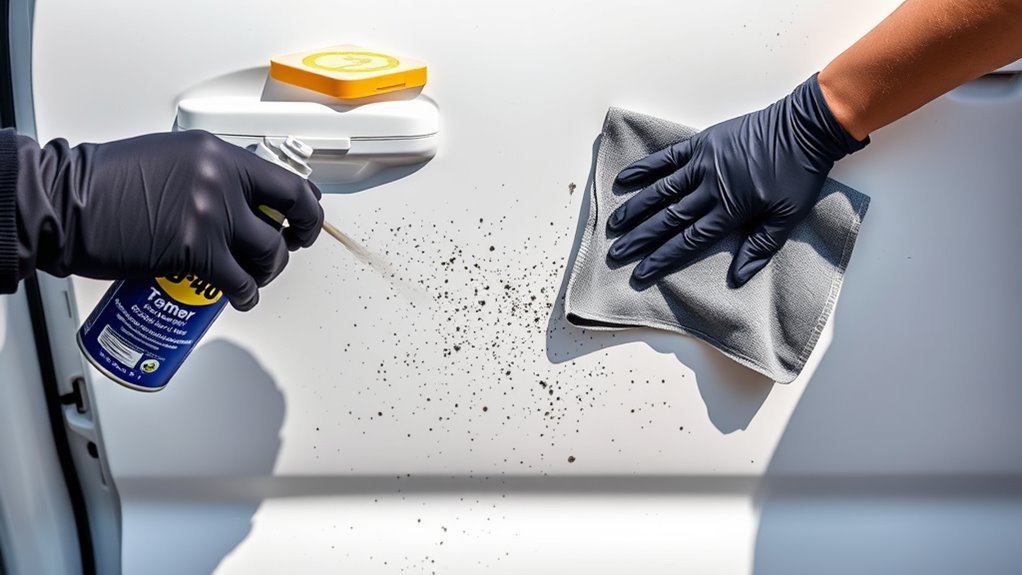
If you don’t have a specialty tar remover on hand, WD‑40 can break down sticky road tar quickly—spray the spot, let it sit for about a minute, then gently wipe with a clean microfiber to lift the residue. Use WD 40 benefits to your advantage: it penetrates and loosens tar so you don’t have to grind at the paint. Test first on an inconspicuous panel to confirm compatibility.
For older, set‑in tar, repeat spray-and-wait cycles and apply light, controlled scrubs with the microfiber. Those application tips keep you efficient and protect the finish. After tar’s gone, wash the area with car soap to remove oily residue, then reapply wax or sealant to restore protection. Work patiently, not aggressively — liberation here means freeing your paint without risking damage. Keep a can of WD‑40 as a practical backup, but reserve it for when specialty products aren’t available and you need reliable, straightforward results.
Comparing Options: Turtle Wax vs WD‑40 vs Goo Gone
When choosing between Turtle Wax, WD‑40, and Goo Gone, you’ll want to weigh raw effectiveness against how each product interacts with your Tacoma’s paint. Turtle Wax clings and dissolves set‑in tar fastest, WD‑40 is handy for fresh spots but may need more scrubbing, and Goo Gone breaks down sticky residue with a slightly different application. Whatever you use, prep the surface, test a hidden spot for safety, then wash and reapply wax or sealant afterward.
Product Effectiveness Comparison
Although all three products can remove road tar, you’ll get the quickest, cleanest results by matching product to the tar’s condition: product longevity, application techniques matter. For fresh deposits, WD-40 penetrates and loosens tar quickly; you’ll spray, let it sit briefly, then wipe with light pressure. Turtle Wax Bug and Tar Remover, thicker and adhesive, excels on older, set-in spots—apply generously, let dwell, then lift with minimal scrubbing, offering superior long-term effectiveness. Goo Gone targets sticky residues well but demands a post-wash to protect paint; use it for small, tacky areas. You’ll choose WD-40 for speed, Turtle Wax for stubbornness and durability, and Goo Gone for delicate tack—each selected by condition, not habit.
Surface Safety & Prep
Because heat softens both tar and paint, always work on a cool surface and in the shade to avoid damage and uneven removal. Begin surface preparation by confirming the panel is cool to the touch; this protects paint protection and lets products perform predictably. Choose Turtle Wax Bug and Tar Remover when clinging action is needed for stubborn spots; it reduces effort and risk. Use WD-40 for fresh tar—it’s accessible but may need more scrubbing on older deposits. Try Goo Gone for tough dissolution, but test an inconspicuous spot first to guarantee no finish harm. After any treatment, wash the area thoroughly, remove residues, and reapply wax or sealant to restore paint protection. Work deliberately, respect the surface, and reclaim control of your Tacoma’s finish.
Stubborn Tar: Agitation, Tools, and Repeat Techniques
Start by softening the tar with your chosen product—Turtle Wax Bug and Tar Remover, WD‑40, or a dedicated tar solvent—and let it sit long enough to loosen the bond while working in shade so it won’t evaporate too fast. Use focused agitation techniques with a soft cloth or microfiber towel, rubbing gently in small circles to lift softened tar without abrading paint. For set‑in spots, practice careful tool selection: a plastic scraper or an expired credit card lets you pry edges free without scratching. Expect repeats—apply, wait, agitate, and retry until the blemish releases. Stay patient; multiple passes are normal.
| Task | Purpose |
|---|---|
| Product soak | Loosen bond |
| Microfiber rub | Safe agitation |
| Plastic scraper | Lift set‑in tar |
| Repeat cycles | Guarantee full removal |
You’re breaking free from stubborn stains by using deliberate, product-aware steps that respect your Tacoma’s finish.
Aftercare: Wash, Clay If Needed, and Reapply Wax/Sealant
Once you’ve removed the tar, wash the area with a pH‑balanced car shampoo and plenty of clean water to strip any solvent residue and loosened debris. Rinse thoroughly and dry; you’re clearing the stage for true paint protection and final tar removal techniques. Check for missed spots and treat them before proceeding.
- If the paint feels rough, use a quality clay bar kit to remove embedded contaminants — work in small panels, lubricate, and inspect.
- After claying, wipe the surface with an isopropyl blend or quik detailer to guarantee no oils remain.
- Choose a proven wax or synthetic sealant compatible with your Tacoma’s finish; apply per product instructions for even coverage and cure time.
- Buff to a uniform gloss and recheck edges where tar liked to hide.
You’ll free your paint and reclaim control. Reapplying wax/sealant restores barrier function, aids future tar removal, and aligns with durable paint protection strategies.
Prevent Future Tar and Simple Maintenance Tips
If you want to minimize future tar headaches, keep a consistent maintenance routine: wash your Tacoma after long trips or when you’ve driven on fresh asphalt, apply a quality wax or sealant every few months, and promptly spot-treat any tar you see. You’ll cut buildup by rinsing contaminants off quickly, especially after routes with heavy truck traffic or fresh paving. Use targeted tar removers or isopropyl solutions for spot treatment so you don’t let tar set into the paint.
For stronger defenses, consider paint protection film or a ceramic coating; they give you a sacrificial layer or hydrophobic barrier that makes tar removal easier. Avoid parking under trees and steer clear of active construction zones when you can—lower exposure means fewer headaches. Keep supplies handy: pH-balanced car shampoo, microfiber towels, clay bar for embedded debris, and wax or sealant. Adopt this maintenance routine and you’ll free yourself from repeated tar battles while protecting the Tacoma’s finish.
Frequently Asked Questions
Will WD-40 Remove Tar From Car Paint?
Yes, you can use WD-40 for tar removal techniques; it’ll loosen fresh tar, but you’ll need to test first, scrub older spots, wash residue, then restore paint protection with wax or sealant to safeguard freedom.
How to Remove Road Grime From Car Paint?
Scrub smartly: start simple. You’ll wash with dedicated soap, clay bar sticky residue, spot-treat stubborn grime with tar remover, rinse, then seal—apply paint protection so your ride stays liberated, low-maintenance, and looking like new.
Will Rubbing Alcohol Remove Road Tar?
Yes — you can use rubbing alcohol for tar removal; dab gently with a soft cloth, repeat cautiously, rinse, then restore paint protection with wax or sealant. You’ll liberate your finish while preserving paint protection.
Conclusion
You’ve stripped the sticky road story from your Tacoma and put the paint back to rights—think of it as wiping mud from a favorite boot. Keep washing, masking, and testing before you apply products; reach first for Turtle Wax Bug & Tar, use WD‑40 only as a backup, and agitate gently on stubborn spots. Finish with a wash, optional clay, and a fresh sealant so future tar slides off like water from glass.