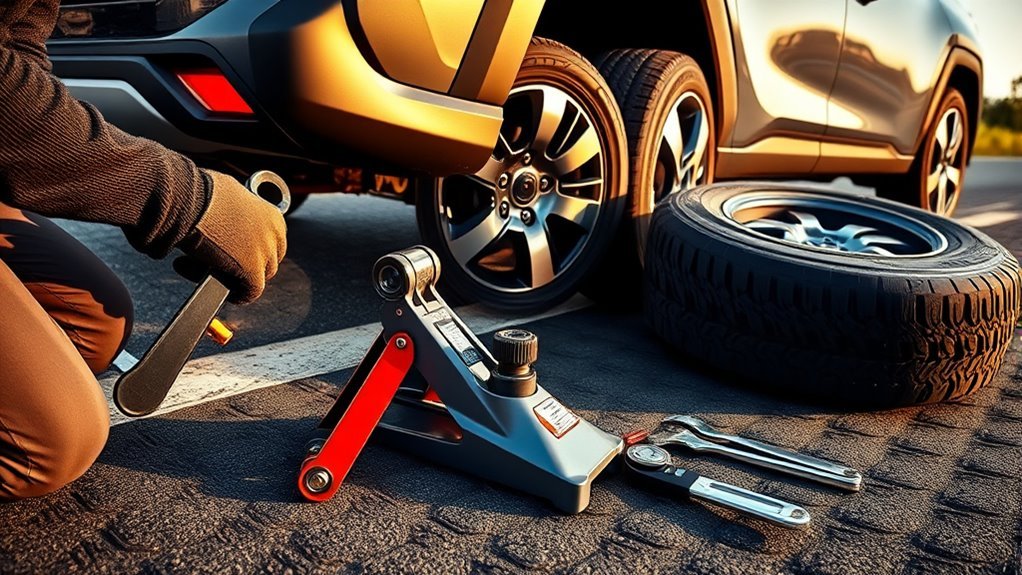
You can safely change a flat on your Toyota RAV4 by engaging the parking brake, opening the rear hatch, and retrieving the jack, crank and tire iron. Chock the opposite wheel, loosen lug nuts in a star pattern before jacking at the manufacturer jacking point, raise the vehicle, remove the wheel, inspect for damage, mount the spare, hand-thread lug nuts, lower and tighten in a crisscross pattern, check spare pressure to spec — continue for step-by-step guidance.
Prepare Your RAV4: Parking Brake, Spare Kit, and Tools
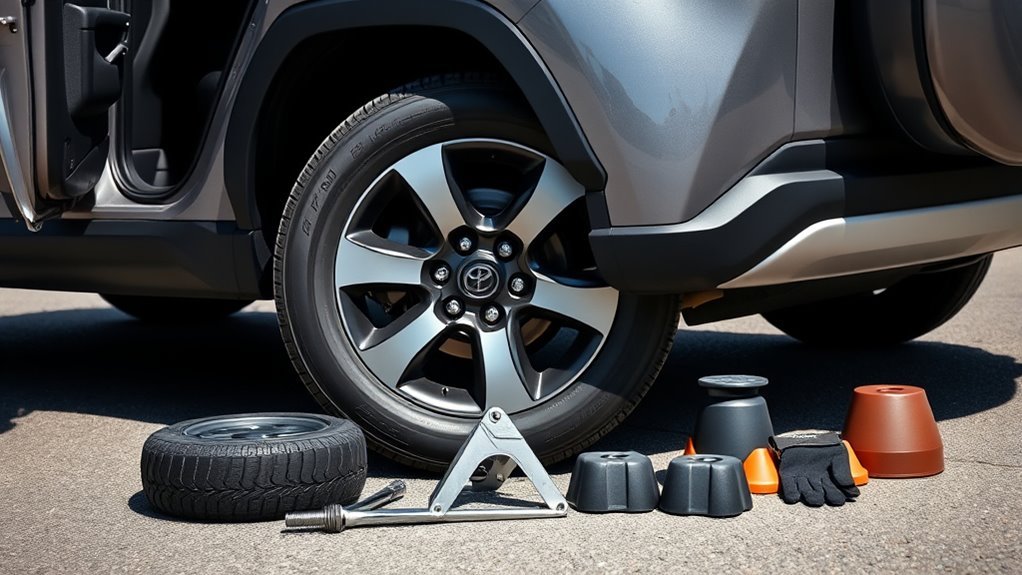
Start by engaging the parking brake using the center “P” button so the RAV4 can’t roll, then open the rear hatch and lift the floorboard to access the spare tire kit. You’ll remove the spare and jack, confirming you have the jack, crank, and tire iron. Verify the vehicle rests on a flat surface; if not, stabilize it to prevent rolling. This sequence keeps you safe and mobile—key to tire maintenance and emergency preparedness.
Inspect tools for damage and guarantee the spare’s inflation meets recommendations before use. Position tools within reach but clear of moving traffic. Keep the ignition off and hazard lights on while you work. Note the front jacking point on the pinch weld for later use; don’t attempt jack placement yet. These steps give you control and reduce risk, aligning practical self-reliance with liberated movement. You’ll proceed to jacking with confidence after completing this checklist.
Find the RAV4 Jacking Points and Position the Jack
Locate the RAV4’s designated jack points along the pinch weld just behind the front wheels and confirm their exact positions in your owner’s manual. Make sure the vehicle is on a flat surface with the parking brake engaged before positioning the jack. Position the jack directly under the jacking point, use the crank until it contacts firmly, and verify stable, even pressure before lifting.
Locate RAV4 Jack Points
One clear rule: always park on a flat surface and set the parking brake before you position the jack. For jacking safety, identify the pinch welds: front jacking points are on the pinch weld just behind the front tires; rear jacking points are on the pinch weld just in front of the rear tires. Consult your owner’s manual for exact locations and any model-specific notes. Position the jack saddle squarely under the designated pinch weld area, ensuring firm contact with metal — not body panels or trim. Align the jack so its lift axis is vertical and won’t slip when load transfers. Tighten or seat the jack until it bears the vehicle lightly before lifting further. These steps give you control and reduce risk while you reclaim mobility.
Confirm Vehicle Levelness
After you’ve seated the jack on the pinch weld as described, confirm the RAV4 sits level on firm ground before raising it further. Check that the parking brake’s engaged and the surface is flat to prevent rolling. Use the crank until the jack contacts the notch at the pinch weld; don’t lift high yet. Visually inspect wheel heights and feel for sway; adjust jack placement if uneven. Confirm vehicle alignment laterally so weight’s centered over the jack for tire stability. Proceed only when levelness and contact are certain.
| Front | Jack Point | Surface |
|---|---|---|
| Left | Notch | Solid |
| Right | Notch | Solid |
Position Jack Securely
Place the jack directly under the RAV4’s front pinch weld notch near the tire, aligning its saddle with the factory jacking point so the load bears on the reinforced seam rather than the body panel. Locate the pinch weld near the front tire, confirm the notch, and set a compatible hydraulic or scissor jack beneath it. Make sure the jack contacts the jacking point squarely; offset placement risks frame damage and compromised jack safety. Park on a flat, stable surface and engage the parking brake to preserve vehicle stability. Before lifting, double-check alignment and that the jack base sits fully on solid ground. Raise slowly, watching for any shift. If the jack moves or creaks, lower and reposition until secure.
Loosen Lug Nuts Before Lifting the Vehicle
Start by engaging the parking brake and chocking the opposite wheel so the vehicle can’t roll, then use a tire iron to break each lug nut loose by turning counterclockwise. You’ll apply lug nut techniques that prioritize control: keep the wrench perpendicular, use steady pressure, and avoid sudden jerks. Loosen each lug nut slightly first; the vehicle’s weight holds the wheel and prevents spin, so full removal now isn’t necessary.
Work in a star pattern to distribute stress evenly across the rotor and avoid warping. After the first pass, repeat the star sequence, increasing torque until each nut is finger-loose. If a nut resists, employ an impact drill cautiously—confirm socket fit and moderate power to prevent stripping. Maintain awareness of hand placement and footing; liberation comes through mastery, not force. Once all lug nuts are loose but still threaded, stop—don’t lift. This procedural step protects the wheel, makes subsequent removal simpler, and serves core tire maintenance goals.
Jack the RAV4 Safely and Support It Correctly
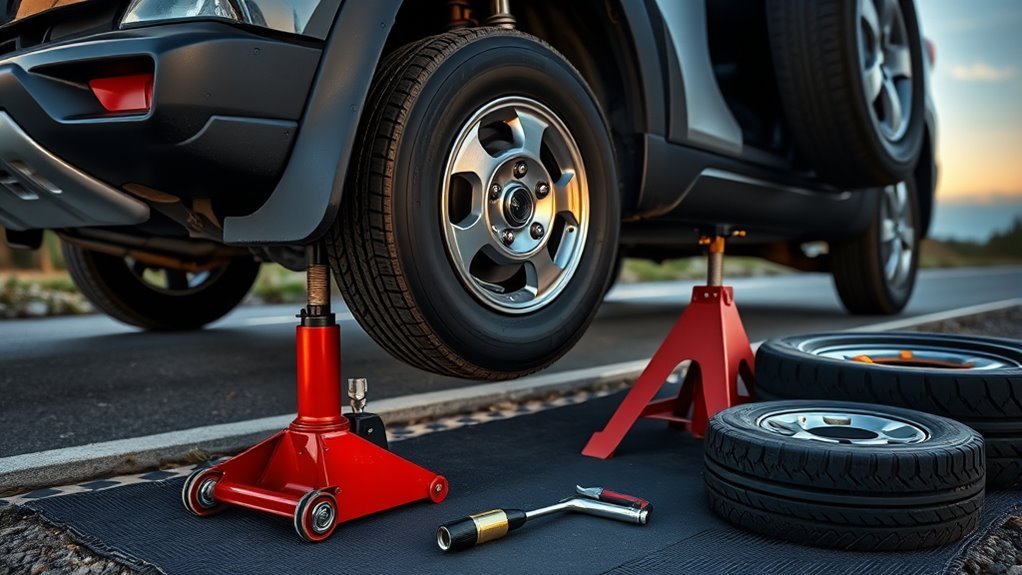
With the lug nuts loosened, you’ll now lift and secure the RAV4 so the wheel can be removed safely. Confirm safety precautions: park on a flat, stable surface, engage the parking brake, and place wheel chocks opposite the wheel being lifted. Identify the front jacking point on the pinch weld just behind the front wheel.
Select an appropriate jack type for your RAV4—scissor or hydraulic floor jack recommended for stability. Position the jack saddle directly under the designated jacking point so it contacts the vehicle squarely. Crank the jack until it firmly contacts the pinch weld; don’t force lift before contact.
Lift until the tire clears the ground by about two inches. Immediately support the vehicle with a rated jack stand placed under a reinforced support area near the jacking point. Never rely on the jack alone. Lower the vehicle slightly onto the stand so the jack bears no load, then remove the jack from under the vehicle. Recheck chocks, brake, and stand stability before proceeding.
Remove the Flat Tire and Inspect the Damage
Loosen and remove the lug nuts with the lug wrench, turning lefty-loosey while stabilizing the vehicle. Pull the wheel straight off the hub, then inspect the tread for abnormal wear and scan the casing for punctures, cuts, or embedded objects. Check the wheel hub for debris or damage, and stow the flat securely in the trunk for proper disposal.
Remove Lug Nuts
Use the lug wrench to turn each lug nut counterclockwise (lefty-loosey) until they’re fully removed, switching to an impact drill if they’re stubborn. Apply proven lug wrench techniques: steady, even force on each nut in a star pattern to prevent binding. If a nut won’t budge, reposition your foot on the wrench for leverage or use the drill briefly. Once all nuts are free, lift the wheel straight off the hub; if it sticks, give the tire a firm, controlled kick to break the seal.
Inspect the removed tire for visible damage like punctures, nails, or screws to identify cause, then slide the flat out of the workspace. These tire removal tips speed the process and keep you mobile and autonomous.
Inspect Tire Tread
Now that the wheel is off, inspect the tread and sidewall for the cause and extent of damage. You’ll perform a focused assessment using tire maintenance tips and an eye for tread safety importance.
- Measure tread depth with a gauge; minimum safe depth is 2/32″.
- Visually scan tread for cuts, embedded debris, or separations.
- Examine sidewall for bulges, cracks, or blisters indicating structural failure.
- Verify tire pressure at recommended 30–35 psi to rule out under-inflation as a factor.
- Decide: if wear exceeds limits or damage is severe, replace rather than repair.
Document findings. If you’re uncertain or see structural defects, stop and seek professional replacement to protect your freedom to travel safely.
Check For Punctures
With the tire off, inspect the tread and sidewalls for punctures, cuts, or embedded debris—shine a flashlight into grooves and along the bead area to reveal small or hidden damage. You’ll look for puncture types: nail, screw, or shard punctures in the tread versus sidewall cuts. If you find an object, note location and measure diameter; punctures up to 1/4 inch in the tread are typically eligible for tire repair. Remove foreign objects carefully and recheck the inner surface for bulges, separations, or large tears that indicate replacement. Record findings, including size and position, and don’t improvise fixes beyond a temporary plug on the roadside. Consult a professional when damage is near the bead, on the sidewall, or if integrity is uncertain.
Mount the Spare on the RAV4 and Hand-Thread Lug Nuts
Lift the spare onto the wheel hub, aligning it carefully with the lug studs so it seats snugly. You’ll confirm spare tire alignment visually, then proceed methodically to secure the wheel. Hand-thread each lug nut clockwise, feeling for proper engagement to avoid cross-threading. Begin all lug nut threading by hand before applying tools so the studs and nuts seat correctly.
- Position wheel so studs pass cleanly through hub holes; verify even contact.
- Start each lug nut by hand, turning slowly until resistance indicates proper thread engagement.
- Use the sequence to prepare for crisscross tightening later; do not force any nut.
- If a nut binds, back it off and re-align the wheel to prevent damage.
- After all nuts are hand-tight, use the lug wrench to snug them further while vehicle remains raised.
These steps free you from doubt, ensuring the spare is mounted securely and ready for controlled lowering.
Lower, Tighten Lug Nuts in a Crisscross Pattern, and Check 60 Psi

After you’ve snugged the lug nuts by hand and lowered the RAV4 off the jack, use the lug wrench to firmly tighten the nuts in a crisscross pattern so the wheel seats evenly against the hub. Tighten progressively: start with one nut, move to the opposite one, and continue the crisscross sequence until all are secure. This tightening technique prevents warping and guarantees true seating.
| Step | Action | Rationale |
|---|---|---|
| 1 | Tighten first nut | Initial alignment |
| 2 | Tighten opposite nut | Even pressure |
| 3 | Continue pattern | Prevents warp |
| 4 | Recheck all nuts | Confirm security |
After pattern completion, recheck each lug nut with the wrench, applying firm torque until resistance is solid. Finally, verify spare tire pressure; set to 60 psi for peak performance and safety. You’ll leave the scene liberated from roadside dependence when you apply these tightening techniques and confirm correct tire pressure.
Store Tools, Arrange Tire Repair/Disposal, and Note Spare-Tire Limits
- After the wheel change, perform methodical tool organization and secure the flat for transport.
- Stow the jack, lug wrench, and any sockets in their designated compartments; lock lids to prevent shifting.
- Place the flat tire in a stable cargo area, chock or wedge if needed, and cover it with a tarp to contain dirt.
- Check spare tire pressure immediately; many temporaries require around 60 psi—inflate if below spec.
- Note spare-tire limits: consult the RAV4 manual for maximum speed and distance; obey limits to avoid drivetrain stress.
- Contact a local tire repair shop or roadside assistance now to arrange tire disposal or repair; schedule pickup or drop-off.
You’ll restore the vehicle to operational order and maintain readiness for future stops. Proper tool organization shortens response time; prompt tire disposal or repair prevents environmental issues and legal hassle. Follow manual limits for safety and to keep your freedom of movement uncompromised.
Frequently Asked Questions
Can I Drive on the Spare Beyond the Rav4’s Recommended Distance Limit?
No — you shouldn’t. You’ll exceed spare tire longevity and risk driving safety; follow the RAV4’s distance limit, replace with a full tire promptly, monitor pressure, and avoid high speeds or heavy loads to stay liberated and safe.
Is It Safe to Change a Tire Alone at Night or on a Busy Road?
You shouldn’t; it’s risky. You’ll follow safety precautions: move off road, activate hazards, use reflective gear, cone/triangles, and flashlight. Visibility concerns and traffic exposure mean call roadside assistance or wait for help to stay liberated and safe.
Will Using a Different Wheel Size Affect My Rav4’s ABS or Traction Control?
Bite the bullet: you’ll impact ABS and traction control if wheel specifications differ; check tire compatibility, speedometer variance, and sensor calibration. You’ll need matched diameters, compatible offsets, and possibly ECU recalibration to stay liberated.
How Do I Reset the Tire Pressure Monitoring System After Mounting the Spare?
You’ll set tire pressure settings to the recommended PSI, start the vehicle, access the monitoring system reset via the settings menu (or hold the TPMS button), confirm reset, and drive briefly so sensors relearn and recalibrate.
Can I Temporarily Repair the Tire With a Plug Instead of Replacing It?
Yes — like a quick bandage, you can use temporary tire solutions; follow plug installation tips: seat vehicle, remove object, ream, insert plug, trim excess, check pressure, drive cautiously and replace tire soon for safety and freedom.
Conclusion
You’ve now got the RAV4 off the ground, the flat swapped for the spare, and the lug nuts torqued in a crisscross pattern—good work. Treat the spare like a temporary patch: get the damaged tire repaired or replaced promptly and note the spare’s speed and distance limits. Stow the jack and tools securely, and recheck lug-nut tightness after a short drive. Like a well-oiled clock, a quick follow-up keeps everything running safely and reliably.