
You need to manage two separate ratings: GVWR is the maximum weight your vehicle can carry when fully loaded (vehicle, fluids, passengers, cargo) and is fixed by the manufacturer on the door jamb label; GCWR is the maximum safe combined weight of your tow vehicle plus trailer set by the chassis maker. Use GVWR to calculate payload and GCWR to find your maximum trailer mass; follow both for legal and safety reasons, and keep going to learn how to calculate limits and tongue weight.
Quick Towing Decision Rules: GVWR vs GCWR

When you’re deciding how much to tow, compare both ratings: GVWR tells you the max weight of your vehicle fully loaded (vehicle, passengers, cargo) while GCWR caps the combined weight of vehicle plus trailer and its load; the safe tow limit is the lesser of the two, and exceeding either creates safety, mechanical, and legal risks. You’ll first calculate curb weight plus passengers and cargo to see how close you are to GVWR. Then add trailer and payload to estimate combined weight against GCWR. Use the lower allowable margin as your operational cap.
For predictable towing safety, monitor tongue weight and overall weight distribution so braking, steering, and suspension stay within designed ranges. If numbers approach either rating, reduce cargo or choose a lighter trailer. You’ll avoid fines, component damage, and loss of control by treating GVWR and GCWR as hard limits, not targets, and by keeping weight distribution balanced for liberation on the road.
What GVWR Covers and Where to Find It
You’ll find the GVWR on the Safety Compliance Certification Label—usually on the driver’s door jamb—or in the owner’s manual. It represents the total allowable weight of the vehicle plus passengers, cargo and any factory- or dealer-added equipment, so include those when loading. To confirm safe loading you should verify your vehicle’s curb weight (listed in the manual or spec sheet) and guarantee combined weight doesn’t exceed the GVWR.
Where GVWR Is Posted
Start by checking the Safety Compliance Certification Label—usually mounted on the driver’s door jamb—because it lists the vehicle’s GVWR along with other certification details. You’ll find the GVWR location clearly printed on that label; manufacturers also replicate weight data on other vehicle labels under the hood or in the glove compartment. Consult the owner’s manual next; it restates GVWR and related ratings so you can verify against the door label. For legal or administrative purposes, check registration or title documents, which sometimes record GVWR. Always confirm the posted value before loading: it’s your authoritative limit. Use these documented sources to plan loads, avoid overload penalties, and preserve freedom to travel without risking safety or regulation violations.
What GVWR Includes
Think of GVWR as the vehicle’s certified upper limit: it covers the curb weight plus every occupant, all cargo, fuel, fluids, and any factory or aftermarket accessories permanently attached to the vehicle, but it does not include the weight of a towed trailer. You’ll rely on manufacturer-determined GVWR factors such as axle strength, frame capacity, and suspension design to understand load limits. Locate the Safety Compliance Certification Label on the driver’s side door jamb to read the rated GVWR; the label is authoritative. Check GVWR regularly—overloading creates clear safety hazards, legal exposure, and accelerated wear. For liberation in operation, monitor payload against the posted GVWR, plan loads within limits (for example, a Ford F450’s 14,000 lb rating), and respect GVWR importance for safe, compliant travel.
Verifying Curb Weight
When you verify curb weight, confirm the vehicle’s empty mass—including all fluids and a full fuel tank but excluding passengers and cargo—because that number is the baseline for calculating payload and ensuring you don’t exceed GVWR. You’ll use curb weight verification to derive payload: GVWR minus curb weight equals allowable load. Find official numbers on the Safety Compliance Certification Label inside the driver’s door and cross-check the owner’s manual. If you need an exact measure, use certified scales and documented weight measurement techniques at a public weigh station. Record results and compare to GVWR before adding accessories or cargo.
- Check driver’s door label for GVWR and curb weight
- Consult the owner’s manual for confirmation
- Use certified axle or full-vehicle scales
- Document measurements and retain receipts
- Recalculate payload before loading
Who Sets GCWR and How It’s Calculated
The GCWR is set by the vehicle’s chassis manufacturer using SAE International guidelines, and it’s calculated by combining the truck’s GVWR with the trailer’s GVWR to define the maximum safe combined weight; this rating accounts for the tow vehicle’s structural limits, drivetrain and braking capacity, and the weight of cargo, passengers, and the trailer to guarantee legal compliance and safe towing. You’ll rely on GCWR standards and manufacturer guidelines to know the ceiling for combined mass. Manufacturers evaluate frame strength, suspension, engine torque, transmission cooling, axle ratings, and brake performance to derive a GCWR that preserves handling and stopping distance. To calculate, you add the tow vehicle’s GVWR to the attached trailer’s GVWR; the resulting figure is the maximum allowable combined weight you must not exceed. Follow the stamped or placard values, factor in payload and passenger loads, and respect GCWR to avoid legal issues, component failure, and compromised safety while you claim freedom on the road.
GVWR vs GCWR: Practical Differences That Matter for Towing
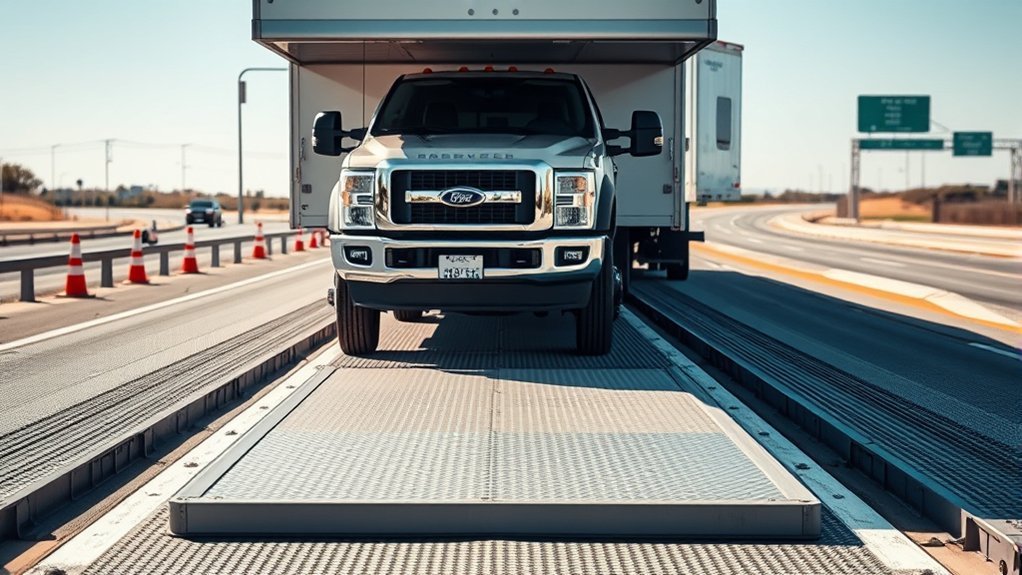
Because towing combines two systems, you need to treat GVWR and GCWR as distinct limits: GVWR caps how much your tow vehicle can safely carry (vehicle, passengers, cargo) while GCWR caps the total mass of vehicle plus trailer. You’ll use both ratings to protect equipment, comply with law, and preserve freedom to move without risk.
- Check towing capacity against GCWR before hitching; the trailer’s weight adds to combined limits.
- Respect GVWR for payload: passengers and gear live inside that limit regardless of trailer size.
- Monitor tongue load and weight distribution to avoid overloading axles or degrading steering/braking.
- Use the lower limit (GVWR or GCWR) as your operational ceiling; exceeding either creates safety and legal risks.
- If combined mass could exceed 26,001 lb, plan for CDL requirements and commercial compliance.
Treat ratings as nonnegotiable constraints that enable safe, liberated travel—calculate, distribute weight, and operate within limits.
Calculate Payload Capacity
After you’ve checked GVWR and GCWR limits, calculate payload capacity so you know how much load—passengers, cargo, and equipment—you can add without exceeding the vehicle’s rated limit. Subtract the vehicle’s curb weight from its GVWR to get payload capacity; e.g., 14,000 lb GVWR minus 10,000 lb curb weight yields a 4,000 lb payload. For trailers, subtract empty weight from trailer GVWR to find net payload—20,000 lb GVWR minus 5,000 lb empty weight equals 15,000 lb net payload.
Use manufacturer specifications from the owner’s manual or the driver‑door sticker for accurate GVWR and curb/empty weights. Account for payload factors such as passengers, fuel, aftermarket equipment, and cargo, and track them before departure. Consider weight distribution to maintain handling, braking, and legal compliance. Regularly check actual vehicle weights at a scale if you push limits. Stay deliberate: know your numbers, respect limits, and you’ll keep control and freedom on the road.
Compute Tongue Weight and Safe Tow Limit (Step‑by‑Step Example)
Now compute tongue weight first: measure the trailer’s total loaded weight and multiply by the recommended 10–15% to get the downward force at the coupler. Then determine your safe tow limit by subtracting your vehicle’s curb weight and current passenger/cargo load from the GCWR. Finally, confirm the trailer’s tongue weight doesn’t exceed your vehicle’s payload and that combined weights stay below GCWR.
Calculating Tongue Weight
Want to make sure your trailer stays stable and your vehicle stays safe? You’ll calculate tongue weight precisely using proven measuring techniques so you stay free from needless restrictions and danger. Follow this concise procedure:
- Position trailer level and connected; use a certified scale or a tongue weight scale to measure tongue weight directly.
- If using a vehicle scale, weigh with trailer hitched and subtract vehicle-only weight to get tongue load.
- Aim for 10–15% of trailer plus cargo weight for stability; adjust cargo fore/aft to achieve range.
- Confirm combined vehicle weight (including passengers, cargo, tongue weight) stays within GVWR.
- Verify trailer and tongue weights don’t push the total beyond the vehicle’s GCWR before you depart.
Determining Safe Tow Limit
Because safe towing depends on both gross limits and actual weights, you’ll compute a tow limit by starting with the vehicle’s GCWR and subtracting the tow vehicle’s current weight (including passengers and cargo); the remainder is the maximum trailer mass you can haul. Use this step-by-step method: determine GCWR (tow GVWR + trailer GVWR), weigh your loaded tow vehicle, subtract to get the safe tow limit, and include tongue weight (10–15% of trailer weight) in the tow vehicle load. Maintain proper weight distribution for control and towing safety; tongue weight must not push the tow vehicle past its GVWR.
| Item | Value | Note |
|---|---|---|
| Tow GVWR | 14,000 lb | example |
| Trailer GVWR | 20,000 lb | example |
| GCWR | 34,000 lb | summed |
| Safe Tow Limit | GCWR − actual tow weight | include tongue weight |
Compliance, Safety Checks, and When to Consult the Manufacturer
When you’re preparing to tow or haul, confirm that your vehicle’s actual curb, payload, and trailer weights don’t exceed the GVWR or GCWR listed by the manufacturer; doing so prevents legal penalties, reduces accident risk, and protects vehicle components. You’ll run routine compliance checks and basic safety regulations to keep control and freedom on the road. Know when to consult the manufacturer—especially after modifications that affect structure, suspension, or powertrain—because ratings can change and documentation must reflect that.
- Weigh curb, payload, and trailer before trips.
- Log weights and compare to GVWR/GCWR for compliance checks.
- Inspect brakes, tires, hitch, and suspension per safety regulations.
- Consult manufacturer if you alter axle, tires, or reinforcements.
- Verify CDL requirements when GCWR exceeds 26,001 lb.
Stay proactive: accurate records and manufacturer guidance prevent overload, reduce liability, and maintain performance so you keep moving safely and independently.
Frequently Asked Questions
Are GVWR and GCWR the Same?
No — you shouldn’t treat them as identical. GVWR definition limits your vehicle’s own maximum loaded weight; GCWR definition caps combined vehicle plus trailer weight. Know both, obey limits, and tow within manufacturer specs to stay free.
Does GVWR Mean Fully Loaded?
Yes — GVWR is the fully loaded maximum. Studies show overloading causes 30% more brake wear. You’ll use payload capacity and weight distribution to stay within GVWR, protecting safety, legality, and your freedom on the road.
Does GCWR Include Trailer Weight?
Yes — GCWR includes trailer weight, so you’ll account for trailer capacity and cargo when planning. Stay within towing limits by adding your vehicle’s GVWR to the trailer’s GVWR, ensuring safe, liberated control of towing.
Conclusion
When you’re sizing a rig, remember GVWR is your truck’s structural limit and GCWR is the whole-team cap — like a stadium’s seating versus total crowd capacity. I once overloaded a trailer by 200 lb, and the engine overheated within 10 miles — a data point that’s hard to ignore. Use the placard and your owner’s manual, calculate payload and tongue weight, and don’t guess: stay within both GVWR and GCWR to guarantee safe, legal towing.