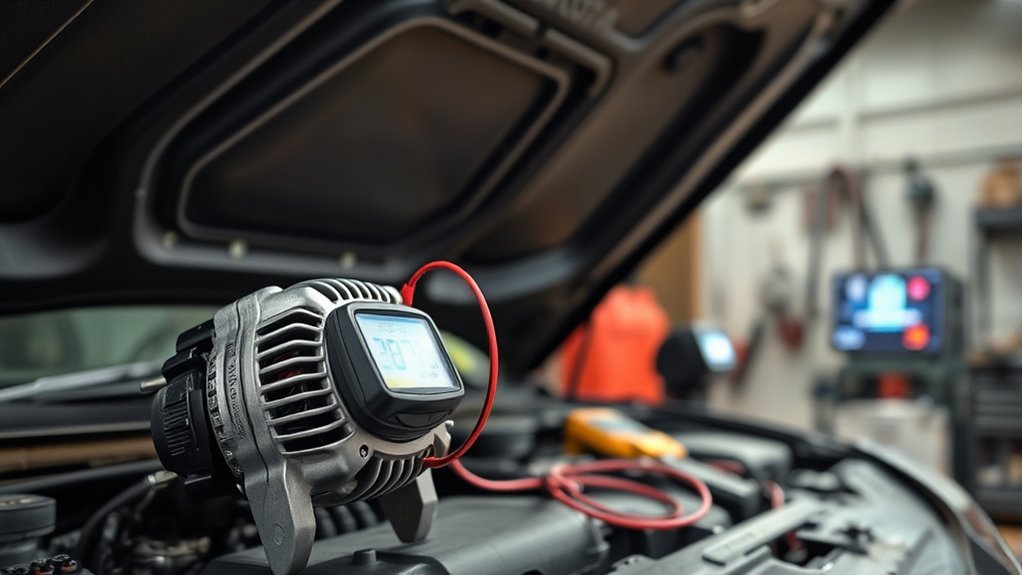
If your Camry shows a battery warning light, dim or flickering headlights, radio dropouts, slow cranking, or a new battery that dies fast, you likely have an alternator charging failure. Start by measuring voltage (13.7–14.7V running), check charging fuses, clean and tighten battery and ground connections, and inspect the serpentine belt and alternator wiring. If voltage’s low or erratic, replace or rebuild the alternator and follow proper alignment and torque; further steps and tests explain how.
Camry Alternator Symptoms
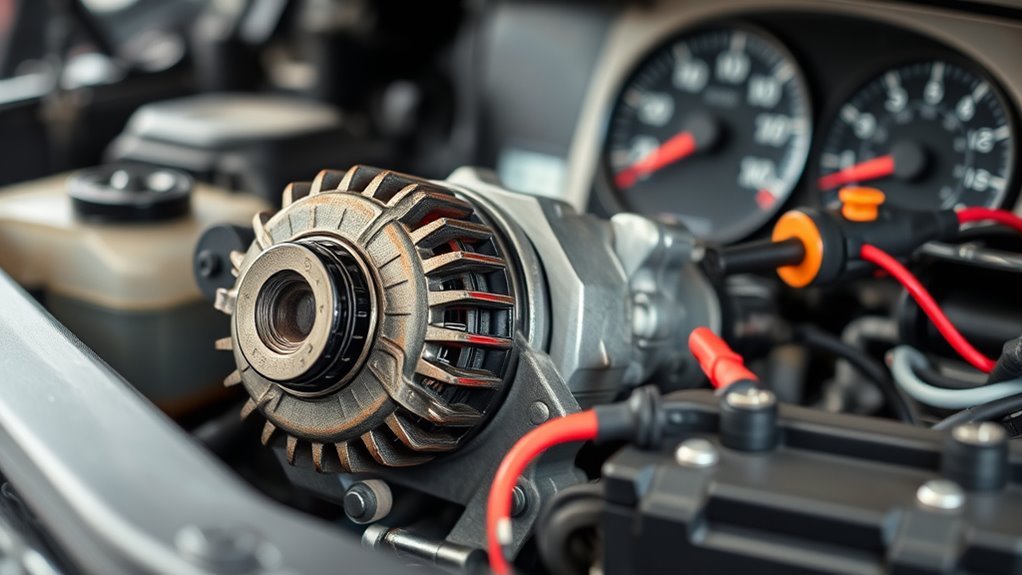
Think of the alternator as your Camry’s on-board charger: when it’s failing you’ll notice clear electrical symptoms. You’ll see the battery warning light come on, a direct sign to start alternator troubleshooting. Flickering or dim headlights and a radio that drops in and out while driving point to unstable charging—use those as cues for targeted electrical diagnostics. If the engine struggles to crank or you hear clicking when you turn the key, don’t ignore it; that often means the alternator isn’t replenishing the battery. A new battery that dies quickly after install is another red flag that charging has failed. Even the shifter sticking in park can be traced to low system voltage from a bad alternator. You want to act decisively: gather voltage readings, document symptoms, and prioritize repairs so you’re not stuck by a preventable electrical failure. These signs free you to fix the root cause, not just replace parts blindly.
Confirm It’s the Alternator (Not Battery or Fuses)
How can you be sure the alternator—not the new battery or a blown fuse—is causing your Camry’s charging failure? Start with simple diagnostics that free you from guessing. If the car ran briefly after a new battery then died, and you saw dimming lights or the battery warning light, the alternator is prime suspect. Use alternator testing with a multimeter: perform a voltage measurement at the battery with the engine idling. A healthy alternator yields 13.7–14.7 volts. If you read below that range while accessories are off, the alternator isn’t charging properly. Don’t skip inspecting charging-related fuses to rule out an open circuit that mimics alternator failure. If alternator testing points to a bad unit, remove it and scan for visible leaks, burned windings, or pulley damage before replacement. These targeted checks let you act decisively, avoid wasted parts, and reclaim control of your Camry’s electrical system.
Quick Checks: Fuses, Battery, and Connections
Start by checking the main fuses for the charging system to rule out simple electrical interruptions. Then inspect the battery terminals for corrosion, tightness, and secure mounting since poor contact will stop charging. If the battery reads about 12.6 volts and connections are clean and tight, you can move on to wiring and alternator tests.
Check Main Fuses
Check the main fuses in the engine bay and under the dash, since a blown fuse can stop the alternator from charging the battery. You’ll want to remove the fuse panel cover, identify the main charging and alternator fuses, and visually inspect them for damage. Use a multimeter for continuity testing across each fuse; no beep or infinite resistance means it’s blown and needs fuse replacement. Do this before deeper alternator work so you don’t waste time on components that aren’t the problem. Stay mindful of safety: ignition off, keys removed, and gloves if needed. This step frees you from guesswork—if fuses are good, you’ve narrowed the fault and can move on to wiring and alternator checks.
Inspect Battery Connections
While you’re still troubleshooting the charging system, inspect the battery connections and related wiring for corrosion, looseness, or damage—these simple issues often mimic alternator failure. You want freedom from guesswork: perform basic battery maintenance and connection cleaning before condemning the alternator. Check the battery condition and confirm a full charge and correct installation so tests are valid.
- Remove and clean terminals: disconnect negative first, use a brush and baking soda solution for connection cleaning, then tighten securely.
- Inspect wiring and fuses: look for frayed wires and blown charging-system fuses that can interrupt current flow.
- Test battery and retest charging: a weak battery can mimic alternator faults—replace if it won’t hold charge.
Prep the Car and Battery Safely
Before you touch anything, disconnect the negative battery terminal to eliminate shock and short risks, then put on gloves and goggles. You’re committing to basic battery maintenance and safety precautions: isolating the battery prevents sparks and protects electronics. Confirm you’ve got a small ratchet and a 19 mm wrench handy for tight spots.
Scan fuses tied to the charging system before swapping parts so you don’t chase a bad component. Inspect the battery for corrosion, cracked terminals, or loose clamps; clean and tighten as required. Assess workspace clearance around the alternator—note if the tensioner or motor mount limits access so you can plan the removal steps without improvising.
Keep the car stable: engage the parking brake and chock wheels. Work in daylight or strong lighting, and position tools within reach to avoid awkward moves that risk slips. These practical steps protect you and streamline diagnostics, freeing you to fix the charging issue decisively.
Remove the Serpentine Belt and Access the Alternator
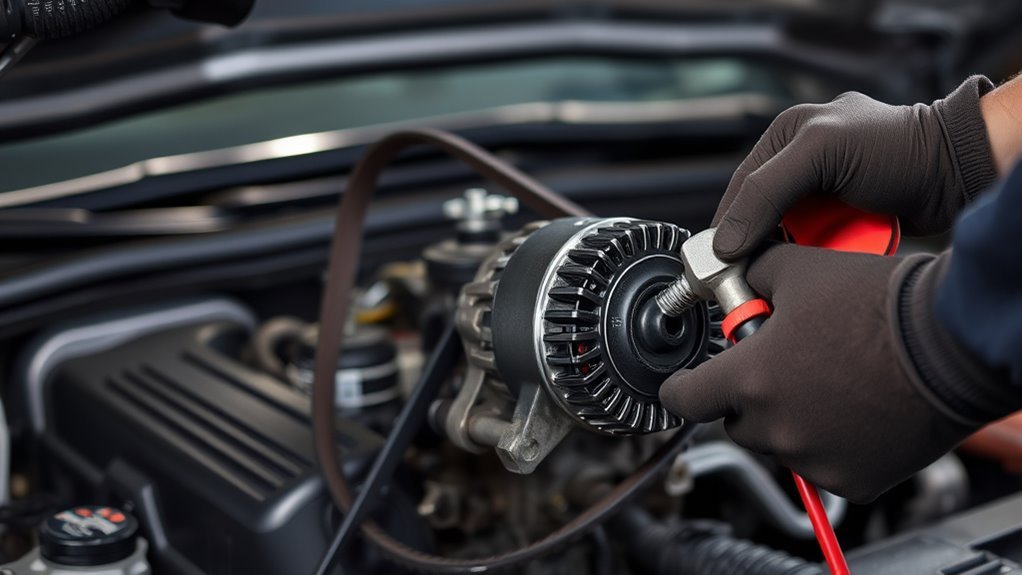
Loosen the serpentine belt tensioner with a 19 mm wrench to relieve tension and slip the belt off the alternator pulley, making sure you know the belt routing so you can reinstall it correctly. Stand clear of moving parts, don’t put fingers between the belt and pulley, and inspect the serpentine belt for cracks, glazing, or frayed edges before reuse. Tensioner adjustment is a simple lever action; use steady force and control to avoid sudden release.
- Note the belt routing and take a photo—this frees you from guesswork when reinstalling.
- Rotate the tensioner with the 19 mm wrench, hold it, and slide the belt off the alternator pulley; work deliberately to protect your hands.
- With the belt removed, create workspace and clear the area so you can access the alternator mounting bolts safely.
You’re reclaiming control—diagnose belt condition, perform proper tensioner adjustment, and expose the alternator so the next step goes smoothly.
Unbolt the Old Alternator: Bolts and Tools Needed
Once you’ve slipped the belt off the alternator pulley using the 19 mm wrench, grab a small ratchet and the correct sockets: two 14 mm and one 12 mm, which are the fasteners holding the 2009 Camry alternator in place. Work methodically: the small ratchet lets you reach tight spaces and keep control when breaking the bolt torque. Follow bolt specifications—two 14 mm mounting bolts and a single 12 mm pivot or brace bolt—so you don’t guess or strip heads.
Support the alternator as you remove the last fastener; it’ll drop once unsecured. Keep fingers clear of the pulley and belt path to avoid injury. Use your alternator tools to loosen gradually, then remove bolts in sequence to prevent binding. After unbolting, inspect the unit for leaks, corrosion, or broken brackets. Note any damage—additional repairs may be required. This approach frees you from uncertainty and gets you ready for replacement with confidence.
Install the New Alternator: Alignment and Bracket Tips
With the old alternator out and bolts organized, fit the new unit into the bracket so its mounting ears line up squarely with the engine mounts; if the old alternator had a support bracket or spacer, transfer it now so the new unit sits at the same angle. You’ll leave mounting bolts slightly loose at first so you can correct alignment issues without fighting seized hardware. Check bracket compatibility before tightening—misfit brackets are a common cause of premature wear.
With bolts organized, fit the new alternator, transfer any spacers, leave bolts loose to align before torquing.
- Slide unit in, tap bolts gently to avoid thread damage, confirm ears and bolt holes align.
- Transfer any support brackets/spacers from the old alternator to maintain factory geometry and prevent wobble.
- With bolts hand-tight, seat the belt on all pulleys, inspect tension and run a visual drum-roll for proper tracking.
Once alignment looks true, torque bolts to spec. This practical, diagnostic approach frees you from guesswork and minimizes rework—solid fit, secure mount, ready for final system checks.
Verify Camry Alternator Charging
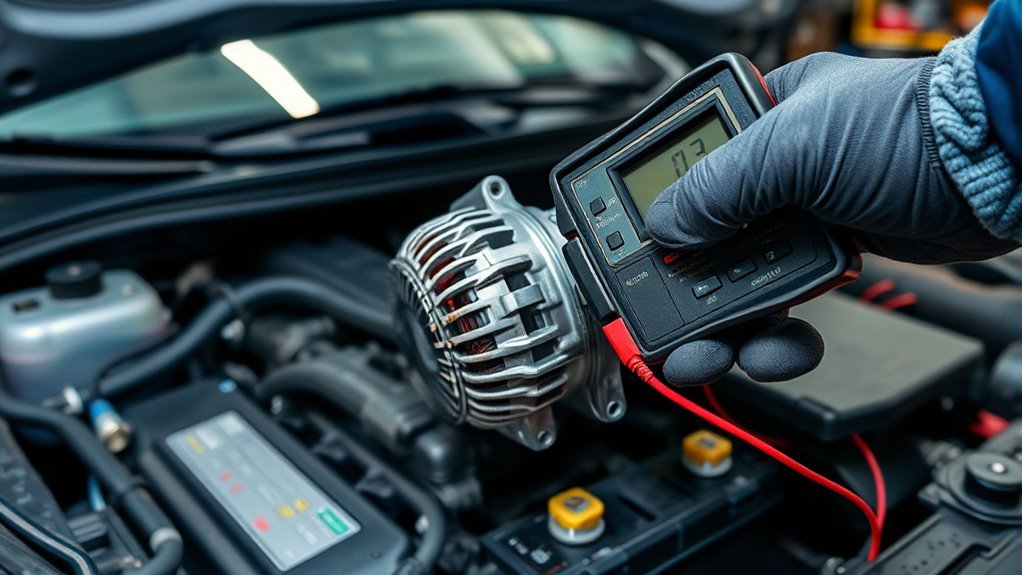
Start by checking the battery voltage with a multimeter — a resting battery should read about 12.6V and the engine-running voltage should be 13.8–14.5V to confirm charging. If readings are low, verify alternator output at the alternator terminals and inspect the drive belt for proper tension and wear. Also make sure all battery and alternator connections are clean, tight, and corrosion-free before running a load test.
Battery Voltage Test
Begin by measuring battery voltage with a multimeter while the Camry is in park and all accessories are off; a properly charging alternator should read about 13.7–14.7 volts with the engine running. Use clear voltage measurement techniques and note battery health indicators: compare readings with engine off and running. A healthy alternator raises voltage by 0.5–1.0 V.
- Read baseline: engine off should be ~12.6 V; record this to gauge battery health indicators.
- Start engine: expect 13.7–14.7 V; stable values mean the alternator charges.
- Watch for drops below 12.6 V or erratic swings; these suggest alternator faults or wiring issues.
You’ll free yourself from guesswork by following this concise diagnostic test.
Alternator Output Check
1) Verify alternator output by measuring battery voltage with a multimeter while the engine is running — you should see about 13.8–14.4 V; anything below 13.8 V suggests the alternator isn’t adequately charging. Use alternator testing to confirm a failing unit if readings stay low under load. Listen for grinding or whining that indicates internal damage reducing output. Perform a wiring inspection for corroded, loose, or damaged connections that can mimic alternator failure; clean and secure terminals before condemning the alternator. If voltage drops suddenly when the engine’s off, that’s further proof the alternator didn’t maintain charge during operation. You’ll free yourself from guesswork by combining these tests: multimeter checks, auditory cues, wiring inspection, and formal alternator testing.
Belt And Connections
A worn or loose serpentine belt and poor electrical connections are common, fixable causes when a Camry’s alternator isn’t charging properly—inspect the belt for cracks, glazing, or slack and confirm proper tension, then check the battery positive, alternator output lead, and chassis grounds for corrosion, looseness, or damaged insulation. You’ll also verify pulley condition and use a multimeter: running voltage should read 13.8–14.5V. Address belt wear and connection corrosion promptly to reclaim reliability and freedom from roadside failures.
- Inspect belt and pulley for glazing, cracks, or slipping; adjust or replace to restore tension.
- Clean and tighten battery terminal, alternator lead, and grounds; replace wires with damaged insulation.
- Measure alternator output; if low, test diodes and regulator before replacing the unit.
Common Mistakes to Avoid During This Repair
While you’re replacing the alternator, don’t jump to conclusions—check and replace fuses first since a blown fuse can mimic a bad alternator; use installation tips and troubleshooting techniques before pulling the unit. Don’t fully tighten bolts on first fit — leave them snug to let you adjust alignment. Transfer any brackets from the old alternator so mounting and grounding stay correct. Use a small ratchet in tight spots to avoid stripping bolts or damaging nearby parts. After installation, confirm the belt sits square on every pulley; misalignment invites premature wear and failure. Don’t ignore wiring: double-check connections and terminal cleanliness. Avoid skipping steps to save time—you’ll only court repeat repairs. Stay systematic, deliberate, and free from haste so you reclaim control of your Camry’s charging system.
| Mistake to Avoid | Quick Fix |
|---|---|
| Skipping fuse check | Replace/check fuse first |
| Tightening too soon | Snug then align |
| Missing brackets | Transfer brackets before mounting |
Cost, Time, and When to Call a Pro
Expect alternator replacement on a 2009 Camry to run about $300–$600 for parts and labor, with job time usually 2–4 hours for a pro. If you’re seeing persistent battery lights, hard starts, or odd noises, call a technician who can perform a charging-system test. Try basic checks first, but if troubleshooting doesn’t isolate the issue, hire a pro to avoid misdiagnosis or extra damage.
Repair Cost Estimates
Cost is typically the first concern when your Camry’s alternator isn’t charging, and you’re looking at roughly $400–$800 for a professional replacement including parts and labor, depending on where you live and shop rates. Check warranty coverage and parts availability before committing — a reman alternator can cut cost but may affect coverage. Expect 2–4 hours for removal and installation; testing first can save you from unnecessary replacement.
- If you see dimming lights, battery warning, or hard starts, test the alternator before buying parts — you reclaim control by diagnosing first.
- DIY saves labor but needs tools and skill; don’t risk cascading damage to the battery or electronics.
- If parts are scarce, factor extra time and cost for sourcing.
When To Hire
If you can’t reach the alternator, lack the right tools, or your troubleshooting stalls after basic checks, call a pro—it’s usually faster and safer than digging in blind. If access is tight or you risk damaging nearby parts, hire a mechanic. Expect $100–$200 labor for replacement, depending on location and vehicle. Pros typically finish in 1–3 hours, so you’ll reclaim time and reduce DIY risks.
If fuses, battery tests, and basic checks take too long or give no answers, a technician can run a full diagnostic and spot wiring or battery problems beyond alternator myths. You want liberation from uncertainty—call a trusted shop when complexity, time, or safety outstrip your tools and experience.
Frequently Asked Questions
What Will Cause an Alternator to Not Charge?
Alternator failure causes include worn brushes, damaged rotor, blown fuses, overheating, or belt slip, and battery connection issues like corroded or loose cables; check wiring, fuses, belt tension, and replace faulty components to regain freedom.
Conclusion
Think of your Camry like a trusted road companion: the alternator is its heart. If you’ve checked fuses, battery, and connections, replaced the alternator, and verified charging, you’ve given that heart a proper heartbeat. Avoid shortcuts—tighten mounts, align the belt, and double-check wiring. If things still falter, don’t force a fix; call a pro. A steady charge keeps your journey smooth and your ride reliable—don’t ignore the signs.