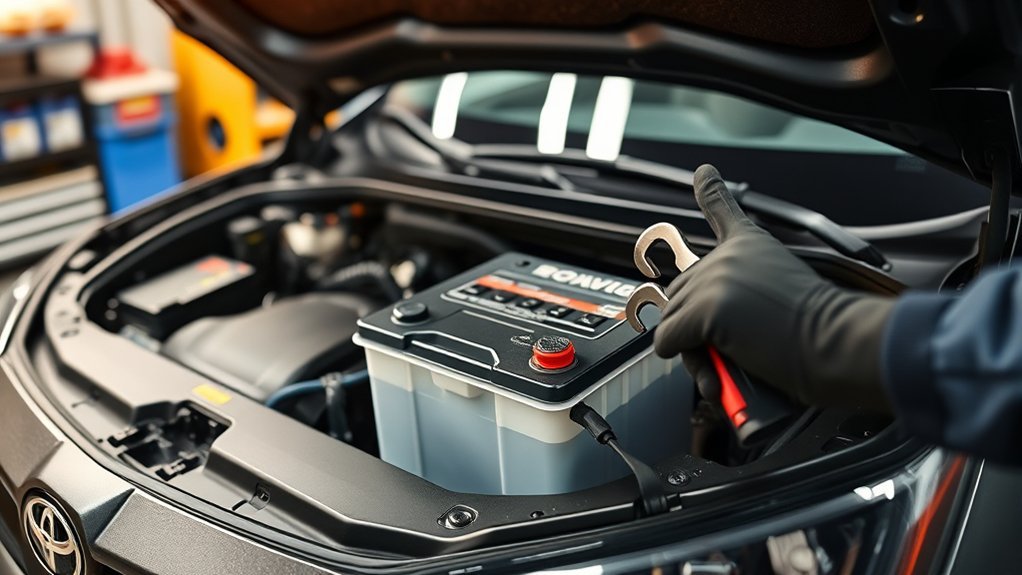
When selecting a battery for your Toyota RAV4, you’ll typically find Group 47, Group 48, or H6 options. It’s crucial to meet the minimum requirement of 603 CCA for reliable starts. AGM batteries are preferred for Start/Stop systems, offering enhanced reliability and longevity. Always consult your owner’s manual to confirm compatibility. By knowing your battery options, you can guarantee peak performance. Stick around to uncover more valuable tips about battery maintenance and performance!
What to Expect During a Battery Replacement Service
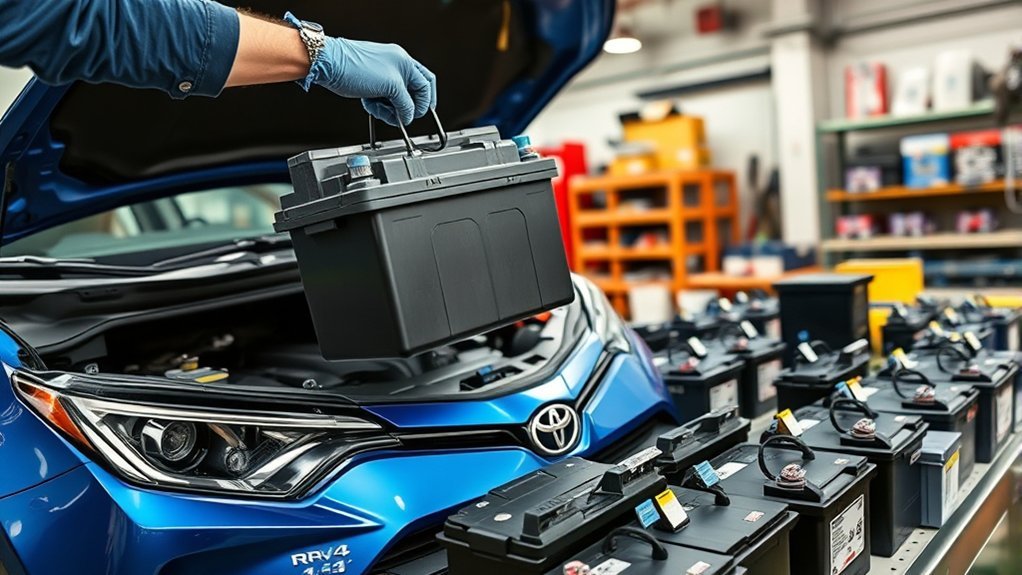
When you schedule a battery replacement for your Toyota RAV4, you can expect a swift and efficient process. Typically, it’ll take about 30 to 60 minutes, including a full battery health test and charging system inspection. You’ll want to verify you’re at a certified dealership, where factory-trained technicians with the right qualifications handle the installation. They’ll install an OEM-grade battery that meets or exceeds your vehicle’s specifications, often requiring programming to sync with your car’s systems.
For peak performance, consider some battery installation tips: always check the warranty coverage and ask for transparent pricing that includes labor and recycling fees. Regular checks every 3 to 5 years can help you catch issues early and prevent improper fitment. By choosing certified installation, you’re not just replacing a battery; you’re investing in your vehicle’s longevity and reliability.
Signs It’s Time to Replace Your RAV4 Battery
If your RAV4 is showing signs like a delayed engine crank or dim lights, it might be time for a battery check. Reduced electrical performance can signal underlying issues that could leave you stranded. Keep an eye out for these warning signs to guarantee your RAV4 stays reliable on the road.
Common Warning Signs
Recognizing the common warning signs that indicate it’s time to replace your RAV4 battery can save you from unexpected breakdowns. Watch for delayed engine cranking, as this often signals starting issues. Visible corrosion around the battery terminals can also impact performance, so keep an eye out for that. Low battery fluid levels are another sign you may need a new battery. Don’t ignore dashboard warning lights, especially the battery light, which points to potential electrical symptoms. Finally, if you notice dimming lights or reduced performance in your electrical accessories, it’s likely time for a replacement.
| Warning Sign | Description | Action Needed |
|---|---|---|
| Delayed Engine Cranking | Difficulty starting your vehicle | Consider battery replacement |
| Corrosion Effects | Rust around terminals | Clean or replace battery |
| Low Fluid Levels | Insufficient electrolyte | Replace battery |
| Dashboard Warning Lights | Battery light illuminated | Inspect battery immediately |
Reduced Electrical Performance
As your RAV4 battery ages, you might notice a decline in electrical performance that can be hard to ignore. Hard starts, dim lights, and even false diagnostic codes often signal that it’s time for a replacement. Be alert for symptoms like fluid leaks, corrosion on terminals, or a check engine light activation—these battery drainage causes can severely impact your electrical system. If you experience delayed engine cranking, it’s likely your battery is nearing its end, typically after 3 to 5 years. Regular voltage checks are essential; below 12 volts often indicates a failing battery. Don’t overlook low battery fluid levels and corrosion—they’re key signs that your battery may need immediate attention and replacement for peak performance.
What Battery Group Sizes Are Compatible With the Toyota RAV4?
When you’re considering a battery for your Toyota RAV4, it’s vital to know the compatible group sizes to guarantee peak performance. The standard choice is the Group 47 battery, but if you seek a boost, Group 48 or H6 batteries can also fit by using the outer bolt hole. For 5th generation RAV4 models, make certain to select a battery with at least 603 CCA and 65Ah capacity for maximum functionality.
AGM batteries are often the go-to for their reliability, especially in Start/Stop systems, while standard Group 47 batteries may fall short. Proper battery sizing is fundamental to guarantee adequate cold-cranking amps, particularly in extreme temperatures. Always verify your battery group compatibility using your VIN to confirm you choose the right battery size variations for your RAV4, allowing you to drive with confidence.
How to Choose the Right Battery for Your RAV4
Choosing the right battery for your RAV4 is essential for peak performance and reliability. You’ll want to evaluate battery types, compatibility, and specifications to guarantee a perfect fit. Understanding these factors helps you make an informed decision that keeps your vehicle running smoothly.
Battery Types Overview
Selecting the right battery for your Toyota RAV4 can greatly impact its performance and reliability. You’ll find two main battery types: AGM (Absorbent Glass Mat) and conventional lead-acid. AGM batteries are ideal for Start/Stop systems, thanks to their superior cycling capabilities. In battery comparisons, consider that AGM typically outperforms lead-acid in durability and efficiency. Verify the battery you choose meets the minimum requirement of 603 Cold Cranking Amps (CCA) for reliable starts in cold conditions. Always refer to your owner’s manual to confirm compatibility and specifications, maintaining vehicle performance and warranty coverage. Regular inspections can help you monitor battery health, as the average lifespan ranges from 3 to 5 years, emphasizing proactive maintenance.
Compatibility and Specifications
Understanding battery compatibility and specifications is key to ensuring your Toyota RAV4 runs smoothly. For peak performance, choose a Group 48 (H6) battery, which fits securely in the 5th gen models. If your RAV4 has a Start/Stop system, go for an AGM or EFB type, meeting or exceeding 65Ah and 603 CCA for best functionality. Avoid Group 47 batteries; they won’t meet your vehicle’s power needs. When selecting a replacement, prioritize batteries with a higher CCA rating to improve starting in cold weather. Always consult the 2020 RAV4 XLE manual, particularly pages 657 and 658, for detailed specifications. Following these battery installation and maintenance tips will keep your RAV4 performing at its best.
What Are the Cold Cranking Amps (CCA) Requirements?
When it comes to the cold cranking amps (CCA) requirement for your 5th gen Toyota RAV4, you’ll want to verify you have at least 603 CCA for peak performance, particularly in chilly conditions. Choosing the right battery is vital for reliable starts and ideal battery performance in cold weather.
Here’s a quick comparison of battery types and their CCA ratings:
| Battery Type | Minimum CCA | Example Model |
|---|---|---|
| Type A | 603 A | LN3 |
| Type B | 560 A | LN2 |
| Type C | 563 A | N/A |
Opting for a battery with a higher CCA can greatly enhance your vehicle’s starting reliability and overall performance, especially when temperatures drop. Inadequate CCA may lead to hard starts and electrical issues, so verify your battery meets or exceeds OEM specifications for an uninterrupted driving experience.
Battery Size: Effects on Performance and Longevity
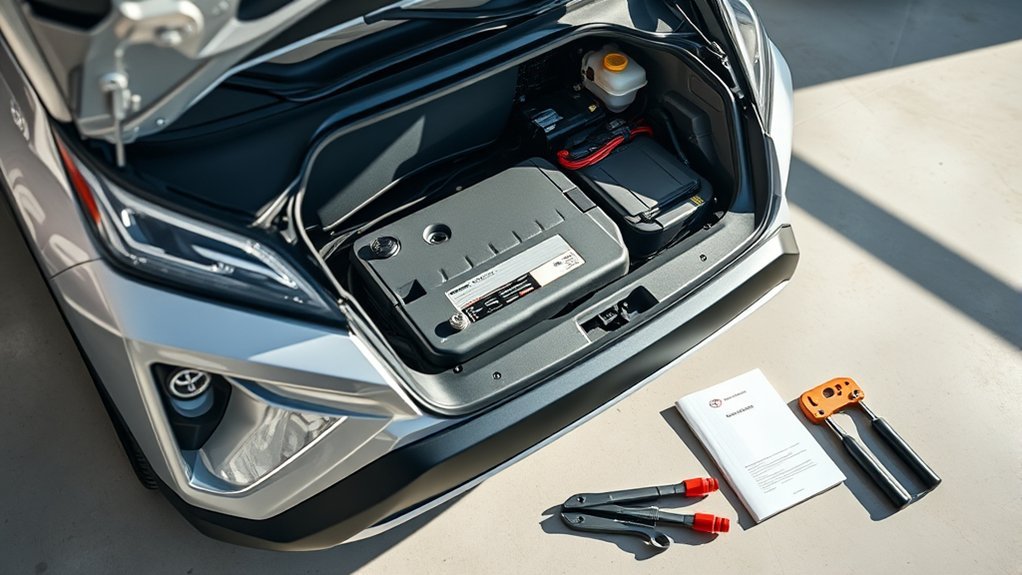
Battery size plays a significant role in your 5th gen Toyota RAV4’s overall performance and longevity. Choosing the right battery size can greatly influence how your vehicle operates, especially in demanding conditions. Here’s what you should know about the battery size impact:
- Larger Group 48 or H6 batteries enhance cold cranking amps (CCA) and amp hours.
- A standard Group 47 battery might not provide peak performance longevity.
- AGM batteries outperform traditional flooded lead-acid options, especially for Start/Stop systems.
- Proper sizing guarantees your RAV4 maintains power for sensitive electronics.
- Aim for a battery with at least 603A CCA and 65Ah for reliable performance.
AGM vs. Flooded Lead-Acid Batteries: What’s the Difference?
How do AGM and flooded lead-acid batteries stack up against each other? Understanding their differences can help you make the best choice for your Toyota RAV4.
| Feature | AGM Advantages | Flooded Limitations |
|---|---|---|
| Lifespan | Lasts longer (up to 7 years) | Shorter lifespan (3-5 years) |
| Charging Speed | Faster charging with lower resistance | Slower charging |
| Temperature Resistance | Better performance in extreme temps | Less effective in cold conditions |
| Maintenance | Sealed and spill-proof | Requires regular maintenance |
With their impressive cold cranking amps and resistance to vibrations, AGM batteries are ideal for modern vehicles, especially those with Start/Stop systems. On the other hand, flooded lead-acid batteries come with limitations that may not meet your needs. Opt for AGM if you’re looking for reliability and longevity!
How Battery Chemistry Affects Your RAV4’s Performance
Choosing the right battery chemistry can profoundly impact your RAV4’s performance. Selecting an AGM (Absorbent Glass Mat) battery can enhance reliability and longevity, especially if your RAV4 has a Start/Stop system. Here’s how battery chemistry affects your ride:
- Longer battery lifespan: AGM batteries last 3 to 5 years compared to 3 to 4 years for traditional lead-acid options.
- Higher cold cranking amps (CCA): Better starting power in cold climates guarantees you won’t get stranded.
- Lower internal resistance: This means quicker charging, essential during high electrical loads.
- Improved charging efficiency: AGM batteries charge faster, keeping your vehicle’s systems running smoothly.
- Meets OEM specifications: A CCA of at least 603A guarantees peak electrical performance.
Tips for Maintaining Your RAV4 Battery Health
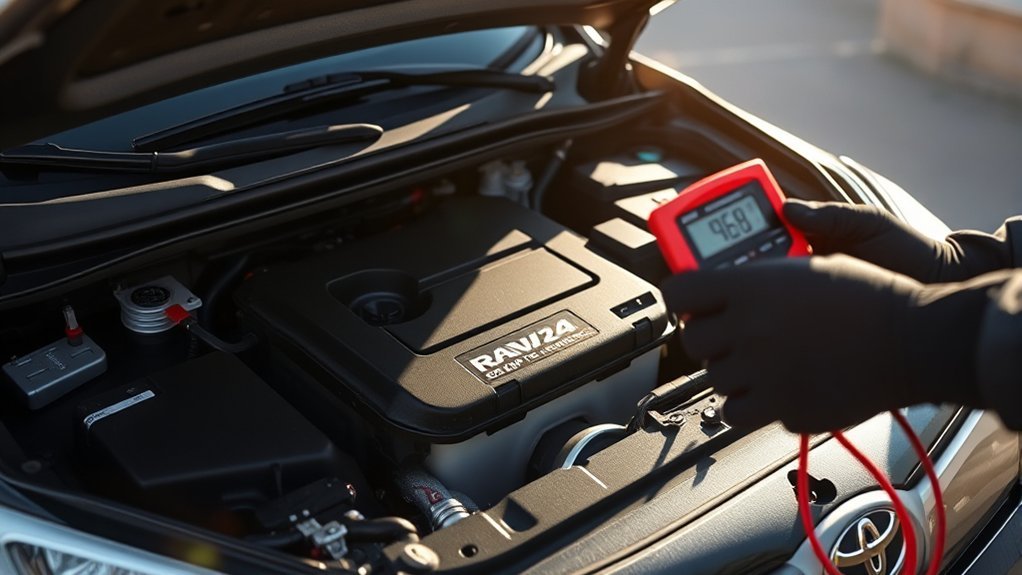
Maintaining your RAV4’s battery health is essential for ensuring reliable performance and longevity. Start with regular voltage monitoring techniques; your battery should ideally read between 12 and 13 volts. If it’s above 13 volts, it might signal a failing battery. Next, inspect the battery terminals and cables for any signs of corrosion or loose connections, as these can lead to poor performance and starting issues. Don’t forget to schedule routine battery health tests at every service visit—early identification of capacity loss can save you from unexpected failures. It’s wise to contemplate replacing your battery every 3 to 5 years to avoid problems associated with aging batteries. Finally, always opt for OEM-grade batteries or those recommended for your RAV4 to maintain warranty coverage and reliability. Following these battery maintenance tips will keep your RAV4 performing at its best!
Common Myths About RAV4 Batteries Debunked
When it comes to RAV4 batteries, you’ve probably heard a few myths that can lead to confusion. Many people think that battery lifespan depends solely on the brand, or that AGM batteries aren’t necessary for your model. Let’s clear up these misconceptions and help you make informed choices for your RAV4.
Battery Lifespan Misconceptions
While many people assume that car batteries last between 5 to 10 years, this isn’t the case for modern Toyota RAV4s. In reality, their batteries usually last only 3 to 5 years due to advanced electrical systems and usage patterns. Here are some common battery myths and lifespan facts to keep in mind:
- Extreme temperatures can drastically shorten battery life.
- RAV4s need specific battery types like Group 48 or H6 for peak performance.
- Maintenance-free doesn’t mean no checks; regular inspections are essential.
- Not all batteries are created equal; budget-friendly options can perform well.
- Higher price doesn’t always mean better quality; performance varies widely.
Stay informed and proactive to guarantee your RAV4’s battery lasts as long as it should!
AGM vs. Conventional Confusion
Understanding the differences between AGM and conventional batteries is essential for RAV4 owners, especially given the myths surrounding them. AGM advantages include superior cold cranking amps and better resilience in extreme conditions, making them ideal for Start/Stop systems. In contrast, conventional batteries have limitations, typically lasting only 3-5 years and struggling in harsh environments. The 2020 RAV4 manual highlights that OEM-grade batteries must meet or exceed specifications, and AGM options often deliver enhanced performance. Plus, replacing an AGM battery is hassle-free, as it usually doesn’t require registration. Many RAV4 models support Group 48 or H6 AGM batteries, providing powerful performance that conventional Group 47 batteries simply can’t match. Embrace the upgrade, and enjoy the benefits!
Frequently Asked Questions
How Do I Know What Group Battery I Need?
To know what group battery you need, check your vehicle’s compatibility with battery specifications. Look for a VIN lookup to confirm the correct group size, ensuring ideal performance and avoiding potential issues with installation.
Conclusion
In conclusion, choosing the right battery for your Toyota RAV4 is like selecting the perfect partner for a road trip—everything clicks into place. By understanding group sizes, CCA requirements, and battery types, you guarantee smooth journeys ahead. Just as you wouldn’t ignore a warning light on your dashboard, pay attention to battery health. With proper maintenance, your RAV4’s battery can power countless adventures, keeping you on the road and ready for whatever comes your way.