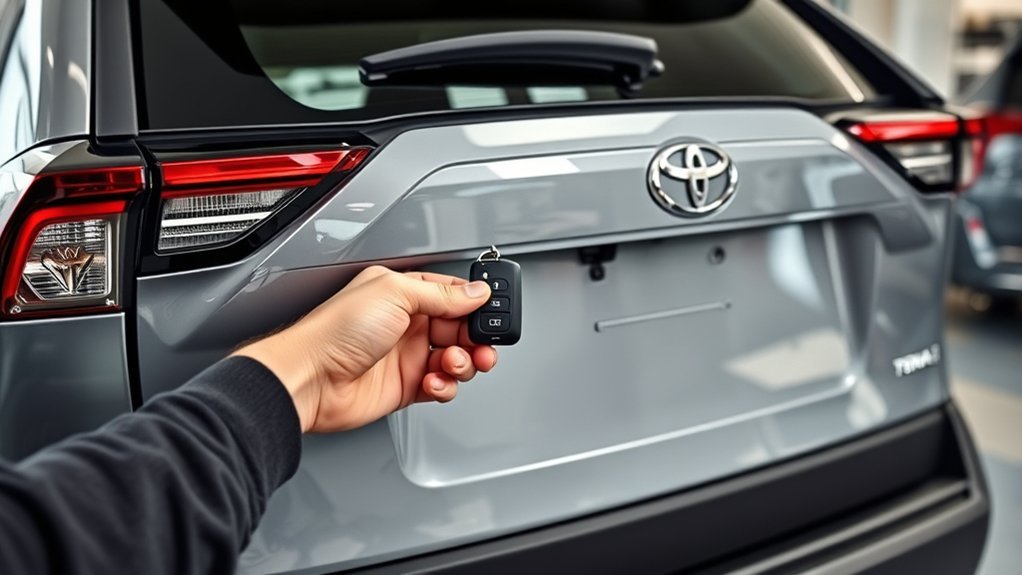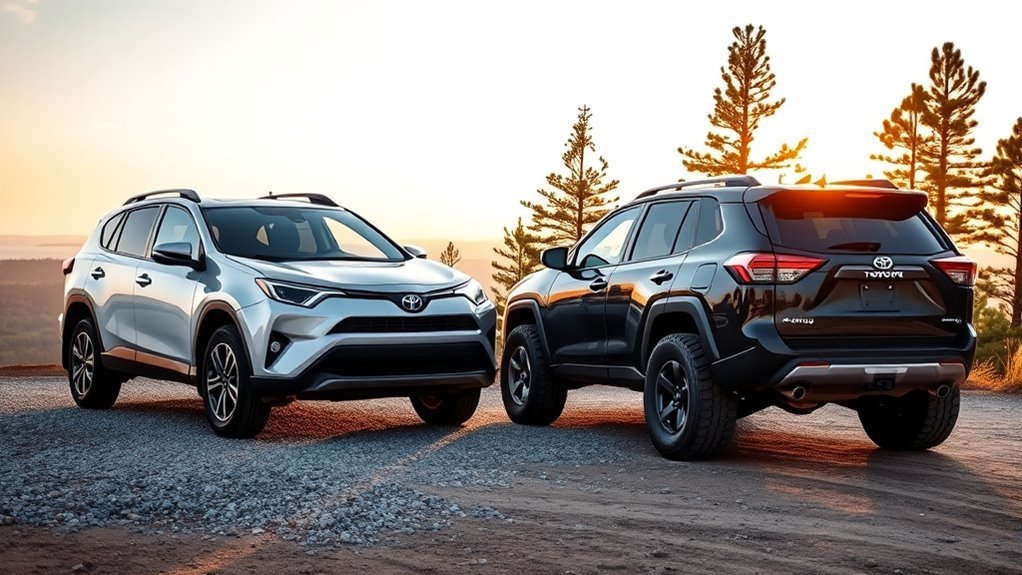
The RAV4 is a crossover, not a traditional truck‑based SUV, because it uses a unibody car platform that gives you a smoother, more carlike ride and better urban maneuverability. You’ll get superior fuel economy—especially in the hybrid (about 28 city/35 highway)—plus advanced safety tech and available AWD for light off‑road use. It won’t match heavy towing or extreme off‑road durability of body‑on‑frame SUVs, but its trims balance comfort, cargo and capability—keep going if you want specifics.
Is the RAV4 a Crossover or an SUV?
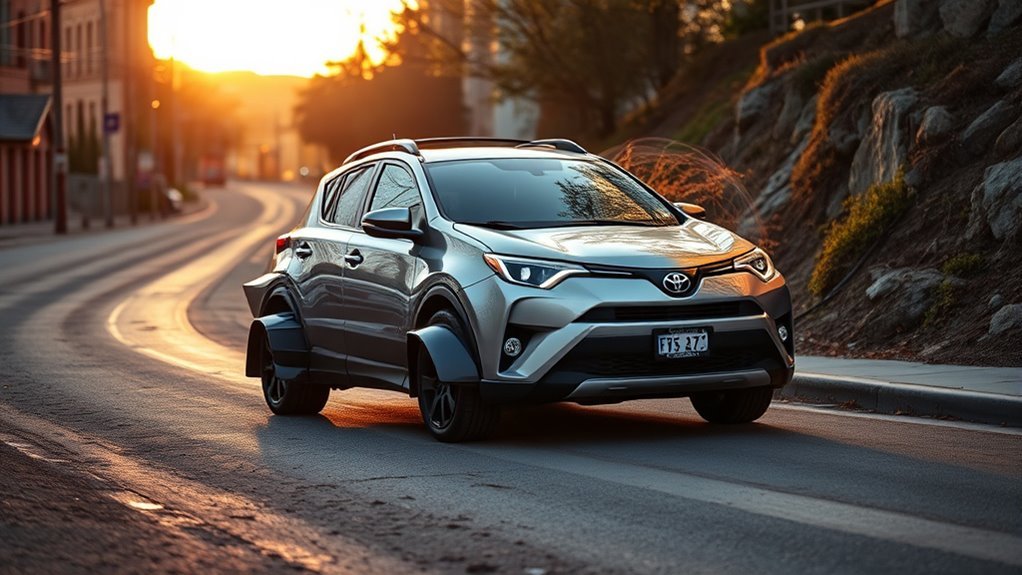
Curious whether the RAV4 is a crossover or an SUV? You’ll find it’s classified as a crossover, primarily because its unibody construction delivers car-like handling, smoother ride, and better fuel efficiency—core crossover characteristics that free you from bulky SUV dynamics. When you compare it to traditional SUVs, the RAV4 emphasizes maneuverability and urban usability rather than off-road ruggedness; SUV comparisons often highlight body-on-frame designs built for towing and severe terrain, which the RAV4 doesn’t prioritize. You’ll appreciate Toyota Safety Sense 2.5 and available AWD for enhanced traction and daily confidence without sacrificing commuter comfort. Inside, the spacious cabin and ample cargo space blend versatility with family-friendly practicality, letting you pursue adventures while keeping efficiency in mind. In short, if you want liberation from heavy handling and high fuel costs but still need capability and safety, the RAV4’s crossover identity aligns with that balance better than conventional SUVs.
How RAV4’s Unibody Platform Affects Ride, Fuel, and Towing
You’ll notice the RAV4’s unibody platform gives you a smoother, car-like ride and more precise handling than traditional body-on-frame SUVs. That same construction helps improve fuel economy for daily commuting, though it also means the RAV4’s towing capacity is modest compared with truck-based models like the Sequoia. We’ll compare exact fuel figures, ride characteristics, and towing limits so you can weigh comfort and efficiency against hauling needs.
Ride Comfort And Handling
Although the RAV4’s unibody construction doesn’t suit heavy-duty hauling, it gives you a noticeably smoother, more carlike ride by integrating body and frame for better vibration control and handling on paved roads. You’ll feel improved ride quality and confident handling dynamics when cruising city streets or winding suburban routes. The lighter unibody makes the RAV4 more agile than body-on-frame SUVs, so you’ll maneuver tight corners and parking spots with less effort. Advanced driver aids and suspension tuning sharpen responsiveness while preserving comfort, letting you choose brisk or relaxed driving without sacrificing composure. But that refinement comes with limits: unibody comfort reduces towing capacity versus traditional SUVs. For liberation-minded drivers, the trade favors daily comfort and nimble control over heavy hauling.
Fuel Efficiency And Economy
Because the RAV4 uses a unibody platform, it sheds weight and rides more like a car, which directly improves fuel economy—you can expect about 28 MPG city and 35 MPG highway in the hybrid variant—making it a strong choice for daily commutes and urban driving. You’ll notice smoother handling and crisper responses compared with body-on-frame SUVs, so your commute feels liberating and efficient. The lighter structure reduces rolling resistance and fuel consumption, enhancing urban maneuverability when parking or weaving through traffic. Safety benefits from better crumple zones and energy dissipation, so you don’t sacrifice protection for economy. If you prioritize efficient, car-like performance and nimble city driving, the RAV4’s unibody design delivers balanced fuel economy without heavy-duty towing tradeoffs.
Towing Limits And Capacity
Shifting from fuel economy to towing, the RAV4’s unibody platform balances ride comfort and light-duty hauling: it handles and rides more like a car while still towing up to 3,500 pounds when properly equipped, so you can tow small boats, lightweight campers, or utility trailers without sacrificing daily drivability. You’ll appreciate smoother highway cruising and ~30 mpg combined while using AWD for added traction when conditions demand it. Compared with body-on-frame SUVs, the RAV4 trades heavy-duty brute strength for nimble handling, ideal for urban launches and weekend escapes. Mindful preparation matters: choose proper towing accessories, monitor tongue weight, and manage weight distribution to keep steering responsive and braking secure. This crossover liberates you to tow modest loads without burdening daily life.
RAV4 Features That Favor Crossover Buyers (Comfort, Tech, Efficiency)
When you compare daily drivers, the RAV4 stands out for blending car-like comfort with crossover practicality: its unibody construction delivers smoother ride quality and sharper handling for city commutes, while a roomy five-passenger cabin and flexible cargo setup keep gear and groceries tidy. You’ll notice supportive seats, minimized NVH, and suspension tuning that favors comfort without dulling responsiveness, so your daily routine feels freer and less taxing.
The RAV4’s tech features reinforce that liberated experience: standard Apple CarPlay and Android Auto keep navigation and communication seamless, and Toyota Safety Sense 2.5+ adds Pre-Collision with Pedestrian Detection and Lane Departure Alert for confident urban driving. Choose AWD when you need extra grip—fuel economy remains strong, averaging about 28 mpg combined—so you won’t sacrifice efficiency for versatility. Overall, the RAV4 prioritizes comfort, connected convenience, and pragmatic efficiency, making it a compelling crossover if you value effortless mobility and smart packaging like generous cargo space.
How the RAV4 Compares to Truck‑Based SUVs (Towing, Off‑Road, Durability)

When you compare the RAV4 to truck‑based SUVs like the Sequoia, you’ll notice clear tradeoffs in towing, off‑road prowess, and long‑term durability. The RAV4’s unibody design and ~3,500 lb towing limit favor fuel economy and everyday comfort, while body‑on‑frame trucks can tow up to ~9,000 lb and offer higher ground clearance for tougher terrain. Over the long run, trucks’ heavier-duty construction usually means better resistance to rigors of heavy use, whereas the RAV4 prioritizes on‑road refinement and advanced safety tech.
Towing Capacity Limits
Although the RAV4 can tow up to 3,500 pounds with its towing package, you’ll find that truck‑based SUVs like the Sequoia or 4Runner are built to handle far heavier loads and harsher conditions. You’ll appreciate the RAV4’s unibody design for daily freedom—better fuel economy, smoother ride—but it limits gross towing capacity and long‑term durability under heavy strain. If you plan regular hauling, choose a body‑on‑frame SUV whose chassis, suspension and braking systems suit large trailers; they also accept heavier towing accessories without compromising structure. For occasional light trailers the RAV4 is practical, but don’t push its envelope: prioritize towing safety, proper tongue weight, cooling and braking upgrades, and pick a vehicle aligned with your liberated lifestyle and load demands.
Off‑Road Capability Comparison
Because the RAV4 is built as a unibody crossover, you’ll get a smoother ride and better fuel economy but less hardcore off‑road capability and long‑term durability than truck‑based, body‑on‑frame SUVs. You can enjoy confident off road performance for light trails with available AWD and about 8.4 inches of clearance, but you’ll hit limits on rock gardens and deep ruts where a 4Runner or Land Cruiser thrives. Towing is modest—3,500 pounds—so choose based on freedom, not brute force.
| Feature | RAV4 (Crossover) | Truck‑Based SUV |
|---|---|---|
| Towing | 3,500 lb | Up to 9,000 lb |
| Clearance | ~8.4 in | Much higher |
| Terrain adaptability | Good light‑trail | Superior demanding trails |
Long‑Term Durability
If you plan to use a vehicle for daily driving with occasional light adventures, the RAV4’s unibody design gives you better ride comfort, fuel economy (around 28–30 MPG combined), and lower ownership strain, but it won’t match the long‑term toughness of body‑on‑frame SUVs like the Sequoia or 4Runner for heavy towing, severe off‑roading, or high towing-mileage duty. You’ll find durability comparisons favor truck‑based platforms when strength and frame longevity matter: Sequoia’s chassis supports towing near 9,520 pounds, while the RAV4 tops out around 3,500. For liberated lifestyles that push limits, choose a vehicle built for it. Maintenance considerations differ too: crossovers often cost less to maintain and get better economy, while truck SUVs demand heavier-duty servicing, tires, brakes, and more frequent inspections under load.
RAV4 Trims: Hybrid, Adventure/Off‑Road, and Towing‑Friendly Options
Thinking about a RAV4? You’ll see clear RAV4 trim advantages when comparing the Hybrid, Adventure/off‑road, and towing‑friendly setups. The Hybrid delivers hybrid performance with a gas engine plus electric motor, boosting fuel economy and cutting emissions so you can roam farther with less guilt. Adventure focuses on traction and clearance—raised suspension, all‑wheel drive, and rugged styling—to pry open rough routes. The towing package equips the RAV4 to haul up to 3,500 pounds, matching trailers and gear without compromising safety tech.
- Hybrid: superior mileage, lower emissions, standard Toyota Safety Sense™ 2.0 for confident, efficient travel.
- Adventure/off‑road: increased ground clearance, tougher aesthetics, AWD for demanding terrain and exploratory freedom.
- Towing‑friendly: dedicated tow hardware, 3,500‑lb capacity, versatile cargo space (up to 69.8 cu ft) for liberated journeys.
You’ll find each trim balances capability, safety, and interior flexibility so you can choose freedom without sacrificing practicality.
Which to Choose: Daily Driving, Family Trips, or Serious Towing
Wondering which rides fits your life best? You’ll find the RAV4 excels at daily driving: smooth handling, better fuel efficiency, and urban-friendly maneuverability free you from gas-station anxiety and tight parking stress. If your freedom means weekend escapes, the RAV4 also suits family trips—seating for five and generous cargo room handle luggage, strollers, or bikes without feeling cramped.
But if liberation means towing a boat or tackling backcountry with a trailer, you’ll need a larger SUV. Vehicles like the Toyota Sequoia offer serious towing—up to about 9,000 pounds—while the RAV4’s towing capacity tops out near 1,500 pounds, limiting heavy-duty haulage. Crossovers prioritize comfort and economy; traditional SUVs trade efficiency for rugged capability and higher payloads.
Choose the RAV4 for everyday comfort, efficiency, and versatile family trips. Pick a robust SUV when your plans demand off-road strength and substantial towing capacity.
Frequently Asked Questions
Is the RAV4 Considered an SUV or a Crossover?
The RAV4 classification is a crossover, not a traditional SUV, and you’ll appreciate its vehicle versatility: it blends car-like handling, fuel efficiency, seating for five, cargo practicality, and available AWD for liberated, confident driving.
What Are the Disadvantages of a Crossover?
Like a city car in hiking boots, you’ll lose towing power, rugged durability and ground clearance compared to SUVs; despite crossover advantages and crossover safety in urban use, you’ll sacrifice cargo space and heavy-duty performance.
Is a Toyota Crossover a SUV?
Yes — a Toyota crossover combines crossover features like unibody refinement and fuel efficiency, yet it offers some SUV capabilities such as all-wheel drive and cargo space; you’ll choose based on desired freedom, handling, and rugged needs.
Conclusion
In short: the RAV4’s unibody crossover DNA gives you carlike comfort, top fuel economy, and tech that feels like magic on daily drives and family trips—while a truck‑based SUV still rules when you’re hauling heavy loads or crawling over rocks. Choose the RAV4 for civilized commutes, efficient hybrids, or light towing; pick a body‑on‑frame SUV if you plan to tow like a pro or punish terrain weekly. It’s practical, not prehistoric—pick what fits your mission.