
You should check your Toyota Supra’s tire pressure monthly and before long trips to guarantee peak performance and safety. Keep in mind that tire pressure can fluctuate with temperature changes, so gauge it regularly, especially during seasonal shifts. If you’re carrying heavy cargo, increase the pressure by 2-3 psi as recommended. Utilizing your TPMS can help monitor tire pressure effectively. Learn how to maintain your tires for the best driving experience and efficiency.
Understanding Tire Pressure and Its Importance
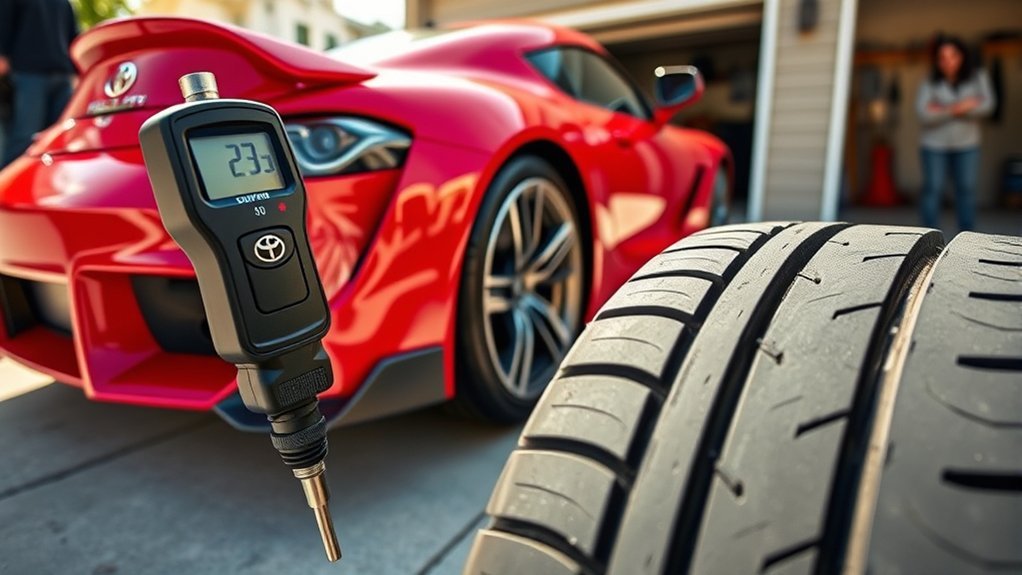
Tire pressure is essential for your Toyota Supra’s performance and safety. Maintaining the correct tire pressure, measured in pounds per square inch (PSI), directly affects your vehicle’s handling and fuel efficiency. If your tires are underinflated, you’ll notice decreased stability and higher fuel consumption. On the flip side, overinflated tires lead to poor traction and a rough ride. Check the recommended cold inflation pressure in your owner’s manual or on the door jamb sticker to stay safe. Regular checks—at least once a month and before long trips—are critical. Proper tire inflation can boost your fuel economy by up to 3.3%, emphasizing how important it is to keep those pressure levels in check for peak performance impact.
How Temperature Changes Impact Tire Pressure
Temperature changes can greatly affect your tire pressure, with a drop of about 1 psi for every 10°F decrease. During warmer weather, the air inside your tires expands, potentially bringing pressures up to 41 psi. That’s why it’s essential to regularly check your tire pressure, especially as the seasons change, to maintain peak performance and safety.
Temperature Effects on Pressure
As the seasons change, you might notice fluctuations in your Toyota Supra’s tire pressure. With every 10°F increase in temperature, tire pressure can rise by about 1 psi. During colder months, it’s common to see a recommendation of 37 psi, while warmer weather may push that up to 41 psi. Checking your tire pressure when the tires are cold is vital; driving heats them up, skewing readings. These temperature-related shifts can impact your vehicle’s handling, stability, and fuel efficiency. Regular monitoring helps you stay in control and guarantee your Supra performs at its finest, no matter the season. So, keep an eye on those seasonal impacts to maintain ideal tire pressure.
Fluctuations During Seasonal Changes
When the seasons shift, you might notice your Toyota Supra’s tire pressure fluctuating considerably. Tire pressure sensors help monitor these changes, as colder months can cause a drop of about 1 psi for every 10°F decrease. It’s essential to make seasonal adjustments; recommended pressure is around 37 psi in winter and may rise to 41 psi in warmer weather. Regular checks before driving guarantee you’re always in the safe zone, enhancing safety, handling, and fuel efficiency.
| Temperature Change | Pressure Change | Recommended Action |
|---|---|---|
| -10°F | -1 psi | Check pressure |
| 0°F | 0 psi | Maintain pressure |
| +10°F | +1 psi | Monitor closely |
| +20°F | +2 psi | Adjust as needed |
| Seasonal Shift | Variable | Regular checks needed |
Importance of Regular Checks
Ignoring regular tire pressure checks can lead to significant issues, especially since fluctuations occur with changing temperatures. Tire pressure can drop by about 1 psi for every 10°F decrease, risking under-inflation and increased tire wear. For your Toyota Supra, the cold inflation pressure is best set at 38 psi. If you skip checks, especially during seasonal changes, you might find pressures climbing up to 41 psi in warmer weather, negatively impacting your driving performance. Regularly monitoring your tire pressure—ideally once a month or before long trips—ensures your tires stay within the recommended range. This not only enhances safety and handling but also improves fuel efficiency, allowing you to enjoy your driving experience to the fullest.
Check Tire Pressure Before and After Long Trips
Before hitting the road for a long trip, checking your tire pressure is essential for ensuring ideal handling and safety. Tire pressure monitoring is vital, as temperatures can change during your journey, affecting pressure levels. For the most accurate reading, measure your tire pressure after the vehicle has been parked for at least three hours to get a “cold” reading. Underinflated tires can reduce fuel efficiency and increase wear, especially on extended drives. After your trip, it’s wise to check the pressure again, particularly if you notice any changes in performance. Familiarize yourself with pressure adjustment techniques to maintain peak levels regularly. This simple habit can enhance safety and improve fuel economy by up to 3.3%.
Regular Maintenance: Monthly Tire Pressure Checks

To keep your Toyota Supra performing at its best, checking the tire pressure monthly is essential. Regular checks help you avoid the risks of under- or overinflated tires, which can compromise handling and fuel efficiency. For accurate readings, measure the pressure when the tires are “cold.” The recommended cold inflation pressure for your Supra is typically around 38 psi, as noted on the door jamb sticker. Make tire pressure checks a routine habit, especially before long trips or during seasonal changes.
Here are some tire maintenance tips:
| Action | Frequency |
|---|---|
| Check Tire Pressure | Monthly |
| Inspect for Visible Damage | Monthly |
| Rotate Tires | Every 5,000 miles |
Employ these pressure monitoring techniques to maximize your driving experience!
Adjusting Tire Pressure for Heavy Loads
Maintaining the right tire pressure takes on added significance when you’re carrying heavy loads in your Toyota Supra. For peak handling and stability, make heavy load adjustments by increasing tire pressure above the standard recommendation, typically by 2-3 psi. Always check the manufacturer’s tire pressure guidelines for specific adjustments, as these can vary by model. Underinflated tires can lead to increased wear, reduced fuel efficiency, and a heightened risk of blowouts due to excessive flexing. Before heading out on long trips with heavy cargo, monitor tire pressures—ideally when the tires are cold for accurate readings. Once the load is removed, remember to revert to standard inflation levels to guarantee your Supra performs safely and efficiently.
How to Use TPMS for Regular Maintenance Checks
To keep your Toyota Supra’s tires in top shape, understanding the Tire Pressure Monitoring System (TPMS) is key. When you see alerts on the dashboard, don’t ignore them; they’re your first clue to check tire pressures. After making adjustments, always reset the TPMS to guarantee accurate readings moving forward.
Understanding TPMS Alerts
While you might rely on your Toyota Supra’s Tire Pressure Monitoring System (TPMS) for alerts, understanding how to use it effectively can enhance your vehicle’s performance and safety. The TPMS provides real-time readings of tire pressures and temperatures, making it easier for you to monitor their status. Regularly checking the TPMS display for discrepancies, especially with front tire temperatures, is essential. Remember, the TPMS might not always show the recommended pressure for your specific model, so refer to the door jamb sticker or owner’s manual for accurate specs. It’s wise to check tire pressures at least once a month or before long trips to prevent issues indicated by alert responses from the TPMS warning light.
Resetting The TPMS System
Resetting the TPMS after adjusting your tire pressures is essential for accurate monitoring and safety. It guarantees your system’s sensor accuracy and keeps you aware of your tire health. Here’s how to effectively use TPMS for regular maintenance checks:
- Adjust Tire Pressures: Verify all tires are inflated to the recommended levels before proceeding.
- Reset TPMS: Locate the reset button, usually found under the steering wheel or in the glove compartment, and hold it until the indicator blinks.
- Confirm Calibration: Drive for a short distance to verify that the TPMS recalibrates correctly and reflects accurate readings.
Regularly resetting the TPMS not only maintains peak performance but also enhances your driving experience in your Toyota Supra.
Frequently Asked Questions
What Is the Best Psi for a Supra?
The best psi for your Supra is around 38 psi. Regular tire maintenance tips like checking pressure monthly can enhance performance upgrades and guarantee a smooth, safe driving experience. Keep those tires in top shape!
Conclusion
Keeping your Toyota Supra’s tires properly inflated is like guaranteeing a smooth dance on the open road. Embrace the routine of checking your tire pressure regularly, especially before those long journeys or when the temperature swings. Adjusting for heavy loads guarantees you’re gliding safely. With the help of your TPMS, you’re not just maintaining your ride; you’re nurturing a bond with the asphalt beneath you, guaranteeing every turn is a thrill rather than a chore.