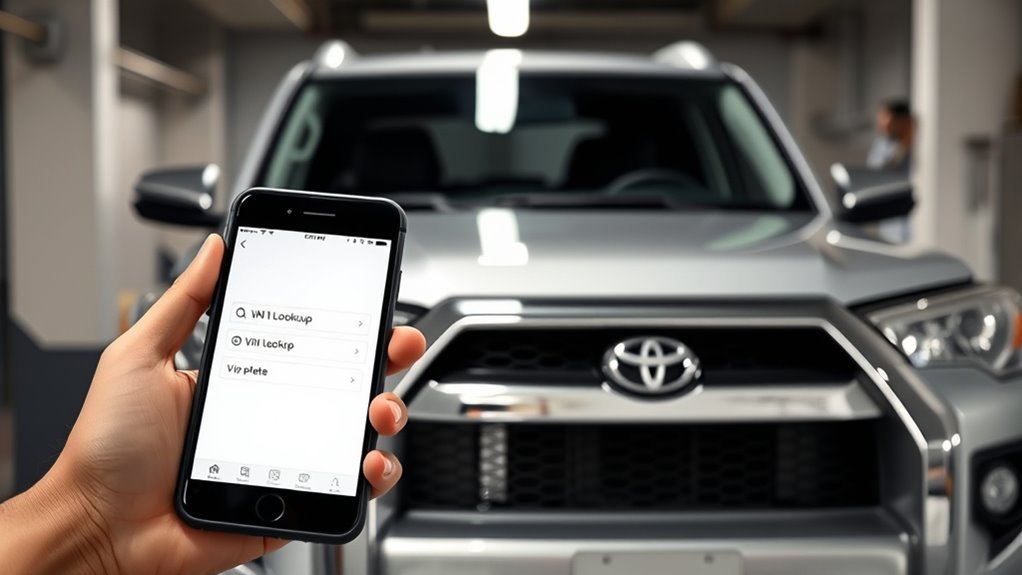
Enter your 17-digit Toyota 4Runner VIN on Toyota’s official recall page or NHTSA’s recall lookup to check whether your exact vehicle has an unrepaired safety recall or Toyota service campaign. Confirm the VIN from the dashboard, driver-side doorjamb, registration, or insurance card before you search, because one wrong character can return the wrong result.
Quick Answer
To check Toyota 4Runner recalls by VIN, find your 17-character VIN, enter it on Toyota’s recall lookup, then verify the result on NHTSA’s recall page. If an unrepaired safety recall appears, call an authorized Toyota dealer and schedule the free remedy.
Key Takeaways
- Use the full 17-character VIN, not a partial VIN, trim name, or plate number alone.
- Toyota’s lookup can show open safety recalls and service campaigns for covered Toyota vehicles.
- NHTSA’s VIN lookup is excellent for unrepaired safety recalls, but it does not show every completed recall or every non-safety campaign.
- Safety recall repairs are handled at no charge by the manufacturer’s dealership network.
- If you are buying a used 4Runner, verify the VIN yourself and ask for dealer repair paperwork before signing.
At a Glance
| Time Required | 3–10 minutes to check; dealer repair time varies by recall and parts availability |
| Difficulty | Easy |
| Tools Needed | 17-character VIN, internet access, and your phone or computer |
| Cost | Free to check; safety recall remedies are free through the manufacturer’s dealer network |
What This Guide Helps You Do

This guide walks you through the safest way to check Toyota 4Runner recalls by VIN, understand the result, and act on any open safety campaign. You will learn where to find the VIN, how to use Toyota and NHTSA recall tools, what each result means, and how to document the repair.
A VIN check is especially important if you recently bought a used 4Runner, moved to a new address, inherited a vehicle, or are not sure whether the previous owner completed recall work. Recall notices usually go to the registered owner on file, so a used buyer can miss an important letter even when the vehicle still needs a repair.
Find Your Toyota 4Runner VIN Fast
Your Toyota 4Runner’s VIN is a unique 17-character code. NHTSA’s VIN decoder explains that the VIN identifies a specific vehicle and encodes details about that vehicle. Toyota also lists common VIN locations on the vehicle itself.
Locate the VIN Plate
Start with the easiest physical locations:
- Driver-side dashboard: Look through the windshield at the lower corner of the dashboard on the driver’s side.
- Driver-side doorjamb: Open the driver’s door and check the certification label on the doorjamb or door post.
- Registration or insurance card: Use these documents if you are not near the vehicle, then compare them against the vehicle label later.
Copy every character exactly. VINs do not use the letters I, O, or Q in modern standardized VINs, so double-check anything that looks like a 1, 0, or similar character.
Check Registration Documents
Your title, registration card, and insurance documents can help you retrieve the VIN quickly. However, do not rely on paperwork alone when buying a used 4Runner. Compare the document VIN with the dashboard and doorjamb VIN. If they do not match, pause the purchase or service request until the discrepancy is explained by the DMV, insurer, seller, or dealer.
Decode VIN Characters Carefully
You do not need to decode the VIN manually to check recalls, but decoding can help confirm that you copied the right vehicle. The NHTSA VIN Decoder can identify details such as manufacturer information and plant details reported by the manufacturer. Use it as a confirmation tool, not as a substitute for the recall lookup.
Pro Tip: Take a clear photo of the dashboard VIN and doorjamb label. That makes it easier to enter the VIN accurately and gives you a record if a dealer, seller, or insurer asks for confirmation.
Check 4Runner Recalls on Toyota’s Site Step by Step
Toyota’s official recall lookup is the best first stop for Toyota-specific safety recalls and service campaigns. It can search by license plate and state or by the full 17-digit VIN.
- Go to Toyota’s Safety Recalls & Service Campaigns lookup.
- Choose the VIN option if you have the VIN available.
- Enter all 17 characters exactly as shown on the vehicle or registration.
- Submit the search and review any listed safety recall or service campaign.
- If Toyota shows one or more items ready for repair, use the dealer locator or call your preferred authorized Toyota dealer.
Write down the campaign title, campaign number if shown, affected system, and recommended remedy. Those details help the service advisor identify the correct repair when you schedule the appointment.
Verify Toyota 4Runner Recalls on NHTSA Step by Step
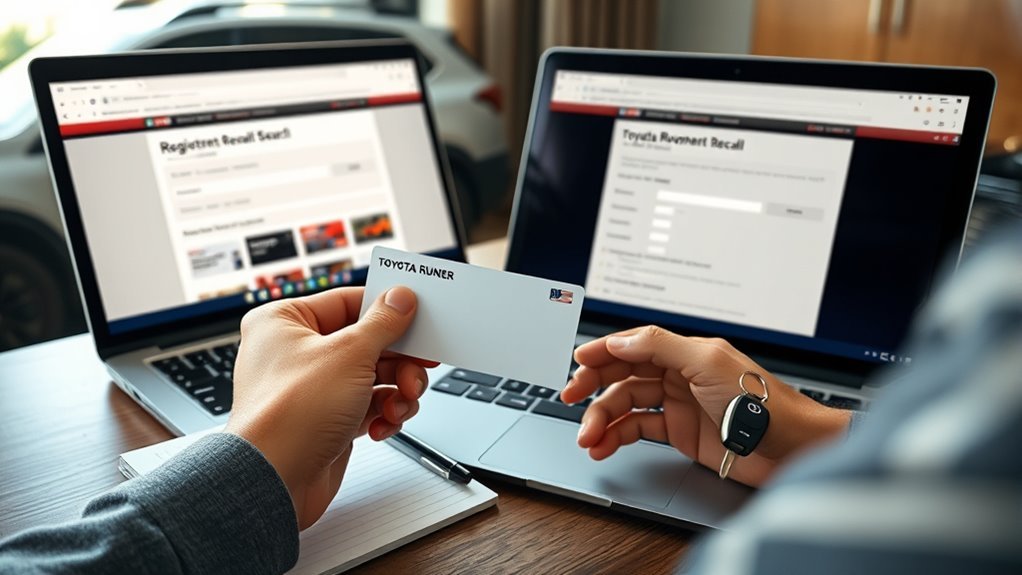
NHTSA’s recall lookup is the federal safety recall check. It is useful because it focuses on safety-related recalls and lets you search vehicles, car seats, tires, and equipment.
Enter the VIN on NHTSA
- Go to NHTSA’s Check for Recalls page.
- Select the vehicle recall search.
- Enter your 17-character VIN or use the license plate option if available.
- Review whether the tool shows an unrepaired safety recall associated with that VIN.
Review Recall Details
If NHTSA lists a recall, review the affected component, defect summary, consequence, remedy, and manufacturer campaign number. Then call an authorized Toyota dealer and ask for the recall remedy tied to your VIN.
Note: NHTSA’s VIN and license plate lookup does not show everything. It may not show completed recalls, manufacturer customer service campaigns, international vehicles, some very recent recalls before all VINs are identified, or most safety recalls older than 15 years unless the manufacturer offers broader coverage.
Read Recall and Service Campaign Results: What Statuses Mean
Recall tools use different wording, but the practical meaning is simple: either your 4Runner needs action, the tool does not show an unrepaired recall, or the issue is outside that tool’s coverage.
| Result or Status | What It Usually Means | What to Do |
|---|---|---|
| Open / unrepaired safety recall | A safety-related defect or noncompliance has not been remedied on your VIN. | Schedule the free remedy with an authorized Toyota dealer. |
| No unrepaired recalls | The lookup does not show an incomplete safety recall covered by that tool. | Save the result and check again twice a year or before a long trip. |
| Service campaign / customer support program | Toyota may offer inspection, repair, or support that is not always the same as a federal safety recall. | Read Toyota’s terms, eligibility, mileage limits, and deadlines carefully. |
| Recently announced / VINs pending | A recall may be public before every affected VIN appears in a lookup. | Check Toyota, NHTSA, and dealer records again later. |
| Completed | The remedy was performed previously, but not every public lookup displays completed recall history. | Ask the dealer for repair order records if you need proof. |
If There’s a Safety Recall: What to Do First
If your VIN lookup shows an open safety recall, act quickly and keep records. Safety recalls are not optional maintenance items. They are tied to defects or noncompliance that can affect crash risk, injury risk, or vehicle safety standards.
- Confirm the VIN: Recheck the dashboard or doorjamb VIN before scheduling.
- Save the campaign details: Record the recall title, NHTSA campaign number if shown, Toyota campaign number if shown, and remedy description.
- Call an authorized Toyota dealer: Ask for the recall remedy tied to your VIN.
- Ask about parts and timing: Some recalls require parts ordering or software updates.
- Follow interim instructions: If the notice says “Do Not Drive,” “Park Outside,” or gives other safety guidance, follow that guidance until the remedy is complete.
- Keep the repair order: Save the final dealer paperwork showing the recall was completed.
Warning: Do not ignore a high-risk safety recall because the vehicle seems to drive normally. Some defects, including airbag or seat belt issues, may not be obvious until a crash or emergency occurs.
High-Risk Recalls to Watch For: Takata Airbags and Others
Airbag, seat belt, brake, steering, fuel-system, fire-risk, and crash-warning recalls deserve urgent attention. Takata airbag recalls are especially important because defective inflators can rupture after long-term exposure to heat and humidity, sending metal fragments toward occupants. NHTSA has confirmed U.S. deaths and injuries linked to defective Takata PSAN airbag inflators, so any open Takata-related campaign should be scheduled immediately.
A cleared VIN today is not a lifetime clearance. Recall data can change, ownership records can lag, and new campaigns can be announced after you buy the vehicle.
Even if your 4Runner is not affected by a Takata campaign, the habit is the same: check by VIN, read the remedy, follow interim safety instructions, and keep written proof of completion.
Schedule Free Repairs and Request Reimbursement
For a safety recall, the manufacturer is required to provide a remedy such as repair, replacement, refund, or in rare cases repurchase. In normal owner practice, that means you call an authorized Toyota dealer and schedule the recall work at no charge.
When you schedule, ask the service advisor these questions:
- Is the remedy available now for my VIN?
- Do parts need to be ordered?
- How long will the repair take?
- Is there any interim safety instruction I should follow?
- Will the repair order clearly show the recall campaign number?
If you previously paid for a repair that later became covered by a recall, read the owner notification letter and Toyota’s recall support information for reimbursement instructions. Keep the invoice, proof of payment, VIN, mileage, repair date, and parts/labor description. Reimbursement eligibility depends on the specific campaign terms.
Check Recalls on a Used 4Runner Before Buying
A used 4Runner may have changed owners several times, and recall letters may have gone to someone else. Before you buy, run the VIN yourself on Toyota and NHTSA. Do not rely only on a seller’s verbal promise that “all recalls are done.”
- Match the VIN: Compare the dashboard, doorjamb, title, and listing.
- Run both lookups: Check Toyota’s recall page and NHTSA’s recall page.
- Ask for proof: Request dealer repair orders for completed recall work.
- Check older vehicles carefully: NHTSA’s VIN lookup has coverage limits for older recalls, so dealer records can matter more on older 4Runners.
- Delay the purchase if needed: If a serious recall is open, ask the seller to complete it before transfer or negotiate accordingly.
Troubleshooting VIN Lookup Problems
If the Toyota or NHTSA tool does not return the result you expected, try these fixes before assuming the vehicle is clear:
- Re-enter the VIN manually: One wrong character can change the result.
- Check for I, O, and Q confusion: Modern VINs do not use those letters.
- Use the VIN instead of only the plate: License plate records can lag after a sale, move, or registration change.
- Check again later: Recently announced recalls may take time before every affected VIN appears.
- Call a Toyota dealer: A dealer can check Toyota’s systems by VIN and confirm campaign eligibility.
- Report safety concerns: If you experience a safety problem that is not listed as a recall, you can file a complaint with NHTSA through its recall and safety issue tools.
Frequently Asked Questions
Is a Toyota VIN check free?
Yes. Toyota’s official recall lookup and NHTSA’s recall lookup are free to use. You only need the 17-character VIN or, where supported, the license plate and state. Safety recall remedies are also handled at no charge through the manufacturer’s dealer network.
Does NHTSA show all Toyota 4Runner recall history?
No. NHTSA’s VIN lookup is designed to show covered unrepaired safety recalls. It may not show completed recalls, manufacturer customer service campaigns, international vehicles, some very recent recalls before VINs are fully identified, or most recalls older than 15 years unless the manufacturer offers broader coverage.
What is the difference between a safety recall and a service campaign?
A safety recall involves a safety-related defect or noncompliance and requires a remedy. A Toyota service campaign or customer support program may cover inspections, repairs, or support for certain conditions, but the terms, eligibility, deadlines, and coverage can differ from a federal safety recall. Read the campaign details carefully.
What should I do if the dealer says parts are not available?
Ask the dealer to document the appointment request, confirm whether parts are on order, and explain any interim safety instructions from Toyota. Keep the service advisor’s name, date, and any repair order or case number. Then check back regularly until the remedy is completed.
What is the Toyota 4Runner class action lawsuit?
The commonly referenced federal 4Runner case involved alleged frame corrosion in certain older 4Runner vehicles. Court and Federal Register records show it was a specific frame-corrosion dispute and related defect petition, not a blanket recall for all 4Runner parts. If you need legal advice or want to know whether a claim applies to your vehicle, consult a qualified attorney.
Should I check recalls again after buying a used 4Runner?
Yes. Run the VIN as soon as you buy the vehicle, update your ownership and mailing information with Toyota, and check again at least twice a year. This helps catch new recalls, recently updated VIN records, and campaigns that were not visible when you purchased the vehicle.
Sources
- Toyota Owners Safety Recalls & Service Campaigns Lookup — official Toyota recall and service campaign lookup.
- Toyota Support: Where to Find the VIN — Toyota VIN location guidance.
- NHTSA Check for Recalls — federal recall lookup and recall process guidance.
- NHTSA VIN Decoder — official explanation of 17-character VINs and VIN decoding.
- NHTSA Takata Air Bag Recall Spotlight — Takata recall risk, priority, and safety background.
- Federal Register: Denial of Motor Vehicle Defect Petition DP18-002 — official record related to 4Runner frame-corrosion petition.
Conclusion
Checking Toyota 4Runner recalls by VIN is quick, free, and worth doing more than once. Start with Toyota’s recall page, verify with NHTSA, read the result carefully, and schedule any open safety recall with an authorized Toyota dealer. Keep the final repair order, update your ownership information, and check again before road trips or any used-vehicle purchase. A few minutes with the VIN can prevent a free safety fix from being missed.