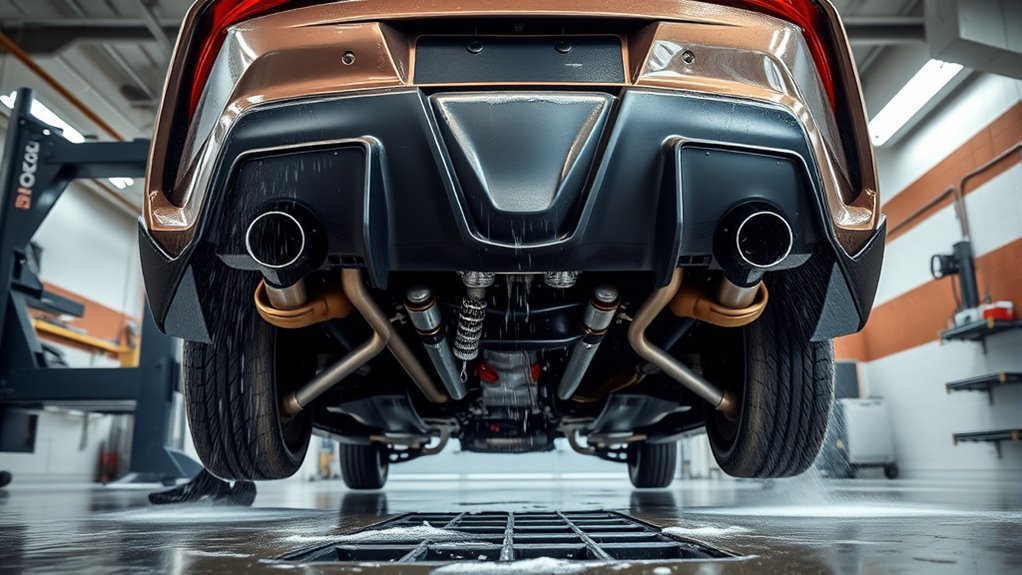
You’ll prep with hot water, a pressure washer (adjustable PSI), corrosion‑resistant brushes, degreaser and rated jack stands; confirm stability and inspect for salt, rust and debris. Clear loose snow and slush, flush wheel wells and crevices with hot water, apply degreaser to greasy spots and rinse while wet. Control spray angle to protect components, then dry and apply rust inhibitor or undercoating to exposed metal. Follow a biweekly winter wash and monthly focused inspections to prevent corrosion — keep going to learn full procedures and products.
Prep: Supra Undercarriage Tools, Safety Checks & Pre‑Wash Inspection
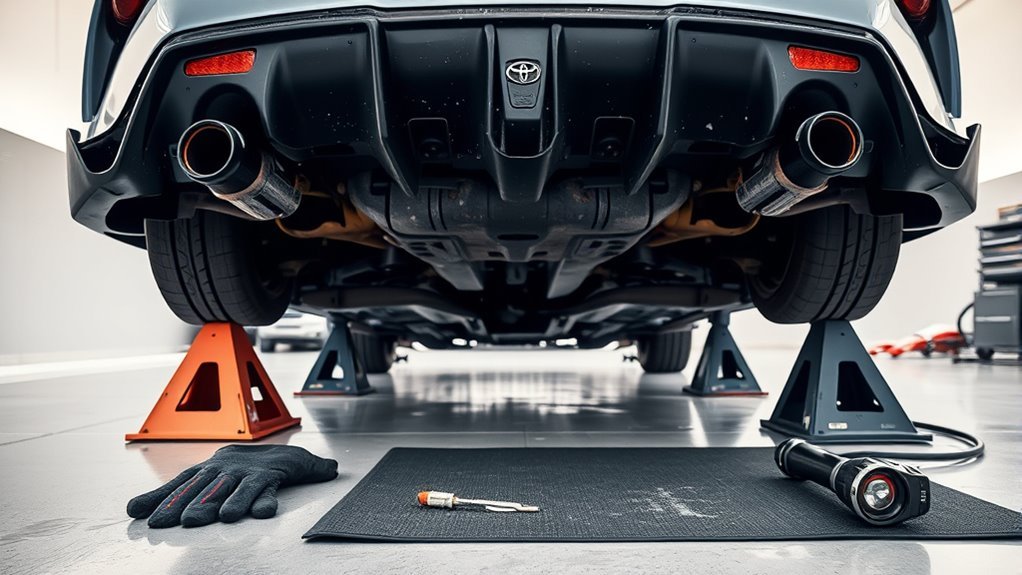
Start by gathering the essential tools: a pressure washer, degreaser, assorted brushes, and a protective undercoating spray, and plan to use hot water for more effective salt and grime removal. You’ll follow strict tool selection guidelines: choose a pressure washer with adjustable PSI, corrosion-resistant brushes, and a solvent-safe degreaser. Secure the Supra on rated jack stands or ramps; confirm stability before working beneath it. Conduct a pre-wash inspection to map salt, rust, and trapped debris so you can prioritize treatment zones. Protect sensors, exposed wiring, and intake openings with plastic or cloth covers. Apply hot-water rinses to dissolve salt, then targeted degreasing and mechanical brushing. These cleaning techniques free you from winter buildup and preserve mobility.
Remove Snow, Salt & Slush Safely: Step‑By‑Step Quick Clean
Clear loose snow and slush from the Supra’s undercarriage with gloved hands or a soft brush, working outward from the center to prevent pushing debris into suspension and brake components. Next, target wheel wells and crevices using proven snow removal techniques: dislodge compacted snow, then flush remaining residue with hot water from a DIY car wash or pressure washer at moderate distance to avoid component damage. Treat heavily soiled spots with a degreaser, keeping surfaces wet to prevent etching, then rinse thoroughly. Inspect fasteners, exhaust hangers, and control arms as you work. Finish by drying accessible areas and planning rust-proof spray or undercoating on vulnerable metal. Repeat every two weeks during winter as a disciplined, liberating routine of safe cleaning methods.
Cleaning Options: Pressure Wash, Degreasers, and Steam-What to Use When
Choose the right cleaning method for the Supra’s undercarriage based on soil type and component sensitivity: use a hot-water pressure washer to blast away salt and road grime quickly, apply a diluted degreaser to localized grease or oily deposits while keeping rubber parts wet to avoid damage, and opt for steam cleaning when you need a thorough, low-risk clean of intricate areas after heavy winter exposure.
- Pressure wash — Use hot water at a DIY car washes bay for speed and coverage; pressure wash benefits include salt removal and debris dissolution. Control distance and angle to protect sensors and seals.
- Degreaser — Apply diluted solution to greasy zones; degreaser precautions: avoid soaking rubber and electrical connectors, rinse while surfaces stay wet.
- Steam cleaning — Choose for complex geometry; steam cleaning advantages are deep clean with low mechanical force and minimal component risk.
Protect the Undercarriage: Rust Inhibitors, Undercoating & Wheel Care
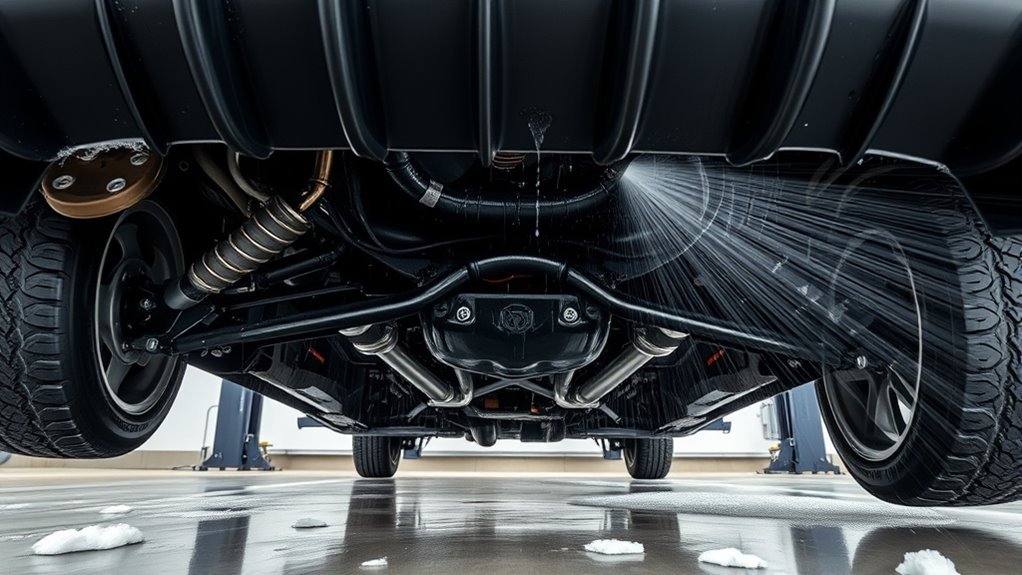
When you want to keep salt and moisture from turning chassis components into liabilities, apply rust inhibitors and undercoatings to create a continuous protective barrier over vulnerable metal and suspension parts. Start by removing grime; then choose between professional undercoating for uniform, durable coverage and DIY options like rust proof sprays for targeted protection. Mask heat-sensitive components and follow manufacturer cure times. Spray seams, control arms, and brackets in overlapping passes to avoid gaps. For wheels, decontaminate and apply wheel sealants to aluminum rims to block salt adhesion and simplify future cleaning. Schedule tactile inspections after curing to confirm coverage. You’ll reclaim control of corrosion risk by using methodical application, quality materials, and focused follow-through.
Inspect & Maintain: Post‑Clean Checklist and Seasonal Schedule
If you’ve just finished a thorough undercarriage wash, follow a concise post‑clean checklist and seasonal schedule to lock in protection and spot emerging issues before they worsen. You’ll use targeted inspection techniques and maintenance tips to keep freedom from corrosion. Complete the procedural steps below immediately after cleaning and on schedule.
- Inspect brake lines, suspension mounts, and frame for salt, grime, or surface rust; document findings and prioritize repairs.
- Apply rust‑proofing spray or undercoating sealant to exposed metal; allow specified cure time; note product and date for records.
- Set schedule: wash undercarriage every two weeks during winter and after heavy salt/snow exposure; perform a focused inspection monthly.
Act swiftly on any wear to preserve component life and retain your vehicle’s mobility.
Frequently Asked Questions
Should You Wash the Undercarriage of a Car in Winter?
Yes — you should wash the undercarriage after winter driving. You’ll perform undercarriage maintenance regularly, rinsing salt and grime to prevent corrosion, protect brake and suspension components, and preserve vehicle longevity while reclaiming control over deterioration.
What Happens if I Wait Too Long to Clean the Snow off My Car?
An ounce of prevention: if you wait, snow accumulation traps moisture, promotes rust; ice forms, scratches paint when removed, visibility suffers, locks freeze, aerodynamics worsen. Act promptly—clean, deice, inspect for rust prevention and freedom.
Is a Supra Good for Winter?
Yes — you can drive a Supra in winter if you fit proper winter tires, adjust throttle input, and respect its rear-wheel-drive handling dynamics; you’ll need disciplined technique, traction aids, and corrosion prevention to preserve freedom on snowy roads.
Conclusion
After winter’s assault you’ll want the Supra’s undercarriage to be as ready as a pit crew—clean, inspected, and protected. Follow the checklist: remove salt and slush, choose pressure wash or steam as conditions dictate, apply degreaser where needed, and treat vulnerable areas with rust inhibitor or undercoating. Inspect fasteners, brakes, and wheel wells. Keep a seasonal schedule and act promptly—small, precise steps now prevent corrosion from spreading like a slow, costly engine fire.