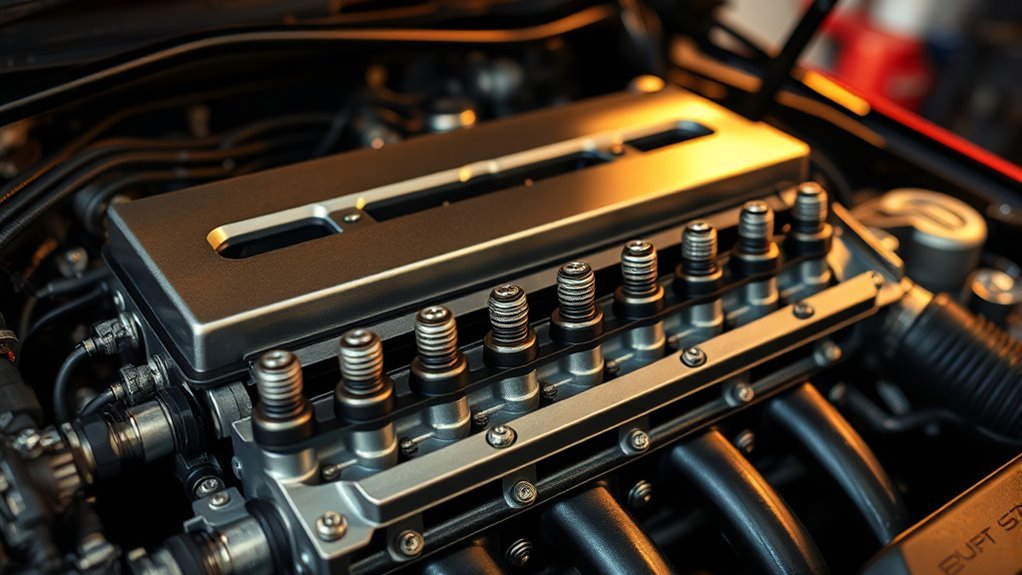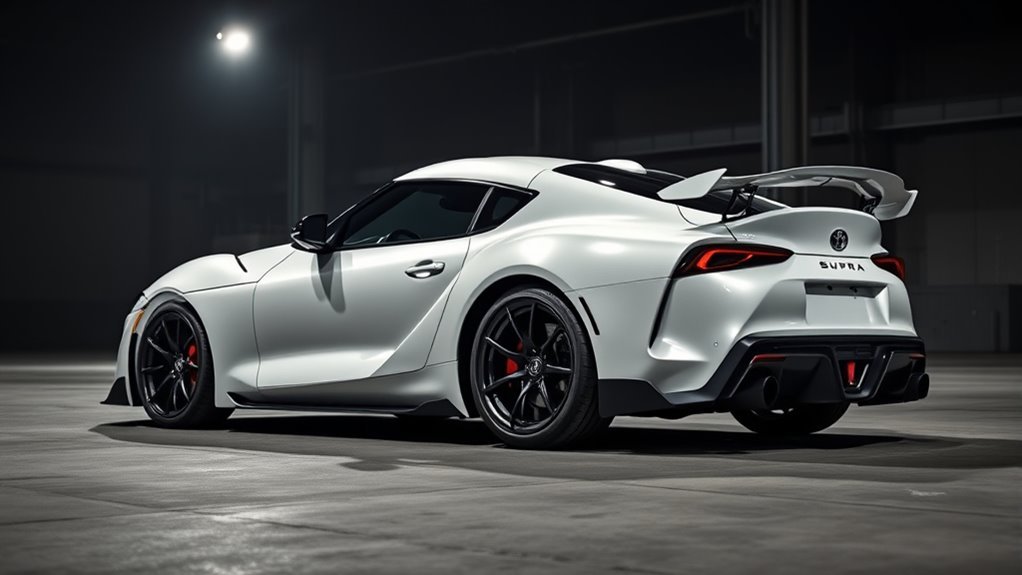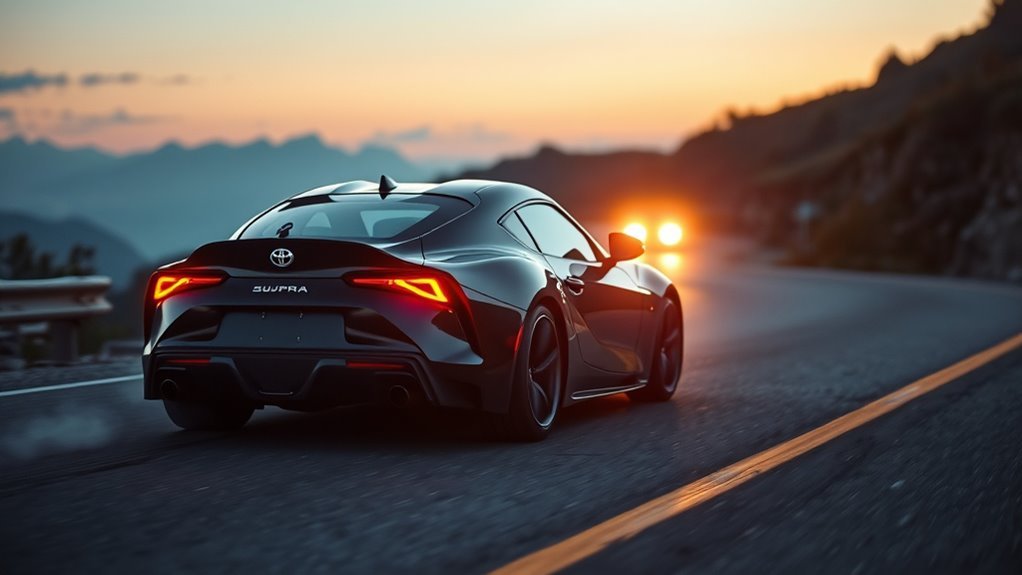
Toyota Supra stability control is not one single feature. It is a group of systems that help the car brake, accelerate and corner more predictably when grip changes. On modern GR Supra models, the main pieces are ABS, traction control, Vehicle Stability Control (VSC), brake assist and the active rear differential. Older Supra generations used simpler systems, so the exact behavior depends on model year, market and trim.
Quick Answer
On a Toyota Supra, ABS helps prevent wheel lock during hard braking, traction control helps limit drive-wheel spin, and VSC helps correct understeer or oversteer by reducing engine output and braking individual wheels. Keep the systems on for public roads; reduce intervention only on a safe, closed course.
Key Takeaways
- ABS works mainly during braking, helping the tires keep rolling so you can still steer.
- Traction control works mainly during acceleration, reducing wheelspin when the rear tires lose grip.
- VSC compares the car’s path with the driver’s steering input and can reduce engine speed or brake individual wheels.
- Sport mode, Traction mode and VSC Off do different things; do not treat them as the same setting.
- The active rear differential helps manage power transfer across the rear axle, but it does not replace good tires or careful driver inputs.
Note: This guide focuses on the modern Toyota GR Supra, especially 2020–2026 U.S.-market cars. The 1980s and 1990s Supra generations used different hardware and did not have the same modern VSC/ESC logic.
What ABS, Traction Control and VSC Do on a Toyota Supra
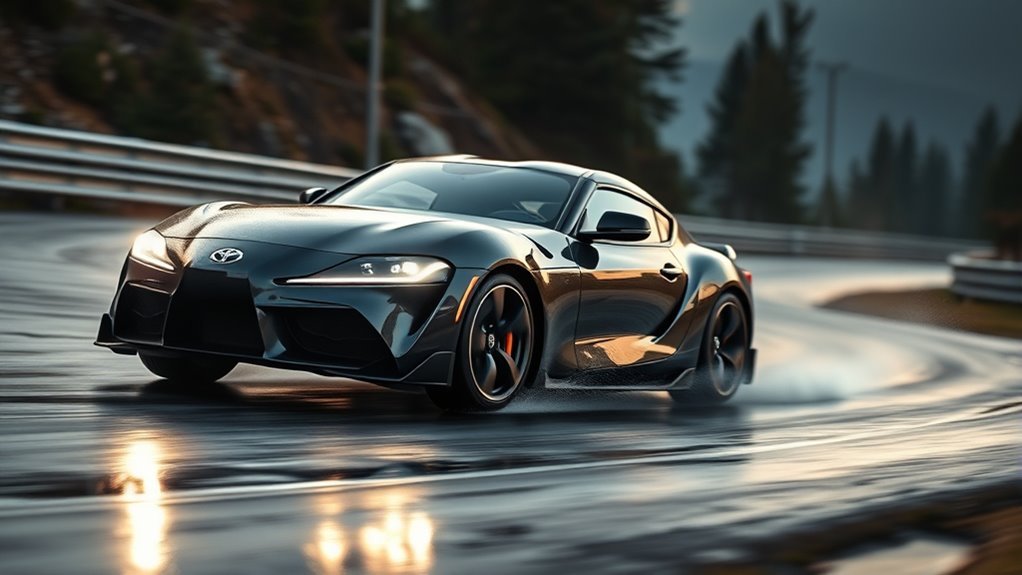
Think of the Supra’s stability systems as layers. ABS helps during hard braking. Traction control helps when the driven rear wheels spin under throttle. VSC helps when the car begins to rotate more or less than the driver intended.
| System | What it watches | What it can do | Main benefit |
|---|---|---|---|
| ABS | Wheel speed while braking | Pulses brake pressure to help prevent lockup | Keeps more steering control during hard braking |
| Traction control / TRAC | Rear-wheel spin during acceleration | Reduces engine output and may use braking to reduce slip | Helps the car accelerate without excessive wheelspin |
| VSC | Steering input, yaw behavior and wheel-speed information | Reduces engine speed and brakes individual wheels within system limits | Helps correct understeer or oversteer |
| Active rear differential | Wheel speed, yaw, brake pressure, throttle and steering information | Varies rear-axle locking behavior through a multi-plate clutch | Improves rear traction and corner-exit stability |
ABS does not create grip; it helps you use the grip available. Traction control and VSC also cannot overcome bad tires, standing water, ice, poor alignment or abrupt driver inputs. They are safety aids, not a license to ignore the road surface.
ABS vs Modern Stability Systems: 1989 Supra Compared to Today’s Cars
A 1989 Supra belongs to a very different control era. A car from that period may have anti-lock braking hardware, but it does not behave like a modern GR Supra with integrated VSC, traction control, brake assist and an active rear differential.
ABS Only Era
In an ABS-focused car, the main electronic help appears during hard braking. The system watches wheel-speed behavior and modulates brake pressure to reduce wheel lock. It does not continuously manage yaw, steering angle or rear-wheel traction in the same way modern stability control does.
That means the driver manages most of the car’s balance with steering, braking, throttle and weight transfer. Skilled drivers may enjoy that mechanical feel, but it also leaves less electronic backup when the rear tires step out or the front tires push wide.
Modern Stability Suite
A modern stability suite is more integrated. It can compare steering intent with the car’s actual movement and intervene before a slide becomes harder to catch. VSC can reduce engine speed and brake individual wheels, while traction control can reduce wheelspin during acceleration.
The difference is especially noticeable on wet pavement, cold tires, rough roads and emergency lane changes. Modern systems work in the background and may intervene before a driver fully recognizes the problem.
Impact on Driver Control
The older car gives the driver more raw responsibility. The modern GR Supra gives the driver more electronic support. Neither approach changes the laws of physics. If the tires exceed their available grip, the car can still understeer, oversteer or take longer to stop.
NHTSA research found that electronic stability control reduced fatal single-vehicle run-off-road crash involvements by 36% in passenger cars in the evaluated data set.
What Traction Control and VSC Monitor in Real Driving
During real driving, traction control and VSC are looking for different problems. Traction control is most concerned with excessive wheelspin under power. VSC is more concerned with whether the car is following the path suggested by the driver’s steering input.
If you accelerate hard on a wet road and the rear tires spin, traction control may reduce engine power and help the tires regain grip. If you enter a corner and the car begins to rotate too much, VSC may step in to reduce yaw. If the car does not rotate enough and pushes wide, VSC may also intervene within its operating limits.
These systems work best when the driver is smooth. Abrupt throttle, sudden steering or panic braking can still overwhelm the tires, especially on cold, worn or mismatched tires.
How VSC and Traction Control Work Together
VSC and traction control share information. The car uses wheel-speed data, steering input and vehicle-motion data to decide whether the rear tires are slipping, whether the car is rotating too much, or whether the front tires are losing cornering grip.
When intervention is needed, the system may do one or more of the following:
- Reduce engine output to calm wheelspin or yaw.
- Brake one or more individual wheels to help bring the car back toward the intended path.
- Work with the active rear differential to support rear-axle traction and stability.
The exact intervention depends on speed, steering angle, throttle position, available grip and the selected driving mode. It is better to describe the system as adaptive rather than as a fixed “brake this exact wheel every time” rule.
How Normal, Sport, Traction Mode and VSC Off Change System Behavior
Many Supra owners casually talk about “track mode,” but Toyota owner-facing material separates the ideas more carefully: Sport mode changes the driving feel, Traction mode changes the stability-control strategy for more forward momentum, and VSC Off reduces the electronic safety net much further.
| Setting | Best use | What changes | Caution |
|---|---|---|---|
| Normal mode | Daily driving, rain, traffic, unfamiliar roads | Balanced tuning for comfort, efficiency and stability | This is the safest default for public roads. |
| Sport mode | Dry roads, spirited but responsible driving | Sharper vehicle response and more agile chassis/suspension tuning | It does not make poor grip disappear. |
| Traction mode | Loose or special surfaces where some slip may help forward motion | Optimizes forward momentum while limiting driving stability compared with full VSC | Use carefully; the car may be easier to slide. |
| VSC Off | Controlled closed-course use by experienced drivers | Disables or greatly reduces stability and traction intervention | Driving stability is reduced during acceleration and cornering. |
Warning: Do not turn off VSC or traction control on public roads to drift, slide or test limits. Reduced intervention gives you less backup if the tires lose grip, and recovery requires more skill and more space.
How the Active Rear Differential Affects Cornering When VSC Is Relaxed or Off
The modern GR Supra uses an electronically controlled rear differential. Toyota describes it as a system that can use wheel speed, engine rpm, yaw rate, brake pressure, throttle opening and steering-angle information to control a multi-plate clutch. That clutch can vary the locking ratio between the rear wheels from 0 to 100 percent.
In plain English, the active rear differential helps the rear axle put power down more cleanly. In a corner, it can help support traction at the rear tires and make the car feel more settled when the driver feeds in throttle. When stability intervention is reduced, the differential becomes even more important because it is one of the main systems helping manage rear-axle behavior mechanically.
That does not mean it prevents every slide. A limited-slip or active differential can make oversteer feel more predictable, but it can also help both rear tires break traction if the driver adds too much throttle for the available grip.
Pro Tip: When learning the Supra’s balance, change only one variable at a time. Try Normal, then Sport, then Traction mode on a safe surface before considering VSC Off on a closed course.
[Products Worth Considering]

Fits 1999-2008 GM 8.6" Differential

Fits 2001 to 2009 Chrysler 9.25" rear

【Fit for Chevy】Fit for 2007-2013 Chevy Avalanche ; for 2002-2006 Avalanche 1500 ; for 1988-2001 C1500 ; for 1988-1999 K1500 ; for 1999-2004 S10 ; for 1999-2018 Silverado 1500 ; for 2007 Silverado 1500 Classic ; for 2001-2006 Silverado 1500 HD ;for 1995-2002 Suburban 1500 ; for 1995-2018 Tahoe ; for 2002-2008 Trailblazer
When to Leave VSC and Traction Control On
Leave VSC and traction control on for normal driving. That includes commuting, rain, cold weather, uneven pavement, traffic, canyon roads, highway driving and any road you do not know well. The systems are designed to help when something unexpected happens.
Consider reducing intervention only when all of the following are true:
- You are on a legal closed course or controlled training area.
- You have enough runoff space and no nearby traffic, curbs, trees or pedestrians.
- Your tires, brakes and suspension are in good condition.
- You understand how the car responds to oversteer and understeer.
- You are willing to accept that the car may be harder to recover when it slides.
For most drivers, Sport mode with VSC still active is the better first step. It gives a sharper feel without removing the main safety backup.
[Products Worth Considering]

√ CUT PRECISELY Exclusive design for 2020 2021 2022 2023 2024 2025 2026 Toyota GR Supra A90 8.8 Inch navigation screen, No need to trim the edges,100% compatible with the 2020 2021 2022 2023 2024 2025 2026 GR Supra center control touch screen.

APPLICABLE MODELS: The center console air conditioner switch panel trim frame compatible with Toyota Supra GR A90 A91 MK5 2019-2026, The size of the original car is customized.

Compatibility: Compatible with 2020-2026 Toyota Supra A90 A91 Coupe
Safety Trade-Offs and Recommended Upgrades to Improve Supra Stability
If you want more stability, start with the parts that actually touch the road. Tires, alignment, brake condition and suspension health matter more than turning off electronic aids. A stable Supra is not just a powerful Supra; it is a car with predictable grip.
[Products Worth Considering]

Safety Versus Performance
Reducing stability intervention can make the car feel more direct, but it also gives the driver more responsibility. On dry track pavement, that may be useful for an experienced driver. On a wet public road, it can turn a small mistake into a spin.
The safest performance setup is progressive: good tires, correct tire pressures, healthy brakes, proper alignment, then driver training. Electronic settings should come after those basics, not before them.
Recommended Stability Upgrades
| Upgrade or service | Why it helps | Priority |
|---|---|---|
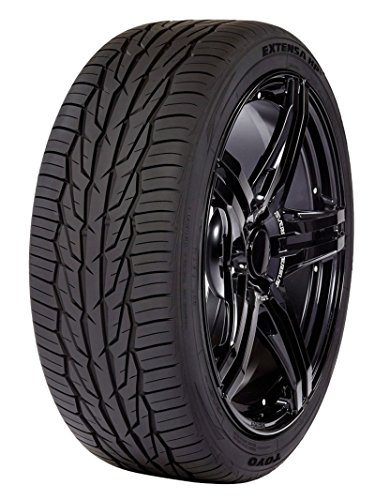
| High-quality performance tires | The biggest grip and braking improvement for most drivers | Very high |
| Correct tire pressure | Keeps the contact patch predictable as tires heat up | Very high |
| Performance alignment | Improves turn-in, tire wear and cornering balance | High |
| Fresh brake fluid and pads | Improves consistency during repeated hard stops | High for track use |
| Suspension inspection or quality dampers | Helps the tires stay planted over bumps and transitions | Medium to high |
| Motorsport stability-control calibration | Only useful for dedicated builds with professional setup | Low for street cars |
Driving Technique Adjustments
Electronic systems work better when your inputs are smooth. Feed in throttle instead of stabbing it. Add steering progressively. Brake in a straight line before asking the front tires to turn hard. If you reduce stability intervention, those habits become even more important.
- Use progressive throttle. Sudden throttle can break rear traction, especially in lower gears.
- Unwind steering as you add power. The rear tires can handle more throttle when the car is straighter.
- Look where you want to go. If the car slides, your hands tend to follow your eyes.
- Practice on a closed course. Do not learn oversteer recovery in traffic.
Troubleshooting: What ABS, Traction or VSC Warning Lights Mean
If an ABS, VSC, traction-control or brake warning light stays on after startup, treat it as a fault until proven otherwise. A warning light can mean a sensor issue, low voltage, tire-size mismatch, wheel-speed sensor problem, brake-system fault or another condition that limits system performance.
Start with simple checks: confirm all tires are the correct size, set tire pressures evenly, inspect for obvious tire damage and make sure the battery is healthy. If the warning remains, have the car scanned with a diagnostic tool that can read chassis and stability-control codes, not just generic engine codes.
Note: Do not assume the car has full stability-control support when a warning light is on. Drive gently and have the system diagnosed before performance driving.
Frequently Asked Questions
How does Toyota Vehicle Stability Control work?
Toyota Vehicle Stability Control helps keep the car on its intended path within physical limits. On the GR Supra, VSC can reduce engine speed and brake individual wheels when the system detects instability such as oversteer or understeer.
How does a stability control system work?
A stability control system compares driver intent with vehicle motion. It uses inputs such as wheel speed, steering angle and yaw behavior, then may reduce engine torque or apply individual brakes to help correct the car’s path.
What is the weakness of the Toyota Supra stability system?
The main trade-off is that stability intervention can feel intrusive during aggressive performance driving. That is not really a defect; it is the system doing its safety job. On a closed course, experienced drivers may prefer reduced intervention, but on public roads the safety benefit is usually more important.
Should stability control be on or off?
Stability control should stay on for public-road driving. Turn it down or off only on a closed course, with enough space, good tires and the skill to recover the car if it slides.
Is Traction mode the same as VSC Off?
No. Traction mode is a version of the VSC strategy that prioritizes forward momentum with less stability support. VSC Off goes further and reduces or disables key stability and traction functions, which makes the car easier to slide.
Does the Supra active rear differential replace traction control?
No. The active rear differential helps manage power transfer across the rear axle, but traction control and VSC still provide electronic intervention. The differential can improve corner-exit grip, but it cannot save the car from excessive speed, poor tires or abrupt throttle inputs.
Conclusion
Supra stability control is most useful when you understand what each system does. ABS helps under braking, traction control helps under throttle, VSC helps correct the car’s path, and the active rear differential helps the rear tires put power down. Together, they make the GR Supra more predictable, especially when grip changes quickly.
For daily driving, leave VSC and traction control on. For performance driving, build skill gradually and use a closed course. The fastest setting is not always the one with the fewest electronic aids; it is the one that lets the driver stay smooth, consistent and in control.
Sources
- Toyota 2023 GR Supra Quick Reference Guide — backs up ABS, Sport mode, VSC, Traction mode and active differential descriptions.
- Toyota 2025 GR Supra eBrochure — backs up electronically controlled rear differential sensor inputs and 0–100% locking-ratio statement.
- Toyota Owners: 2026 Supra Driving Stability Control Systems — backs up Toyota’s current owner-facing VSC and Traction mode guidance.
- 49 CFR 571.126: Electronic Stability Control Systems — backs up general ESC definitions for yaw, steering input, individual braking and engine-torque control.
- NHTSA ESC Effectiveness Report — backs up crash-reduction data for electronic stability control.
- Toyota Support: When to Use the VSC Off Button — backs up Toyota’s guidance that VSC/TRAC should only be turned off for specific low-traction situations such as getting unstuck.