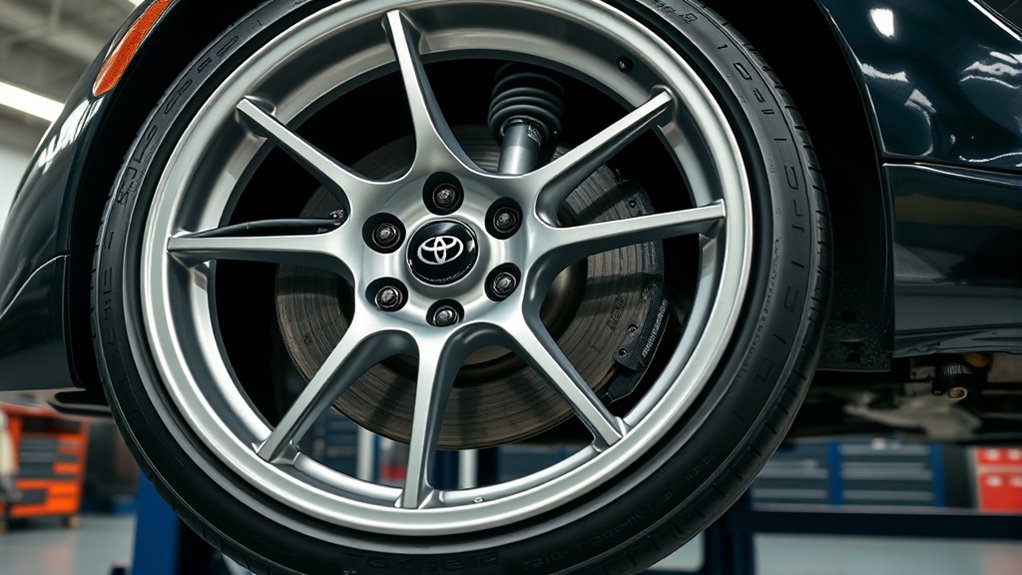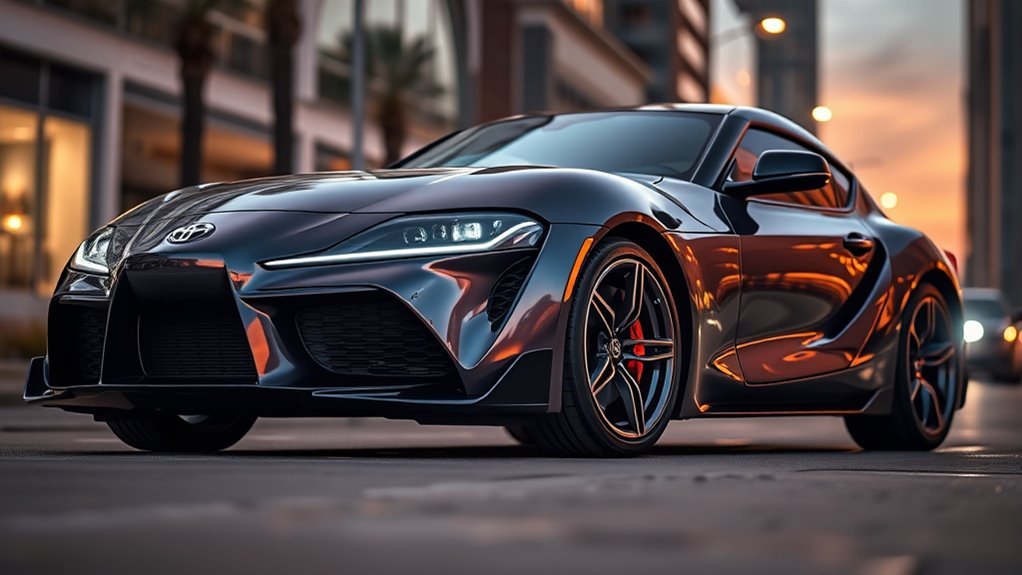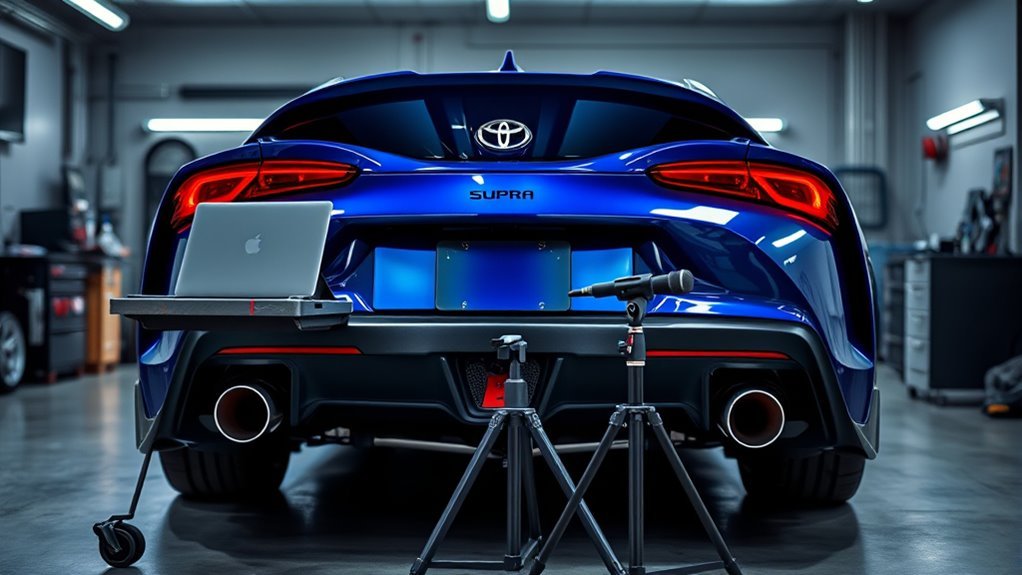
You want a Supra exhaust that sounds sharper, flows better, and still makes sense for street use. Start with the basics: identify your exact Supra model, decide how loud you really want it to be, then choose the right mix of pipe diameter, muffler design, resonators, valves, material, and emissions-compliant parts.
Quick Answer
For the best Supra exhaust sound, choose a valved cat-back if you want daily comfort, a resonated system if you hate drone, stainless steel for a warmer tone, titanium for a brighter edge, and emissions-compliant catted parts for street use. Avoid choosing by loudness alone.
Key Takeaways
- The modern MkV Toyota GR Supra 3.0 uses a turbocharged inline-six, so the engine sets a smooth base tone before any exhaust parts are added.
- A cat-back changes sound with the least emissions risk because it usually leaves catalytic converters and sensors untouched.
- Downpipes change volume, smell, rasp, and legality much more than a rear exhaust, so treat them as a separate decision.
- Check model year, transmission, OPF/GPF status, and 2026 Final Edition fitment before buying any exhaust.
- The best setup is not always the loudest one; a controlled tone with low drone is usually better for daily driving.
At a Glance
| Time Required | 1–3 hours for a typical cat-back install; longer if parts are rusted, valved, or custom-fitted |
| Difficulty | Moderate DIY with a lift or jack stands; professional install recommended for valved systems and downpipes |
| Tools Needed | Socket set, torque wrench, penetrating oil, exhaust hanger tool, lift or jack stands, new gaskets or clamps if required |
| Cost | Common Supra cat-back and slip-on systems range roughly from $1,600 to $4,600 before labor, depending on brand, material, and tips |
How to Choose the Right Supra Exhaust: 5 Key Criteria
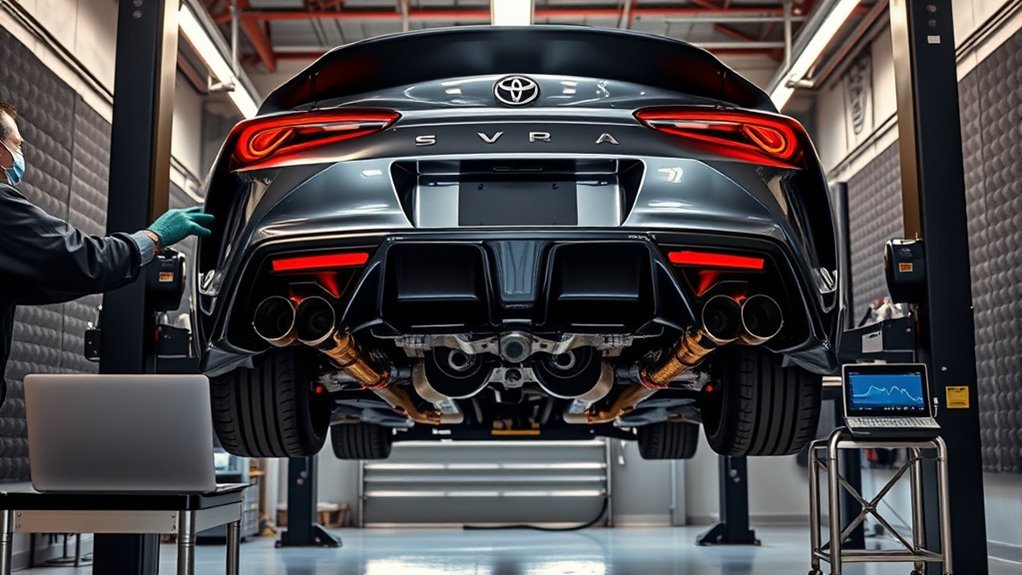
Use these five criteria before you compare brands or listen to sound clips:
- Fitment: Confirm your generation, model year, engine, transmission, OPF/GPF status, and whether your car is a 2026 Final Edition. Some current A90 systems do not fit Final Edition models or bracing.
- Sound goal: Decide whether you want OEM+, deeper tone, louder cold starts, track volume, or minimum highway drone.
- Muffler and resonator design: Straight-through mufflers usually sound louder and freer. Resonated or chambered designs usually control harshness and drone better.
- Pipe diameter and layout: Larger piping can increase flow and volume, but it can also change pitch and cabin resonance. On MkV Supra systems, you will often see 3-inch, 3.5-inch, or split dual layouts.
- Legality and emissions: Cat-backs usually keep emissions equipment intact. Downpipes and catalyst changes need much closer legal review.
Warning: Removing or defeating emissions equipment can be illegal for street use. The U.S. EPA states that tampering with a vehicle emissions-control system is illegal under the Clean Air Act, and California requires CARB Executive Order approval for many emissions-related aftermarket parts.
[Products Worth Considering]

Dual Cat Back Design with Side and Rear Exit.
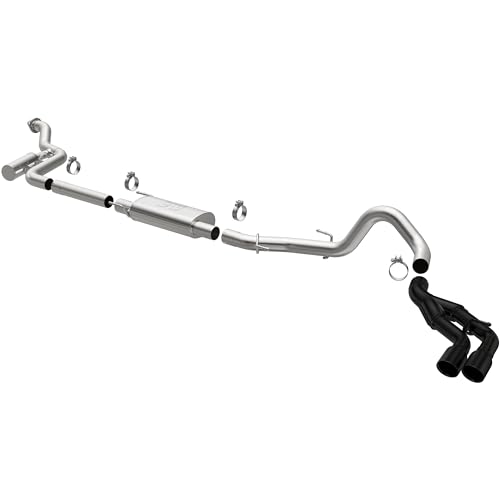
EXHAUST UNLEASHED - Redefine your Toyota Tacoma exhaust sound in all the right ways. This is the latest evolution in MagnaFlow exhaust.
![J2 Engineering J2-CBE-OS-065 Cat Back Exhaust System [Compatible with 11-16 Toyota Camry]](https://m.media-amazon.com/images/I/418UOQVYd4L._SL500_.jpg)
【FITMENT】Compatible with 2011-2016 Toyota Camry
Know Your Supra Before You Buy Any Exhaust
The exhaust that fits one Supra may not fit another. The current Toyota GR Supra highlights a 3.0L turbocharged inline-six, but the buying details go deeper than engine size. You should check:
- Generation: MkV/A90/A91 parts are different from older Mk4 Supra parts.
- Engine: 3.0L inline-six systems do not always fit 2.0L cars.
- Transmission: Some exhausts list automatic-only or transmission-specific fitment.
- Market: OPF/GPF-equipped cars may need different parts than non-OPF cars.
- Model year and trim: Several current exhaust listings have special notes for 2026 Final Edition models.
Note: “A90 Supra exhaust” is not specific enough. Match the part number to your exact car before ordering, especially if your Supra has Final Edition bracing, OPF/GPF equipment, or a manual transmission.
What Your Stock Supra Actually Sounds Like And Why It Matters
The stock MkV Supra sound is controlled, smooth, and fairly refined. You hear the inline-six character, some turbo presence, and a sportier note when the exhaust valve opens, but Toyota tuned the factory system for comfort, durability, emissions compliance, and broad daily use.
| Stock Character | Why It Happens | What To Change |
|---|---|---|
| Quiet cold and cruise behavior | Factory muffling, catalysts, valve control, and insulation | Cat-back or axle-back |
| Smooth inline-six tone | Even firing order and turbocharged I6 layout | Muffler, resonator, and material choice |
| Limited turbo drama | Factory intake, diverter valve behavior, and sound insulation | Intake/BOV changes, where legal and appropriate |
| Low cabin drone | OEM noise-control tuning | Choose resonated or drone-canceling aftermarket systems |
Listen to your car before ordering parts. Pay attention to cold start, warm idle, 2,000–3,000 rpm cruise, part-throttle acceleration, and wide-open throttle. Those are the situations where an exhaust can go from exciting to annoying.
How Engine, Turbos, and Manifolds Shape Exhaust Tone
The engine sets the base voice. Exhaust parts shape that voice, but they do not completely rewrite it. On the MkV GR Supra 3.0, the turbocharged inline-six creates a smooth, dense tone. The turbo also absorbs and softens some exhaust pulse energy, which is one reason turbo cars often sound smoother and less sharp than naturally aspirated engines.
Be careful with older Supra advice. The Mk4 2JZ-GTE is famous for twin-turbo setups, but the modern MkV/A90 Supra 3.0 is commonly described by exhaust manufacturers as a twin-scroll turbocharged inline-six, not a factory twin-turbo car. That difference matters when you compare sound clips, manifolds, downpipes, and turbo upgrades.
Manifold and turbo changes can alter the sound, but they are deeper powertrain modifications. For most owners, the biggest practical sound changes come from the cat-back, resonators, mufflers, valves, downpipe, and material.
Cat-Back, Downpipe, Muffler, Resonator, and BOV: What Each Part Does
| Part | Main Sound Effect | Legality / Risk |
|---|---|---|
| Cat-back exhaust | Changes volume, tone, tip sound, and drone level behind the catalytic converter | Usually lower risk because emissions equipment often stays intact |
| Axle-back | Changes rear muffler/tip tone with a smaller install scope | Usually lower risk, but still check local noise rules |
| Downpipe | Big jump in volume, turbo sound, smell, rasp, and flow | Higher risk because catalysts and sensors may be affected |
| Muffler | Controls loudness, tone shape, and harshness | Noise rules may apply |
| Resonator | Targets rasp and drone frequencies | Usually low emissions risk |
| Valve | Switches between quieter and louder paths | Low emissions risk if it does not alter emissions equipment |
| BOV / diverter valve | Adds turbo release sound on throttle lift | Depends on design, tuning, and local rules |
[Products Worth Considering]

2.5" Mandrel Bent for Maximum Flow

2.5" Mandrel Bent for Maximum Flow
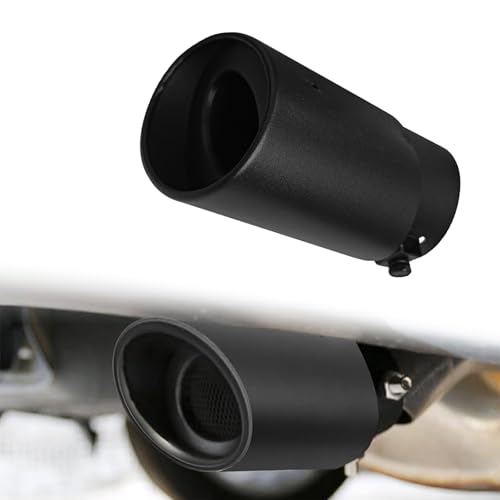
【Fashionable Decoration】: The car exhaust tip adopts chrome finish and bevel shape design, which is exquisite and unique, adding a stylish and cool feeling to your car and reflecting your unique personality
Pick Pipe Size, Muffler, and Material for the Sound You Want
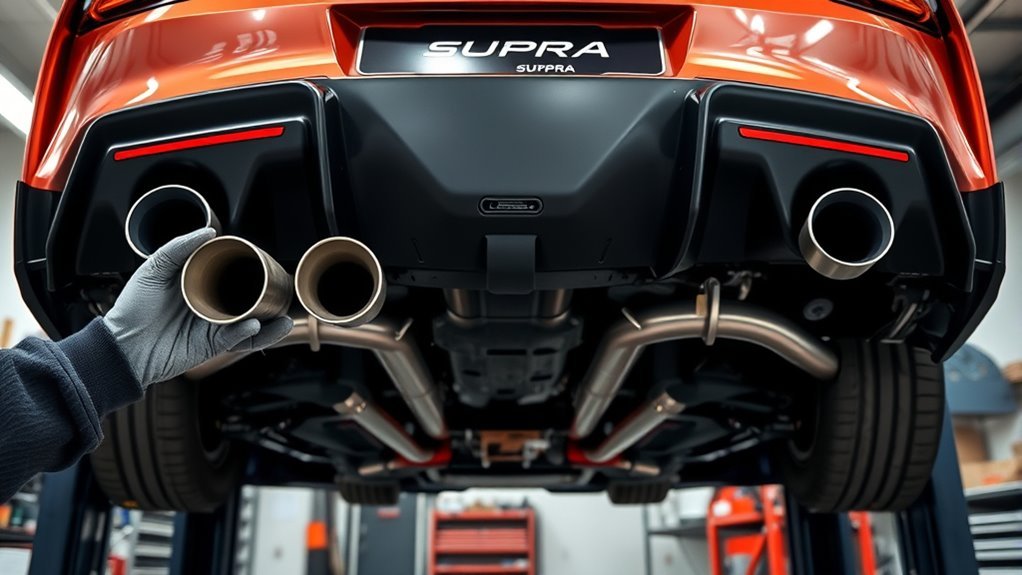
Pipe size, muffler layout, resonator choice, and material work together. Do not choose one spec in isolation.
| Goal | Best Direction | Tradeoff |
|---|---|---|
| OEM+ daily tone | Valved, resonated, stainless cat-back | Less dramatic outside the car |
| Deep, mature sound | Resonated cat-back with quality mufflers | May cost more than simple straight-through systems |
| Aggressive street sound | Straight-through or valved cat-back | More cold-start volume and possible cabin resonance |
| Track-style loudness | Track version, fewer resonators, larger piping | Can be tiring on highways and may fail noise limits |
| Bright exotic edge | Titanium slip-on or cat-back | Higher price and sharper tone may not suit everyone |
Stainless steel usually gives a strong, durable, familiar performance tone. Titanium can sound brighter and more metallic while saving weight, but it often costs much more. A larger pipe may support higher power goals, but if the car is mostly stock, muffler and resonator design will usually matter more for real-world sound satisfaction.
Pro Tip: When comparing sound clips, use headphones and find clips with warm idle, cabin cruise, drive-by, and full-throttle pulls. A cold-start-only clip tells you very little about daily livability.
How Valves, BOVs, and Downpipes Change Supra Exhaust Sound
Valves, BOVs, and downpipes do different jobs, so do not lump them together.
- Valved exhausts are the best choice if you want two personalities. Closed valves keep the car calmer during early starts or highway driving. Open valves add more volume and flow through the louder path.
- BOVs or diverter-valve changes affect turbo release sound more than exhaust note. They add the whoosh or chirp you hear when lifting off the throttle.
- Downpipes create the largest sound jump because they sit close to the turbo and catalytic converter. They can add volume, turbo whistle, odor, rasp, and check-engine-light risk if the part is not designed and used correctly.
Choose the rear exhaust for tone. Choose a downpipe only when you have a clear power, sound, tuning, and legality plan.
Compare HKS, Akrapovič, Borla, and AWE: Sound, Cost, and Fitment
These brands target different Supra owners. Always verify the current part number before buying because prices, tips, model-year coverage, and Final Edition compatibility can change.
| Brand / System | Sound Character | Current Notes To Check |
|---|---|---|
| HKS | Refined JDM tone, controlled volume, factory-valve integration on some systems | Check OPF/non-OPF fitment and 2026 Final Edition notes before ordering. |
| Akrapovič | Premium titanium, crisp, metallic, exotic sound | Usually the premium-price option; confirm OPF/GPF version and local compliance. |
| Borla ATAK | Aggressive, sharp, louder performance tone | Borla lists 2020–2026 3.0L automatic RWD fitment for this system, except Final Edition models. |
| AWE | Touring for refined sound, Track for rowdier volume; resonated and non-resonated options | AWE notes its A90 system will not fit with Final Edition bracing in place. |
[Products Worth Considering]

Fits 2016 Toyota Tacoma 3.5L

Dual Cat Back Design with Side and Rear Exit.

Sound Character Comparison
If you want calm daily use, start with HKS or AWE Touring-style options. If you want a premium lightweight tone, compare Akrapovič titanium clips. If you want the car to sound angry and obvious, Borla ATAK or AWE Track-style systems will be closer to that target.
The best comparison is not “which is loudest?” It is “which one sounds good inside the cabin after 30 minutes on the highway?” Drone control matters as much as outside volume.
Cost And Fitment
As of current listings, common Supra cat-back and slip-on options can sit anywhere from the high-$1,000 range to the mid-$4,000 range before labor. Borla’s listed ATAK variants are around the $1,600–$1,900 range depending on tip choice, AWE variants are commonly around $2,000–$2,500, HKS listings commonly sit around $3,050, and Akrapovič titanium systems commonly list above $4,500.
Do not use price alone to choose. A cheaper loud system can become expensive if it drones, fails fitment, needs extra parts, or forces you to replace it later. Confirm these details before checkout:
- Exact model year and chassis code
- 3.0L vs 2.0L engine
- Automatic vs manual transmission
- OPF/GPF vs non-OPF market version
- Final Edition fitment and underbody bracing clearance
- Valve actuator compatibility
- Tip size and bumper clearance
- Noise and emissions legality in your area
Installation, Emissions, and Tuning Tips to Get Your Desired Tone
A good exhaust can sound bad if it is installed poorly. Leaks, crooked tips, overtightened clamps, loose hangers, and valve actuator errors can all create rattles or harshness that people blame on the exhaust design.
Installation Best Practices
- Read the instructions first. Confirm whether the system reuses factory clamps, gaskets, hangers, valve motors, or adapters.
- Use safe lifting points. Never work under a car supported only by a jack.
- Loosely assemble before final tightening. This lets you align tips and prevent stress on hangers.
- Check clearances. Look around the differential, underbody braces, heat shields, bumper, and tips.
- Torque fasteners properly. Over-tightening can deform clamps; under-tightening can cause leaks.
- Cycle the valves. If the system is valved, confirm the actuator opens and closes without binding.
- Heat-cycle and recheck. After the first drive, inspect clamps, leaks, and tip alignment again.
Emissions Compliance Tips
For the lowest legal risk, choose a cat-back or axle-back that does not alter catalytic converters, oxygen sensors, or emissions monitors. If you are changing a downpipe, catalyst, or ECU calibration, check federal, state, and local rules before installing anything.
The EPA’s emissions tampering guidance explains that defeating emissions controls is illegal under the Clean Air Act. In California, the California Air Resources Board explains that exempted aftermarket parts receive an Executive Order after evaluation. If your car must pass inspection, keep documentation for emissions-related parts.
Tuning For Desired Tone
A cat-back usually does not require ECU tuning. Some manufacturers even label their systems as no-tune-required. Tuning becomes more relevant when you change downpipes, turbo hardware, fueling, or emissions-related components.
Do not tune just because you want “more sound.” Fix the hardware first: resonators reduce rasp, mufflers control volume, valves manage quiet/loud modes, and proper alignment prevents leaks. A tune may change burble behavior, throttle response, and fueling, but aggressive burble maps can increase heat, attract unwanted attention, and create compliance or warranty concerns.
Troubleshooting Drone, Rasp, Rattles, CELs, and Bad Smells
| Problem | Likely Cause | Best Fix |
|---|---|---|
| Highway drone | Resonance at cruise rpm | Add resonators, switch to Touring/resonated section, or choose a drone-canceling system |
| Rasp | Too little resonation, downpipe change, thin-wall tone | Use a resonated midpipe or a less aggressive muffler |
| Rattle on start-up | Tip contact, loose clamp, heat shield contact, valve issue | Recheck alignment, hangers, clearances, and valve actuator movement |
| Exhaust leak ticking | Bad gasket, loose clamp, uneven connection | Replace gasket, reseat joint, and torque evenly |
| Check-engine light | Sensor/catalyst/downpipe issue or valve electronics | Scan codes first; do not guess. Restore compliant parts or repair the fault |
| Strong fuel or sulfur smell | Catalyst change, rich calibration, or leak | Inspect for leaks and emissions issues; use compliant catalytic components |
Frequently Asked Questions
How do you tune your Supra exhaust sound?
Tune the sound by choosing the right hardware first: cat-back, muffler, resonator, valve layout, pipe diameter, and material. Use a tune only when the modification requires it, such as certain downpipe or turbo setups. For most daily-driven Supras, a valved resonated cat-back is the cleanest starting point.
Why do Supras sound like that?
The Supra’s sound comes from its inline-six engine layout, turbocharger, exhaust manifold, catalysts, mufflers, valves, and pipe design. The modern MkV Supra 3.0 has a smooth turbocharged inline-six tone, while older or heavily modified Supra builds can sound very different.
Is a cat-back exhaust legal on a Supra?
A cat-back is usually the lower-risk option because it normally leaves catalytic converters and emissions sensors in place. However, street legality still depends on noise rules, local law, and the exact part. Always check your state or country before installing.
Will a downpipe make my Supra louder?
Yes, a downpipe usually makes a Supra louder and can add turbo sound, rasp, smell, and check-engine-light risk. It also has much bigger emissions implications than a cat-back. Use emissions-compliant parts for street cars and verify inspection requirements before buying.
Which Supra exhaust has the least drone?
Look for resonated systems, Touring versions, valved designs, or systems engineered specifically for drone control. Avoid buying only from loud exterior clips. Cabin cruise clips at highway speed are the best way to judge drone before purchase.
Do I need a tune after installing a Supra exhaust?
Usually not for a cat-back. A tune may be needed or recommended when changing a downpipe, turbo, fueling, or other powertrain parts. If the exhaust manufacturer says no tune is required, follow the installation instructions and scan for faults after installation.
Conclusion
A great Supra exhaust is a matched setup, not a random loud pipe. Start with your exact model and fitment, decide how much volume and drone you can live with, then choose the muffler, resonator, valve, material, and pipe layout that support that goal. Keep emissions equipment and local rules in mind, especially if you are considering a downpipe.
For most street-driven Supras, the best first move is a quality valved or resonated cat-back from a reputable brand. It gives you a stronger voice without jumping straight into the legal, tuning, and inspection risks that come with emissions-related changes.
Sources
- Toyota GR Supra official page — current GR Supra engine and vehicle overview.
- U.S. EPA Clean Air Northeast: Tampering and Aftermarket Defeat Devices — emissions tampering and Clean Air Act guidance.
- California Air Resources Board: Aftermarket, Performance, and Add-On Parts — CARB Executive Order explanation for aftermarket parts.
- Borla Toyota GR Supra ATAK cat-back product page — Borla fitment, pipe diameter, material, valve, and Final Edition note.
- AWE A90 Toyota GR Supra exhaust suite — AWE Touring/Track options, 180 Technology, no-tune note, pricing, and Final Edition bracing note.
- HKS Toyota GR Supra featured model page — HKS GR Supra exhaust design, valve-operation, and sound-frequency notes.