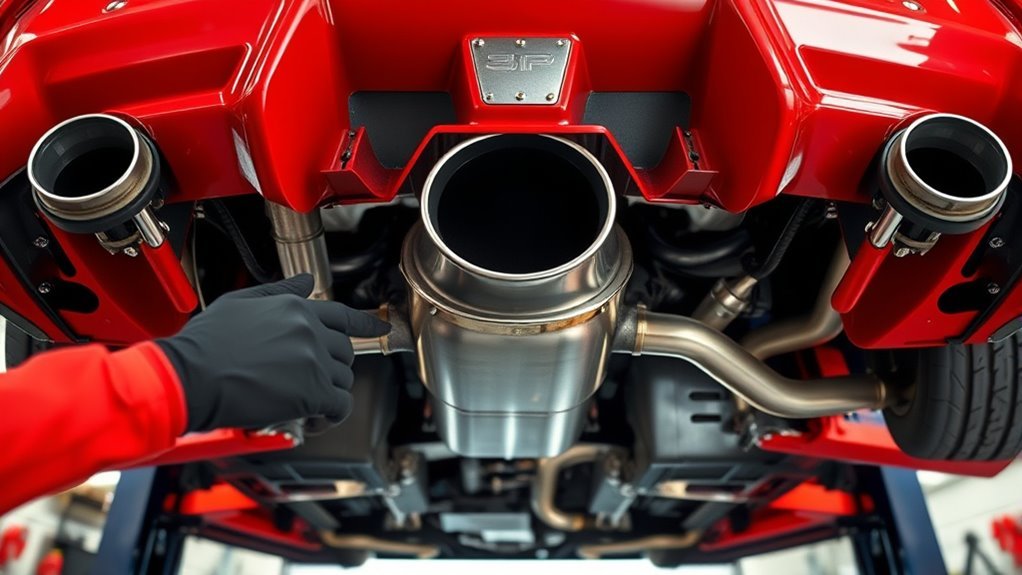
Your Supra’s catalytic converter is the emissions-control part that cleans the exhaust before it leaves the tailpipe. It uses a coated honeycomb core to reduce nitrogen oxides and oxidize carbon monoxide and unburned hydrocarbons, helping the car meet emissions rules without adding unnecessary exhaust restriction when it is healthy.
Quick Answer
A Toyota Supra catalytic converter turns harmful exhaust gases into less harmful gases by sending exhaust through a platinum-group-metal-coated honeycomb. A failing converter may cause a check engine light, P0420 code, rotten-egg smell, poor acceleration, excess heat, or an emissions-test failure.
Key Takeaways
- The Supra uses a three-way catalytic converter to reduce NOx and oxidize CO and hydrocarbons.
- Common warning signs include P0420, sluggish acceleration, strong sulfur odor, overheating, poor fuel economy, and failed emissions testing.
- Do not replace the converter until misfires, exhaust leaks, oil burning, coolant leaks, and oxygen or air-fuel sensor problems are checked.
- Removing or bypassing a catalytic converter on a street-driven car is illegal under U.S. federal emissions law and can also violate state rules.
- For a legal replacement, match the converter to the Supra’s model year, engine, emissions certification, and your state’s requirements.
At a Glance
| Time Required | 15–30 minutes for a basic scan; 1–2 hours for proper diagnosis |
| Difficulty | Beginner for code reading; intermediate for testing backpressure or sensor data |
| Tools Needed | OBD-II scanner, flashlight, infrared thermometer or scan-tool temperature data, lift or jack stands for visual inspection |
| Typical Cost | Diagnosis often costs less than replacement; full converter replacement can vary widely by Supra generation, OEM vs. aftermarket part, labor, and state emissions rules |
What a Toyota Supra Catalytic Converter Does
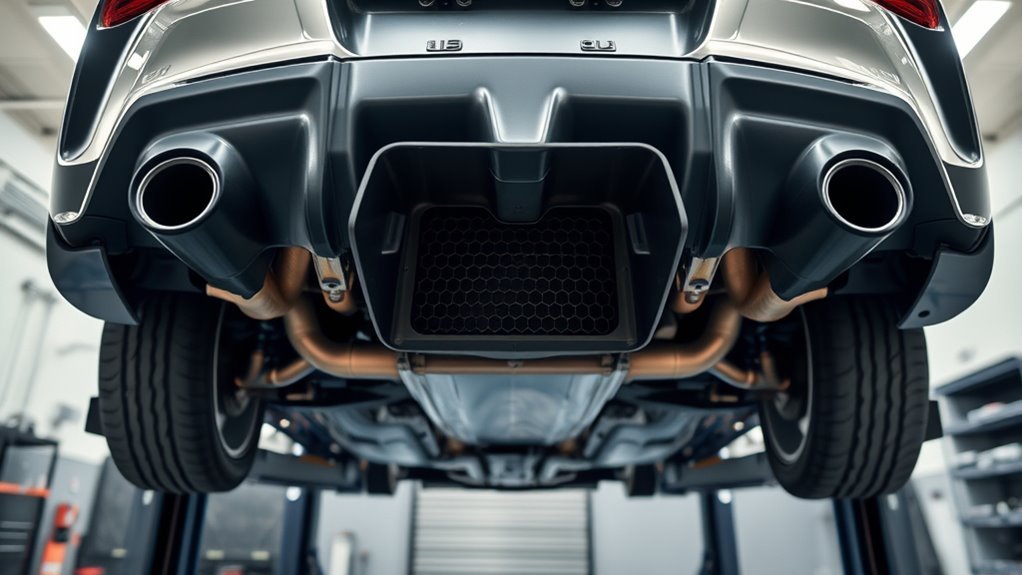
Because a gasoline engine creates carbon monoxide (CO), unburned hydrocarbons (HC), and nitrogen oxides (NOx), the Supra’s catalytic converter changes those pollutants into less harmful gases before they exit the exhaust. In a healthy three-way converter, the catalyst reduces NOx into nitrogen and oxygen while oxidizing CO and HC into carbon dioxide and water vapor.
The converter does this inside a honeycomb-shaped substrate with a high-surface-area coating. That coating contains small amounts of platinum-group metals, mainly platinum, palladium, and rhodium. The exact metal loading varies by model year, engine, market, and converter supplier, so any single gram estimate should be treated as a rough generalization rather than a Supra-specific specification.
On modern Supras, the engine computer monitors catalyst performance with oxygen or air-fuel sensors before and after the converter. If the downstream sensor pattern suggests the converter is no longer storing and processing oxygen effectively, the system may store a catalyst-efficiency code such as P0420. Toyota also warns that serious misfiring can quickly damage emission-control components, including the catalytic converter, so a flashing check engine light should be treated as urgent service rather than a casual warning.
Warning: Never crawl under a Supra supported only by a jack, and never touch or inspect the converter immediately after driving. Exhaust parts can stay hot enough to burn skin or ignite nearby materials.
How the Supra Catalytic Converter Works
The Supra’s converter works best when the engine is mechanically healthy, the air-fuel mixture is controlled correctly, and there are no exhaust leaks ahead of the catalyst. The converter needs heat to “light off,” but excessive heat from misfires, rich running, oil burning, or coolant contamination can melt or poison the substrate.
Catalyst Chamber Operation
The catalyst chamber routes exhaust through thousands of small honeycomb passages. This design gives the exhaust a large contact area while keeping flow restriction low. The washcoat on the honeycomb holds the precious-metal catalysts and oxygen-storage materials that help the converter keep working during normal changes in throttle, load, and fuel mixture.
- Honeycomb geometry: increases contact area while limiting backpressure.
- Platinum and palladium: help oxidize carbon monoxide and hydrocarbons.
- Rhodium: helps reduce nitrogen oxides.
- Oxygen storage: helps smooth normal air-fuel swings so the converter can keep cleaning exhaust.
Emission Conversion Stages
A three-way converter performs two main jobs at the same time. First, it reduces NOx by removing oxygen from nitrogen-oxide molecules. Second, it oxidizes CO and HC by adding oxygen, forming CO2 and H2O. These reactions are most effective after the converter reaches operating temperature and the engine management system maintains the correct mixture.
That is why converter problems often trace back to something upstream. A bad ignition coil, leaking injector, failed thermostat, vacuum leak, oil consumption, coolant leak, or exhaust leak can make a good converter look bad or destroy a new one quickly.
Pro Tip: If a new catalytic converter fails soon after installation, look for the root cause first. Replacing the converter without fixing misfires, rich running, oil burning, or exhaust leaks can lead to another failure.
What’s Inside a Supra Converter — And Why It Matters
Inside the Supra’s catalytic converter is a ceramic or metallic substrate formed into a honeycomb, a washcoat layer, and precious-metal catalysts. The honeycomb gives the exhaust many small paths to pass through, while the washcoat carries the reactive materials that perform the emissions-cleaning chemistry.
- Substrate: supports exhaust flow and provides a stable structure for the catalyst coating.
- Washcoat: increases surface area and holds oxygen-storage materials.
- Platinum and palladium: support oxidation of CO and hydrocarbons.
- Rhodium: supports reduction of nitrogen oxides.
- Oxygen or air-fuel sensors: help the computer monitor mixture and catalyst efficiency.
This matters because a converter is not just a hollow muffler. If the substrate cracks, melts, plugs, or becomes chemically contaminated, the Supra can lose power, fail an emissions inspection, run hotter than normal, or trigger a check engine light. If the substrate breaks apart, you may also hear rattling from the exhaust.
Supra Generation and Engine Differences
Not every Supra uses the same converter layout. Older A70 and A80 Supras, including the 7M and 2JZ cars, have different exhaust packaging from the modern A90/A91 GR Supra. The current GR Supra also differs by engine: 2.0-liter turbo four-cylinder cars and 3.0-liter turbo inline-six cars use different exhaust components and emissions calibrations.
Before buying parts, match the converter to all of the following:
- Model year and generation
- Engine size and emissions family
- Federal, California, or other state emissions certification
- Automatic or manual transmission, where fitment differs
- Sensor locations and exhaust flange design
- Whether the vehicle is street-driven, track-only, or exported to another market
Note: A converter that physically bolts on is not automatically legal. In California and states that follow California-style rules, use the California Air Resources Board aftermarket converter database to verify the exact approved part for your car.
Symptoms & Diagnostics: How to Spot a Failing Supra Converter
A failing Supra catalytic converter can mimic ignition, fuel, turbo, or sensor problems. Do not diagnose it by smell or one code alone. Use the symptoms as clues, then confirm them with scan-tool data and inspection.
Warning Light Illuminated
A check engine light is often the first sign. The most common catalyst-efficiency code is P0420, which means “Catalyst System Efficiency Below Threshold” for Bank 1. Because the Supra uses inline engines, Bank 1 is normally the relevant bank. Do not assume the converter is bad just because P0420 appears; the code can also be caused by sensor faults, exhaust leaks, fuel-control problems, or misfire history.
- Scan for stored, pending, and permanent OBD-II codes.
- Record freeze-frame data, including RPM, load, coolant temperature, fuel trims, and vehicle speed.
- Check for misfire codes before condemning the converter.
- Inspect for exhaust leaks ahead of the converter.
- Compare upstream and downstream oxygen or air-fuel sensor behavior after the engine is fully warm.
Reduced Engine Performance
A clogged converter can restrict exhaust flow and create backpressure. In a turbocharged Supra, restriction can feel like slow spool, weak midrange pull, poor throttle response, or a car that feels strong at low load but flat at higher RPM. A severely restricted converter can also cause overheating, stalling, or a no-start condition.
Performance symptoms that support further testing include:
- Sluggish acceleration that gets worse as RPM rises
- Loss of top-end power
- Converter or underbody heat that seems excessive
- Rattling from the exhaust after the substrate breaks apart
- Rotten-egg odor, especially with rich running or misfires
- Fuel economy drop with no clear driving-style change
Tests That Help Confirm the Problem
The best diagnosis combines several checks instead of relying on one result. A shop may use scan-tool graphing, a backpressure gauge, temperature readings, smoke testing for leaks, and a visual inspection.
| Test | What It Shows | Important Caution |
|---|---|---|
| OBD-II code scan | P0420, misfire, fuel-trim, sensor, or heater-circuit clues | A code points to a system, not always the failed part |
| Live sensor data | Upstream/downstream oxygen or air-fuel sensor patterns | Modern wideband sensors do not read like old narrowband sensors |
| Backpressure test | Exhaust restriction from a melted or clogged substrate | Use proper fittings and service data to avoid damaging sensors or threads |
| Temperature comparison | Whether the converter is lighting off and reacting | Load, airflow, and mixture affect readings; do not use temperature alone |
| Smoke or leak test | Leaks before the downstream sensor that can fake catalyst faults | Even small leaks can affect oxygen readings |
Common Causes of Supra Catalytic Converter Failure
Catalytic converters are built to last, but they are vulnerable to engine problems. The converter is often the victim, not the original cause.
- Misfires: dump unburned fuel into the exhaust, overheating the converter.
- Rich fuel mixture: can overheat or foul the catalyst.
- Oil burning: can coat and poison the substrate.
- Coolant entering the cylinders: can contaminate the catalyst and sensors.
- Exhaust leaks: can trick the computer into setting efficiency codes.
- Physical impact: road debris or bottoming out can crack the substrate.
- Aftermarket tuning issues: aggressive fueling, disabled monitors, or improper downpipes can create legal and reliability problems.
A catalytic converter replacement is only a repair when the root cause is fixed. Otherwise, the same heat, fuel, oil, or leak problem can damage the new converter too.
Repair, Replacement, and Upgrade Options: Costs and Pros/Cons
Converter decisions are cost-benefit decisions. A loose heat shield, failed oxygen sensor, bad gasket, or small exhaust leak may cost far less than a converter. A melted, clogged, stolen, or efficiency-failed converter usually requires replacement.
| Option | Best For | Pros | Cons |
|---|---|---|---|
| Repair nearby issue | Leaks, gaskets, sensors, heat shields | Lower cost; avoids unnecessary converter replacement | Only works if the converter itself is still good |
| OEM converter | Street cars needing factory fit and compliance | Best fitment and calibration match | Usually the highest parts cost |
| Legal aftermarket converter | Older cars outside warranty where approved parts exist | Can reduce cost while keeping emissions compliance | Must be matched to engine, emissions family, and state rules |
| High-flow converter | Modified builds where a legal, approved part is available | May reduce restriction compared with a damaged or poorly matched part | Can fail inspections or violate law if not approved for the vehicle |
For newer street-driven Supras, check warranty coverage before paying out of pocket. Under federal emissions-warranty rules, certain major emissions components, including catalytic converters on light-duty vehicles, have longer coverage than many ordinary parts. Warranty eligibility depends on age, mileage, failure type, maintenance history, and whether the vehicle has been modified.
Warning: A “cat delete,” hollowed converter, simulator, or tune that disables emissions monitoring can violate federal and state emissions law on a street vehicle. It can also trigger inspection failure, odor, noise, and drivability problems.
Theft Risk for Supras: Prevention and Recovery Steps
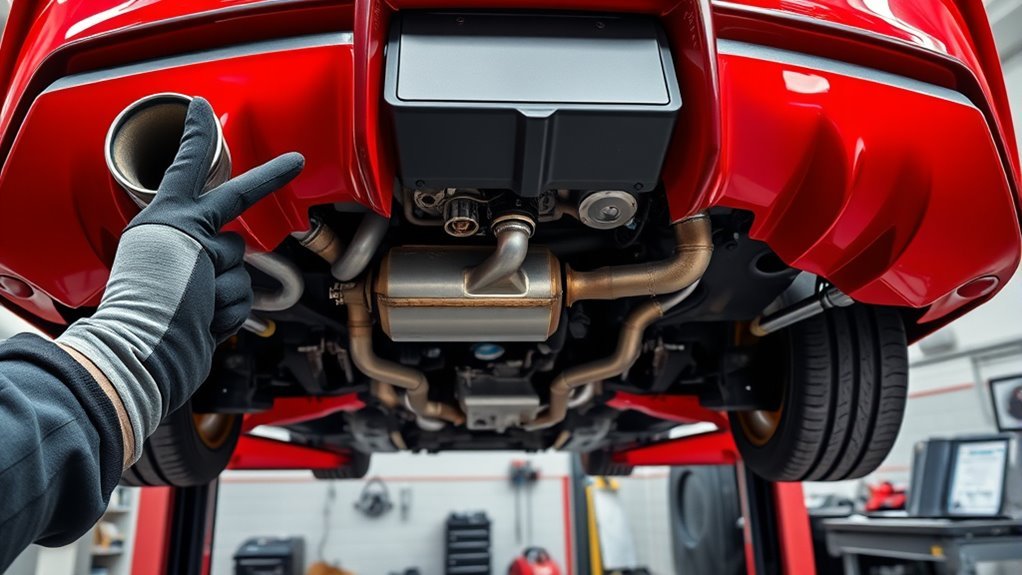
Supra catalytic converters contain valuable metals, so theft is possible. That said, a Supra’s lower ride height can make access harder than on high-clearance trucks and hybrids. The real risk depends on where the car is parked, how visible the converter is, local theft trends, and whether the vehicle has protective hardware.
| Measure | Purpose |
|---|---|
| Well-lit parking | Deter opportunistic thieves |
| Cameras/sensors | Record evidence |
| VIN engraving | Impede resale |
| Lock/shield | Physical barrier |
| Rapid reporting | Enables recovery strategies |
To reduce risk, park in a garage when possible, choose bright camera-visible spaces, add a vehicle-specific shield if one is available, and consider high-temperature marking or VIN etching. If the converter is stolen, do not drive far with the exhaust open. Photograph the damage, file a police report, contact insurance, and have a shop inspect nearby oxygen-sensor wiring, exhaust hangers, and cut points.
How the Converter Affects Performance and Fuel Economy
A healthy Supra converter should not feel like a major performance bottleneck on a stock or mildly modified car. It is designed to clean exhaust while keeping flow acceptable for the engine calibration. A damaged or plugged converter is different: it can raise backpressure, slow turbo response, reduce high-RPM power, and hurt fuel economy.
- Healthy converter: supports legal street use, proper OBD-II readiness, and normal drivability.
- Clogged converter: can reduce acceleration and increase exhaust heat.
- Contaminated converter: may trigger efficiency codes even if exhaust flow is not blocked.
- Removed converter: may create legal problems, inspection failure, strong odor, check engine lights, and poor calibration behavior.
If a tune or downpipe change is planned, verify emissions legality first. “For off-road use only” parts are not legal for normal street use just because they fit the Supra.
What to Tell Your Mechanic: Exact Data and Test Results to Report
Give your mechanic facts, not guesses. The more exact your data, the faster they can separate a bad converter from a bad sensor, leak, tune, or engine problem.
- All stored, pending, and permanent OBD-II codes
- Freeze-frame data for P0420 or related codes
- Whether the check engine light is steady or flashing
- Recent misfire, fuel, oxygen-sensor, or air-fuel-sensor codes
- Fuel economy before and after the problem started
- Any rotten-egg smell, rattling, smoke, or excessive heat
- Recent repairs, tune changes, downpipe changes, or exhaust work
- Oil or coolant consumption history
- Live upstream and downstream sensor data, if available
- Backpressure or temperature test results, if already measured
Also tell the shop your goal: stock legal repair, emissions-test readiness, OEM restoration, or a compliant performance setup. That helps them choose the right diagnostic path and the correct replacement part.
Frequently Asked Questions
Can a Toyota run without a catalytic converter?
A Toyota may physically run without a catalytic converter, but removing or bypassing the converter on a street-driven vehicle is illegal under U.S. federal emissions law and can also violate state rules. It can trigger a check engine light, fail emissions inspection, create strong exhaust odor, increase noise, and pollute far more than a properly working system.
What are the three functions of a catalytic converter?
A three-way catalytic converter performs three key emissions functions: it reduces nitrogen oxides into nitrogen and oxygen, oxidizes carbon monoxide into carbon dioxide, and oxidizes unburned hydrocarbons into carbon dioxide and water vapor.
Does code P0420 always mean the Supra needs a new converter?
No. P0420 means the engine computer sees catalyst efficiency below the expected threshold. The converter may be worn out, but exhaust leaks, oxygen or air-fuel sensor faults, misfires, rich running, oil burning, coolant contamination, or recent battery resets can also affect the diagnosis.
How long should a Supra catalytic converter last?
There is no single mileage that applies to every Supra. A converter can last well beyond 100,000 miles when the engine is healthy, but misfires, overheating, oil burning, coolant leaks, physical damage, or improper modifications can ruin one much sooner.
Can I use a high-flow catalytic converter on a Supra?
Possibly, but only if the part is legal for your vehicle and location. For street use, the converter must match the car’s emissions requirements. In California and states using California-style rules, verify the exact part in the CARB-approved aftermarket converter database before installation.
Conclusion
Your Supra’s catalytic converter is a precision emissions part, not just a piece of exhaust tubing. It cleans CO, hydrocarbons, and NOx while helping the engine stay compliant and drivable. If you see P0420, smell sulfur, lose power, or notice excess heat, scan the car and check the root causes before replacing parts. Fix misfires, leaks, oil or coolant contamination, and sensor issues first; then choose an OEM or legally approved replacement that matches your exact Supra.
Sources
- Toyota Owners — 2026 Supra warning indicators — backs up the warning that serious misfiring can damage emission-control components, including the catalytic converter.
- U.S. EPA — Transportation, air pollution, and emission-control FAQs — backs up the legal and emissions risks of removing catalytic converters.
- U.S. EPA Clean Air Northeast — Tampering and aftermarket defeat devices — backs up the Clean Air Act anti-tampering guidance.
- eCFR 40 CFR § 85.2103 — Emission warranty — backs up federal emissions-warranty coverage periods for major emissions components.
- California Air Resources Board — Aftermarket catalytic converter database — backs up the need to verify California-approved replacement converters.
- U.S. EPA — Aftermarket Catalytic Converters: Guide to Their Purchase, Installation, and Use — backs up replacement-converter guidance and compliance considerations.