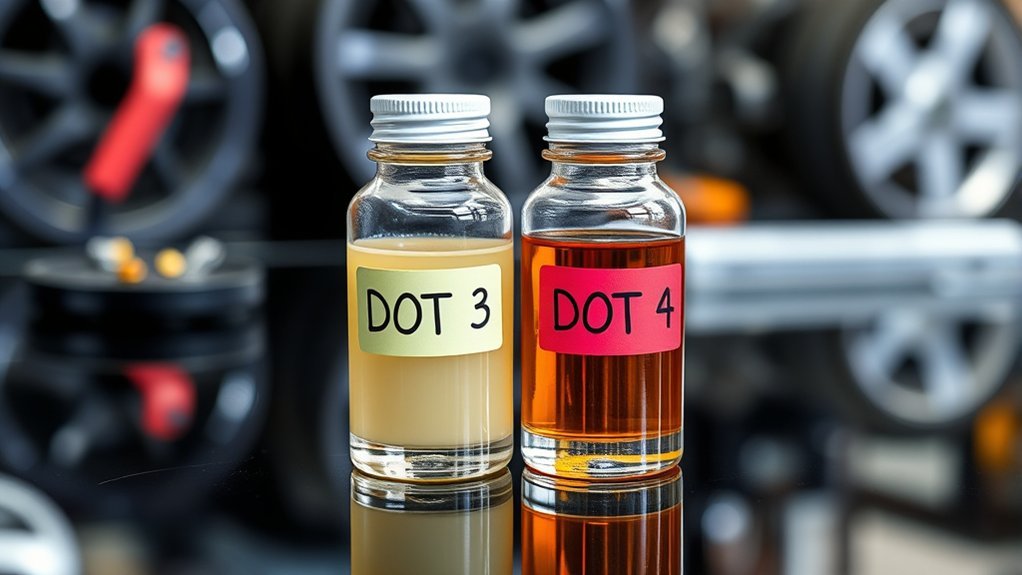
When choosing between DOT3 and DOT4 brake fluids, understand their key differences. DOT3 has lower boiling points and absorbs moisture more readily, risking brake fade under heavy use. In contrast, DOT4 offers higher boiling points, enhancing performance and safety, especially during intense driving. While DOT4 can replace DOT3 in many systems, avoid mixing them to maintain efficiency. Proper maintenance is essential for longevity. For further insights on brake fluid care and performance, explore more about ideal choices and tips.
Understanding Brake Fluid Ratings: DOT3 vs. DOT4
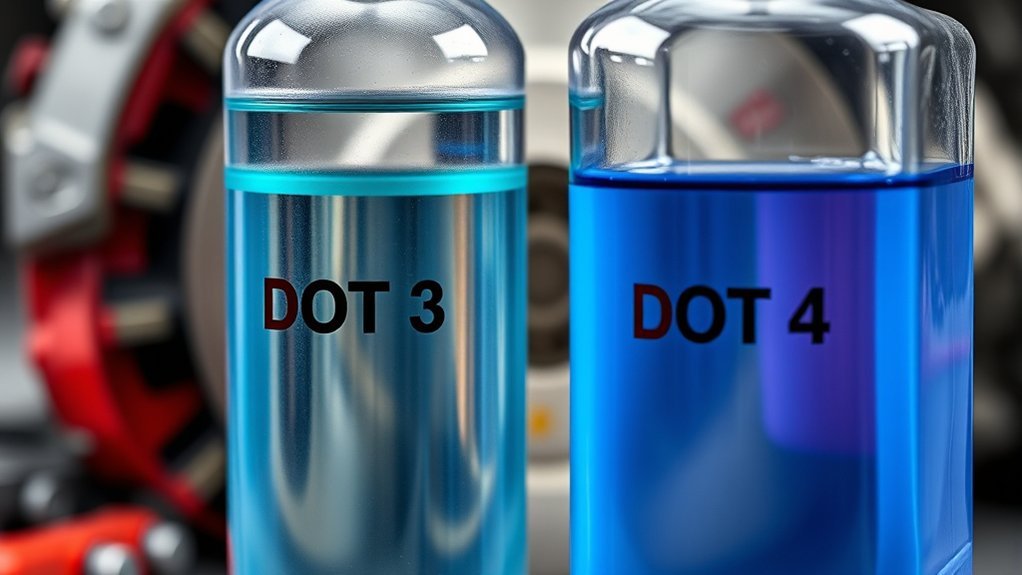
When comparing brake fluid ratings, you’ll find that understanding the differences between DOT3 and DOT4 is essential for your vehicle’s performance. DOT3 applications are suitable for everyday driving needs but come with lower boiling points, around 205°C dry and 140°C wet. This can be a limitation during intense driving conditions. In contrast, DOT4 advantages include higher boiling points of approximately 230°C dry and 155°C wet, making it ideal for spirited driving or heavy braking. Its formulation allows for better moisture absorption resistance, maintaining performance under stress. While DOT3 can be used in DOT4 systems, using DOT4 in DOT3 applications is not advisable due to potential brake performance issues. Mixing these fluids is risky, as it can compromise braking efficiency and safety. Understanding these critical differences empowers you to choose the right fluid, ensuring peak performance and reliability for your vehicle.
How Boiling Points Impact Brake Performance
Understanding how boiling points impact brake performance is fundamental for guaranteeing your vehicle operates safely and effectively. The boiling points of brake fluids directly influence their ability to withstand elevated temperatures during intense driving conditions. DOT3, with a dry boiling point of around 205°C (401°F), is less capable and may lead to brake fade under heavy braking. In contrast, DOT4‘s higher dry boiling point of approximately 230°C (446°F) offers superior performance, minimizing the risk of performance degradation. This resilience means DOT4 absorbs moisture more slowly, maintaining braking efficiency over time, particularly in high-stress situations. Elevated boiling points enhance safety margins, essential when you push your vehicle’s limits. Mixing DOT3 and DOT4 can compromise this performance due to their differing characteristics, making it critical to choose the right fluid for peak braking performance. Prioritizing boiling point considerations guarantees a safer, more liberated driving experience.
Choosing DOT4 for Optimal Performance
Choosing DOT4 brake fluid can greatly enhance your vehicle’s braking performance, especially under demanding conditions. Its higher boiling point considerably reduces the risk of brake fade during performance driving, ensuring you maintain braking efficiency when it matters most. Additionally, DOT4’s lower moisture absorption promotes consistent performance over time, making it ideal for spirited driving or frequent braking scenarios.
| Feature | DOT3 | DOT4 |
|---|---|---|
| Boiling Point | Lower | Higher |
| Moisture Absorption | Higher | Lower |
| Ideal Usage | Standard driving | Performance driving |
Opting for DOT4 even in vehicles designed for DOT3 is acceptable and can enhance safety margins without compromising system integrity. While it may cost slightly more, the investment pays off in reliability and performance, making it a smart choice for safety-conscious drivers.
How Moisture Affects Your Brake Fluid Lifespan
Moisture absorption in brake fluid greatly impacts its lifespan and performance. As water infiltrates, it lowers the boiling point, increasing the risk of brake failure under high-stress conditions. To counteract these effects, you should replace your brake fluid every 1-2 years, ensuring peak braking efficiency and safety.
Moisture Absorption Effects
As brake fluid ages, it inevitably absorbs moisture, which can greatly impact its performance and lifespan. Moisture sources, such as humidity and condensation, are constantly at play, particularly in DOT3 fluids, which absorb moisture more readily than DOT4. This absorption leads to corrosion within the brake system, compromising safety and potentially resulting in costly repairs. Regularly replacing brake fluid is essential for corrosion prevention, with recommendations typically every 1-2 years, depending on fluid type and driving conditions. Using DOT4 brake fluid can extend lifespan and enhance moisture resistance, ensuring peak braking performance. By staying proactive, you can maintain your vehicle’s safety and efficiency, liberating yourself from the risks associated with degraded brake fluid.
Boiling Point Reduction
When brake fluid absorbs moisture, it greatly reduces its boiling point, which can lead to brake fade during demanding driving conditions. This boiling point degradation affects your vehicle’s performance and safety. Here’s what you need to know:
- DOT3 vs. DOT4: DOT3 has a dry boiling point of 205°C, while DOT4’s is 230°C, making DOT4 preferable for high-performance scenarios.
- Corrosion Risk: Moisture interaction can cause corrosion within the brake system, shortening fluid lifespan.
- Performance Loss: Reduced boiling points can result in brake fade, compromising your control.
- Fluid Maintenance: Regularly checking and replacing brake fluid helps maintain ideal boiling points and enhances overall safety.
Stay vigilant about your brake fluid to guarantee reliable braking performance.
Fluid Replacement Frequency
Regularly replacing brake fluid is vital for maintaining peak brake performance, since prolonged exposure to moisture can greatly degrade its properties. Brake fluid types like DOT3 typically require replacement every 1 to 2 years, while DOT4 offers slightly longer durability due to enhanced moisture resistance. As moisture accumulates, it lowers the boiling point and leads to brake fade, compromising safety under heavy use. Furthermore, moisture can cause corrosion in the brake system, potentially resulting in costly repairs. To guarantee ideal performance, adhere to maintenance schedules and periodically check the brake fluid’s condition. Even small moisture levels can notably impact braking efficiency, making timely replacement a critical aspect of vehicle safety and performance.
Compatibility: Can You Use DOT4 in DOT3 Systems?
Can you safely introduce DOT4 brake fluid into a system designed for DOT3? Yes, you can. DOT4 brake fluid offers significant advantages, including a higher boiling point, which enhances performance during spirited driving and high-stress situations. However, understanding the limitations of DOT3 is vital. Here are key points to take into account:
- Performance Boost: DOT4 improves braking efficiency and heat resistance.
- Compatibility: Mixing DOT3 and DOT4 can cause performance issues.
- Maintenance: Regular checks are essential for system integrity.
- Safety First: Using DOT3 in a DOT4 system can lead to system failures.
Using DOT4 in a DOT3 system doesn’t compromise safety and can elevate your vehicle’s braking performance. Always verify compatibility to maintain the integrity of your braking system and prevent costly repairs.
Understanding DOT4LV: Low Viscosity Brake Fluid
Understanding the nuances of brake fluid types is essential for optimal vehicle performance, especially in extreme conditions. DOT4LV, or low viscosity DOT4, is engineered for superior cold climate performance. It maintains ideal fluid flow even in frigid temperatures, preventing the thickening that often plagues traditional brake fluids. This is vital for vehicles operating in colder regions, ensuring you achieve a consistent braking response when it matters most.
Manufacturers increasingly equip specific models with DOT4LV to meet their low viscosity requirements, highlighting its significance. By using this specialized brake fluid, you enhance overall braking efficiency, providing an extra layer of safety and control in challenging weather. The viscosity benefits of DOT4LV reduce the risk of brake failure, giving you confidence in your vehicle’s performance when driving in harsh conditions. With DOT4LV, you embrace a responsive braking system that adapts seamlessly to the demands of your environment.
Tips for Keeping Brake Fluid Fresh
To keep your brake fluid fresh, regularly change it according to your vehicle’s maintenance schedule. Proper storage is essential; always seal the cap tightly and store the fluid in a cool, dry place. Monitoring fluid levels and inspecting for any discoloration will help you catch contamination early.
Regular Fluid Changes
While maintaining peak brake performance, regular fluid changes are essential for guaranteeing safety and efficiency. To achieve ideal fluid maintenance and enhance performance longevity, follow these guidelines:
- Check Levels and Quality: Inspect brake fluid every 6 months to detect any degradation.
- Change Interval: Replace brake fluid every 1-2 years to combat moisture absorption that can lower effectiveness.
- Moisture Testing: Use a brake fluid tester to measure moisture content; even small amounts can greatly affect boiling points.
- Complete Flush: Consider flushing the entire brake system instead of just topping off, which removes contaminants and guarantees improved braking response.
Adhering to these practices will maintain braking efficiency and system integrity, keeping you safe on the road.
Proper Storage Practices
Proper storage of brake fluid is essential for maintaining its effectiveness and performance. To minimize fluid degradation, always store brake fluid in a cool, dry place, away from direct sunlight. Make certain your storage containers are tightly sealed after use to prevent contamination from air exposure. Avoid placing brake fluid near heat sources or in areas with fluctuating temperatures, as extreme heat can compromise quality. Use the fluid within the manufacturer’s recommended shelf life—typically around two years—to guarantee peak performance. Additionally, label containers clearly with the purchase date and fluid type. This practice helps you track freshness and compatibility, empowering you to make informed decisions about your braking system’s maintenance.
Frequently Asked Questions
What Happens if I Mix DOT 4 and DOT 3?
Mixing DOT 3 and DOT 4 compromises brake fluid compatibility, leading to performance differences that can affect braking efficiency. This mix can cause inconsistent responses and increase the risk of brake failure under stress.
Can We Use DOT 4 Brake Fluid in DOT 3?
Yes, you can use DOT 4 brake fluid in a DOT 3 system. The compatibility enhances performance differences, ensuring better braking under stress. Just avoid mixing them to maintain ideal safety and functionality.
Should I Upgrade to DOT 4?
Yes, you should upgrade to DOT 4. It enhances brake performance and fluid longevity, especially under demanding conditions. This upgrade guarantees better reliability and safety, making it a smart choice for your vehicle’s brake system.
Conclusion
In conclusion, choosing between DOT3 and DOT4 brake fluid can dramatically influence your vehicle’s braking performance. If you’re looking for peak performance and safety, DOT4 is often the superior choice, especially in high-demand situations. Remember, moisture can wreak havoc on your brake fluid lifespan, so keeping it fresh is essential. With the right fluid, you’ll be driving with confidence, knowing your brakes are as responsive as a cheetah on the prowl.