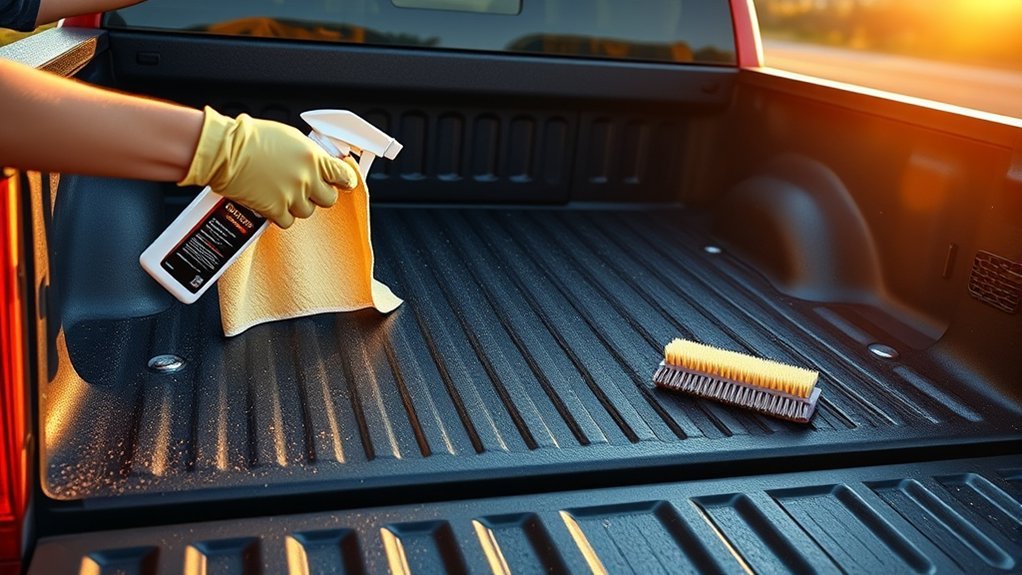
Cleaning and protecting a Toyota Tundra bed is easiest when you match the method to the bed surface: factory composite, spray-on liner, drop-in liner, or exposed painted areas. Use controlled pressure, an automotive-safe cleaner, full drying, and a compatible protectant so you remove grime without damaging the liner, tailgate hardware, cameras, sensors, or the bed finish.
Quick Answer
To clean and protect a Toyota Tundra bed, empty the bed, rinse loose grit with low pressure, foam it with an automotive-safe citrus degreaser, scrub with a soft or medium-stiff brush, rinse completely, dry all seams, then apply a compatible graphene or ceramic spray only where traction will not be affected.
Key Takeaways
- Use the lowest effective pressure, a wide fan nozzle, and safe distance instead of blasting the bed at high PSI.
- Current 2022-and-newer Tundras use an aluminum-reinforced Sheet-Molded Composite bed, so avoid treating every Tundra bed like exposed steel.
- Citrus degreaser works well on oily residue, but it should be automotive-safe, diluted as directed, and rinsed thoroughly.
- Graphene or ceramic sprays can help water bead and make future cleaning easier, but they should not be used on steps or grip areas unless the label says it is safe.
At a Glance
| Time Required | 45–90 minutes, plus product curing time if required |
| Difficulty | Easy to moderate |
| Tools Needed | Hose or pressure washer, wide fan nozzle, foam cannon or pump sprayer, microfiber towels, fender brush, soft or medium-stiff brush, leaf blower or air blower if available |
| Cost | About $20–$80 if you already own basic wash tools |
Quick Guide: Clean and Protect a Toyota Tundra Bed (Steps at a Glance)
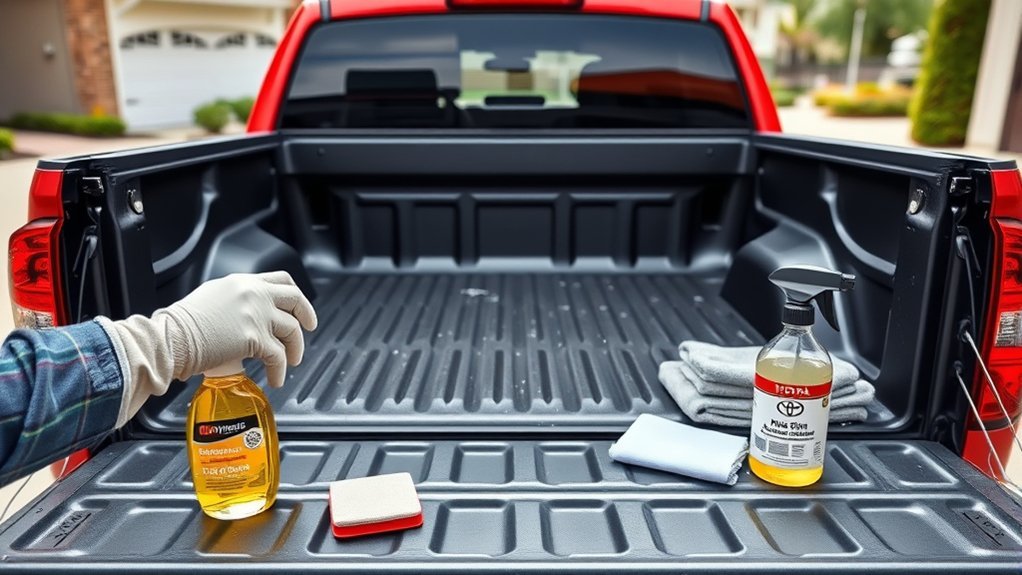
Start by identifying what you are cleaning. Toyota describes the current Tundra bed as an aluminum-reinforced Sheet-Molded Composite surface, while some trucks may also have a spray-on liner, drop-in liner, bed mat, or exposed painted areas. That surface check matters because pressure, brush stiffness, and protectant choice should change with the bed material.
- Empty and inspect the bed. Remove cargo, mats, tie-down accessories, and loose debris. Check seams, drain holes, bed bolts, tailgate gaps, and liner edges.
- Pre-rinse with control. Use a hose or pressure washer with a wide fan pattern. Keep the nozzle moving and avoid getting close to cameras, sensors, wiring, tailgate mechanisms, and rubber boots.
- Foam and dwell. Apply an automotive-safe citrus degreaser through a foam cannon or pump sprayer. Let it dwell only as long as the label allows; do not let it dry on the surface.
- Scrub the right way. Use a soft or medium-stiff brush for textured liners and a softer wash brush or microfiber mitt for painted or glossy areas.
- Rinse until clear. Work from the cab end toward the tailgate so grime and soap flow out of the bed.
- Dry fully for dry protectant application. Use towels, air, or a leaf blower to clear seams, bolt holes, tie-down pockets, and liner texture.
- Apply protection only where appropriate. Use a graphene or ceramic spray on compatible surfaces, buff off excess, and avoid areas where a slick finish could create a slip hazard.
Warning: Do not use a zero-degree nozzle, do not hold the wand close to the bed, and do not chase stubborn stains with more pressure. Use cleaner dwell time and brushing instead.
Tools and Products to Buy: Pressure Washer, Citrus Degreaser, Graphene Boost
You do not need the most powerful pressure washer to clean a Tundra bed. You need adjustable pressure, a wide fan nozzle, a cleaner that matches the surface, and enough towels or airflow to dry the bed before protection. For spray-on liners, always check the liner manufacturer’s care instructions before using strong cleaners or high pressure.
| Item | Best Use | Buying Tip |
|---|---|---|
| Adjustable pressure washer or hose | Pre-rinse and final rinse | Choose control over maximum PSI; use a wide fan nozzle. |
| Foam cannon or pump sprayer | Even cleaner coverage | A pump sprayer is fine if you do not own a foam cannon. |
| Automotive-safe citrus degreaser | Oil, road film, mud, and cargo residue | Use the label dilution; avoid harsh solvents on liners. |
| Soft and medium-stiff brushes | Agitating textured surfaces and corners | Use softer brushes on paint and glossy trim. |
| Microfiber towels or blower | Drying seams and pockets | A blower helps clear water trapped in liner texture. |
| Graphene or ceramic spray | Hydrophobic protection and easier future rinsing | Apply only if the product label is compatible with your bed or liner. |
[Products Worth Considering]

These TPE door anti‑kick pads provide durable, water‑resistant protection for Toyota Tundra doors from 2022 to 2026. They fit precisely, are easy to install with double‑sided tape, and can be cleaned simply with water. The pads guard against scuffs and impacts while preserving the door's appearance and smooth operation.

The Pigenius windshield sunshade protects your Tundra's interior from heat and UV damage while keeping the cabin cool. Its accordion design folds easily for storage and quick setup, and the triple‑laminate construction provides durable, reflective protection. Ideal for long trips and daily commutes, it guards dashboards, seats, and steering wheels from sun‑related wear.

Upgrade your Toyota's front bumper with this premium license plate bracket that fits US and Canada plates perfectly. Made from heavy‑duty, rust‑proof plastic, it protects your paint and stays street legal. The kit includes six unique screws and a wrench for quick, tool‑free installation, ensuring a secure mount without scratches.
Pressure Washer Options
Choose a pressure washer with adjustable output and a wide fan nozzle rather than a high-PSI unit you cannot control. Toyota’s owner information warns that high-pressure water can damage certain vehicle parts and says to keep the cleaning nozzle at least 11.9 inches (30 cm) from the vehicle body. LINE-X also recommends a wide fan pattern under 1000 PSI for its bedliners.
- Electric pressure washer: Best for routine bed cleaning because it is easier to control and usually has enough flow for soap and rinse work.
- Gas pressure washer: Useful for heavy outdoor cleaning, but use it carefully on truck beds because output can be too aggressive.
- Garden hose: Often enough for a lightly dirty composite bed or maintained spray-on liner.
- Wide fan nozzle: Safer than a narrow stream because it spreads the water force over a larger area.
Citrus Degreaser Benefits
A citrus degreaser helps loosen oily residue, road film, spilled cargo grime, and dirt packed into textured liners. Use a product labeled for automotive surfaces, dilute it as directed, and test a small area first. Strong cleaner is not a substitute for safe technique: if the foam starts drying, rinse and reapply rather than letting chemicals sit on the bed.
Note: Vehicle wash water can carry detergent, oil, grease, metals, and hydrocarbons. The EPA recommends limiting detergent use, using biodegradable phosphate-free water-based detergents, and directing wash water away from storm drains when possible.
Graphene Boost Usage
A graphene boost or ceramic spray can add water-beading behavior and make future cleaning easier, but it should be used only after the bed is clean and the product label confirms compatibility. Adam’s Graphene Boost instructions, for example, say to apply a fine mist to a cool, clean surface or microfiber towel, wipe it into one panel at a time, then flip the towel and wipe again for a streak-free finish.
For dry protection, dry the Tundra bed completely first. If your specific product allows use as a drying aid on a wet surface, follow that label instead. On textured or spray-on liners, use a microfiber towel, microfiber applicator, or soft detailing brush to work product into the texture, then buff off excess so it does not pool.
Pro Tip: Protectants should leave protection, not residue. After buffing, rub a clean dry towel across the surface. If the towel drags through oily streaks or the floor feels slick, keep buffing or wash that area again.
Wash Your Tundra Bed: Pressure Washer, Foam Cannon, and Scrubbing
Work in the shade on a cool surface when possible. Heat makes degreaser dry too fast, and dried soap is harder to rinse from textured liners. Remove bed mats and accessories first so soap and dirt do not hide underneath them.
[Products Worth Considering]

These plush car seat belt cover pads provide a soft, friction‑reducing layer that eases shoulder pressure during long drives, making rides more comfortable for adults and kids. The cute purple flower pattern adds a stylish touch to any vehicle interior while the durable, wear‑resistant material ensures long‑term use. Easy Velcro straps secure the pads without tools, and the universal fit works with most seat belts.

The ELECFRESH door side trash cans provide a custom-fit solution for Toyota RAV4 owners, turning unused door space into a convenient garbage storage area. Their open design allows quick disposal while the sponge pad ensures a stable, quiet installation that doesn't interfere with driving. Ideal for keeping the vehicle interior tidy and clutter‑free.

ZEP HEAVY-DUTY CITRUS DEGREASER: Natural citrus solvents remove adhesives, grease and oil from most surfaces
Pressure Washer Setup
Set the washer to the lowest pressure that removes loose dirt. Keep the nozzle moving, stay at least 12 inches from the surface, and use extra distance around tailgate hardware, parking sensors, cameras, wiring, trim, rubber seals, and any chipped painted areas. If your bed has a LINE-X-style spray-on liner, use a wide fan pattern and stay under the liner maker’s recommended pressure.
- Attach a 25-degree or 40-degree fan nozzle; avoid pencil jets.
- Test the spray in a small, low-visibility area.
- Rinse from the cab end toward the tailgate.
- Use cleaner and a brush for stuck grime instead of moving the nozzle closer.
Foaming and Scrubbing
After the pre-rinse, apply citrus-degreaser foam evenly across the bed floor, walls, tailgate, corners, and seams. Let it dwell according to the product label. Then scrub with controlled strokes, using a medium-stiff brush for textured liners and a softer brush or microfiber mitt for painted or glossy sections.
| Tool | Purpose |
|---|---|
| Foam cannon or pump sprayer | Even cleaner coverage |
| Pressure washer or hose | Initial rinse and final rinse |
| Medium-stiff brush | Textured liner agitation |
| Soft wash brush or mitt | Painted or smoother surfaces |
| Fender brush | Corners, seams, tie-down pockets, and tailgate gaps |
Use short, firm strokes instead of heavy downward pressure. If you find an oily spot, reapply degreaser to that spot and let it dwell again. If you find grit, rinse before scrubbing so the brush does not drag abrasive dirt across the bed.
Rinse, Dry, and Clean Tight Spots Before Protection
After scrubbing, rinse the bed thoroughly until the runoff is clear and no foam remains in the texture, seams, tie-down pockets, or tailgate gap. Work from the front of the bed to the tailgate so dirty water exits instead of pooling in corners.
Drying matters because trapped water can dilute a dry-applied protectant and hide soap residue. Use microfiber towels on flat areas, then use a leaf blower, compressed air, or a clean towel wrapped around a brush handle to clear seams, bolt holes, bed-rail gaps, and drain channels.
- Check corners and seams for leftover suds.
- Open and close the tailgate once to release trapped water.
- Dry around tie-down points and bed accessories.
- Wait until the bed is visibly dry before applying a dry protectant.
Apply Graphene Boost to Textured or Rhino-Lined Beds (How-To)
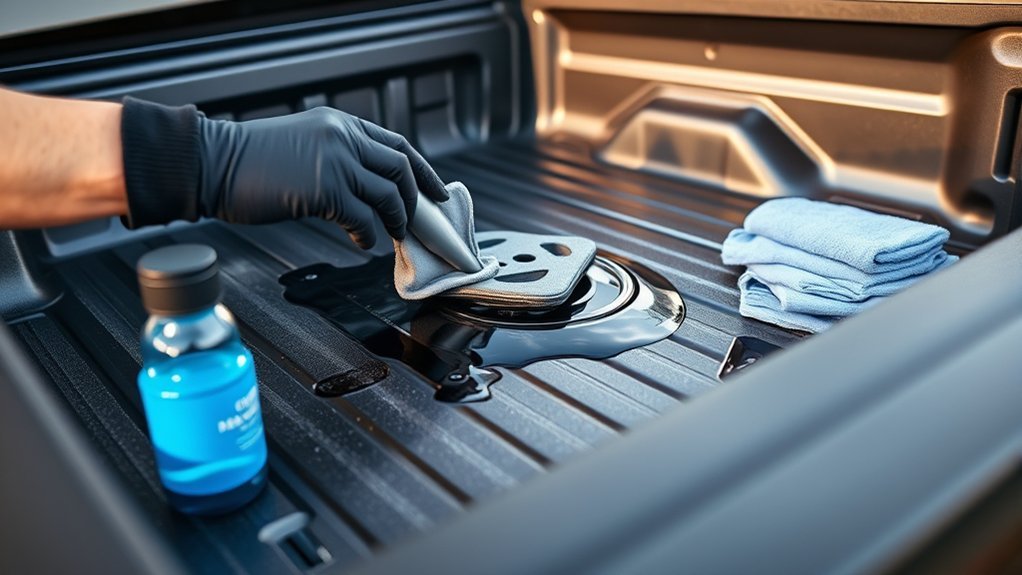
Before applying Graphene Boost or any ceramic-style spray, confirm that the bed is clean, cool, and compatible with the product. For a textured or Rhino-style spray-on liner, lightly mist the product onto a microfiber towel or applicator rather than soaking the bed. Work in small sections so you can spread the product evenly and buff off excess before it dries unevenly.
- Mask or avoid sensitive areas. Keep overspray away from cameras, sensors, tailgate latches, rubber seals, step pads, tires, brake parts, and areas where people stand.
- Apply lightly. Use a fine mist on a microfiber towel or applicator. Heavy application can leave streaks or residue in texture.
- Work it into the surface. Use overlapping passes so high and low spots in the texture get even coverage.
- Buff immediately. Wipe with a clean microfiber towel until the surface feels dry to the touch.
- Check traction. Do not leave coating on steps, bed steps, or walking surfaces if it makes them slippery.
- Let it cure. Follow the product label before hauling cargo, exposing the bed to rain, or washing again.
Warning: Hydrophobic sprays can change surface feel. Avoid applying them to step pads, running boards, bumper steps, bed steps, or any area where traction matters unless the manufacturer specifically approves that use.
[Products Worth Considering]

✅ ADVANCED GRAPHENE PROTECTION CREATES AN INCREDIBLY SLICK SURFACE THAT BEADS AND REPELS WATER! Using graphene ceramic resins, this water-based graphene spray coating creates a super-slick layer of paint protection to coat the top of your current coatings, sealants or waxes! Extend the life of your current protection, or use as a stand alone 6-9 month paint sealant.

✅ADVANCED 2 IN 1 FORMULA – Breakthrough Hybrid Graphene Formula -- A graphene (rGO)-infused ceramic (Si02) car wax spray combined into one product to provide an effortless application with long lasting results. This spray and wipe formula adds 2-in-1 versatility to enhance coatings or achieve durable, stand-alone protection.

Keep Your Car’s Exterior Looking Great: Boost your car’s film and paint protection with XPEL Ceramic Boost! Seal the surface with a micro-thin layer of protection to help resist debris, contaminates and scratches, while repelling dust and lint
Maintenance and Troubleshooting: Stains, Reapply Timing, and Common Fixes
For normal use, rinse the bed after dirty loads and deep clean it whenever grime, salt, fertilizer, oil, mulch, concrete dust, or road film starts building up. Heavy hauling may need a monthly wash. Light weekend use may only need a deep clean every two or three months. After corrosive exposure, rinse as soon as practical.
| Problem | Best Fix | Avoid |
|---|---|---|
| Mud and clay | Pre-rinse, foam, dwell, brush, rinse again. | Scrubbing dry dirt into the surface. |
| Oil or grease | Use diluted automotive-safe degreaser and repeat spot cleaning if needed. | Gasoline, harsh solvents, or letting degreaser dry. |
| Road salt or fertilizer | Rinse quickly, then wash with mild soap or diluted degreaser. | Leaving residue in seams or under mats. |
| Sap or tar | Use a liner-safe or automotive-safe tar remover only after testing a small area. | Abrasive pads or unknown solvents. |
| Paint, concrete, or adhesive | Remove fresh residue quickly and follow the chemical maker’s cleanup guidance. | Grinding or scraping aggressively through the liner. |
| Rust-colored transfer stains | Wash first; if staining remains, use a product approved for the specific surface. | Assuming the composite bed is rusting without checking for metal cargo transfer. |
Reapply graphene or ceramic spray when water no longer beads well, after a strong degreaser wash, or on the interval listed by the product label. If the bed has a spray-on liner, check the liner maker’s maintenance guidance first. LINE-X, for example, recommends soap, water, a stiff bristle brush, and a wide fan pressure-washer pattern under 1000 PSI for its bedliners.
Common Mistakes That Damage the Bed or Liner
- Using too much pressure: High pressure can lift weak edges, damage trim, and force water into sensitive areas.
- Letting degreaser dry: Dried cleaner can leave residue and may discolor some surfaces.
- Using harsh solvents without testing: Strong chemicals can dull, bleach, or soften some liners.
- Coating grip areas: Hydrophobic sprays can make walking surfaces slick.
- Ignoring trapped debris: Dirt under mats, around bed bolts, and along liner edges can hold moisture and grime.
- Skipping the final rinse: Soap left in textured liners attracts dust and makes the bed look dirty sooner.
Frequently Asked Questions
What is the best way to protect your truck bed?
The best protection is a clean surface, compatible liner or coating, and routine rinsing after dirty or corrosive loads. For a Tundra bed, use a liner-safe cleaner, dry the bed, then apply a compatible graphene, ceramic, or UV protectant only where it will not create a slip hazard.
What are Toyota Tundra beds made of?
Toyota describes current 2022-and-newer Tundra beds as lightweight Sheet-Molded Composite with aluminum reinforcing cross members. Older trucks, aftermarket liners, drop-in liners, bed mats, and exposed painted areas may need different cleaning methods, so inspect your actual bed surface before choosing pressure or chemicals.
Can you pressure wash a Toyota Tundra bed liner?
Yes, but use low pressure, a wide fan nozzle, and safe distance. Do not use a narrow jet or hold the nozzle close to seams, liner edges, cameras, sensors, wiring, or tailgate hardware. If you have a LINE-X-style liner, follow the liner maker’s pressure guidance.
How often should you clean a Tundra bed?
Rinse after messy loads and wash immediately after salt, fertilizer, oil, concrete dust, or chemical exposure. Heavy-use trucks may need a monthly deep clean. Light-use trucks may only need a deep clean every two or three months.
Should you use Graphene Boost on a Rhino-lined or textured bed?
Only if the product label and liner maker allow it. Apply lightly, work in small sections, and buff off all excess. Avoid steps, bed steps, bumper steps, and grip surfaces because hydrophobic sprays can make some surfaces feel slick.
Conclusion
A clean Toyota Tundra bed should be free of grit, soap, trapped water, and chemical residue before you add protection. Use low pressure, give citrus degreaser time to work, scrub with the right brush, rinse until clear, and dry the seams completely. Then apply Graphene Boost or another compatible protectant lightly and carefully, keeping it away from surfaces where grip matters. Repeat the process after harsh hauling or whenever water no longer beads like it should.
Sources
- Toyota Tundra official model page — current Tundra bed construction and composite-bed wording.
- Toyota Pressroom: 2026 Toyota Tundra — Sheet-Molded Compound bed and aluminum reinforcing cross members.
- Toyota Owners Manual: Cleaning and protecting the vehicle exterior — high-pressure washing cautions and nozzle-distance guidance.
- LINE-X: Maintaining Your Bedliner — soap, brush, and pressure-washer guidance for LINE-X bedliners.
- Adam’s Polishes Graphene Boost — manufacturer application instructions for Graphene Boost.
- EPA Stormwater BMP: Vehicle Maintenance and Washing — wash-water runoff and detergent best practices.