When a Toyota Tundra turns on the Check Engine light, the fastest first step is to read the stored OBD2 diagnostic trouble codes, save the freeze-frame data, and compare the code with the truck’s symptoms. A code does not automatically prove one part is bad. It points you toward the system to test: ignition, fuel trim, airflow, catalyst efficiency, EVAP, timing, wiring, communication, or vehicle speed.
Quick Answer
To read Toyota Tundra OBD2 codes, plug a scanner into the driver-side under-dash OBD2 port, switch the ignition to ON without starting, scan for stored, pending, and permanent codes, and save freeze-frame data before clearing anything. Then test the likely cause before replacing parts.
Key Takeaways
- A Tundra OBD2 code identifies a fault area, not a guaranteed failed part.
- Record stored, pending, permanent, and freeze-frame data before clearing codes.
- P0300/P030x, P0171/P0174, P0101, P0420/P0430, P0441, P0340, P0500, and U-codes need different test paths.
- A flashing Check Engine light, loss of power, fuel smell, overheating, or oil-pressure warning is not a “keep driving and scan later” situation.
- For newer Tundras, check open recalls by VIN before paying for major engine diagnosis.
At a Glance
| Time Required | 5–15 minutes to read codes; 30 minutes to several hours for basic testing |
| Difficulty | Easy to scan; moderate to advanced to diagnose correctly |
| Tools Needed | OBD2 scanner, phone app or handheld reader, flashlight, multimeter, basic hand tools, model-year repair information |
| Cost | About $25–$150 for a basic DIY scanner; shop diagnostic fees and labor vary widely by location |
Before You Scan: Safety and Model-Year Checks
Start with safety, not the scanner. If the Check Engine light is flashing, the truck is shaking hard, the engine is knocking, the oil-pressure light is on, coolant temperature is high, you smell raw fuel, or the Tundra loses power, pull over when safe and avoid driving it farther. Those symptoms can turn a small repair into engine or catalytic-converter damage.
Warning: Do not clear codes before saving them. Clearing codes can erase freeze-frame clues and reset emissions readiness monitors. On many newer vehicles, permanent DTCs may remain until the onboard system confirms the repair during later driving.
Because Tundras span multiple engines and generations, always confirm procedures with the correct Toyota owner’s manual or model-year service information. A first-generation V8, a 5.7L V8, and a newer twin-turbo V6 can share some generic OBD2 codes but require different tests and parts.
Owners of newer trucks should also check recalls before paying for major diagnostics. Toyota’s official recall lookup accepts a VIN or license plate. This matters because Toyota has announced safety recalls involving certain recent Tundras where machining debris may lead to engine knocking, rough running, no-start conditions, or loss of motive power.
How to Read OBD2 Codes on a Toyota Tundra
- Park safely and stabilize power. Put the Tundra in Park, set the parking brake, turn off accessories, and make sure the battery is not weak. Low voltage can create misleading communication and sensor codes.
- Find the OBD2 port. Look under the driver-side dashboard near the footwell. Use a flashlight if needed.
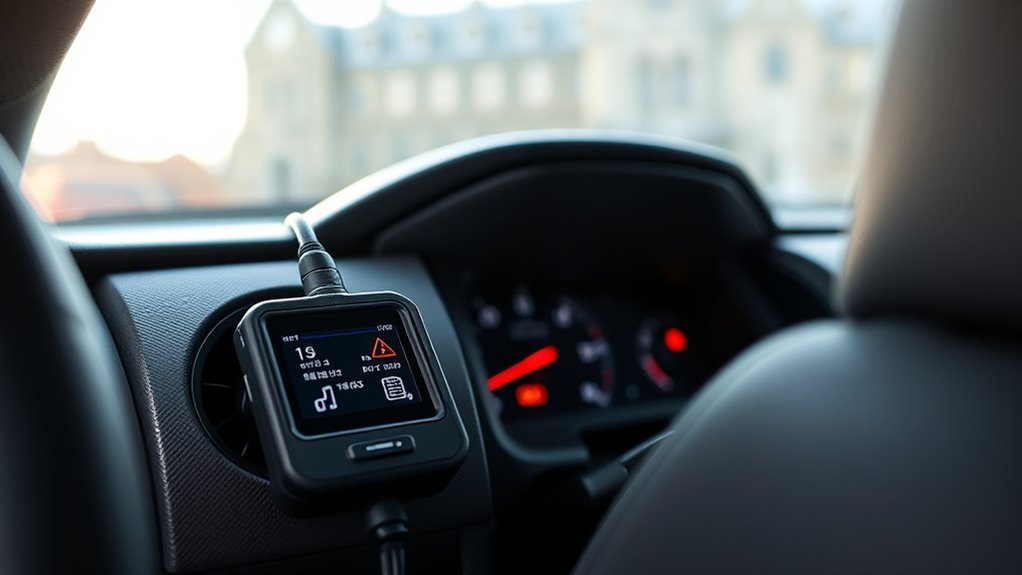
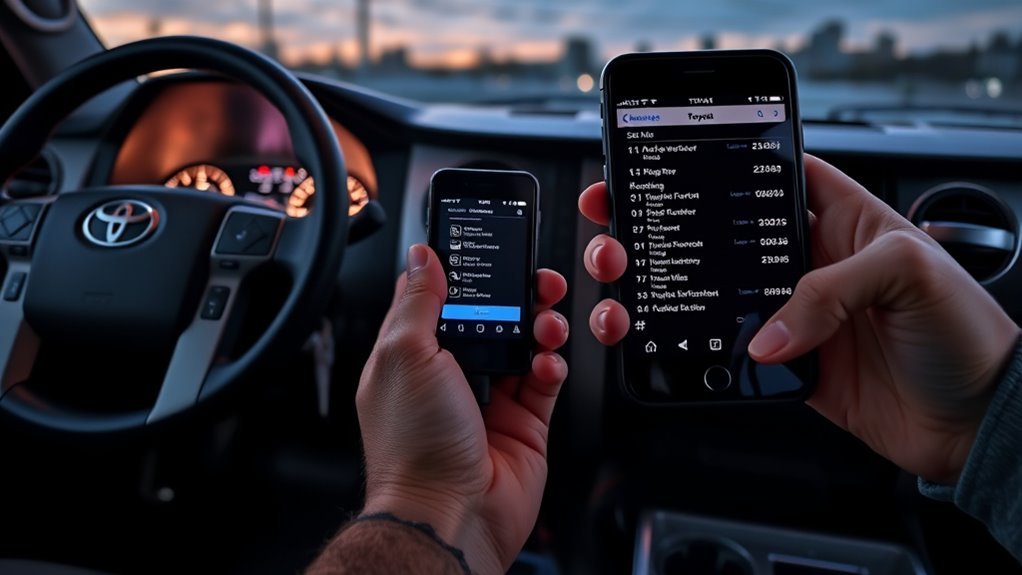
- Connect the scanner. Plug in a handheld OBD2 reader, Bluetooth adapter, or enhanced Toyota-capable scan tool. A basic reader can show generic powertrain codes; an enhanced tool may show Toyota-specific modules and more live data.
- Switch ignition ON without starting. For a key ignition, turn the key to ON. For push-button models, press the START button without pressing the brake until the ignition is ON.
- Scan all available code types. Read stored codes, pending codes, permanent codes, and any module-specific codes your tool can access.
- Save freeze-frame data. Record engine RPM, coolant temperature, vehicle speed, fuel trim, load, and mileage when the code set.
- Check live data. Review short-term and long-term fuel trims, MAF readings, coolant temperature, O2 or air/fuel sensor data, misfire counters, and battery voltage.
- Diagnose before clearing. Fix the root cause, clear codes only after repairs, then drive the truck through normal warm-up and cruise conditions to see whether codes return.
Pro Tip: Take photos of the scanner screen before clearing anything. A single freeze-frame screenshot can show whether the fault happened cold, hot, at idle, under load, or at highway speed.
What Tundra OBD2 Codes Mean
OBD2 codes follow a pattern. The first character identifies the system, and the numbers narrow the fault area. Generic P0xxx codes are standardized across OBD2 vehicles. Manufacturer-specific codes, often P1xxx or enhanced module codes, may require Toyota-specific scan data and repair information.
| Code Type | System | Example | What It Means |
|---|---|---|---|
| P | Powertrain | P0300 | Engine, transmission, fuel, ignition, or emissions fault area |
| B | Body | B-code | Cabin electronics, airbags, HVAC, or body-control systems |
| C | Chassis | C-code | ABS, stability control, steering, suspension, or brake-related systems |
| U | Network | U0073 | Communication fault between modules or on the CAN bus |
Note: A code reader may display “Bank 1” or “Bank 2.” On V-style engines, Bank 1 is the side with cylinder 1. Confirm cylinder numbering for your exact Tundra engine before replacing bank-specific sensors.
Most Common Tundra OBD2 Codes and Symptom Checklist
The table below gives a practical first-pass checklist. Use it to choose tests, not to guess parts. If multiple codes appear, diagnose the earliest or most root-cause code first. For example, a lean code can contribute to misfires, and misfires can damage catalysts.
Read the code, save the freeze-frame data, compare symptoms, test the system, then replace parts only when the test results support it.
| Code | Meaning | Common Symptoms | First Checks |
|---|---|---|---|
| P0300 / P0301–P0308 | Random or cylinder-specific misfire | Rough idle, shaking, poor power, flashing CEL | Spark plugs, coils, injectors, vacuum leaks, compression, fuel pressure |
| P0171 / P0174 | System too lean, bank 1 or bank 2 | Hesitation, rough idle, high positive fuel trims | Intake leaks, PCV hoses, MAF sensor, exhaust leaks, weak fuel delivery |
| P0101 | MAF sensor range/performance | Poor acceleration, stalling, lean/rich fuel trims | Dirty MAF element, intake duct cracks, wiring, aftermarket oiled filter contamination |
| P0420 / P0430 | Catalyst efficiency below threshold, bank 1 or bank 2 | CEL, possible exhaust smell, reduced performance | Exhaust leaks, misfires, fuel mixture problems, O2/A/F sensors, catalytic converter condition |
| P0340 / P0345 | Camshaft position sensor circuit | Hard start, no start, rough running, misfire-like symptoms | Sensor connector, wiring, oil contamination, timing correlation, battery voltage |
| P0441 / P0455 / P0456 | EVAP purge flow or leak fault | CEL, fuel smell, hard start after refueling | Gas cap seal, purge valve, vent valve, EVAP hoses, smoke test |
| P0500 | Vehicle speed sensor fault | Speedometer issue, shifting concerns, ABS/traction warnings | Wheel-speed data, sensor wiring, connectors, ABS module communication |
| U0073 | Control module communication bus off | Multiple warning lights, intermittent no communication | Battery condition, grounds, CAN wiring, water intrusion, aftermarket electronics |
| P0125 / P0128 | Coolant temperature or thermostat performance | Poor heater output, low temp reading, fuel economy drop | Coolant level, thermostat operation, coolant temperature sensor, wiring |
Fixes and DIY Diagnostics for Each Common Tundra Code
Use a step-by-step approach. Start with visual checks and live data, then move to electrical tests, pressure tests, smoke tests, and component replacement only when the evidence is strong.
P0300 and P030x: Misfire Diagnosis
- Do not keep driving with a flashing CEL. Misfires can overheat and damage catalytic converters.
- Check freeze-frame data. Note whether the misfire happened cold, hot, at idle, under load, or at highway speed.
- Inspect ignition parts. Look for worn plugs, cracked coils, oil in plug wells, loose coil connectors, and damaged wiring.
- Use cylinder clues. If P0302 follows a coil from cylinder 2 to another cylinder, the coil is suspect. If it stays on cylinder 2, keep testing.
- Check fuel and air. A vacuum leak, weak injector, low fuel pressure, or dirty MAF can trigger misfires.
- Test mechanical health. If ignition and fuel check out, compression or leak-down testing may be needed.
P0171 and P0174: Lean Condition Diagnosis
A lean code means the computer is adding fuel because it sees too much air, too little fuel, or incorrect airflow data. Check long-term fuel trims. Large positive trims at idle often suggest a vacuum leak; large positive trims under load can point toward fuel delivery or MAF measurement problems.
- Inspect intake boots, PCV hoses, brake booster hose, and vacuum lines.
- Smoke-test the intake if visual checks do not find the leak.
- Clean the MAF only with MAF-specific cleaner, then let it dry fully before reinstalling.
- Check fuel pressure and fuel volume if trims worsen under acceleration.
- Check for exhaust leaks ahead of oxygen or air/fuel sensors.
P0101: MAF Sensor Performance Diagnosis
P0101 does not always mean the MAF sensor is bad. A cracked intake tube, unmetered air leak, dirty sensor element, poor ground, or incorrect aftermarket intake can also cause the code.
- Inspect the air filter box and intake duct for gaps or cracks after the MAF.
- Check the MAF connector for loose pins, corrosion, or pulled wires.
- Compare MAF grams-per-second readings to engine load and RPM; readings that are flat, erratic, or implausible need further testing.
- Avoid touching the sensor wire or film element.
P0420 and P0430: Catalyst Efficiency Diagnosis
P0420 and P0430 are expensive codes to guess on. The catalytic converter may be worn, but a converter can also be harmed by unresolved misfires, rich running, oil consumption, coolant burning, or exhaust leaks. Fix those first.
- Repair active misfire or fuel-trim codes before judging catalyst efficiency.
- Inspect for exhaust leaks before and near the catalyst.
- Compare upstream and downstream oxygen or air/fuel sensor behavior with a scan tool.
- Do not replace the catalytic converter until sensor data, exhaust checks, and engine-running condition support that diagnosis.
P0441, P0455, and P0456: EVAP Diagnosis
EVAP codes are often less urgent than misfire or overheating faults, but they still matter for emissions and fuel vapor control.
- Inspect the gas cap seal and filler neck for damage or dirt.
- Check purge-valve operation, especially if the truck is hard to start after refueling.
- Inspect EVAP hoses near the tank and engine bay.
- Use a smoke machine for small leaks instead of guessing at hoses.
P0340 and P0345: Camshaft Position Sensor Diagnosis
Camshaft position codes can come from a failed sensor, damaged wiring, weak battery voltage, timing issues, oil contamination, or connector problems. If the Tundra has a no-start or stalls, this is a higher-priority diagnosis.
- Inspect the connector and wiring near the cam sensor.
- Check for oil intrusion or broken connector locks.
- Verify battery and charging voltage before chasing signal faults.
- Use model-specific service information if timing correlation codes appear with cam sensor codes.
P0500, U0073, and Communication Diagnosis
Speed and communication codes can affect shifting, ABS, traction control, and other systems. Start with battery health and grounds. A weak battery or poor ground can create many unrelated-looking codes.
- Compare vehicle speed data from the engine, transmission, and ABS modules if your scanner supports it.
- Inspect wheel-speed sensor wiring where it passes near suspension and brake parts.
- Look for aftermarket electronics tied into power, ground, or communication wiring.
- For U-codes that return immediately, a professional scan tool and wiring diagram may be necessary.
Live Data to Check Before Replacing Parts
Live data is what separates testing from guessing. Even a mid-level scanner can usually show the values below.
| Live Data | Why It Matters | Useful For |
|---|---|---|
| Short-term and long-term fuel trim | Shows whether the computer is adding or subtracting fuel | P0171, P0174, P0101, misfires |
| MAF reading | Shows measured intake airflow | P0101, lean codes, hesitation |
| Coolant temperature | Confirms warm-up and closed-loop operation | P0125, P0128, poor fuel economy |
| O2 or air/fuel sensor data | Helps evaluate mixture control and catalyst behavior | P0420, P0430, rich/lean conditions |
| Misfire counters | Identifies which cylinder is misfiring and when | P0300, P0301–P0308 |
| Battery voltage | Low voltage can trigger communication and sensor faults | U-codes, no communication, intermittent codes |
When to Clear Codes and Confirm the Repair
Clear codes only after saving the data and performing the repair. Then drive the Tundra long enough for the system to retest. Some monitors run quickly; others need a cold start, warm-up, steady cruise, deceleration, or several trips.
The EPA describes OBD as software that monitors emission-related systems and can illuminate the MIL when faults are detected. The California Bureau of Automotive Repair also notes that readiness monitors are self-tests and that permanent DTCs cannot simply be erased by a scan tool or battery disconnect. That means a “cleared” dashboard light is not the same as a verified repair.
- Save the original code list and freeze-frame data.
- Repair the confirmed fault.
- Clear codes with the scanner.
- Drive normally until the engine reaches full operating temperature.
- Re-scan for stored, pending, and permanent codes.
- Check readiness monitor status before an emissions inspection.
Repair Yourself vs. a Shop: Costs, Tools, and Risks for Tundra Fixes
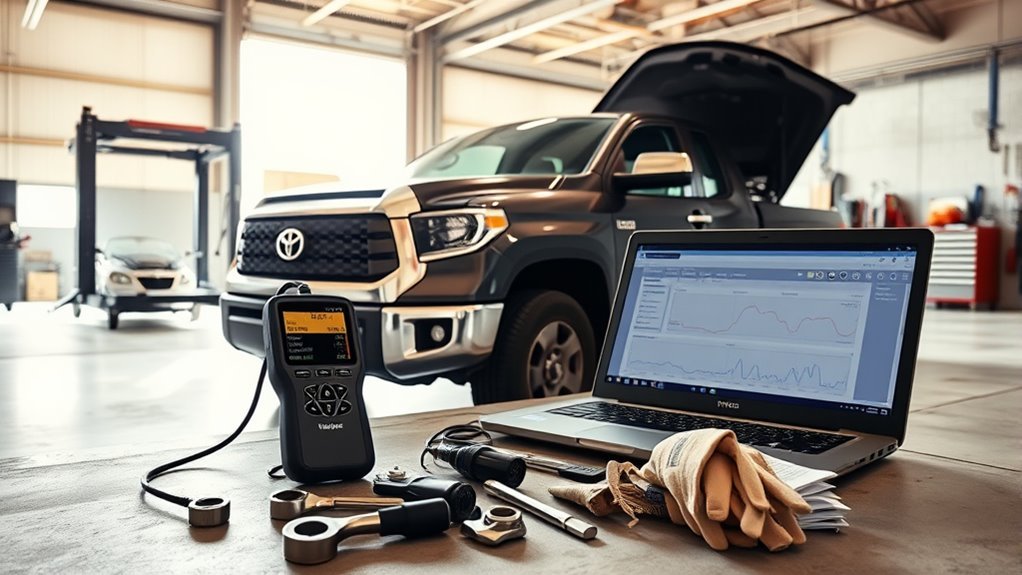
DIY scanning can save money, but guessing at parts can erase those savings fast. A basic OBD2 reader may cost about $25–$60. A better scanner with enhanced data can cost more, but it may still be cheaper than replacing one wrong sensor. Current U.S. repair labor varies heavily by region and shop type; AAA’s 2026 repair-labor guidance reports rates from under $100 to over $200 per hour, with many shops clustered between $120 and $159 per hour.
| Job Type | Good DIY Candidate? | Why |
|---|---|---|
| Read codes and save freeze-frame data | Yes | Low risk and useful before any repair visit |
| Air filter, loose intake duct, dirty MAF inspection | Yes | Basic tools and careful handling are usually enough |
| Spark plugs or coils | Sometimes | Depends on access, torque specs, and correct cylinder identification |
| EVAP smoke testing | Sometimes | A smoke machine helps avoid guessing on small leaks |
| Catalytic converter diagnosis | Usually shop | Converters are expensive, and root-cause testing matters |
| CAN-bus, no-start, airbag, ABS, transmission, or hybrid faults | Shop recommended | Needs advanced scan tools, wiring diagrams, safety procedures, and experience |
Tundra Recall and Warranty Checks Before Major Diagnosis
Before spending money on a major engine diagnosis, check your VIN. Toyota’s official recall page covers open safety recalls and service campaigns for U.S., U.S. Territories, and Mexico vehicles. Toyota also says safety recall repairs are performed at no charge to the vehicle owner when the vehicle is included in the campaign.
This step is especially important for some newer Tundras. Toyota announced a Nov. 6, 2025 recall involving certain 2022–2024 Tundra conventional gas models, and a May 20, 2026 recall involving certain 2024 Tundra non-hybrid vehicles. Toyota described possible symptoms including engine knocking, rough running, no start, and loss of motive power. Not every truck in those years is included, so use the VIN lookup rather than assuming.
Note: Recall checks do not replace diagnostics. They simply prevent you from paying out of pocket for a problem that Toyota may need to inspect or repair under an active campaign.
Maintenance Checks to Prevent Repeat Tundra OBD2 Codes
Preventing repeat codes is usually about keeping air, fuel, spark, wiring, and temperature control stable. Add these checks to your maintenance routine:
- Air intake: Inspect the air filter, air box, clamps, and intake tube after every filter change.
- MAF sensor area: Keep the intake sealed and avoid over-oiled filters that can contaminate the MAF element.
- Ignition system: Replace spark plugs at the correct interval and inspect coils, boots, and connectors when misfires appear.
- Vacuum and PCV hoses: Check for cracks, loose fittings, and collapsed hoses that can create lean codes.
- Cooling system: Maintain coolant level and thermostat performance so the engine reaches normal operating temperature.
- Exhaust system: Repair leaks before the oxygen or air/fuel sensors to avoid false mixture and catalyst clues.
- Battery and grounds: Keep terminals clean and test the battery if communication or sensor codes appear randomly.
- Post-repair scans: Re-scan after repairs and again after several drive cycles to catch pending codes early.
Frequently Asked Questions
How do you read a Toyota Tundra OBD-II fault code?
Plug an OBD2 scanner into the under-dash port, turn the ignition ON without starting the engine, scan for stored, pending, and permanent codes, and save freeze-frame data. Then look up the code meaning and test the related system before replacing parts.
What is the most common OBD2 code on a Toyota Tundra?
There is no single official “most common” Tundra code for every year and engine. P0420, P0430, P0300, P0171, P0174, P0101, and EVAP codes are commonly discussed, but the right diagnosis depends on your truck’s code list, symptoms, mileage, and live data.
How do you interpret OBD2 codes correctly?
Treat the code as a starting point. Read the code definition, save freeze-frame data, check related live data, inspect the simplest causes first, and test components before replacing them. A P0101 code, for example, may involve the MAF sensor, wiring, intake leaks, or airflow changes.
Can I drive my Tundra with the Check Engine light on?
If the light is steady and the truck runs normally, you can usually drive carefully long enough to scan it soon. If the light flashes, the engine shakes, the truck loses power, temperature rises, oil pressure drops, or you smell fuel, stop driving and arrange diagnosis or towing.
Should I clear Tundra codes after reading them?
Do not clear codes until you save the code list and freeze-frame data. After the repair, clearing codes is fine, but the truck still needs to complete readiness monitors. Permanent DTCs may remain until the onboard system verifies that the problem is fixed.
What scanner do I need for Toyota Tundra codes?
A basic OBD2 reader can read generic powertrain codes such as P0300, P0171, and P0420. For ABS, airbag, transmission, body, network, hybrid, and Toyota-enhanced data, use a scanner that supports Toyota-specific modules and live data.
What are common Toyota warning lights besides Check Engine?
Common Toyota warning lights include oil pressure, charging system, brake, ABS, tire pressure, airbag/SRS, coolant temperature, traction/stability control, and master warning. Use the owner’s manual for your exact model year because symbols and messages can vary.
Conclusion
Tundra OBD2 troubleshooting works best when you slow down and follow the evidence. Read every code, save freeze-frame data, check live data, and test the likely causes before buying parts. Basic scans, intake checks, MAF cleaning, and some ignition work can be reasonable DIY jobs. Flashing lights, no-starts, communication faults, catalyst diagnosis, drivetrain faults, and safety-system warnings deserve professional help. For newer trucks, check Toyota recalls by VIN before paying for major engine work.
Sources
- Toyota Owners Manuals and Warranties — model-year owner information and Toyota manual lookup.
- Toyota Recall Lookup — VIN and license-plate recall checks for Toyota vehicles.
- Toyota Newsroom: 2024 Tundra Recall, May 20, 2026 — current recall context for certain 2024 Tundra non-hybrid vehicles.
- Toyota Newsroom: Tundra, GX, and LX Recall, Nov. 6, 2025 — recall context for certain 2022–2024 Tundra conventional gas models.
- U.S. EPA: On-Board Diagnostic Regulations and Requirements — OBD system purpose and MIL background.
- California Bureau of Automotive Repair: OBD Test Reference — readiness monitors, MIL standards, communication standards, and permanent DTC guidance.