A knock from your Camry can turn a normal drive into a serious repair warning. The sound may come from abnormal combustion, low oil pressure, worn bearings, timing faults, or an accessory belt system that only sounds like engine damage. Use this guide to sort the sound, run simple checks first, and know when to stop driving and call a mechanic.
What’s in This Article
- Quick Answer and How to Use This Guide
- How to Tell Detonation Knock vs. Rod Knock
- Top 6 Causes of Camry Engine Knock Symptoms and Clues
- DIY Checks for Camry Engine Knock
- When It’s a Bottom-End Problem
- Could Sensors, Timing, or a Lean Mixture Be Causing the Knock?
- Cheap Fixes vs. Repairs That Need a Shop
- What a Mechanic Will Check Next
- Frequently Asked Questions
- References
Quick Answer and How to Use This Guide
Quick Answer
If your Camry’s engine is knocking, start with the safest checks: scan for codes, check oil level and condition, inspect belt-driven parts, and listen to when the noise happens. A sharp ping under load often points to detonation. A deep thud at idle or under load may point to rod bearings or other bottom-end wear.
Key Takeaways
- Use the sound pattern to separate detonation, bearing wear, and accessory-drive noise.
- Check oil level, oil condition, and oil pressure before you keep driving.
- Scan for diagnostic trouble codes before replacing parts.
- Treat deep bottom-end knocks as urgent because they can lead to severe engine damage.
- Use simple DIY checks first, but leave internal engine repairs to a qualified shop.
This guide gives you a clear diagnostic path you can follow to isolate and fix the problem. Start by listening for the knock pattern, then scan for Diagnostic Trouble Codes (DTCs), inspect timing parts, and verify oil pressure and flow.
These steps help you separate lubrication issues from mechanical wear. Once you narrow the source, you can choose the right fix, such as replacing spark plugs, repairing timing parts, cleaning oil passages, or getting a shop to inspect bearings.
Warning: Stop driving if the knock sounds deep, gets louder under load, or comes with low oil pressure.
How to Tell Detonation Knock vs. Rod Knock
You need to separate detonation knock from rod knock because the fixes and urgency differ. Use focused knock identification and engine diagnostics to avoid guesswork.
Detonation knock sounds like a sharp, metallic ping under load or high revolutions per minute (RPM). It often links to low-octane fuel, ignition timing, a lean mixture, carbon buildup, or a faulty knock sensor.
Rod knock sounds deeper and heavier. You may hear it at idle, during acceleration, or when engine load changes. It often signals worn connecting-rod bearings or crankshaft damage.
For detonation, verify fuel quality, check timing, and read knock sensor data. For rod knock, plan an internal inspection, including bearing clearance, crankshaft journals, and rod caps.
Top 6 Causes of Camry Engine Knock Symptoms and Clues
You’ll want to separate detonation-related noises from mechanical bearing and accessory-drive sources by checking when the sound appears. Fuel quality, ignition timing, air-fuel mixture, lubrication, bearings, and belt-driven parts can all create knock-like sounds.
Detonation Knock Causes
When detonation knock shows up in your Camry, it usually means combustion happens too early or too unevenly. Start with fuel because low-octane gasoline can trigger pinging under load.
Next, verify ignition timing and engine control signals. Too much timing advance can raise cylinder pressure and create knock.
Inspect the air-fuel ratio for lean conditions caused by dirty injectors, mass airflow (MAF) sensor faults, oxygen (O2) sensor faults, vacuum leaks, or weak fuel delivery. Lean mixtures burn hotter and can make detonation more likely.
Test the knock sensor and its circuit. A faulty sensor may fail to tell the engine control unit (ECU) to reduce timing when knock starts.
Mechanical Bearing Wear
After you check combustion-related causes, inspect mechanical bearing wear as a separate source of engine knock. Bottom-end failures can worsen fast, so treat them as a higher-risk issue.
- Worn rod bearings: A deep rattle or thud that changes with RPM and load can point to too much bearing clearance.
- Balance shaft wear: Some four-cylinder Camry engines use a balance shaft assembly that can create bottom-end noise when worn.
- Low oil pressure: Poor oil flow can let metal parts touch and create knocking.
- Oil contamination: Metal debris can damage bearings and block oil passages.
Replace worn bearings or balance components only after you confirm the source. Internal repairs require clean work, proper torque specs, and accurate measurements.
Accessory Belt Issues
Accessory belt system problems can mimic a knock, so check them early in your noise diagnosis. Inspect belts for glazing, cracks, missing ribs, or stretch.
Check the belt tensioner because a failing tensioner can create a slapping or rattling sound. Spin and visually inspect pulleys for wobble, rough bearings, or damage.
Accessory noises often show up at low RPM and may change when you turn on the air conditioning or electrical load. That pattern can help you separate belt noise from internal engine damage.
DIY Checks for Camry Engine Knock (Tools, Sounds, Quick Tests)
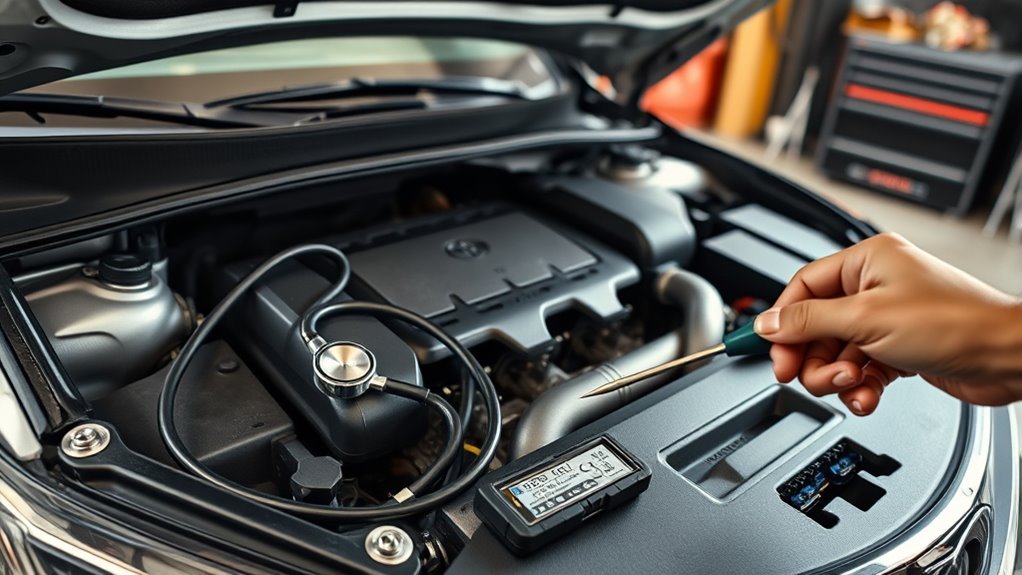
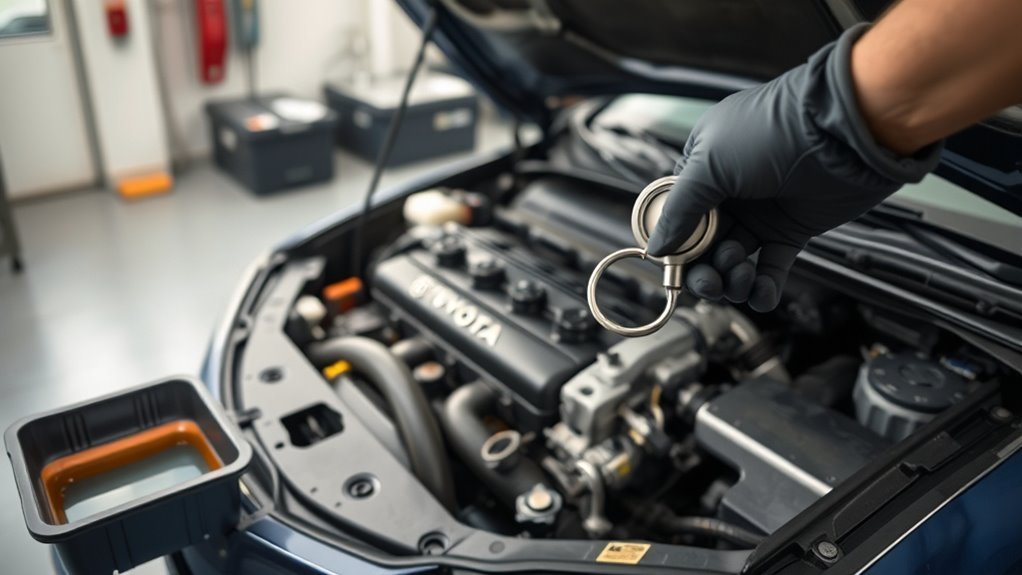
If you hear a persistent tapping or a louder knock from your Camry, start by isolating the sound. Use a mechanic’s stethoscope on the valve cover, lower block, accessory brackets, pulleys, and exhaust manifold.
Verify oil level and quality first. Dirty, low, or diluted oil can make lifters, timing parts, and bearings louder.
Confirm oil pressure with a manual gauge if the sound seems deep or the oil warning light appears. Low pressure can guide your next step and prevent more damage.
- Use a stethoscope to map noise locations while the engine idles and revs briefly.
- Scan for DTCs and record freeze-frame data before clearing any codes.
- Check oil level, oil smell, oil color, and the oil filter for metal debris.
- Inspect belts, pulleys, and the tensioner for looseness, wobble, or misalignment.
- Change the oil and filter if you find contamination, then recheck the sound.
Pro tip: Record the knock during cold start, warm idle, light throttle, and acceleration so a mechanic can hear the pattern.
[Products Worth Considering]

【Main Function】: It can capture the various sounds produced by the engine cylinders in the process of running, help you determine the working status of the internal components of the engine, and discover the hidden faults in time so as to take corresponding maintenance measures.
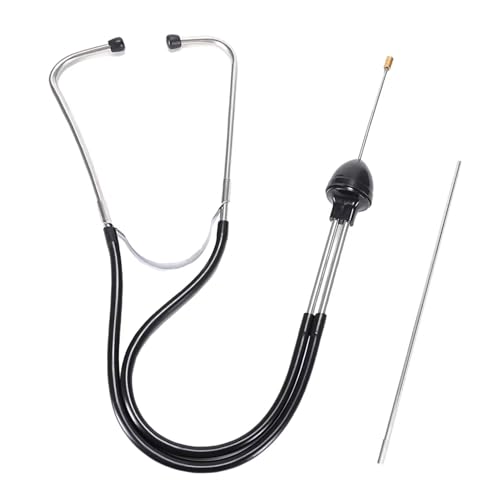
Accurate Location: The mechanical stethoscope has a sensitive acoustic chamber to pinpoint the source of the noise, helping to accurately locate abnormal engine noise. Suitable for diagnosing valve train, bearings, transmission, gears and other engine problems

[High Quality Materials]The engine stethoscope is made of high-quality stainless steel material, which is highly reliable, corrosion-resistant, wear-resistant, sturdy and durable, not easy to crack, and can be used for a long time.
When It’s a Bottom-End Problem (Bearings, Balance Shaft, Debris)
If knocking persists at idle, gets deeper under load, or comes with low oil pressure, suspect a bottom-end issue. Worn rod bearings, crankshaft damage, balance shaft wear, or oil-borne debris can all create this pattern.
Metal or gasket debris can clog oil passages, reduce lubrication, and speed up bearing wear. You should check oil pressure and inspect the oil filter before you keep driving.
[Products Worth Considering]

Fitment: This Main Rod Bearings Fits For Toyota Camry RAV4 Highlander Scion TC 2.0 2.4L 1AZFE 2AZFE

【Compatible Models】Fits for TOYOTA RAV4, AVENSIS, ESTIMA, PREVIA, SOLARA, AVALON, NOAH/VOXY, HARRIER, PREMIO, WISH, YARIS, CALDINA & CAMRY 2000-2009.

Fitment: Piston Rings Main Rod Bearings Fit for 2007-2010 Toyota Camry RAV4 Scion tC 2.4L. Only For STD SIZE
Worn Rod Bearings
When rod bearings wear, they allow excessive play between the connecting rod and crankshaft. That clearance creates a distinct knocking that often sounds loudest at idle or under load.
Use engine noise diagnosis to confirm the source. A metallic thump that changes with load points more toward bottom-end play than valvetrain noise.
Rod bearing repair requires significant disassembly. A mechanic may need to remove the oil pan, inspect rod caps, measure clearances, check crank journals, and replace damaged parts.
- Listen at idle and under load.
- Check oil condition and oil level.
- Inspect the filter and pan for metal.
- Measure bearing clearance after disassembly.
- Replace damaged parts and clean oil passages.
Balance Shaft Failure
Some Camry engines use a balance shaft assembly to reduce vibration. When this assembly wears, it can create persistent knocking and contaminate the oil with metal debris.
You may notice abnormal idle noise, added vibration, or oil contamination. Inspect oil for metallic particles and monitor oil pressure because debris can restrict flow.
If diagnostics show camshaft timing faults, variable valve timing (VVT) issues, or oil pressure concerns, include the balance shaft in your troubleshooting. When wear is confirmed, replace the worn components and flush the oil system.
Oil-Borne Debris
Oil-borne debris in the filter or pan points to internal wear. That debris can damage bearings, clog galleries, and reduce lubrication.
You may see metallic particles, low oil pressure, or repeated filter contamination. Once debris circulates, you risk bearing seizure and persistent knocking.
- Inspect the oil filter and pan for metal shavings.
- Check the pickup screen and oil galleries for blockages.
- Measure bearing and balance shaft clearances.
- Replace worn parts, flush the system, and install a new filter.
Could Sensors, Timing, or a Lean Mixture Be Causing the Knock?
A faulty sensor, mistimed ignition, or a lean air-fuel mix can cause knock in a Camry. These issues affect combustion before they cause obvious mechanical damage.
A bad oxygen sensor or mass airflow sensor can push fuel trims lean. Clogged injectors, weak fuel pressure, vacuum leaks, or poor spray patterns can also raise combustion heat.
Incorrect spark timing can create knock when the spark fires too early for the fuel, load, and temperature. Worn timing parts or control faults can make the problem worse.
The knock sensor detects detonation and tells the ECU to reduce timing. If the sensor or wiring fails, the ECU may not protect the engine fast enough.
Use a scan tool to read live sensor data, fuel trims, timing advance, misfire counts, and DTCs. Repair confirmed sensor, injector, or timing faults before you replace larger parts.
Cheap Fixes vs. Repairs That Need a Shop (Camry Costs & Parts)
After you rule out sensors, timing, or a lean mixture as the source of knock, decide what you can do safely. Choose do-it-yourself repairs only when you have the right tools, skill, and service data.
- Replace spark plugs: Parts and basic labor often cost less than internal repairs, and skilled owners can do this with a torque wrench and correct plugs.
- Inspect belts and pulleys: Belt-driven noise can sound serious, but worn belts, pulleys, or tensioners are usually easier to repair.
- Test the knock sensor: Sensor replacement may cost less than major engine work, but access can vary by engine.
- Diagnose camshaft position sensors: Testing may require a scan tool and wiring checks before replacement.
- Repair timing chains or balance shaft assemblies: These repairs require specialized labor, clean work, and correct timing procedures.
- Repair rod bearings or crankshaft damage: These repairs need internal inspection and often justify professional help.
Preventive maintenance still gives you the best value. Change oil on schedule, use the correct oil grade, monitor oil pressure concerns, and investigate new noises early.
[Products Worth Considering]
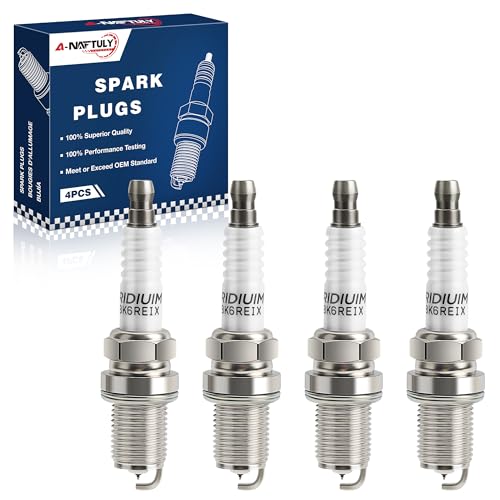
[Reference Number]: 7092, BKR6EGP, 3764, BKR6EIX11, 5553, BKR6ES11, 6741, IFR6E11, 2756, BKR6E11, 4115, PFR6G13, XP3923, 22401AA500, 980795614EHE, 9900079K60KR6, 99906910X9007, BY481BKR6E

【Basic Info:】Ignition Coil UF333 & Spark Plug 7092 are Compatible with Toyota Camry 2002-2011, Toyota RAV4 2001-2008, Toyota Corolla 2009-2010, Toyota Highlander 2001-2007, Toyota Matrix 2009-2010, Toyota Solara 2002-2006, Compatible with Scion tC 2005-2010, Scion xB 2010-2011, Compatible with Lexus HS250h 2010-2012, Compatible with Pontiac Vibe 2009-2010.ect. Please check detail fitting info from pics or detail page. OE checking is necessary before buying.

[Vehicle Fitment]: Compatible with Toyota Camry 2012-2017 L4 2.5L (GAS), Camry 2010-2011 L4 2.5L, Highlander 2009-2019 L4 2.7L, RAV4 2016-2018 L4 2.5L (GAS), RAV4 2009-2015 L4 2.5L, Sienna 2011-2013 L4 2.7L, Venza 2009-2015 L4 2.7L
What a Mechanic Will Check Next (Step-by-Step Diagnostic Path)
When you bring the Camry in, the mechanic should follow a systematic diagnostic path. The goal is to confirm the source before replacing parts.
The technician will usually scan for DTCs, measure oil pressure with a manual gauge, inspect VVT oil screens and cam phasers, check timing chain alignment, and look for oil system debris. These checks help separate sensor faults from lubrication or mechanical failure.
| Step | Action |
|---|---|
| 1 | Scan DTCs for camshaft sensors, misfires, fuel trim, and control-module faults |
| 2 | Measure oil pressure with a manual gauge |
| 3 | Inspect the VVT oil control filter and cam phasers |
| 4 | Check timing chain alignment and tensioner operation |
| 5 | Inspect the oil filter, oil pan, pickup screen, and passages for debris |
Frequently Asked Questions
What Is the Common Cause of Engine Knocking?
Common causes include detonation from poor fuel quality, a lean mixture, incorrect timing, sensor faults, low oil pressure, or worn bearings. Use the sound pattern, scan data, oil checks, and pressure tests to narrow the cause.
What Are Common Camry Engine Problems?
Common Camry engine concerns can include oil leaks, ignition issues, sensor faults, timing component wear, VVT faults, and abnormal engine noise. Some engines may also develop bottom-end or balance shaft noise, so you should verify the source before replacing parts.
Why Is My Toyota Engine Knocking?
Your Toyota engine may knock because combustion happens too early, the air-fuel mixture runs too lean, or internal parts have too much clearance. A scan tool, oil pressure test, and sound-location check can help you separate combustion knock from mechanical knock.
How Do I Get My Engine to Stop Knocking?
You stop engine knocking by fixing the root cause, not by masking the sound. Use the correct fuel, correct timing faults, repair lean-condition causes, restore oil pressure, and replace worn internal parts when tests confirm damage.
Can I Drive a Camry With an Engine Knock?
You may drive briefly if the sound is a light ping from poor fuel and no warning lights appear, but you should still diagnose it soon. Do not keep driving if the knock is deep, loud, or paired with low oil pressure, overheating, misfires, or metal in the oil.
Does High-Octane Fuel Fix Engine Knock?
Higher-octane fuel may reduce detonation if low-octane fuel caused the ping. It will not fix rod knock, low oil pressure, worn bearings, belt noise, or timing damage.
Conclusion
A Camry engine knock needs prompt diagnosis because small combustion issues and serious bottom-end wear can sound similar at first. Start with simple checks: listen to the sound pattern, scan for codes, check oil condition, verify oil pressure, and inspect belts and pulleys.
If you find low oil pressure, metal debris, or a deep thud from the lower engine, stop driving and get professional help. Fast action gives you the best chance to prevent more engine damage and keep repair costs under control.
References
- Toyota Owner’s Manuals and Warranty Information — Toyota
- Vehicle Safety Recalls and Complaints — National Highway Traffic Safety Administration
- Fuel Economy and Your Car — U.S. Department of Energy