Prep your Toyota Camry for winter before the first hard freeze by checking the tires, battery, fluids, wipers, lights, heater, defroster, and emergency supplies. A Camry can be a dependable winter sedan, especially with good tires and careful driving, but snow, ice, road salt, and weak batteries can quickly turn small maintenance issues into roadside problems.
Quick Answer
To prepare a Toyota Camry for winter driving, check cold tire pressure and tread, test the battery, use Toyota-approved fluids, fill winter washer fluid, inspect wipers and lights, wash off road salt, pack an emergency kit, and drive slowly with extra stopping distance on snow or ice.
Key Takeaways
- Set tire pressure to the driver-door placard when the tires are cold, not to the maximum PSI on the tire sidewall.
- Treat 2/32 inch tread depth as the minimum; for regular snow and ice, winter tires are the better choice.
- Have an older or slow-cranking battery professionally tested before freezing weather arrives.
- Use winter washer fluid, working wipers, clear lights, and a strong defroster to protect visibility.
- AWD can help a Camry get moving, but it does not shorten braking distance on ice.
At a Glance
| Time Required | 30–60 minutes for basic checks; longer if tires, battery, or service work are needed |
| Difficulty | Easy for visual checks; moderate for battery cleaning and fluid verification |
| Tools Needed | Tire pressure gauge, tread gauge or penny, flashlight, gloves, microfiber towel, washer fluid, emergency kit |
| Cost | $20–$80 for supplies; more if you need a battery, wipers, winter tires, or professional service |
Quick Pre-Drive Checklist for Your Toyota Camry
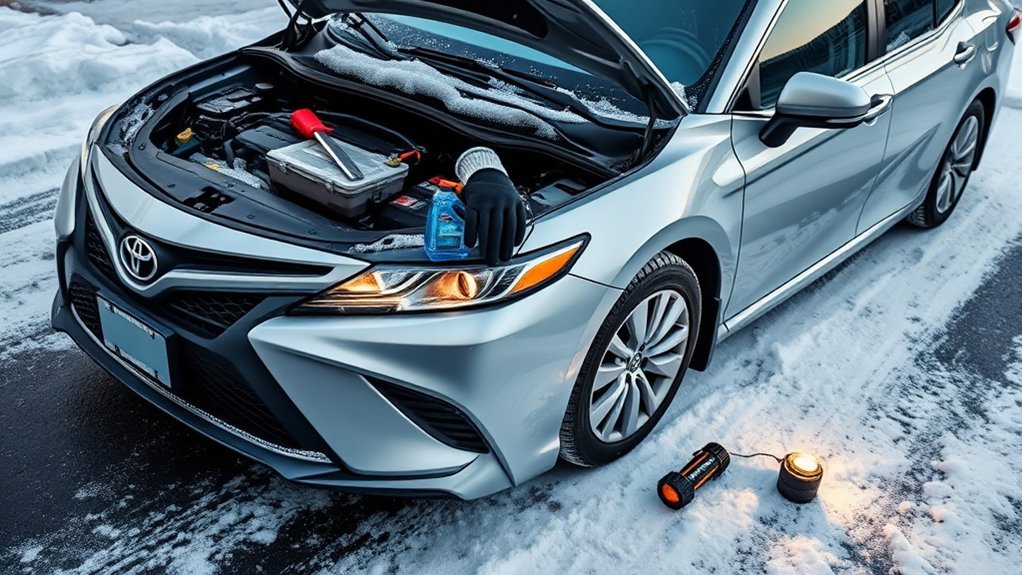
Before a winter drive, give your Camry a quick walkaround. Check tire pressure and tread, confirm all exterior lights work, clear snow from the roof and windows, and make sure the wipers sweep cleanly. Look under the car for obvious fluid leaks, and check that the windshield washer reservoir is filled with freeze-resistant winter fluid.
Inside the cabin, test the heater and front/rear defrosters before the windshield fogs. Make sure rubber floor mats, if installed, are clipped in place and cannot slide under the brake or accelerator pedal. Keep a scraper, gloves, phone charger, small shovel, and blanket within reach instead of buried under luggage.
For long trips, check the weather, road conditions, and fuel level before leaving. If you drive a newer hybrid Camry, keep enough fuel in the tank and avoid starting a long winter trip with the battery or 12-volt system already showing warning signs. You can also check for open recalls by VIN through the NHTSA recall lookup tool.
Inspect & Prepare Camry Tires: Pressure, Tread, Winter Options
Your tires are the most important winter safety item on a Toyota Camry. Cold air lowers tire pressure, and the U.S. Tire Manufacturers Association notes that tire inflation pressure can rise or fall about one to two pounds for every 10 degrees of temperature change. Check pressure at least monthly, before long trips, and after major cold snaps.
[Products Worth Considering]

Upgrade your vehicle's interior with this universal console cover that combines comfort and organization. The high‑quality microfiber leather resists spills and scratches while the thick memory foam core provides ergonomic support, reducing elbow fatigue on long drives. Dual side pockets keep essentials within reach, and elastic straps with non‑slip dots ensure a secure, tool‑free installation for any sedan.

The SCUARI Wiper Arm Removal Tool offers a durable carbon steel construction and an adjustable knob for flexible height control, making it easy to detach wiper arms on cars, SUVs, and trucks. Its rotating handle and secure locking screw ensure safe, damage‑free removal, while the compact collar fits most standard wiper arm sizes. Ideal for both DIY owners and professional mechanics seeking quick, reliable service.

The TPXSIUE passenger storage organizer mat provides a custom‑fit, non‑slip silicone tray that keeps items secure and the console tidy. It slides into the grab‑handle slot without tools, protecting the interior from scratches and rattles while offering easy access to pens, gum, and other essentials. Designed for RAV4 models from 2019 to 2024, it delivers a perfect OEM‑like fit and enhances vehicle organization.
Check Tire Pressure
Check tire pressure when the tires are cold, meaning the car has been parked for at least three hours. Inflate each tire to the PSI shown on the driver-side door-jamb placard or in the owner’s manual, not the maximum pressure printed on the tire sidewall. The NHTSA winter driving guide also recommends checking the spare tire if your Camry has one.
Inspect all four tires for cuts, bulges, cracks, punctures, and uneven wear. If your Camry has a tire repair kit instead of a spare, confirm the sealant is not expired and that the inflator works. A low-pressure tire can reduce control, wear unevenly, and trigger the tire-pressure warning light during cold mornings.
Choose Winter Tires
Measure tread depth before winter starts. NHTSA says tire tread should be at least 2/32 inch or greater, but that is only the minimum. If you often drive on snow, ice, steep hills, or untreated roads, dedicated winter tires are a better choice than worn all-season tires because they use rubber compounds and tread designs made for cold conditions.
| Check | Action | Why It Matters |
|---|---|---|
| Cold tire pressure | Set to the door-jamb placard PSI | Helps traction, handling, and tire life |
| Tread depth | Measure all tires, not just one | Identifies tires that are unsafe for snow or slush |
| Winter tire rating | Look for winter/snow-rated tires if you drive in frequent snow | Improves cold-weather grip and braking control |
| Spare or repair kit | Inspect and verify it is usable | Prevents being stranded after a flat |
Pro Tip: If your tire-pressure light comes on after a cold night, do not ignore it or simply “warm up” the tires by driving. Check the pressure with a gauge and inflate to the placard PSI while the tires are cold.
Check Camry Battery Health and Clean Connectors
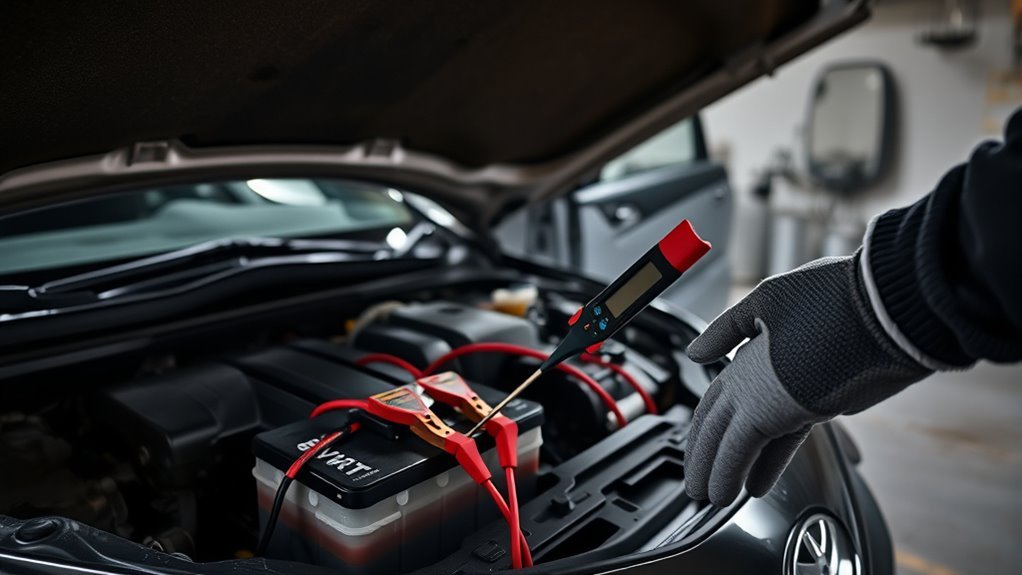
Cold weather makes engines harder to start and reduces battery performance. Before winter hits, inspect your Camry’s 12-volt battery terminals for white, blue, or greenish buildup. Make sure the battery is securely mounted, the cables are tight, and the case is not swollen, cracked, or leaking.
A multimeter can give you a quick at-home voltage reading, but voltage alone does not prove the battery will survive a freezing morning. If your Camry cranks slowly, the battery is more than three years old, or you have seen warning lights, have a shop perform a battery and charging-system test before the first cold snap.
Test Battery Charge
With the car off, a healthy 12-volt battery is usually around the mid-12-volt range, but the exact reading depends on temperature, battery type, and recent driving. If the reading is low, charge and retest it or have it tested professionally. A proper load test is more useful than guessing based on voltage alone.
For 2025 and newer Camry hybrid models, remember that the hybrid system and 12-volt system are not the same thing. A weak 12-volt battery can still cause starting or accessory issues, even if the hybrid battery is healthy.
Clean Corroded Terminals
If you clean battery terminals yourself, wear gloves and eye protection. Disconnect the negative cable first, then the positive cable. Use a baking soda and water paste to neutralize corrosion, scrub gently with a terminal brush, rinse carefully, and dry the area before reconnecting the positive cable first and the negative cable last.
Warning: Do not work around a battery with open flames, sparks, jewelry, or loose metal tools. If the battery is leaking, swollen, frozen, or cracked, do not clean it yourself; have it replaced by a professional.
Top Off and Winterize Fluids: Coolant, Oil, Wiper, Brake
Check fluids before freezing weather, but do not guess at specifications. Toyota fluid requirements vary by model year, engine, and hybrid/non-hybrid setup. Use your owner’s manual, under-hood labels, or the Toyota owner manuals portal to confirm the correct oil, coolant, brake fluid, and service procedures for your exact Camry.
Start with coolant. The cooling system should have enough coolant and the right antifreeze mixture for your climate. If the coolant is low, discolored, contaminated, or overdue, have the system inspected for leaks before simply topping it off.
Use the engine oil viscosity Toyota specifies for your Camry. Toyota explains in its 2025 Camry Hybrid maintenance data that the “0W” in 0W-8 relates to cold-start performance, but the correct oil still depends on the vehicle’s specifications and operating conditions. Do not switch oil grades just because it is winter unless the manual allows it.
Fill the washer reservoir with winter washer fluid rated below your local freezing temperatures. Check brake fluid level, but treat low brake fluid as a warning sign: it may indicate brake wear or a leak. Many modern Camrys use electric power steering, so do not look for or add power steering fluid unless your owner’s manual says your specific model has a hydraulic system.
[Products Worth Considering]
The KUST Black Dashboard Cover Mat offers a custom, eco‑friendly fit for Toyota RAV4 models from 2019 to 2025, protecting the dash from UV damage, scratches, and glare. Made from post‑consumer recycled polyester with a silicone anti‑slip underside, it stays soft, breathable, and odorless while securely adhering to the surface. Installation is quick and reversible, and the foldable design allows easy storage when not in use.

These durable PVC cup holder inserts provide a non‑slip, waterproof surface that keeps drinks stable and prevents spills while protecting the cup holder from scratches and noise. The honeycomb mesh design offers a comfortable grip and easy cleaning, fitting most vehicle cup holders with a 2.75‑inch diameter. Ideal for cars, trucks, and SUVs, they enhance interior comfort and maintain a tidy cabin.
Test Heater, Defroster, and Windshield Wipers for Visibility
Good visibility is a winter safety requirement, not a comfort feature. Run the heater at different fan speeds and confirm warm air reaches the cabin. Turn on the front and rear defrosters and make sure they clear fog quickly. If the cabin heat is weak or the windshield keeps fogging, inspect coolant level, cabin air filter condition, and defroster operation before winter driving gets serious.
Inspect the wiper blades for cracks, stiffness, torn rubber, skipping, or streaking. Replace worn blades before snow and road spray make visibility worse. NHTSA recommends making sure defrosters and wipers work and using high-quality winter washer fluid with de-icer before winter weather hits.
Protect Camry Paint and Undercarriage From Salt Corrosion
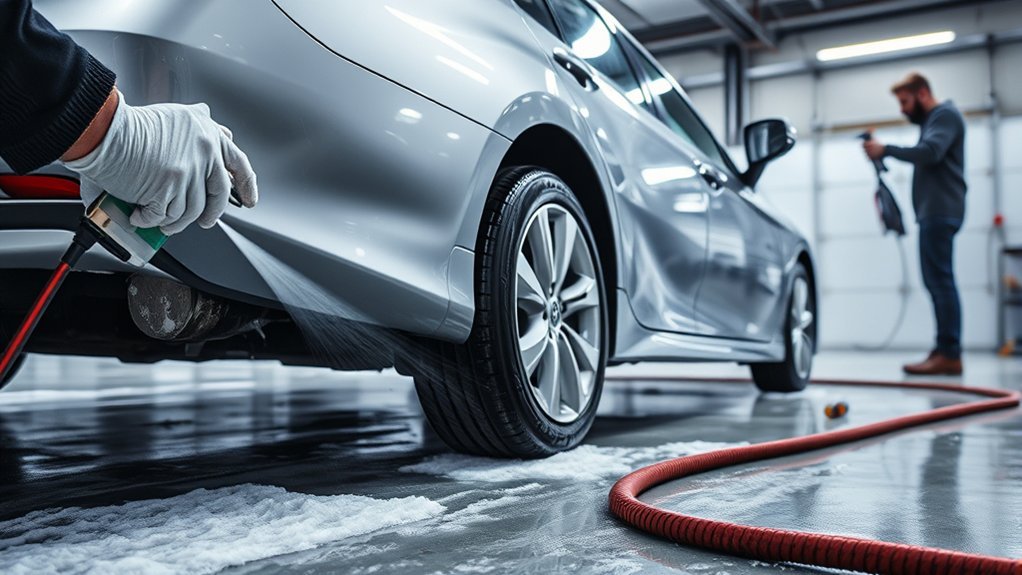
Road salt helps melt ice, but it can also speed up rust on the undercarriage, brake lines, suspension parts, and exposed metal. Before winter, wash your Camry thoroughly and apply a quality wax or paint sealant to make salt easier to rinse away.
During winter, rinse the wheels, rocker panels, wheel wells, and underside whenever temperatures are safely above freezing. A touchless wash with an undercarriage rinse is helpful after storms or salty highway driving. Inspect paint chips and scratches regularly, then touch up exposed metal before rust starts.
If you live in a heavy salt-belt area and plan to keep your Camry long term, ask a reputable shop about underbody corrosion protection. Avoid thick coatings sprayed over existing rust or trapped moisture; the surface should be clean and dry before any rustproofing product is applied.
Pack a Winter Emergency Kit Tailored to Your Camry
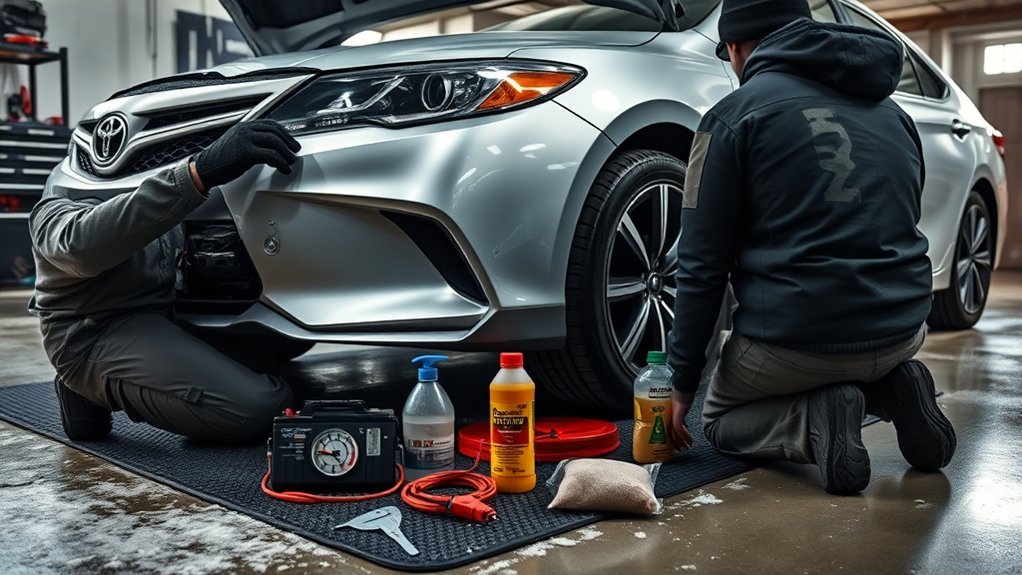
Pack a compact emergency kit before winter weather turns bad. At minimum, include an ice scraper, snow brush, small shovel, jumper cables or a jump pack, flashlight with extra batteries, first aid kit, warm blanket, gloves, water, snacks, phone charger, and any necessary medicine.
Add traction material such as sand or non-clumping cat litter if you drive on snowy driveways or rural roads. Warning triangles or LED flares help other drivers see you if you are stopped. Keep the kit in the trunk, but place the scraper, gloves, and phone charger where you can reach them quickly.
Warning: If you are stranded in snow, clear snow away from the exhaust pipe before running the engine for heat. Run the engine only briefly and crack a window slightly to reduce carbon monoxide risk.
Adjust Driving Habits and Safety Systems for Ice and Snow
Winter driving requires more space and less speed. Slow down before turns, brake early, and leave at least five to six seconds of following distance in snow or ice. On very slick roads, leave even more room. Avoid sudden steering, hard braking, and sharp acceleration.
If your Camry has antilock brakes, press the brake pedal firmly and steadily during emergency braking. Do not pump ABS brakes. If your Camry is an older model without ABS, follow the braking guidance in your owner’s manual.
Available Camry AWD can help the car move from a stop and improve traction when the front wheels slip. Toyota’s 2026 Camry brochure describes Electronic On-Demand AWD as sending torque to the rear wheels when front-wheel slippage is detected. Still, AWD does not overcome ice, does not replace winter tires, and does not shorten stopping distance.
| Situation | Action | Benefit |
|---|---|---|
| Icy intersection | Brake early and roll in slowly | Reduces sliding into traffic |
| Snowy driveway | Use gentle throttle and clear packed snow first | Limits wheel spin |
| Slippery curve | Slow before the turn, then steer smoothly | Helps prevent skids |
| Packed snow | Keep steady momentum and avoid abrupt inputs | Maintains control |
| Unplowed deep snow | Avoid travel if the car may bottom out | Protects the bumper, underbody, and safety |
When to Schedule a Professional Winter Service (Ramey Toyota)
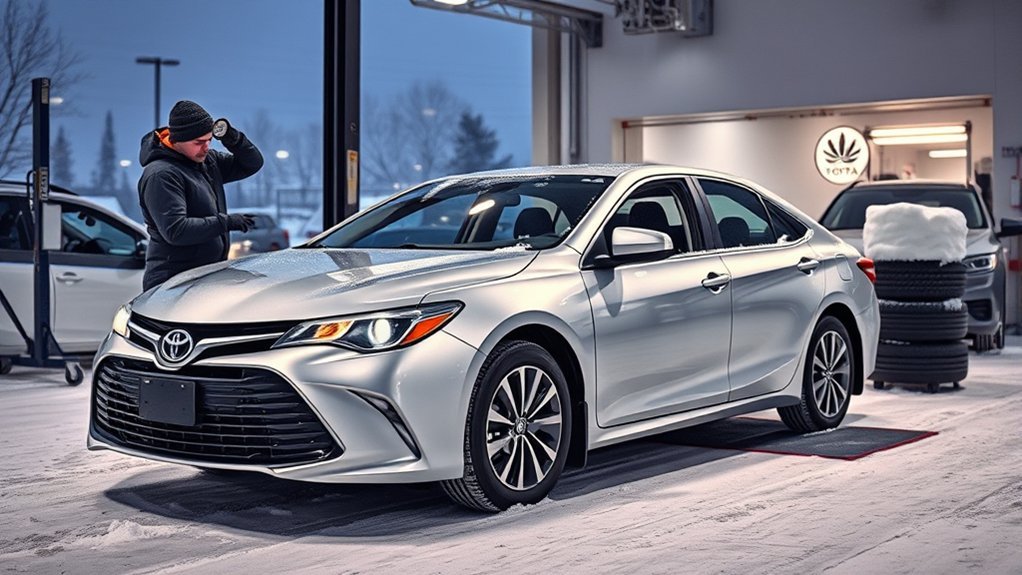
Schedule a professional winter inspection a few weeks before the first expected snowfall, especially if your Camry is due for maintenance, has an older battery, has worn tires, or has warning lights on the dash. A Toyota dealer such as Ramey Toyota, or another qualified repair shop, can check items that are harder to verify at home.
A useful winter service should include:
- Battery and charging-system test.
- Tire tread, pressure, age, and alignment/wear inspection.
- Brake inspection, including pads, rotors, and brake-fluid level.
- Coolant freeze protection and leak check.
- Wiper, washer, heater, defroster, and exterior-light check.
- Undercarriage inspection for rust, loose shields, or damage.
- Review of open recalls and upcoming scheduled maintenance.
Bring notes about any slow starts, warning lights, unusual noises, vibration, pulling, or poor defrosting. Specific symptoms help the technician find problems before winter makes them worse.
Seasonal Maintenance Calendar: Monthly Checks & Trip Prep
Use a simple winter calendar to keep your Camry ready. Once a month, check tire pressure cold, inspect tread, verify washer fluid, test lights, look for leaks, inspect wiper blades, and confirm your emergency kit is still stocked.
Before a long winter trip, repeat the checks and add route planning. Check weather alerts, road closures, and traffic conditions. Fill the gas tank close to full when possible, and let someone know your route and expected arrival time if you will drive through rural or storm-prone areas.
After storms, wash salt from the paint, wheels, and undercarriage. After hitting a pothole or curb hidden by snow, check tire sidewalls and steering behavior. If the car pulls, vibrates, or the steering wheel is off-center, schedule an inspection.
Winter prep is not one big repair. It is a set of small checks—tires, battery, fluids, visibility, emergency gear, and slower driving—that prevent the most common cold-weather failures.
Frequently Asked Questions
Is the Toyota Camry good for winter driving?
Yes, a Toyota Camry can be good for winter driving when it has proper tires, good battery health, working wipers and defrosters, and a careful driver. Front-wheel-drive Camrys can handle light winter conditions with good tires, while available AWD can help with traction when accelerating. Braking and cornering still depend heavily on tire grip and road conditions.
Can a Camry drive in 5 inches of snow?
Sometimes, but it depends on the snow. A Camry may handle light, loose, passable snow with good winter tires and careful driving. Avoid deep, wet, rutted, icy, or unplowed snow that can pack under the car, reduce steering control, or cause the bumper or underbody to drag.
Do I need winter tires for a Toyota Camry?
You do not always need winter tires, but they are strongly recommended if you regularly drive in snow, ice, or temperatures near freezing. All-season tires can work in mild winter climates, but winter tires provide better cold-weather grip, especially when stopping or turning.
What tire pressure should a Camry have in winter?
Use the tire pressure listed on your Camry’s driver-side door-jamb placard or in the owner’s manual. Check it when the tires are cold. Do not inflate to the maximum PSI printed on the tire sidewall, because that number is not the vehicle’s recommended pressure.
Does Camry AWD make winter tires unnecessary?
No. AWD helps the car accelerate and maintain traction when power is applied, but it does not create extra grip for braking on ice. Winter tires improve the tire-to-road contact that matters for accelerating, turning, and stopping.
Conclusion
Prepare your Camry for winter by focusing on the basics that matter most: tire pressure and tread, battery strength, Toyota-approved fluids, washer fluid, wipers, defrosters, lights, road-salt protection, and emergency supplies. If your Camry has available AWD, use it as extra help—not as a substitute for good tires and cautious driving.
Small checks before winter can prevent the biggest cold-weather headaches. Slow down, leave more room, wash off salt, and schedule service early if your tires, battery, brakes, or fluids are questionable.
Sources
- NHTSA Winter Driving Tips — winter tire, battery, visibility, coolant, emergency kit, and safe-driving guidance.
- U.S. Tire Manufacturers Association Tire Care Essentials — cold tire checks and tire pressure changes with temperature.
- Toyota Owners Manuals and Warranties — model-specific fluid, tire, and maintenance guidance.
- Toyota 2026 Camry Brochure — available Electronic On-Demand AWD information.
- Ready.gov Car Safety — winter car safety supplies and travel preparedness.
- AAA Road Salt Vehicle Protection — road-salt corrosion prevention and undercarriage care.