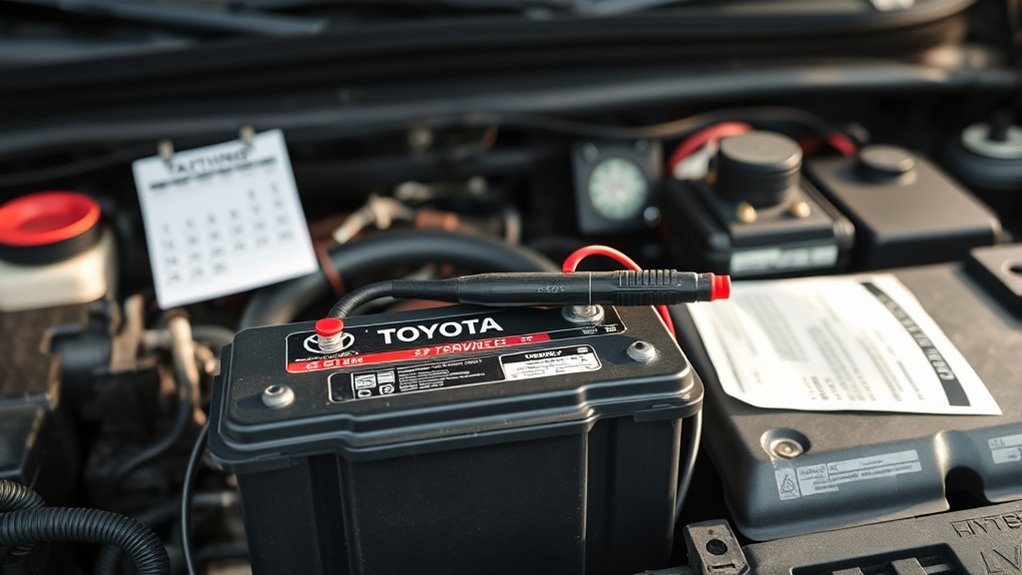
Your Camry’s California emissions warranty can help pay for repairs to emissions-related parts when a covered defect or emissions-test failure occurs. The exact coverage depends on your model year, certification label, state of registration, mileage, and whether the car is certified as a PZEV/TZEV model, so always confirm coverage in your Toyota warranty booklet or with an authorized Toyota dealer before approving a paid repair.
Quick Answer
For many Toyota Camry models certified for California emissions, the California emissions warranty covers emissions-related parts for 3 years or 50,000 miles, with certain high-cost emissions parts covered for 7 years or 70,000 miles. Some certified PZEV/TZEV Camry models may receive 15 years or 150,000 miles of emissions coverage.
Key Takeaways
- California emissions coverage is usually broader than the basic federal emissions warranty, but the Toyota warranty booklet for your exact Camry controls.
- Commonly covered items may include the catalytic converter, engine control computer, onboard diagnostic system, oxygen sensors, evaporative emissions parts, fuel system parts, and related emissions hardware.
- PZEV/TZEV coverage is not automatic for every Camry. Check the under-hood Vehicle Emission Control Information label, warranty booklet, or Toyota dealer records.
- Do not approve a paid emissions repair until the dealer checks whether the repair is covered under California, federal, or PZEV/TZEV emissions warranty rules.
What You Need to Know About Your Camry’s Emissions Warranty
The California Emission Control Warranty is designed to protect owners when a covered emissions part fails because of a defect or when the vehicle cannot meet required emissions standards during the warranty period. For Toyota owners, the most important rule is simple: your Toyota owner’s warranty and maintenance guide is the final source for your exact model year, engine, emissions certification, and covered-parts list.
For 1990 and newer passenger cars and light-duty vehicles sold in California, the California Air Resources Board lists two major California coverage periods: a 3-year/50,000-mile defects and performance warranty for emissions-related parts and a 7-year/70,000-mile high-cost emissions-related parts warranty for specific parts listed in the owner’s manual. CARB also lists enhanced 15-year/150,000-mile coverage for vehicles certified to PZEV or TZEV standards, with separate treatment for certain battery or energy-storage components.
Note: A 2001 Toyota Camry is well past any time-based original emissions warranty in 2026. This guide still explains how the coverage works, but an older Camry will usually be out of warranty unless there is a separate Toyota warranty enhancement, recall, emissions campaign, or other special coverage.
Warranty Duration: Key Details for Toyota Owners
Understanding the warranty duration matters because emissions repairs can be expensive. Catalytic converters, evaporative emissions parts, sensors, and engine-control components can cost far more than routine maintenance, so it is worth checking warranty eligibility before paying out of pocket.
California lists standard emissions-related coverage at 3 years/50,000 miles, high-cost emissions parts at 7 years/70,000 miles, and PZEV/TZEV enhanced emissions coverage at 15 years/150,000 miles when the vehicle qualifies.
| Coverage Type | Typical California Coverage | What It Usually Applies To |
|---|---|---|
| California defects and performance warranty | 3 years or 50,000 miles | Emissions-related parts and repairs needed to pass covered emissions requirements |
| High-cost emissions-related parts warranty | 7 years or 70,000 miles | Specific high-cost parts listed in the Toyota warranty booklet for that model year |
| PZEV/TZEV enhanced emissions warranty | 15 years or 150,000 miles for qualifying emissions components | Vehicles certified to the applicable PZEV/TZEV standard and sold, registered, and operated in qualifying states |
| Federal emissions warranty | 2 years/24,000 miles for many emissions parts; 8 years/80,000 miles for specified major components | Major federal components include catalytic converters, the electronic emissions control unit/computer, and the OBD device or computer according to the U.S. EPA |
For a Toyota Camry, the most useful way to read those periods is this: time and mileage both matter. Coverage ends when the car reaches the time limit or the mileage limit, whichever happens first. It also follows the vehicle, not just the first owner, as long as the car is still inside the applicable coverage period and the failure is not excluded.
How to Check If Your Camry Qualifies
Before you file a claim, confirm whether your Camry is covered under California emissions rules, federal emissions rules, or a longer PZEV/TZEV emissions warranty. Use these checks:
- Look under the hood: Find the Vehicle Emission Control Information label. It will state whether the vehicle conforms to California emissions standards and may identify special emissions certification.
- Check the warranty booklet: Use the booklet for your exact model year, not a generic online summary for a different Camry.
- Confirm the in-service date: Warranty time starts when the vehicle was first put into service, not the date you bought it used.
- Verify mileage: The odometer reading must be within the applicable mileage limit.
- Ask the Toyota dealer to run the VIN: A dealer can check Toyota warranty coverage, emissions campaigns, recalls, and special warranty enhancements tied to your VIN.
Pro Tip: If your check-engine light is on and the diagnostic code points to an emissions part, ask the dealer to check warranty coverage before replacing anything. Once you approve a paid repair at an independent shop, reimbursement may be harder to obtain.
Essential Components Covered by the Emission Warranty
The California emissions warranty can cover many parts that help your Camry control tailpipe and evaporative emissions. Exact coverage varies by model year and certification, but common covered systems may include:
- Catalytic converter: Helps reduce harmful exhaust pollutants. This is often one of the most expensive emissions components.
- Engine Control Module or Electronic Control Unit: Manages fuel, ignition, emissions controls, and diagnostic monitoring.
- Onboard Diagnostic system: Monitors emissions performance and turns on the malfunction indicator light when a fault is detected.
- Oxygen and air-fuel ratio sensors: Help the computer adjust the air-fuel mixture and monitor catalyst performance.
- Evaporative emissions system: Includes parts such as the charcoal canister, purge valve, vapor lines, fuel cap, and related controls that reduce fuel-vapor emissions.
- Exhaust Gas Recirculation system: On equipped models, helps reduce combustion temperatures and certain emissions.
- Fuel and air-induction components: May include selected injectors, sensors, valves, hoses, and related emissions hardware when listed in the warranty booklet.
Do not assume every part in these systems receives the same coverage length. Some components may fall under the shorter emissions warranty, while a model-year-specific list may mark other parts for longer high-cost coverage. For certified PZEV/TZEV Camry models, the coverage can be much broader, but the vehicle must meet the certification, registration, and operation requirements stated in the warranty materials.
What Is Not Covered?
An emissions warranty is not the same as free repair coverage for every check-engine light. Toyota or another manufacturer may deny coverage when the failure is caused by something outside the warranty terms. Common exclusions include:
- Abuse, neglect, racing, flooding, accident damage, or improper use
- Improper maintenance or failure to use required fluids, fuel, or service procedures
- Unapproved modifications, tampering, deleted emissions equipment, or noncompliant aftermarket parts
- Damage caused by a repair facility or an incorrectly installed replacement part
- Normal maintenance items unless they are specifically covered by the applicable emissions warranty
- Vehicles outside the time or mileage limit for the applicable coverage
Warning: Removing, disabling, or modifying emissions equipment can void warranty coverage and may violate state or federal emissions laws. Always use compliant parts and keep documentation for any emissions-related repair.
Best Practices to Maintain Your Warranty
Maintaining your California emissions warranty comes down to good records, correct maintenance, and fast action when a warning light appears. To protect your coverage:
- Follow Toyota’s maintenance schedule for your model year, engine, and driving conditions.
- Keep service receipts for oil changes, spark plugs, air filters, diagnostics, emissions repairs, and any check-engine-light work.
- Use compliant replacement parts. OEM parts are the safest choice, but the key is that replacement emissions parts must be correct and legally approved for your vehicle.
- Do not ignore the malfunction indicator light. A small emissions fault can cause larger problems if the vehicle is driven for too long without diagnosis.
- Keep the fuel cap tight and replace it with the correct part if it fails, since evaporative emissions faults are often tied to vapor leaks.
- Save inspection reports if your Camry fails a Smog Check or other required emissions test.
California warranty rules state that a manufacturer cannot deny warranty coverage solely because you do not have every maintenance receipt, but missing records can make a claim harder to support. Good documentation gives you a cleaner path if the dealer needs proof that the failure was not caused by neglect or improper maintenance.
How to File an Emissions Warranty Claim
Filing an emissions warranty claim for your Toyota Camry is easiest when you give the dealer the right information up front. Use this process before approving a paid emissions repair.
At a Glance
| Time Required | 30–60 minutes to gather records; dealer diagnosis time varies |
| Difficulty | Easy to moderate |
| Tools Needed | VIN, odometer reading, warranty booklet, service records, emissions test report, repair invoices |
| Cost | Covered repairs should include diagnosis, parts, and labor when the claim is approved; diagnostic fees may apply if the issue is not covered |
- Confirm the vehicle details. Write down your VIN, model year, engine, current mileage, state of registration, and in-service date if you know it.
- Collect documents. Bring maintenance records, prior repair invoices, Smog Check failure paperwork, diagnostic trouble codes, and proof of ownership.
- Contact an authorized Toyota dealership. Ask the service department to check California emissions warranty, federal emissions warranty, recalls, service campaigns, and warranty enhancements by VIN.
- Ask for warranty review before paid work. Make it clear that you want the emissions warranty evaluated before authorizing a customer-pay repair.
- Allow inspection or diagnosis. The dealer may need to verify the failed part, confirm the diagnostic code, and check for exclusions such as tampering or accident damage.
- Request the decision in writing. If the claim is denied, ask which warranty term or exclusion applies and keep a copy of the repair order.
- Escalate when needed. If you believe the denial is wrong, contact Toyota customer support and, for California emissions-warranty questions, the CARB Helpline at (800) 242-4450.
Troubleshooting Common Claim Problems
If the claim does not go smoothly, the issue is often one of these problems:
- The dealer says the car is out of warranty: Ask them to verify both the California emissions warranty and the federal emissions warranty. Some major federal components have 8-year/80,000-mile coverage.
- The part is not on the high-cost list: Ask whether it is covered under the shorter California emissions warranty, PZEV/TZEV coverage, a recall, or a Toyota warranty enhancement.
- The vehicle was bought used: Emissions warranty coverage can still apply to used vehicles if time, mileage, and other terms are met.
- An independent shop already diagnosed it: Bring the written diagnosis and codes, but expect the Toyota dealer to perform its own verification.
- The claim was denied for maintenance reasons: Provide receipts and ask the dealer to identify how the missing or improper maintenance caused the emissions part to fail.
Frequently Asked Questions
What does the California emissions warranty cover on a Toyota Camry?
It can cover emissions-related defects and repairs needed for covered emissions compliance issues. Depending on your Camry’s model year and certification, covered parts may include the catalytic converter, engine control computer, onboard diagnostic system, oxygen sensors, evaporative emissions components, fuel-system parts, EGR parts, and other emissions-related hardware listed in the Toyota warranty booklet.
How long is the California emissions warranty?
For many qualifying California-certified passenger vehicles, CARB lists emissions defects and performance coverage at 3 years or 50,000 miles and high-cost emissions-related parts coverage at 7 years or 70,000 miles. Certified PZEV/TZEV vehicles may qualify for 15 years or 150,000 miles of enhanced emissions coverage, but the exact Toyota warranty booklet for your Camry controls.
Is every Toyota Camry a PZEV model?
No. PZEV coverage depends on the vehicle’s emissions certification, model year, engine, original sale state, registration state, and operation requirements. Check the under-hood emissions label, the warranty booklet, or ask a Toyota dealer to verify the VIN.
Does the emissions warranty cover a used Camry?
Yes, emissions warranty coverage generally follows the vehicle rather than only the first owner, as long as the Camry is still within the applicable time and mileage limits and the failure is not excluded by the warranty terms.
What should I do if my Camry fails a Smog Check?
Keep the failed test report, note the mileage, and contact an authorized Toyota dealer before authorizing repairs. Ask the dealer to check California emissions warranty, federal emissions warranty, recalls, and any Toyota warranty enhancements that may apply to the failed component.
What does the emission select warranty cover?
“Emission select warranty” is not the standard name Toyota uses for the California Emission Control Warranty. Owners often use that phrase to mean selected emissions components with longer coverage. For a Camry, check the model-year Toyota warranty booklet for the exact list of parts that receive longer high-cost, federal 8-year/80,000-mile, or PZEV/TZEV coverage.
Conclusion
Understanding your Camry’s California emissions warranty can save you from paying for a repair that Toyota may be required to cover. The big numbers to remember are 3 years/50,000 miles for many emissions-related defects and performance issues, 7 years/70,000 miles for listed high-cost emissions parts, and 15 years/150,000 miles for qualifying PZEV/TZEV emissions coverage. Before paying for a catalytic converter, ECM, OBD, evaporative-system, or sensor repair, check your warranty booklet, confirm the VIN with a Toyota dealer, and keep every diagnostic and maintenance record.
Sources
- California Air Resources Board: California Vehicle and Emissions Warranty Periods — California emissions warranty periods, PZEV/TZEV coverage, and CARB Helpline information.
- U.S. EPA: Frequent Questions Related to Transportation, Air Pollution, and Climate Change — federal emissions warranty periods and major covered components.
- Cornell Legal Information Institute: 13 CCR § 2039 — California emissions warranty statement, owner responsibilities, and manufacturer obligations.
- Toyota Owners: 2001 Camry Manuals and Warranties — Toyota model-specific manuals and warranty reference point.
- Toyota Support: California Emissions Warranty Guidelines — Toyota guidance on California emissions warranty coverage and authorized Toyota dealer warranty work.