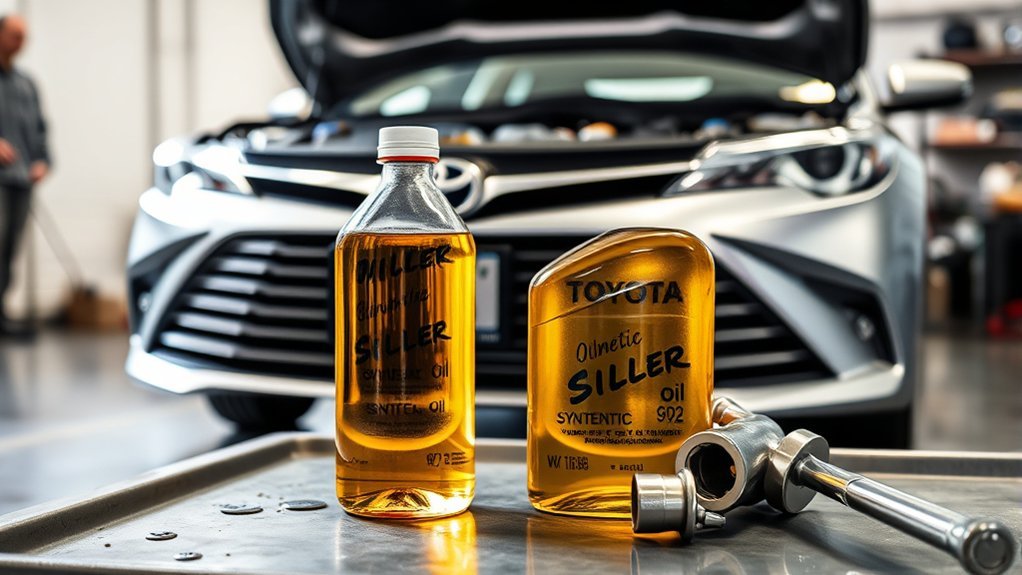
For a Toyota Camry, synthetic oil is usually the smarter choice because it flows well during cold starts, handles heat better, and helps keep modern engine parts clean. The exact oil grade still depends on your Camry’s model year and engine. Many Camrys use 0W-20 synthetic oil, while some newer models call for thinner grades such as 0W-16 or 0W-8. Always match the oil cap and owner’s manual first.
Quick Answer
Yes, synthetic oil is good for a Toyota Camry and is required or strongly recommended for many late-model Camrys. Use the viscosity printed in your owner’s manual or on the oil cap, such as 0W-20, 0W-16, or 0W-8, and follow Toyota’s mileage or time interval.
Key Takeaways
- Do not choose oil by “Camry” alone. Choose it by your model year, engine, oil cap, and owner’s manual.
- 0W-20 synthetic oil is correct for many Camry models, but some newer Camrys require 0W-16 or 0W-8.
- Toyota says vehicles that require 0W-20 synthetic oil may use a 10,000-mile or 12-month oil-change interval, whichever comes first.
- Conventional oil is only a good choice if your specific Camry manual allows it and you follow the shorter service interval.
- After switching an older, high-mileage Camry to synthetic, check the oil level and look for leaks during the first 1,000 miles.
Quick Recommendation: Camry Oil Choice
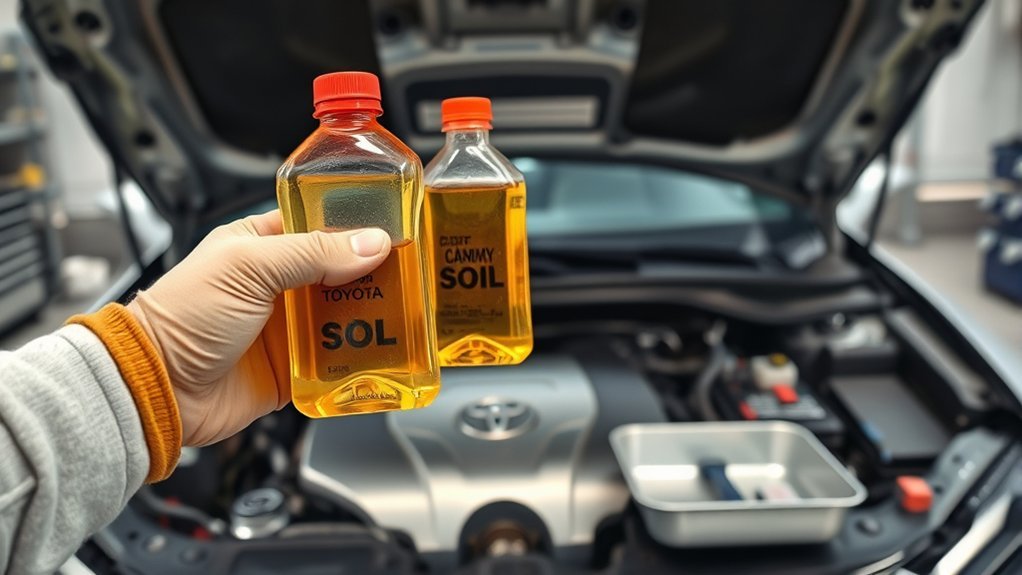
If your Camry’s manual calls for synthetic oil, use synthetic. If the manual allows either conventional or synthetic, synthetic is still the better all-around pick because it resists heat, oxidation, and deposits better than basic conventional oil. That helps with cold starts, city driving, short trips, high temperatures, and longer service intervals.
The one thing you should not do is assume every Camry uses the same oil. A 2025 Camry Hybrid, for example, uses SAE 0W-8 oil meeting JASO GLV-1, while many earlier Camrys used 0W-20 or 0W-16. The right oil is the oil that matches Toyota’s specification for your exact vehicle.
Warning: Do not use a thicker or thinner oil just because it is cheaper, easier to find, or recommended by a generic parts lookup. Using the wrong viscosity can affect cold-start lubrication, fuel economy, variable valve timing operation, and warranty protection.
Which Oil Grade Does a Toyota Camry Need?
The safest answer is simple: open the owner’s manual, check the oil-filler cap, and use the listed SAE viscosity and performance standard. Toyota has changed Camry oil recommendations over the years, so the correct grade can vary by engine and model year.
| Camry Type | Oil Guidance | What to Check |
|---|---|---|
| 2025 and newer Camry Hybrid | Toyota lists SAE 0W-8 with JASO GLV-1. If 0W-8 is unavailable, Toyota says 0W-16 may be used temporarily and replaced with 0W-8 at the next oil change. | Owner’s manual maintenance data section |
| Late-model Camry gasoline and hybrid models | Many use 0W-20 or 0W-16 synthetic oil, depending on engine and year. | Oil cap, manual, and maintenance guide |
| Older Camry models | Some older engines may allow conventional oil or older viscosity grades such as 5W-30, depending on the year and engine. | Printed manual or Toyota manual lookup |
For many Camry owners, 0W-20 synthetic oil is the correct and practical choice. But if your manual calls for 0W-16 or 0W-8, do not substitute 0W-20 unless Toyota specifically allows it for your vehicle.
Why Toyota Recommends Specific Oil Viscosity and Specs
Toyota matches engine oil to tight engine clearances, fuel-economy targets, emissions systems, and components such as variable valve timing. The first number in a grade such as 0W-20 describes cold-start flow. The second number describes viscosity at operating temperature. A lower winter rating helps oil move quickly when the engine is cold, while the hot rating helps maintain the right oil film once the engine warms up.
Modern oil specifications matter too. For many current gasoline engines using 0W-20, look for oil that meets API SP and ILSAC GF-6A when your manual calls for those standards. For 2025 and newer Camry Hybrid models that specify 0W-8, Toyota lists JASO GLV-1. The label on the bottle should match the standard in your manual.
Note: The “best” oil is not the thickest oil. It is the oil that reaches critical parts quickly, maintains the correct film strength, and meets the manufacturer’s exact performance standard.
Synthetic vs. Conventional: Protection, Cold Starts, and Sludge
Synthetic oil gives a Camry stronger all-season protection than conventional oil in most driving conditions. It is engineered for better stability, cleaner operation, and more consistent flow across a wide temperature range.
Cold-Start Protection
Cold starts are hard on an engine because oil has to reach bearings, camshafts, timing components, and cylinder walls quickly. Synthetic oil usually flows better at low temperatures, so it can reduce dry-start wear compared with a conventional oil of the wrong grade or lower quality.
Heat and Breakdown Resistance
Camry engines can see high oil temperatures during long highway drives, summer traffic, mountain driving, or stop-and-go commuting. Synthetic oil resists oxidation and thermal breakdown better than conventional oil, which helps it maintain protection for the full service interval.
Sludge and Deposit Control
Sludge forms when oil oxidizes, thickens, and mixes with contaminants. Synthetic oil is not magic, but it generally does a better job resisting deposit formation when changed on time. That helps keep oil passages, piston rings, and variable valve timing components cleaner.
A clean, correct-grade synthetic oil is one of the simplest ways to protect a Camry engine from cold-start wear, heat stress, and sludge buildup.
Cost & Change Intervals for Camry Oil

Synthetic oil costs more per quart, but it can lower the total cost of ownership if it safely extends the time between oil changes. Toyota states that vehicles requiring 0W-20 synthetic oil have oil-change intervals of 10,000 miles or 12 months, whichever comes first. Toyota also says vehicles where 0W-20 is only an option instead of mineral oil still require 5,000-mile or 6-month intervals.
That distinction matters. A Camry that requires synthetic oil may be designed for a longer interval. An older Camry that merely allows synthetic oil may still need the shorter schedule. Severe driving can also shorten the interval, even when synthetic oil is used.
Severe Driving That Can Shorten Oil Life
- Frequent short trips where the engine does not fully warm up
- Stop-and-go city driving or rideshare/delivery use
- Driving in extreme heat, extreme cold, dust, or heavy traffic
- Long idling periods
- Mountain driving, towing, or carrying heavy loads
- High-mileage engines that consume oil between changes
Pro Tip: Even if your Camry qualifies for a 10,000-mile oil-change interval, check the oil level monthly. A long interval only works if the engine stays properly filled.
When Conventional Oil Is Acceptable
Conventional oil is acceptable only when your Camry’s manual allows it and the oil meets the required viscosity and performance rating. This is more likely on older Camry models than on newer ones. If your manual requires synthetic oil, do not use conventional oil as a money-saving shortcut.
If you drive an older Camry that permits conventional oil, change it on the shorter interval listed in the maintenance guide. Conventional oil can work, but it usually does not offer the same cold-flow performance, high-temperature stability, or deposit control as synthetic oil.
When to Switch and How to Watch for Leaks: Safe Switching Steps
Switching a Camry from conventional oil to synthetic is usually safe when the engine is in good condition. The old myth that synthetic oil “causes leaks” is misleading. Synthetic oil can clean away deposits that were hiding old gasket seepage, so existing weak seals may become easier to notice after the switch.
At a Glance
| Time Required | 30–60 minutes for an oil and filter change |
| Difficulty | Easy to moderate for DIY owners |
| Tools Needed | Correct oil, new filter, drain pan, wrench, funnel, gloves, rags, and ramps or jack stands if needed |
| Cost | Usually higher than conventional oil, but often offset by longer service intervals on models designed for synthetic |
- Confirm the exact oil spec. Check the owner’s manual, oil cap, and Toyota maintenance guide before buying oil.
- Use a fresh filter. Do not switch to synthetic and reuse an old oil filter.
- Inspect common leak areas. Look around the valve cover gasket, oil pan, drain plug, timing cover area, and oil filter housing.
- Record the baseline level. After the oil change, park on level ground, wait a few minutes, and verify the dipstick reading.
- Monitor for 1,000 miles. Check the dipstick weekly and look for drips under the car or oil smell near the exhaust.
- Respond quickly. If you see new leaks, burning oil smell, smoke, or oil loss greater than about half a quart per 1,000 miles, have the engine inspected.
How to Choose the Right Synthetic Oil for a Camry
Use this checklist at the parts store or repair shop:
- Match the SAE viscosity: Use the exact grade listed for your Camry, such as 0W-20, 0W-16, or 0W-8.
- Match the performance standard: Look for API SP, ILSAC GF-6A, JASO GLV-1, or the standard named in your manual.
- Use the correct filter: A quality filter matters because long oil intervals also require strong filtration.
- Avoid mystery additives: Do not add aftermarket oil treatments unless Toyota or a qualified technician recommends them for a specific problem.
- Keep receipts: Save oil and filter receipts in case you need service records for resale or warranty questions.
Do Not Dump Used Motor Oil
If you change your Camry’s oil yourself, pour the used oil into a sealed container and take it to a recycling center, auto-parts store, repair facility, or local used-oil collection site. The U.S. Environmental Protection Agency recommends recycling used oil and used oil filters because used oil can be re-refined into lubricants or processed for other uses.
Frequently Asked Questions
Is synthetic oil good for a Toyota Camry?
Yes. Synthetic oil is good for a Toyota Camry when it matches the required viscosity and specification in the owner’s manual. It usually gives better cold-start flow, heat resistance, deposit control, and longer service-life performance than conventional oil.
Does it matter if I use conventional or synthetic oil in my Camry?
Yes. It matters most on Camrys that require synthetic oil. If your manual requires synthetic 0W-20, 0W-16, or 0W-8, use that oil. If your older Camry allows conventional oil, you can use it only if it meets the correct grade and you follow the shorter maintenance interval.
Can I use 0W-20 in every Toyota Camry?
No. 0W-20 is correct for many Camrys, but not all. Some late-model Camrys use 0W-16, and 2025 and newer Camry Hybrid models list 0W-8. Always check your exact manual before substituting a different viscosity.
How often should I change synthetic oil in a Toyota Camry?
For Toyota vehicles that require 0W-20 synthetic oil, Toyota lists a 10,000-mile or 12-month interval, whichever comes first. Some vehicles still require 5,000-mile or 6-month intervals, especially where 0W-20 is optional rather than required. Severe driving may also require earlier changes.
Will synthetic oil make an older Camry leak?
Synthetic oil usually does not create a leak by itself. However, it can clean deposits around old seals and make an existing weak gasket or seal easier to notice. Check the oil level and inspect for drips after switching, especially on high-mileage engines.
Is full synthetic better than synthetic blend for a Camry?
Full synthetic is usually the better choice when the manual requires synthetic oil or when you want the best heat resistance and cold-flow performance. A synthetic blend may be acceptable only if the manual allows it and it meets the required viscosity and oil standard.
Conclusion
Synthetic oil is the best choice for most Toyota Camry owners, but the exact grade matters more than the word “synthetic” on the bottle. Use 0W-20 only when your Camry calls for 0W-20. If your manual lists 0W-16 or 0W-8, follow that specification instead. Match Toyota’s oil standard, use a quality filter, keep the oil level full, and change it on the correct mileage or time schedule. Do that, and your Camry gets the clean, predictable protection it was designed to run on.
Sources
- Toyota Owners: 2025 Camry Hybrid Maintenance Data — confirms 0W-8, JASO GLV-1, and temporary 0W-16 guidance for 2025 Camry Hybrid.
- Toyota Support: Synthetic Oil Change Intervals — explains Toyota’s 10,000-mile/12-month interval for vehicles requiring 0W-20 synthetic oil and shorter intervals where 0W-20 is optional.
- Toyota Owners: Camry Manuals and Warranties — official Toyota manual lookup for model-specific maintenance and warranty information.
- American Petroleum Institute: Latest Oil Categories — backs API SP and ILSAC GF-6 oil-category guidance.
- U.S. Environmental Protection Agency: Managing, Reusing, and Recycling Used Oil — supports safe used-oil and filter recycling guidance.