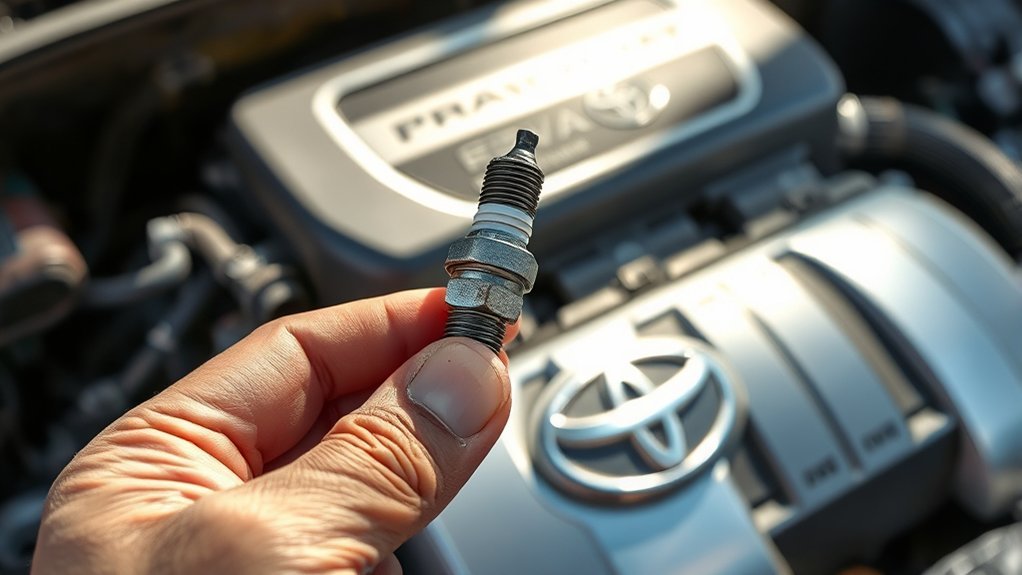
To keep your RAV4 running smoothly, replace the spark plugs every 120,000 miles or 144 months. Some opt for earlier changes around 90,000 to 100,000 miles, especially if you notice hard starts or rough idling. Ignoring replacement can lead to misfires and decreased fuel efficiency, plus costly repairs due to seizing. Regular checks help maintain peak performance and engine longevity. Discover more insights on spark plugs to guarantee your vehicle stays in top shape.
Understanding Spark Plugs and Their Role in Your RAV4

Spark plugs are vital components of your RAV4’s engine, directly influencing performance and efficiency. They ignite the air-fuel mixture in the combustion chamber, ensuring ideal combustion and power delivery. Understanding spark plug types, such as iridium plugs used in models like the 2020 RAV4 Hybrid, is important. These plugs offer durability and wear resistance, extending their lifespan considerably compared to traditional options.
Proper ignition timing relies on the condition of your spark plugs; misfires or delayed ignition can lead to reduced performance and increased emissions. Regular maintenance checks can help you monitor the condition of your spark plugs, preventing issues like hard starts or rough idling. If you notice decreased acceleration, it’s a sign to inspect your spark plugs. Ensuring they’re in good shape not only enhances efficiency but liberates your driving experience, allowing your RAV4 to perform at its best.
When to Replace Spark Plugs: Signs and Recommended Intervals?
Knowing the right time to replace your spark plugs can prevent performance issues and maintain your RAV4’s efficiency. Manufacturer guidelines recommend replacing spark plugs every 120,000 miles or 144 months. However, many mechanics suggest a replacement frequency of 90,000 to 100,000 miles to avoid potential problems.
Watch for signs of worn spark plugs, such as hard starting, rough idling, or decreased fuel efficiency. These symptoms indicate that it may be time for a replacement. Regularly monitoring your spark plugs’ condition is essential, as extended use can lead to complications that affect your vehicle’s performance.
What’s the Cost of Replacing Spark Plugs: Dealer vs. Your Mechanic?
When it comes to replacing spark plugs, the cost at a dealer can reach around $500, which is considerably higher than what you’ll typically pay at an independent mechanic. While dealers may suggest replacements as early as 48,000 miles, personal mechanics often recommend a more reasonable 60,000-mile interval. Understanding these differences can help you make an informed decision about where to service your RAV4.
Dealer Pricing Overview
Replacing spark plugs at a dealership can cost you anywhere from $300 to $500, a significant markup compared to what a personal mechanic might charge. Many dealers recommend replacing spark plugs every 48,000 miles, which clashes with Toyota’s maintenance guide suggesting intervals of 90,000 to 120,000 miles. This disparity in dealer pricing underscores the value of consulting your personal mechanic, who may provide tailored advice and more reasonable rates. Regular maintenance checks can help identify potential issues early, preventing more costly repairs down the line. Ultimately, choosing a personal mechanic can lead to lower maintenance costs and a more personalized service, empowering you to take control of your vehicle’s upkeep.
Mechanic Cost Comparison
While dealership costs for spark plug replacement can soar up to $500, personal mechanics typically offer more affordable rates that can drastically lower your maintenance expenses. Here’s a quick comparison to take into account:
- Cost: Dealers charge considerably more, while personal mechanics provide competitive pricing.
- Maintenance Frequency: Dealers often recommend replacing spark plugs at 48,000 miles; personal mechanics may suggest waiting until 60,000 miles or more, depending on the spark plug types and vehicle condition.
- Long-term Savings: Timely replacements can prevent engine damage and enhance fuel efficiency, saving you money on repairs down the line.
Choosing the right mechanic can not only ease your financial burden but also guarantee your RAV4 runs smoothly for years to come.
Issues From Extended Spark Plug Use
Neglecting to replace spark plugs at the recommended intervals can lead to significant issues, particularly as they become increasingly difficult to remove. Extended use beyond 120,000 miles can result in spark plugs seizing in the cylinder head. This not only complicates removal but also risks stripping or breaking the aluminum threads, leading to costly repairs. Waiting too long to replace spark plugs can cause engine misfires, hard starts, and decreased fuel efficiency, all detrimental to your vehicle’s overall performance. While some spark plugs might appear to show minimal wear at 50,000 miles, regular monitoring is essential to guarantee ideal spark plug longevity. Installing spark plugs with antiseize can help prevent them from sticking, making future replacements smoother. Prioritizing timely spark plug replacement isn’t just about maintenance; it’s crucial for maintaining peak engine performance and avoiding potential headaches down the road.
Assessing Spark Plug Condition for Optimal Engine Performance

To maintain ideal engine performance, you should regularly assess your spark plugs’ condition through visual inspections and monitoring performance indicators. Look for signs of wear, such as carbon buildup or physical damage, and pay attention to how your engine runs—any rough idling or difficulty starting can signal trouble. By staying proactive, you can address issues before they impact your vehicle’s efficiency.
Visual Inspection Techniques
Regular inspections of spark plugs are essential for maintaining peak engine performance, as they can reveal signs of wear that might otherwise go unnoticed. To guarantee effective spark plug maintenance, focus on these visual inspection techniques:
- Check for Carbon Buildup: Look for any deposits on the electrodes, which can hinder ignition and efficiency.
- Examine the Insulator: Inspect for cracks or chips that could lead to misfires, adversely affecting engine performance.
- Monitor Electrode Gap: Confirm the gap between electrodes is within manufacturer specifications; an incorrect gap can compromise spark quality.
Performance Indicators to Monitor
Monitoring performance indicators is essential for evaluating spark plug condition and ensuring ideal engine performance. Start by noting any hard starts, which often indicate worn spark plugs after about 60,000 miles. Keep an eye on the Check Engine light; its activation may signal misfires due to faulty spark plugs. Increased fuel consumption can also point to declining spark plug performance, requiring more frequent refueling. Additionally, pay attention to rough idling or unusual engine noises, as these symptoms may suggest failing spark plugs needing inspection. Finally, regularly assess acceleration responsiveness; poor acceleration typically indicates reduced spark plug efficiency. By monitoring these indicators, you can maintain peak engine efficiency and prolong the life of your vehicle.
User Experiences and Recommendations on Spark Plug Maintenance
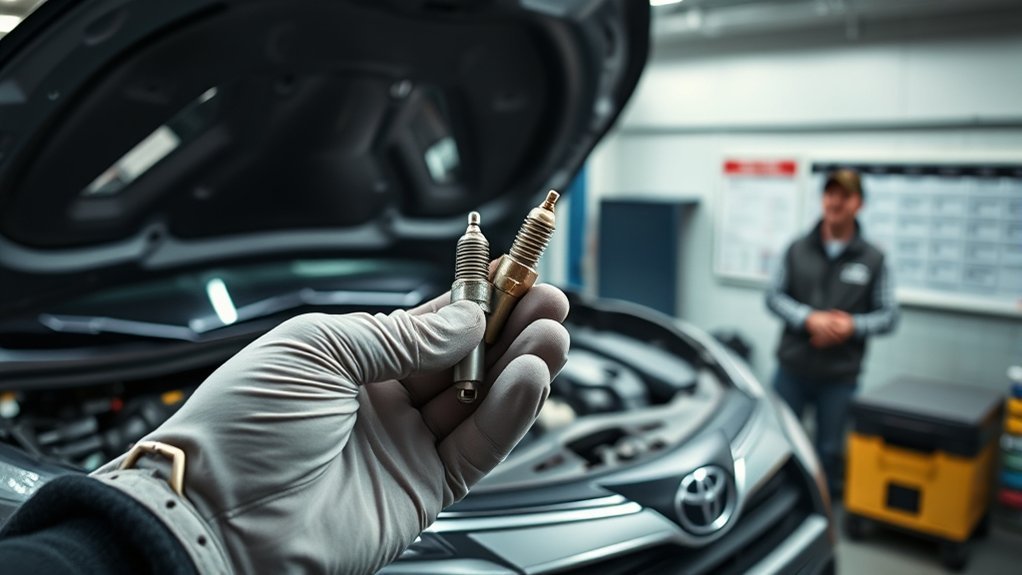
Many RAV4 owners have found that timely spark plug maintenance can greatly impact vehicle performance. To enhance spark plug longevity and avoid costly repairs, consider these maintenance tips:
Timely spark plug maintenance significantly boosts RAV4 performance and helps prevent costly repairs.
- Replace at 60,000-90,000 Miles: Many users recommend this interval, while some opt for earlier replacements to prevent issues.
- Consider Iridium Plugs: If you drive a 2020 RAV4 Hybrid, using iridium spark plugs can extend the life up to 120,000 miles.
- Consult Personal Mechanics: They often provide more cost-effective advice and services compared to dealerships, which may suggest replacements at 48,000 miles.
Waiting too long to replace spark plugs can lead to hard starts and misfires. Keep an eye on your spark plug condition and engage with community discussions to share insights and experiences. This proactive approach not only enhances performance but also guarantees a smoother driving experience.
Maintaining Your RAV4: Tips for Optimal Performance
To guarantee your RAV4 operates at peak performance, maintaining key components like the spark plugs is essential. It’s typically recommended to replace them every 120,000 miles or 144 months, but some users opt for replacement around 90,000 to 100,000 miles to prevent misfires. Regularly monitoring the condition of your spark plugs can help catch issues early; hard starting or rough idling are signs that replacement is necessary.
When installing new spark plugs, use antiseize to avoid complications during future removal, especially with aluminum threads. Sticking to the maintenance schedule, including timely spark plug replacement, is vital for enhancing fuel efficiency and ensuring engine longevity. By actively caring for your RAV4’s spark plugs, you not only boost performance but also foster a driving experience that empowers you to enjoy every mile.
Frequently Asked Questions
How Often Should Spark Plugs Be Changed in a Toyota RAV4?
You should change spark plugs in your Toyota RAV4 every 120,000 miles for peak performance. Regular spark plug maintenance can improve engine efficiency, but consider earlier replacement if you notice hard starts or reduced fuel efficiency.
How Long Do Toyota Oem Spark Plugs Last?
Toyota OEM spark plugs typically last around 120,000 miles, but for peak performance, consider changing them at 90,000 to 100,000 miles. Regular maintenance tips help extend your spark plug lifespan and enhance engine efficiency.
Can a Spark Plug Last 200,000 Miles?
A spark plug can last 200,000 miles, but it often leads to performance impact. Regularly monitoring the spark plug lifespan is essential, as wear symptoms can arise before reaching that distance, risking engine efficiency and reliability.
Conclusion
In the grand scheme of car maintenance, ignoring spark plugs might seem like a bold strategy—until your RAV4 starts misfiring like it’s auditioning for a role in a horror movie. So, embrace the irony: while you could gamble on your engine’s performance, it’s far wiser to replace those spark plugs at recommended intervals. After all, a smooth ride beats the suspense of unexpected breakdowns. Stay proactive, and let your RAV4 shine on the road.