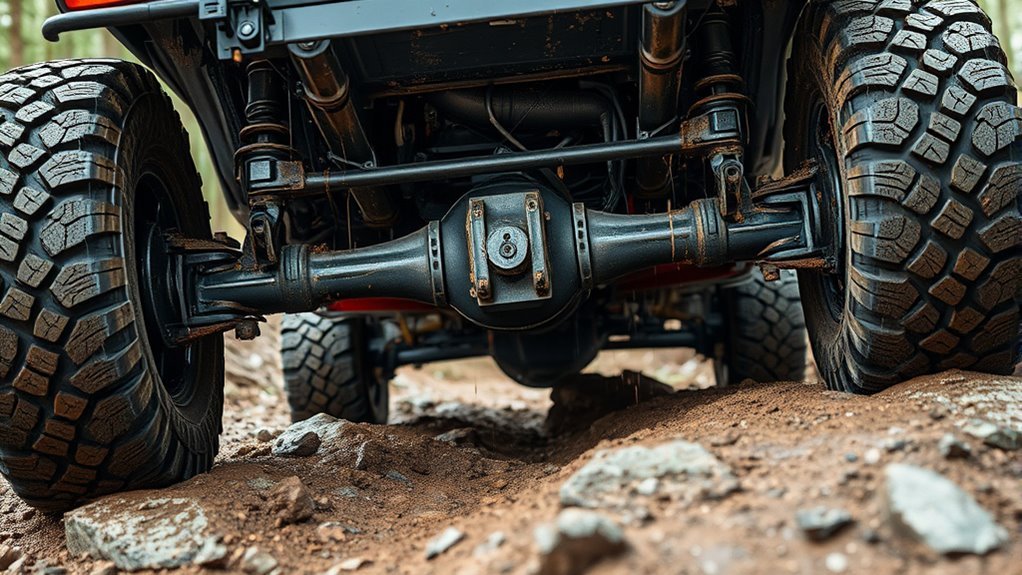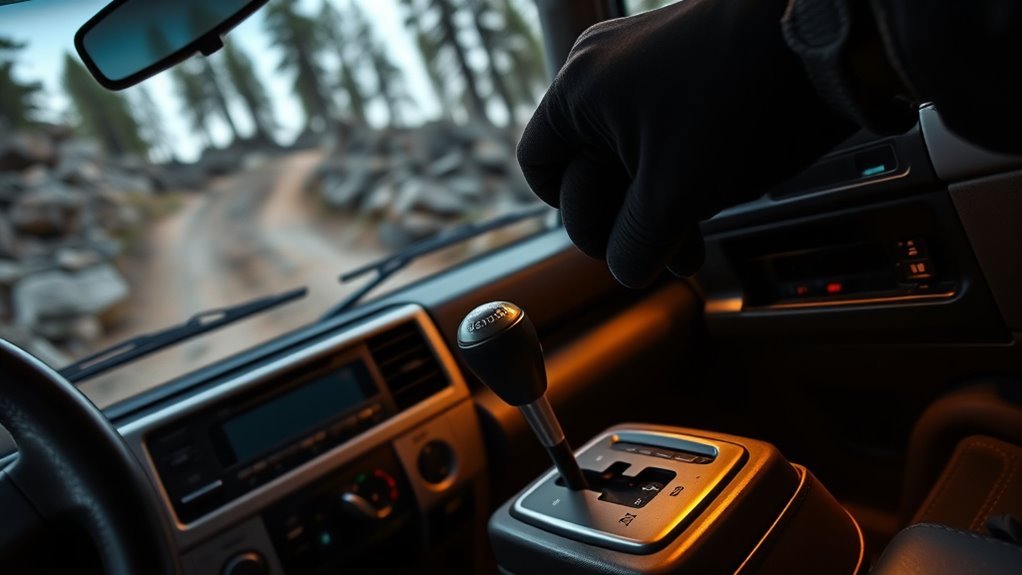
You’ll shift into 4L when you need maximum low‑speed torque to crawl steep, rocky, muddy, or snowy terrain. Put the transmission in Neutral, stop the vehicle, hold idle, then make a quick firm motion into 4L; if it resists, ease the accelerator and try again or rock slightly to relieve bind. Watch the dash indicator and test torque gently. Maintain linkage and fluids to avoid problems, and keep going for tips on troubleshooting and service.
How 4L (4LOW) Works in a Land Cruiser
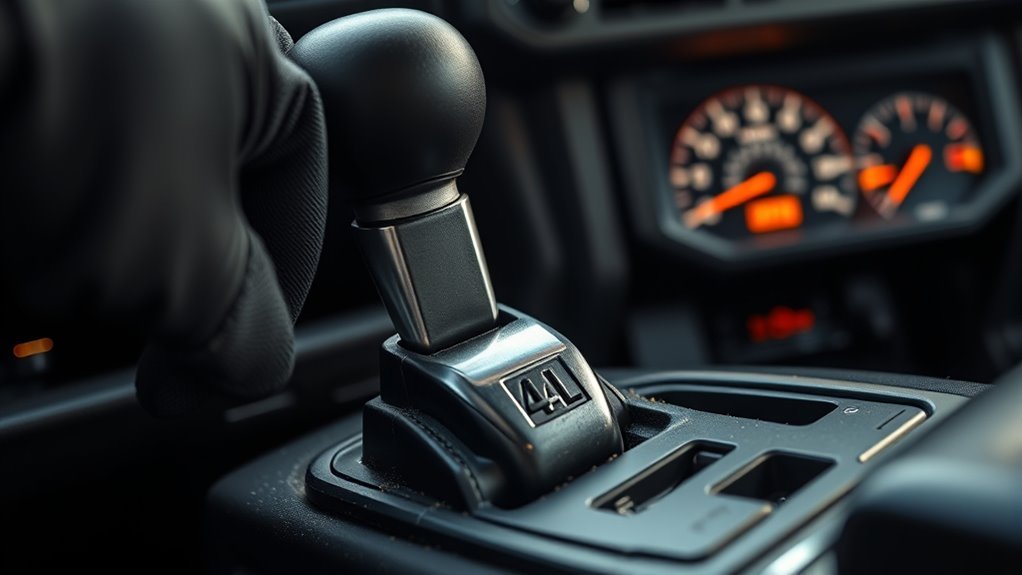
When you shift your Land Cruiser into 4L (4LOW), the transfer case drops to a lower gear ratio to multiply torque and slow wheel speed, giving you precise control on steep, rocky, or muddy terrain; you must put the transmission in Neutral and make a firm, quick shift to activate it cleanly, and keep speeds low while off-pavement to avoid drivetrain damage. In 4L the reduced gear ratio amplifies engine torque so you crawl obstacles without riding the brakes, improving off-road performance and your confidence. The center differential stays disengaged, letting front and rear axles adapt to uneven traction without binding the drivetrain. You’ll feel the vehicle slow dramatically—use that leverage to pick lines and conserve momentum. Regularly exercising the transfer case and keeping it lubricated prevents rust and stiff engagement, so shifts stay crisp. Treat 4L as a precision tool: engage properly, drive deliberately, and you’ll free yourself to traverse harsh terrain with control and minimal mechanical risk.
When and Why to Use 4L
Use 4L when you need low-speed, heavy traction and absolute control over torque on steep or technical terrain. It gives maximum torque at crawl speeds to power through rocks, deep mud, or loose surfaces while preventing wheel spin. Always engage 4L from Neutral or while stopped and never run it on pavement to avoid drivetrain damage.
Low-Speed Heavy Traction
Engage 4L whenever you’re facing low-speed, high-traction demands—think steep climbs, deep snow, heavy towing, or technical off-road sections—because it multiplies torque to the wheels and minimizes wheel slip. You’ll use traction techniques and confident incline navigation to claim routes that would otherwise be denied. Shift into 4L only from neutral or while stationary; trying otherwise risks transmission damage. Once engaged, crawl steadily, let the gearbox do the work, and avoid sudden throttle inputs that provoke wheel spin. Don’t use 4L on pavement or at speed—doing so stresses the drivetrain and accelerates wear. In short: choose 4L for controlled, powerful progress when traction is scarce, and exit it as soon as normal driving conditions resume.
Maximum Torque Control
Choose 4L whenever you need maximum torque and precise speed control—like crawling up a slick, steep face or powering through deep mud—because the low gear ratio multiplies engine torque and helps you modulate traction without slipping. You’ll use 4L for torque management and enhanced off road performance when climbing, descending, or slogging through deep snow or mud. Engage from Neutral or while stopped to protect the transfer case. Stay slow and deliberate; 4L lets you feather the throttle and avoid wheel spin, keeping you free to choose your line. Don’t drive on pavement in 4L—shift back to 4H or 2H to prevent drivetrain wear and regain normal handling.
| Situation | Action | Benefit |
|---|---|---|
| Steep climb | Engage 4L | Max traction |
| Deep mud | Crawl in 4L | Controlled power |
| Pavement | Use 2H/4H | Preserve drivetrain |
Safety Checklist Before Shifting Into 4L
Before shifting into 4L, make sure the transmission is in Neutral so you won’t damage the transfer case. Confirm the vehicle is fully stopped and stable—don’t attempt engagement while rolling. If you hear continuous beeping or aren’t sure about your model, stop and consult the owner’s manual.
Verify Transmission Is Neutral
1 simple but critical check: make sure the transmission is in Neutral (or Park for automatics) and the vehicle is fully stopped before you attempt to shift into 4L. You rely on transmission indicators and clear gear engagement to confirm readiness; continuous beeping or movement means stop and reset. Come to a full halt — shifting while rolling risks costly damage.
- Verify dashboard transmission indicators show Neutral/Park; listen for abnormal beeps.
- Confirm the shift lever is centered and responsive; exercise the lever if it feels stiff.
- Use a quick, firm motion to engage 4L to avoid grinding; don’t baby the shift.
- Maintain transfer case lubrication and routine checks to preserve smooth gear engagement.
Do this to free yourself from doubt and protect the drivetrain.
Secure Vehicle Stability
Start by confirming the vehicle is fully stationary and the transmission reads Neutral (or Park for automatics). You control safety: check vehicle positioning, perform a terrain assessment, and scan the dash for warning lights. Verify the transfer case lever isn’t corroded and moves freely. If any 4WD indicator behaves oddly, consult the manual before engaging 4L.
| Checkpoint | Action | Result |
|---|---|---|
| Positioning | Set vehicle on level ground | Stable base |
| Transmission | Shift to Neutral/Park | Protects drivetrain |
| Dashboard | Inspect warning lights | Confirms readiness |
| Transfer case | Inspect for rust | Verifies smooth shift |
These steps free you to engage 4L confidently and avoid mechanical damage.
Quick Steps: Shift Into 4L
Shift into Neutral, then make quick, firm shifts to engage 4L—this prevents transmission damage and reduces grinding while the transfer case engages. You’ll approach this with control: confirm Neutral, steady the engine at idle, then shift decisively into 4L. Check dash lights within two seconds to verify engagement.
- Confirm Neutral and minimal throttle; this stabilizes input gears for clean gear engagement.
- Make one quick, firm motion into 4L; don’t linger between positions to avoid partial engagement.
- If resistance occurs, ease off the accelerator or coast briefly; changing driving conditions like cold can stiffen components.
- After lights confirm 4WD, test low-speed torque gently to guarantee full engagement before committing to challenging terrain.
You’ve earned mobility—use these steps to seize control of difficult trails and reclaim freedom on demanding routes while protecting the drivetrain.
Shift Tips to Avoid Grinding
When you need to engage 4L without grinding, put the transmission in Neutral, hold the engine at idle, and make a single quick, firm motion into 4L—this aligns the gears and lets the transfer case engage cleanly. You’ll reduce grinding by using decisive shift timing, avoiding slow, tentative moves that cause vibration. Don’t force the lever; excessive force risks damage. If shifting feels resistant, ease off the accelerator and retry—this relieves torque and aids engagement. Regularly operate the transfer case so lubrication stays active; that’s simple grinding prevention that preserves freedom on and off road. You want control and confidence: consistent technique, neutral, idle, quick firm shift, and sensible throttle work every time.
| Action | Why | Tip |
|---|---|---|
| Neutral | Aligns gears | Always confirm |
| Idle | Removes torque | Hold steady |
| Quick, firm | Prevents grind | One motion |
| Regular use | Maintains lube | Schedule runs |
If 4L Beeps or Won’t Engage
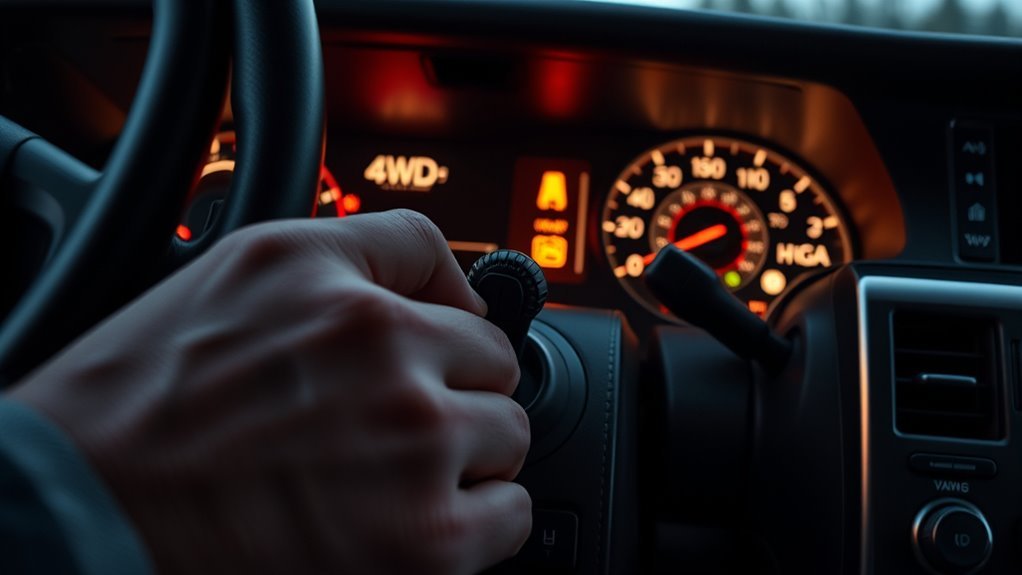
Having your Land Cruiser beep or refuse 4L can be frustrating, but don’t panic — confirm the transmission is in Neutral and the vehicle is fully stopped before trying again. You want control and freedom; use clear shifter troubleshooting and deliberate engaging techniques to regain them. If it still beeps, follow a tight checklist and act deliberately.
- Verify Neutral and full stop, then attempt the shift; shifting from Park or while rolling triggers alerts and risks damage.
- If 4L won’t engage, try reversing slightly to relieve drivetrain bind and retry; small positional changes often free the transfer case.
- Apply firm, steady force to the shifter if corrosion or stiffness resists movement; this is a valid temporary engaging technique but note it may indicate maintenance is needed.
- Confirm all locking mechanisms operate; regular transfer-case use and lubrication prevent binding and improve future shifter troubleshooting success.
Common Mechanical Causes of 4L Failures
Check the shift linkage for corrosion or seized joints—if it’s stiff or crusted with rust, you won’t reliably move into 4L. Inspect the transfer case for worn gears or damaged internals, since internal wear can stop engagement even when the shifter moves. Regular lubrication and exercising the lever prevent both linkage corrosion and premature transfer case wear.
Corroded Shift Linkage
One common cause of a Land Cruiser failing to engage 4L is a corroded shift linkage, which can seize or bind and demand excessive force to move the shifter. You need to prioritize shift maintenance and corrosion prevention to keep your vehicle free and capable. Regularly inspect the undercarriage and shift mechanism for rust, especially after wet or salted-road exposure. Liberate yourself from surprise failures by lubricating the linkage with penetrating oil to restore smooth movement and prevent stiffness. Address visible corrosion promptly to avoid progressive damage.
- Inspect linkage visually for rust and pitting.
- Clean affected areas and apply penetrating oil.
- Replace severely corroded components before they fail.
- Schedule routine shift maintenance and corrosion prevention treatments.
Worn Transfer Case
If your Land Cruiser hesitates or grinds when you try to shift into 4L, the transfer case itself may be worn and need attention. You’ll see delayed engagement, grinding noises, or outright failure to enter 4L when internal gears or bearings have worn or lubrication is inadequate. Corrosion and rust can seize linkages and internal components, so regular transfer case maintenance and exercising the shift lever prevent freezing and reduce wear. Use confident shifting techniques—neutral the transmission when needed and work the lever gently—to minimize stress on aging parts. If problems persist after fluid change and lubrication, plan for professional inspection or replacement. Fight immobility: maintain the transfer case and reclaim reliable 4L engagement.
Simple DIY Fixes for a Stuck Shifter
Start by exercising the shifter regularly and you’ll prevent rust and stiffness from taking hold; move the lever through its full range a few times every month to keep linkage free. You want control—shifter maintenance is liberating and simple. Before any work, put the transmission in Neutral and set the parking brake. Use penetrating oil on rusted joints, then follow with proper lubricant application to restore smooth motion.
- Inspect linkage and boots for corrosion; clean and remove surface rust.
- Apply penetrating oil to seized pivots, work the shifter until free, then add grease.
- Verify transmission is Neutral, engage parking brake, and cycle into 4L gently to confirm engagement.
- Replace any visibly worn bushings or bent rods; cheap parts free you from repeat fixes.
These DIY steps give you reliable, immediate results. You’ll regain confident shifting and avoid escalation to costly repairs.
When to Change Transfer Case & Differential Fluid
Although schedules vary by model and driving conditions, you should plan to change your Land Cruiser’s transfer case and differential fluid roughly every 30,000 to 60,000 miles or follow the owner’s manual, because fresh fluid prevents wear, corrosion, and gear damage—especially if you do off-roading. You’ll extend fluid lifespan and keep your 4WD reliable by sticking to a clear maintenance schedule. Use high-quality synthetic fluids for better lubrication and reduced breakdown under stress.
| Component | Interval | Action |
|---|---|---|
| Transfer case | 30k–60k mi | Replace, inspect for metal |
| Front differential | 30k–60k mi | Replace, check seals |
| Rear differential | 30k–60k mi | Replace, examine fluid |
When you change fluid, inspect for metal shavings or contaminants—those signal wear that demands attention. Regular fluid service improves shifting ease and frees you from avoidable failures, letting you drive boldly and independently.
Dealer Diagnostics: What They’ll Check and When to Go

When your Land Cruiser won’t engage 4L, bring it to the dealer so technicians can run targeted diagnostics — they’ll verify the transmission is truly in Neutral, inspect the transfer case and shifter mechanism for corrosion or wear, and check fluid level and condition for contamination that can impede engagement. You’ll get focused, measurable answers so you can act decisively.
If 4L won’t engage, let dealer techs run targeted diagnostics—transfer case, shifter, and fluid checks for decisive fixes
- Transfer case inspection: techs open and test for rust, binding, or internal damage that blocks engagement.
- Transmission position verification: they confirm Neutral; shifting into 4L won’t work otherwise.
- Shifter mechanism issues: they assess linkages, bushings, and detents for wear or misalignment.
- Fluid analysis: levels and contamination reveal whether old or degraded fluid is causing poor engagement.
If diagnostics show recurring faults, the dealer will recommend corrective service and maintenance steps—exercising the shift lever, targeted lubrication, or component replacement—so you regain confident control and freedom on the trail.
Frequently Asked Questions
Can You Switch Into 4L While Driving?
No — you shouldn’t switch into 4L while driving; doing so risks transmission damage and getting stuck. Use proper driving techniques, stop before engaging, and protect your off road capabilities so you stay free and empowered.
What Does 4L Mean in a Land Cruiser?
4L in a Land Cruiser is four-wheel-drive low, giving extreme torque and crawl control; you’ll gain 4L benefits for steep, slippery, or technical terrain. Use 4L applications for liberating off-road confidence and controlled power.
How to Switch to 4L?
Shift now: stop, shift to Neutral, engage 4L firmly; you’ll gain 4L benefits and Off road advantages, you’ll feel controlled traction and low-speed power, and you’ll liberate your driving—don’t rush, don’t force, stay deliberate.
Conclusion
When you shift into 4L, you’re giving your Land Cruiser a low-gear heartbeat that tugs you through mud, rock, or snow with calm strength. Use it deliberately, check fluids and linkages, and listen for grinding—small warnings before big failures. Respect the transfer case and differentials, try simple fixes first, and don’t hesitate to get dealer diagnostics when things feel wrong. Treat 4L like a trusted tool: maintain it, and it’ll carry you farther.