A used RAV4 Hybrid is one of the safer bets in the used SUV market, but the model year you choose changes the power, fuel economy, warranty coverage and the list of things to inspect. This guide compares the generations, explains how the all-wheel-drive and plug-in versions differ, and gives you a checklist to use before you hand over any money.
Quick Answer
For most buyers, a 2021 or newer RAV4 Hybrid is the sweet spot: it has the stronger 219 hp system, about 40 mpg combined and the longer hybrid battery warranty that started with the 2020 model year. A 2016 to 2018 model costs less and is simpler, but it is slower and returns roughly 32 mpg combined. Whatever the year, run the VIN for open recalls and get a hybrid system health check before buying.
What’s in This Article
Key Takeaways
- Every US-market RAV4 Hybrid from 2016 to 2025 has electronic on-demand AWD as standard, so a used RAV4 Hybrid AWD is the normal configuration, not a rare option.
- The 2019 redesign raised output to 219 hp and fuel economy to about 40 mpg combined.
- 2019 and 2020 hybrids had a widely reported fuel tank filling issue, so confirm the fix was done.
- The plug-in version arrived for 2021 as the RAV4 Prime and was renamed RAV4 Plug-in Hybrid for 2025.
- Toyota lengthened hybrid battery coverage to 10 years or 150,000 miles starting with 2020 models.
Used RAV4 Hybrid Model Years at a Glance
Toyota has sold the RAV4 Hybrid in the United States since the 2016 model year. The used market splits into two clear groups, plus the plug-in.
| Model years | System | Combined output | Approx. combined mpg | Notes |
|---|---|---|---|---|
| 2016 to 2018 | 2.5L hybrid with rear electric motor | 194 hp | About 32 | First RAV4 Hybrid, older infotainment, no Apple CarPlay |
| 2019 to 2025 | 2.5L hybrid with rear electric motor | 219 hp | About 40 | Full redesign, newer safety tech, CarPlay standard |
| 2021 to 2025 plug-in | 2.5L plug-in hybrid | 302 hp | About 38 on gas | EPA electric range of about 42 miles |
Figures are approximate and vary by trim and year. Check the window sticker or the EPA listing for the exact vehicle you are considering.
Best Years to Buy
2021 to 2025 models are the easiest to recommend. By 2021 the early fifth-generation complaints had been addressed on the production line, and these years carry the longer hybrid battery warranty. If your budget allows, this is the range to shop first.
2017 and 2018 are the picks of the older generation. They are the final years of that design, they use a hybrid system with a long track record, and they added Toyota Safety Sense as standard equipment. They suit buyers who want a lower price and can accept less power and lower mpg.
2019 and 2020 are good vehicles that need extra homework. They were the first two years of a new generation and attracted more owner complaints than later years, mainly about the fuel tank not filling completely. A well-documented example with the fix completed can still be a strong buy.
Known Issues to Ask About
- Fuel tank fill (2019 and 2020 hybrids): many owners reported that the pump clicked off early and the tank would not take a full fill, which shortened driving range. Toyota acknowledged the concern and released a remedy. Ask for proof it was performed.
- High-voltage cable corrosion at the rear motor: reported mainly on 2019 to 2021 hybrids in regions that use road salt. Toyota issued extended coverage for certain vehicles. A dealer can confirm coverage and repair history from the VIN.
- 12-volt battery: a weak 12-volt battery is a common cause of no-start complaints on any hybrid. Ask how old it is.
- Open recalls: check the VIN on the NHTSA recall site and on Toyota’s owner site. Recall repairs are free.
Used RAV4 Hybrid AWD, Plug-in and EV: Which One?
Every 2016 to 2025 RAV4 Hybrid sold in the US uses an electric motor to drive the rear wheels when needed, so you do not need to hunt for an AWD badge. There is no driveshaft to the rear axle, which means less to service.
A used RAV4 Plug-in Hybrid (called RAV4 Prime from 2021 to 2024) adds a much larger battery, quick acceleration and the ability to do short trips on electricity alone. It costs more, and it only pays off if you can charge at home or work. Ask for the charging cable, and check the electric range shown after a full charge.
You may also see the RAV4 EV in listings. That was a low-volume, fully electric model sold from 2012 to 2014, mainly in California. It is a different vehicle with limited parts and service support, so treat it as a specialist purchase.
Limited, XSE and Other Trims
Trim affects comfort more than reliability. On 2019 and newer hybrids, LE and XLE are the value choices, XSE adds a sport-tuned suspension and two-tone styling, and Limited brings the most equipment, such as upgraded seat upholstery, a larger screen and premium audio depending on year. On a used vehicle, condition and service history matter more than the badge, so do not pay a large premium for a higher trim with a thin maintenance record.
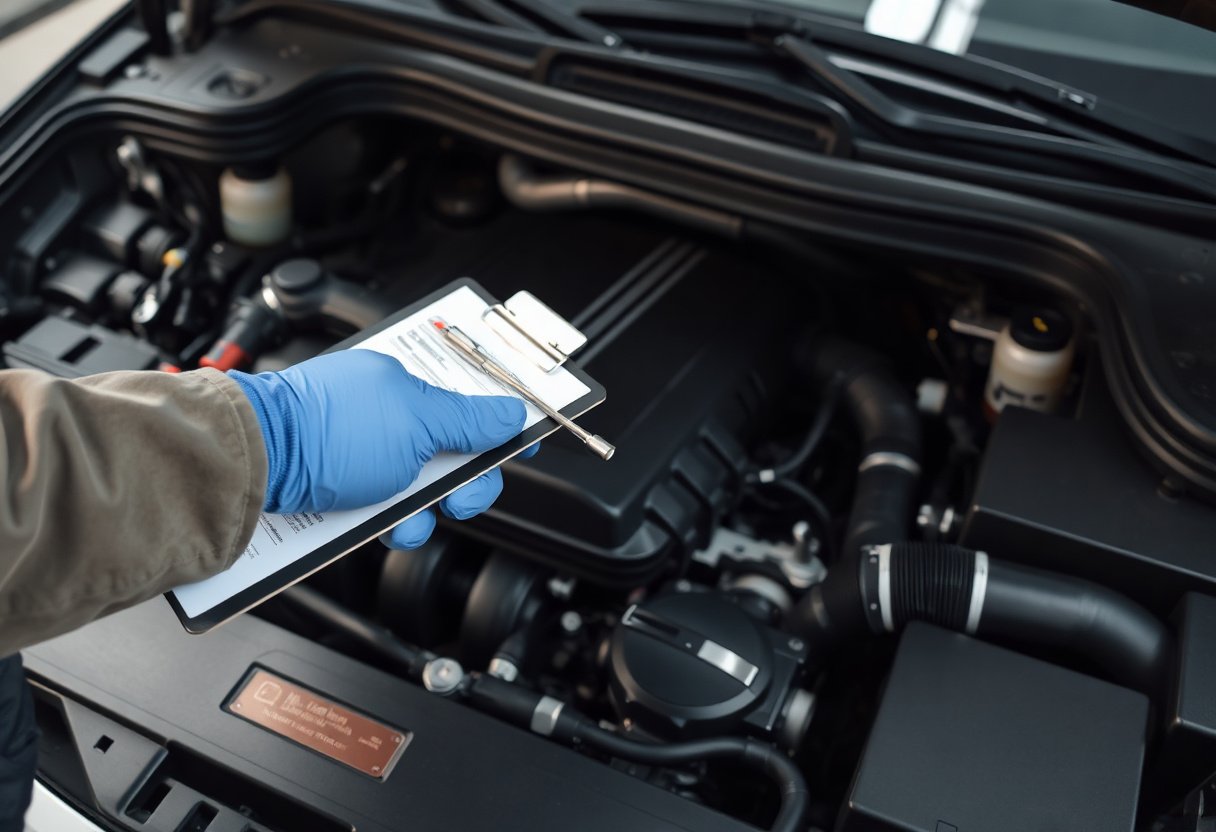
Inspection Checklist Before You Buy
- Run the VIN for recalls and ask a Toyota dealer for the service history.
- Request a hybrid system health check. Many dealers offer this as part of routine service.
- Confirm the build date and mileage against the hybrid battery warranty terms for that model year.
- Look under the rear of the vehicle for heavy corrosion on wiring and connectors if it lived in a salt-belt state.
- On the test drive, make sure the switch between electric and engine power is smooth and that braking feels consistent.
- Check that all warning lights come on at start-up and then go out.
- Fill the tank on 2019 and 2020 models if the seller allows it, and compare the amount added with the tank size.
- Inspect tires for uneven wear, which can point to alignment or suspension problems.
- Pay an independent mechanic for a pre-purchase inspection. It is cheap insurance.
Hybrid Battery Life and Warranty
Toyota covers the hybrid battery for 8 years or 100,000 miles on 2019 and older models, and for 10 years or 150,000 miles on 2020 and newer models, whichever comes first. Coverage follows the vehicle, so a used buyer benefits from whatever remains. Many Toyota hybrid batteries outlast the warranty, but age, heat and long periods of sitting all shorten battery life, so the health check is worth doing on any car near the end of its coverage.
Frequently Asked Questions
Is a used RAV4 Hybrid a good buy?
Yes, for most buyers. It combines strong fuel economy with standard all-wheel drive and a good reliability record. Focus on service history, recall status and hybrid system health instead of mileage alone.
What year of used RAV4 Hybrid is best?
2021 and newer models are the best all-round choice because they have the stronger hybrid system and longer battery warranty. For a lower budget, 2017 and 2018 are the most sorted years of the earlier generation.
Do all used RAV4 Hybrids have AWD?
In the United States, RAV4 Hybrids from 2016 through 2025 came with electronic on-demand all-wheel drive as standard. Always confirm on the specific vehicle, especially if it was imported from another market.
Is a used RAV4 Plug-in Hybrid worth the extra money?
It can be if you charge regularly and drive mostly short trips, because many of those miles will use no gasoline. If you cannot charge at home or work, the regular hybrid is usually the better value.
How many miles is too many for a used RAV4 Hybrid?
There is no fixed limit. A well-maintained example with complete records at 120,000 miles can be a better purchase than a neglected one at 60,000. Let the inspection and the hybrid health check guide the decision.