Use a 75W gear oil that meets API GL5 in your Tacoma transfer case; 75W‑90 GL5 is acceptable if you need extra high‑temperature film strength but may cost a tiny MPG penalty. 75W gives better cold flow and smoother shifting at low temps. GL5 protects gears under heavy load; avoid using GL5 where OEM calls for GL4 in manual transmissions. Change every 30k miles (15k for heavy off‑road) and follow proper drain/refill steps to maintain reliability—keep going for procedure and tips.
Quick Answer: Which Transfer Case Fluid to Use for a Tacoma
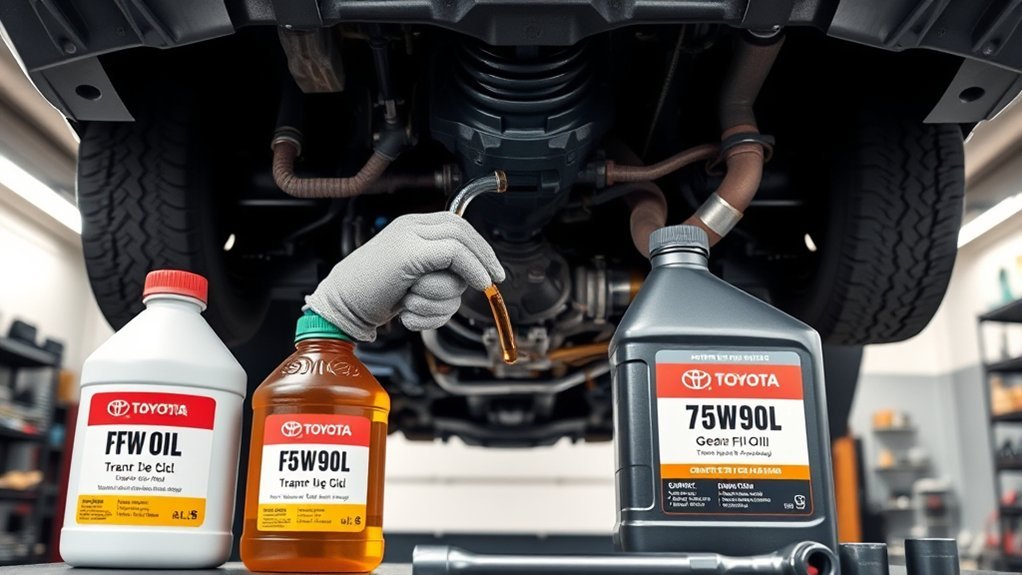
Wondering which transfer case fluid to use for your Toyota Tacoma? You should choose a 75W fluid that meets API GL5 specs for proper fluid compatibility and high-pressure protection. Toyota moved to recommending 75W while retaining GL5 to guard against gear wear under load. Using 75W90 is acceptable—expect only a minor MPG trade-off; it won’t damage the transfer case if it meets GL5. You’ll preserve performance impact by sticking to the spec and changing fluid on schedule. For normal use, plan service every 30,000 miles; for heavy off-roading, shorten intervals to 15,000 miles. When you purchase fluid, verify the GL5 mark and viscosity rating on the label so you don’t compromise protection or shifting smoothness. Following these simple, targeted choices keeps your Tacoma’s drivetrain reliable and frees you from frequent repairs or performance regressions.
Toyota Transfer Case Fluid: 75W + GL5 – What That Means
Think of “75W + GL5” as a specification shorthand that tells you both the oil’s cold-to-hot flow characteristics and its gear protection level: 75W indicates the viscosity grade for low-temperature pumpability and operating thickness, while API GL5 denotes the extreme-pressure additives needed to protect hypoid gears and splines under heavy loads. You’ll choose 75W+GL5 because Toyota specifies it for transfer case maintenance, especially if you push the truck off-road. 75W90 works too, with minor MPG trade-offs, but stick to GL5-rated products from trusted brands for compatibility.
| Attribute | Meaning |
|---|---|
| 75W | Cold start flow and operating viscosity |
| GL5 | Extreme-pressure gear protection |
| Recommendation | Change every 30k miles (15k if heavy off-road) |
Follow fluid specifications closely, use quality brands, and replace fluid on schedule. That keeps your transfer case efficient and frees you to drive hard without risking gear wear.
GL4 vs GL5: Transfer Case, Differential, and Manual Transmission Guidance
You’ve seen why Toyota calls for 75W+GL5 in many transfer cases, but choosing between GL4 and GL5 depends on component design and metallurgy. You’ll protect gearsets by matching lubricant chemistry to application: GL5’s higher EP additives suit differentials and many transfer cases under heavy load, while GL4 is kinder to soft-metal synchros found in manual transmissions. For manual transmission care, don’t substitute GL5 where GL4 is specified — long-term wear and synchro damage can follow.
- Verify vehicle specs and mark applications where GL4 is required to avoid fluid compatibility concerns.
- Use GL5 in differentials and Toyota transfer cases that list GL5, accepting minor MPG tradeoffs for robust EP protection.
- When in doubt, consult OEM data; correct oil choice prevents costly repairs and frees you from repeated maintenance cycles.
Be deliberate: match chemistry to metallurgy, prioritize manual transmission care, and resolve fluid compatibility concerns before you pour.
75W or 75W-90? Viscosity Tradeoffs and Real-World Impact
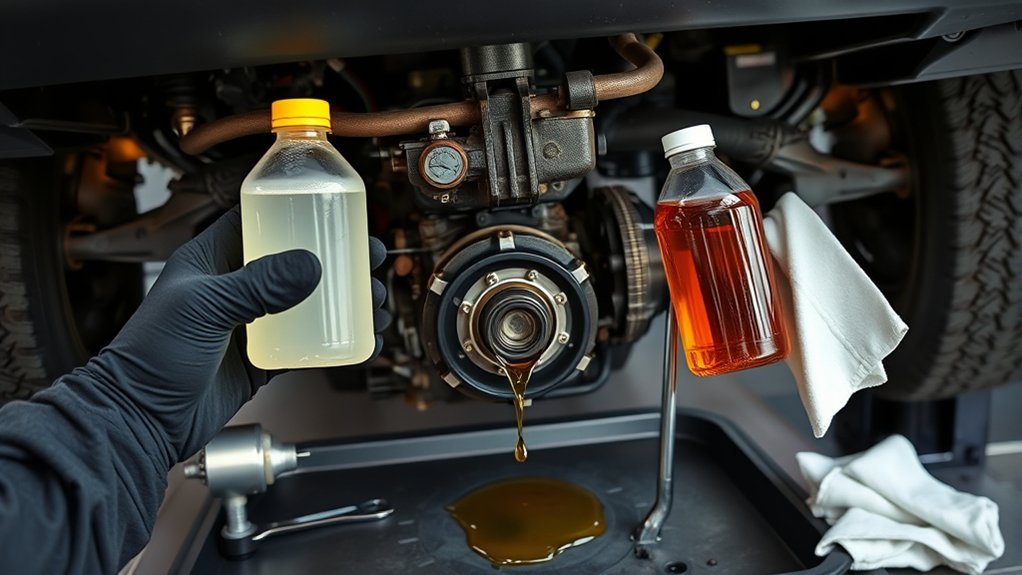
Although both 75W and 75W-90 meet GL5 chemistry requirements, they trade off low-temperature flow for high-temperature film strength, so you should pick the grade that matches your climate, driving load, and service interval discipline. You’ll notice viscosity effects in shifting smoothness and fuel economy: straight 75W flows better at cold starts, slightly improving MPG, while 75W-90 keeps stronger film at high temps and under load. Temperature performance dictates protection more than marketing—use 75W in mild climates if you change fluid frequently; choose 75W-90 for towing, heat, or extended intervals.
| Attribute | 75W | 75W-90 |
|---|---|---|
| Cold flow | Excellent | Good |
| High-temp film | Moderate | Superior |
| Fuel economy | Slight gain | Neutral |
| Shifting | Smooth when cold | Stable under load |
| Service advice | Frequent changes | Longer intervals OK |
Pick by environment and mission: liberate your drive by matching viscosity to real-world conditions.
When to Change Transfer Case Fluid (Normal vs Heavy Use)
When you follow Toyota’s recommendations and inspect driving conditions, change the transfer case fluid every 30,000 miles for normal use and every 15,000 miles for heavy off‑road or demanding service. You’ll protect the driveline and preserve freedom to go where you want without mechanical limits. Transfer case maintenance isn’t optional; timely intervals minimize fluid degradation effects that cause wear, contamination, and bearing or gear failure. Use the specified weight and GL‑5 rating to retain efficiency and component protection.
- Inspect fluid color and smell at each interval to catch contamination early.
- Prioritize shorter intervals when you tow, mud, or expose the Tacoma to frequent water crossings.
- Document service dates to resist neglect and maintain operational autonomy.
Be pragmatic: routine changes and correct fluid selection reduce risk and extend life. You’ll gain predictable performance and avoid restrictive breakdowns that curtail your mobility.
How to Drain & Refill Transfer Case Fluid : Step-by-Step Guide
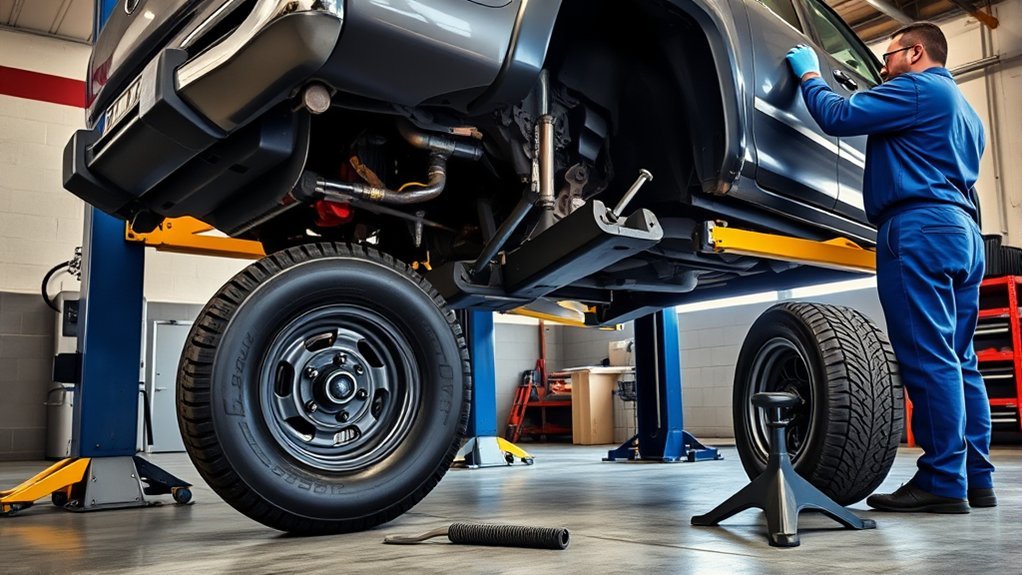
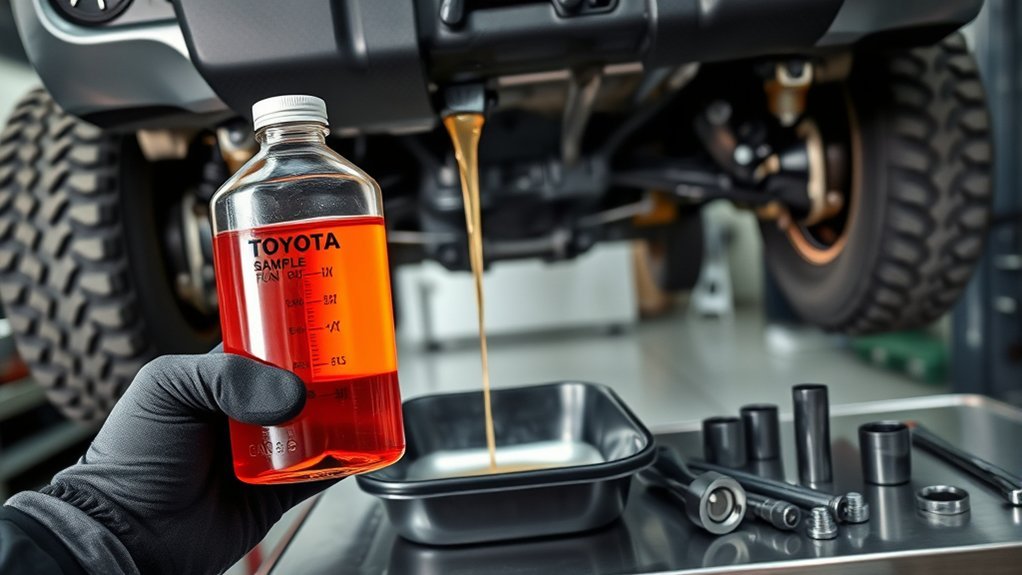
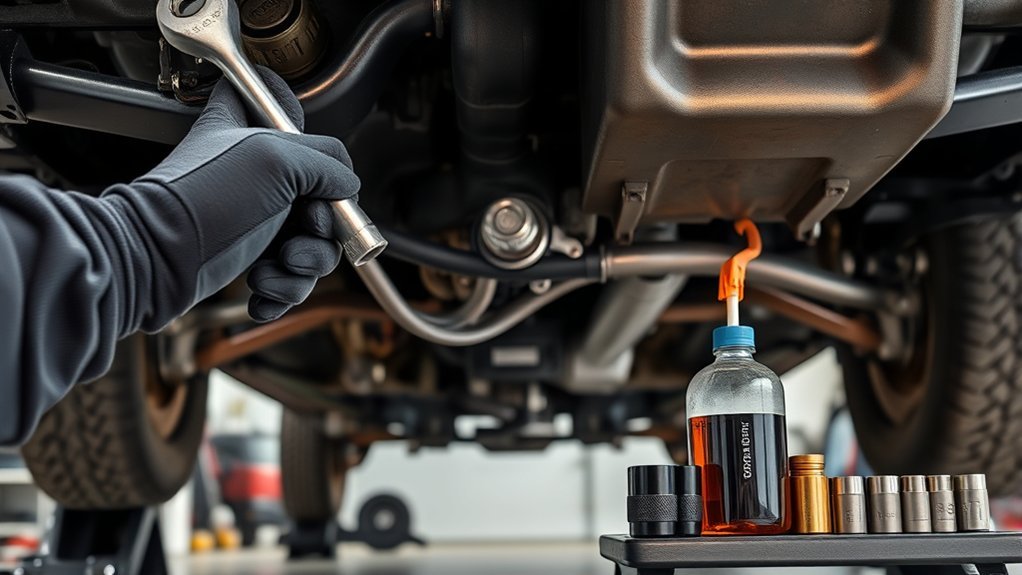
Now that you know how often to service the transfer case, you’ll want a clear, practical procedure for draining and refilling the fluid. Position the vehicle securely, gather a socket wrench and fluid pump, and consult the manual for fluid compatibility and specs. Locate and remove the drain plug; let the old 75W GL5 drain fully into a catch pan, then reinstall the drain plug and torque to spec.
Insert the fluid pump nozzle into the fill hole and pump 75W GL5 until fluid slightly overflows—this indicates full. Clean the fill lip, reinstall the fill plug, and torque to spec. Dispose of used fluid responsibly.
Maintenance tips: change every 30,000 miles, or 15,000 miles for heavy off-road use. Always verify GL5 compatibility in your manual to avoid damage. These concise steps free you to perform confident, safe servicing and keep your Tacoma ready for liberation on and off the road.
Frequently Asked Questions
How Often Should You Change Transfer Case Fluid on a Toyota Tacoma?
Change it every 30,000 miles under normal use; for heavy off‑roading or severe conditions, change every 15,000 miles. You’ll prioritize transfer case maintenance and fluid change frequency to preserve freedom from costly failures.
How Much Fluid Does a Toyota Transfer Case Hold?
Your Toyota transfer case holds about 1.5 to 2.0 quarts of fluid. You’ll practice transfer case maintenance by using approved fluid types (GL5 75W/75W90), checking specs, and changing regularly for freedom from failures.
What Kind of Transfer Case Fluid Does a 2007 Toyota Tacoma Take?
Boldly, you use GL‑5 75W gear oil for your 2007 Tacoma transfer case; you’ll follow transfer case maintenance and fluid replacement tips, changing every 30,000 miles (15,000 off‑road) to protect gears and retain freedom.
Conclusion
You’ve got the right kit: 75W GL‑5 fluid keeps the Tacoma’s transfer case humming. Picture clean fluid flowing like engine oil through gears, protecting splines and bearings from heat and grit. Change it on a schedule—sooner under towing or off‑road abuse—to avoid metal shavings and costly repair. Drain, inspect, refill, and torque the plugs to spec; you’ll preserve smooth shifts and long life with minimal fuss and solid, predictable performance.