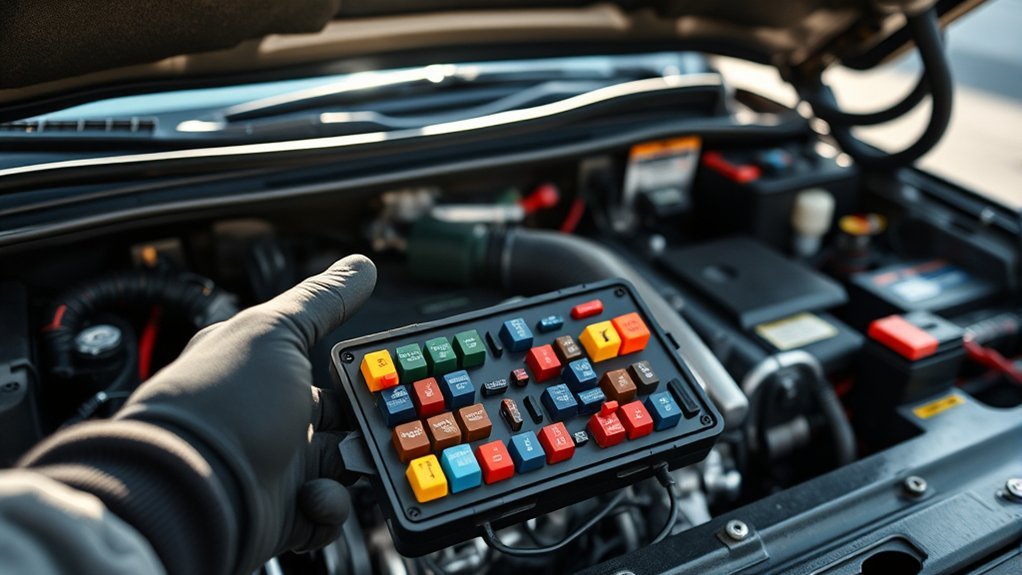
Your Toyota Tacoma has two fuse boxes: an interior panel on the driver’s side (lift the cover and read the diagram on the back) and an engine compartment box behind the battery. Open covers carefully, use the printed diagrams to locate circuits, and use the included pull tool to extract fuses straight out. Match replacement fuses by amp rating, seat covers securely, and keep contacts clean; follow these steps and you’ll find clear troubleshooting and replacement guidance ahead.
Locate the Tacoma’s Two Fuse Boxes
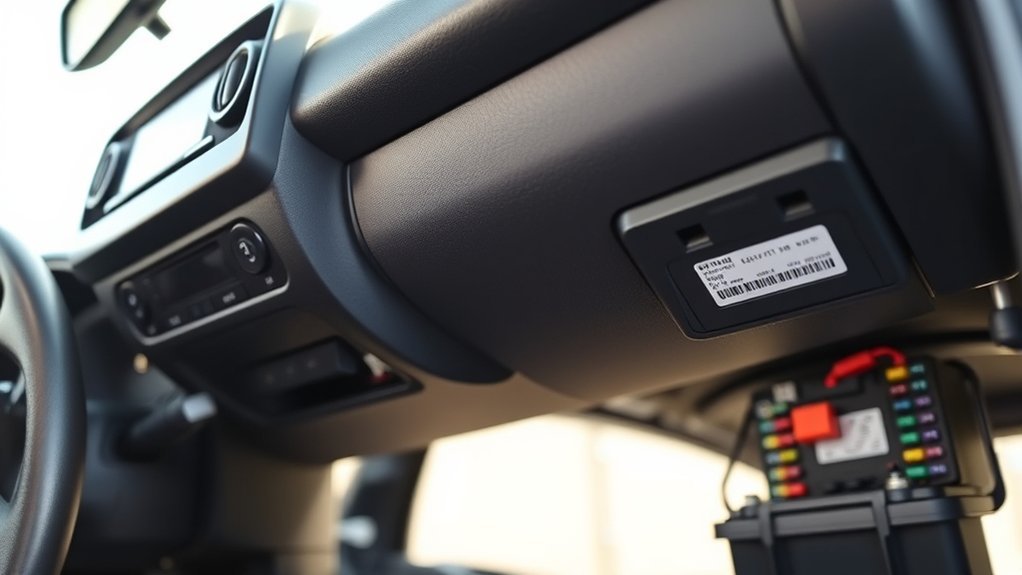
If you’re checking fuses on a Tacoma, start with the driver’s-side interior box—lift its cover to access the fuses and use the diagram on the back to identify each circuit. You’ll perform basic fuse box maintenance here: keep the area tidy, avoid spilling coins or debris when you open the cover, and follow the diagram to target the right fuse. Next, move to the engine compartment box located on the driver’s side behind the battery for additional circuits that power higher-load systems. That box contains a fused layout and a small fuse removal tool to simplify swaps. When you use the tool, pull straight to avoid bending terminals; when replacing fuses, match amperage exactly and seat the new fuse fully. Work deliberately, free yourself from guesswork by consulting the diagram, and keep both covers secured after you finish. These procedural fuse replacement tips keep you safe, efficient, and empowered to maintain your Tacoma.
Access the Tacoma Interior Fuse Panel and Read the Diagram
Open the driver-side door and lift the interior fuse panel cover to access the fuses—there’s a wiring diagram printed on the back of the cover to identify each circuit. You’ll see the diagram immediately; use it to match fuse positions to functions before touching anything. Turn on the interior lighting to improve visibility and keep your work precise. Lift the cover gently to avoid spilling coins or debris, then note the hooks at the bottom that secure the cover when you close it after fuse maintenance.
- Inspect the printed diagram for symbols and amperage to pinpoint the target circuit.
- Use the interior lighting to read small labels and confirm fuse ratings.
- Hold the cover by the edges and check for loose items before removing it.
- When finished, seat the bottom hooks first, then press the top until it clicks, restoring a secure seal.
Follow this procedure to stay empowered and safe during fuse maintenance.
Open the Engine Fuse Box and Use the Removal Tool
Locate the engine compartment fuse box on the driver side behind the battery. You’ll lift the cover carefully, watching the securing hooks at the bottom so you don’t break them. Flip the cover up; the fuse diagram is printed on its back so you can read labels without guessing. Inside you’ll find a small plastic fuse removal tool clipped in place—use it to grasp and pull fuses straight out.
Use the table below to note quick actions and maintenance tips.
| Action | Purpose |
|---|---|
| Lift cover carefully | Protect securing hooks |
| Read diagram on cover | Identify fuse locations |
| Use removal tool | Extract fuses safely |
| Align tabs when closing | Guarantee cover stays secured |
When replacing a fuse, seat it fully and close the cover by aligning tabs and snapping the hooks into place. These procedural maintenance tips free you from uncertainty and keep your Tacoma’s engine bay accessible and secure.
Identify Which Fuse to Check by Symptom (Lights, Horn, A/C, Starter)
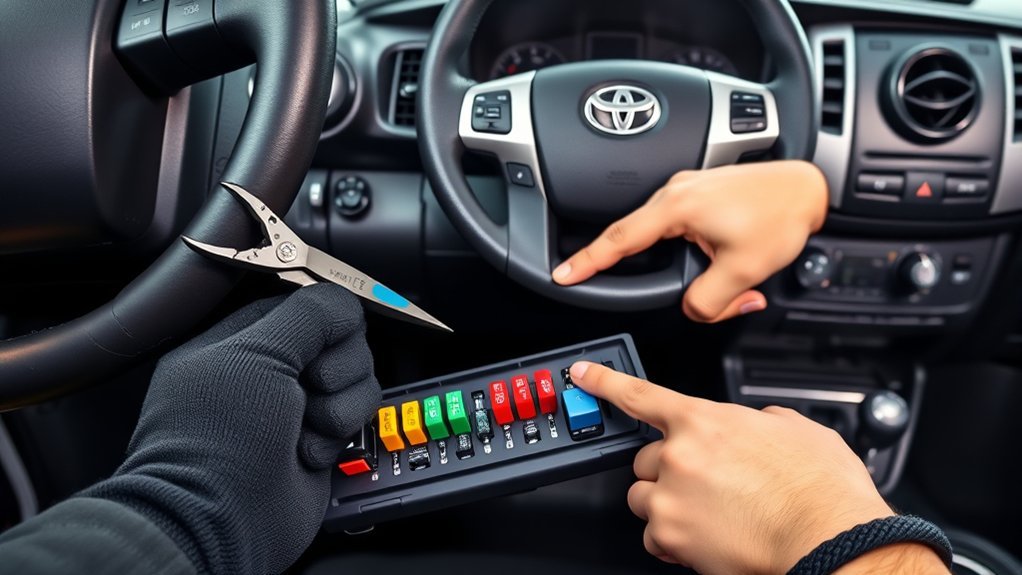
When an electrical component fails, check the fuse identified for that symptom on the appropriate fuse box diagram so you can target the correct fuse quickly; you’ll save time and avoid needless parts swaps. Use the interior fuse box diagram for headlights, taillights, and A/C fuses, and the engine compartment diagram for the horn and starter. Match the symptom to the labeled fuse, note the fuse type, then follow safe troubleshooting tips before proceeding.
- Headlights/taillights: inspect interior fuse box fuses as labeled on the driver-side diagram.
- Horn: check the engine compartment fuse labeled for the horn on the cover’s diagram.
- A/C: lift the interior fuse box cover and inspect the A/C-designated fuse.
- Starter: inspect the engine compartment starter fuse; use the provided removal tool.
Consult both diagrams to confirm identification. These procedural steps free you to act decisively, isolate the failed circuit, and move toward repair with clarity and control.
Safely Replace Fuses: Step-by-Step Tips and Precautions
Now that you’ve matched the symptom to the correct fuse using the diagrams, you can safely replace it by following a few simple steps. Open the driver-side interior fuse box, lift the cover carefully so loose coins or items don’t spill, and study the diagram on the cover. Use the fuse removal tool from the engine compartment box to pull the blown fuse straight out. Inspect the metal strip for breaks—this confirms common fuse issues. Insert a same-amp replacement, align it with the tabs, and press until it seats; then close the cover.
| Step | Action |
|---|---|
| 1 | Lift cover; avoid spills |
| 2 | Check diagram for location |
| 3 | Use removal tool; extract fuse |
| 4 | Replace with same-amp fuse |
Perform regular fuse maintenance tips: check periodically, replace corroded holders, and note recurrent failures—those signal electrical faults, not just fuses. Take control, act safely, and free yourself from preventable breakdowns.
Frequently Asked Questions
Where Is the Fuse Box on a 2018 Toyota Tacoma?
You’ll find fuse boxes inside on the driver’s side under a lift-off cover and in the engine bay behind the battery. Use fuse identification tips, check diagrams, carry removal tools, and prevent common fuse issues with timely replacements.
Conclusion
You’ve now found both Tacoma fuse boxes, read their diagrams and used the removal tool, and know which fuses match symptoms. If you worry this’s too technical, remember most checks just need the right fuse puller and a replacement — not advanced skills. Follow the step-by-step precautions: ignition off, correct amperage, and secure seating. Replace only blown fuses, retest the circuit, and get professional help if problems persist.