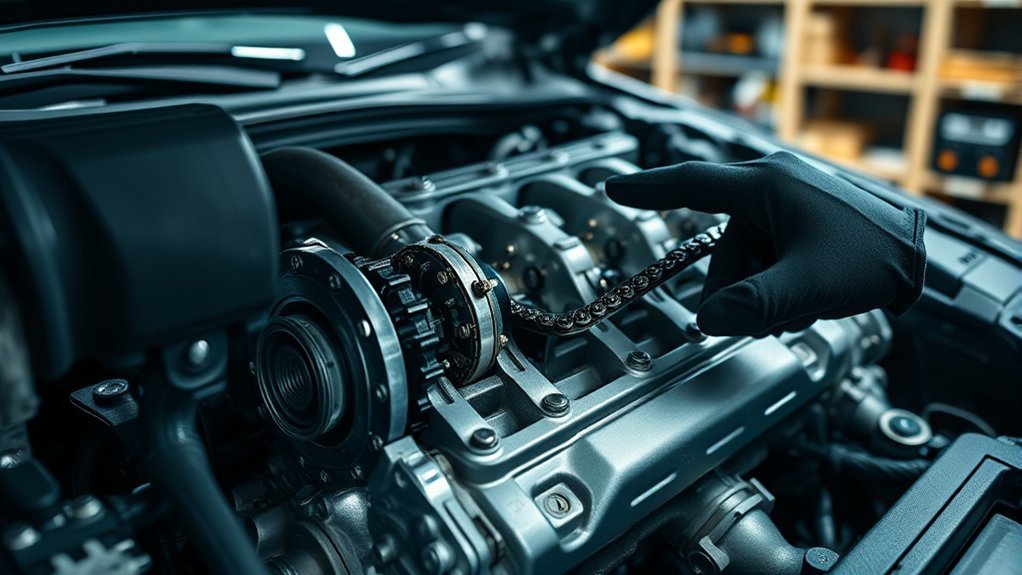
You’ll find Toyota’s VVT‑i on Camrys uses oil pressure via an oil control valve to rotate a cam phaser and shift cam timing for more low‑end torque, improved throttle response, and better fuel economy. Clean oil and timely 5,000‑mile service keep the actuator and lock‑pin working; delayed oil pressure or clogged OCVs cause cold‑start rattles, mis-timing, codes, and reduced performance. Inspect OCV, gears, chain, and oil pressure; continue for diagnostics, maintenance steps, and repair guidance.
VVT‑i Explained : Why Camry Owners Should Care
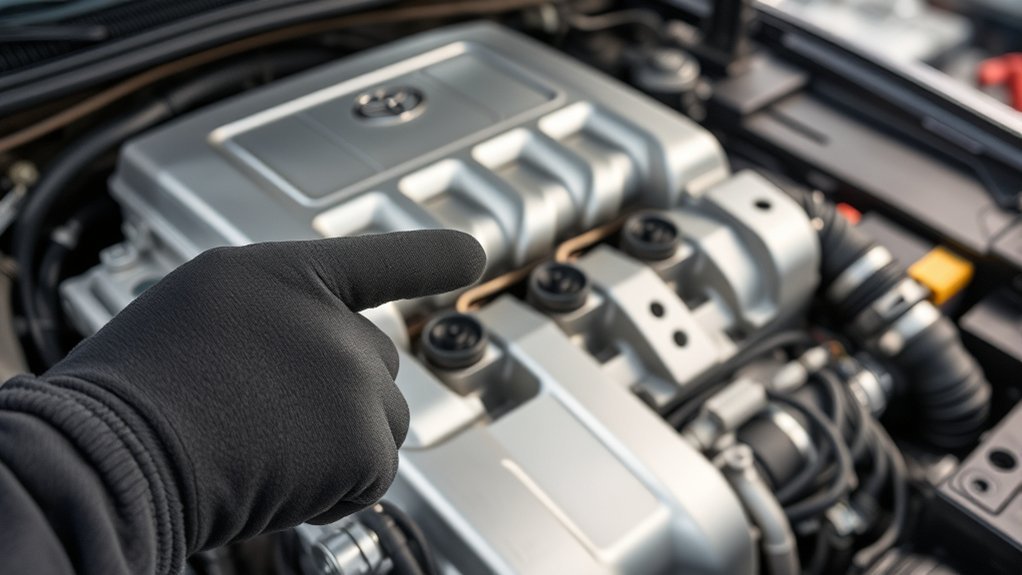
Think of VVT‑i as your Camry’s timing manager: it actively adjusts valve timing to match driving conditions, which boosts power when you need it and improves fuel economy during cruising. You rely on VVT i benefits for measurable performance enhancement—more torque at low RPMs, better throttle response, and reduced fuel consumption under steady loads. The system modulates cam phase via oil pressure; clean, high‑quality oil changed every 5,000 miles preserves actuator responsiveness and prevents sludge that impedes operation. Early Camry engines (e.g., 2ZR‑FE) can exhibit cold‑start rattle tied to VVT‑i wear, so you monitor for unusual noises as an early symptom. Newer oil‑controlled VVT‑i designs raise reliability and lower clog risk, but proactive maintenance still extends life and averts costly repairs. If you want freedom from unexpected failures, integrate scheduled oil service and symptom checks into your routine—it’s the simplest strategy to protect engine longevity and retain the system’s dynamic benefits.
Quick Triage: Is a Cold‑Start Rattle Dangerous?
How worried should you be when your Camry emits a brief rattle on cold start? You should treat a 3–5 second cold-start rattle as a diagnostic flag, not noise to ignore. Typical cold start causes include delayed oil pressure to the VVT-i oil control components and temporary lock-pin disengagement in 2ZR-FE, 1AR-FE, and 2AR-FE engines. The rattle implications range from benign transients to early signs of oil-flow restriction or failing lock-pin behavior. You should monitor frequency and duration: an occasional brief rattle after long idle or low oil is different from consistent rattling at every cold start. If rattling persists, stop prolonged operation and inspect oil level, viscosity, and VVT-i components promptly. Regular oil changes and scheduled VVT-i checks reduce recurrence and protect valve timing integrity. Act early to preserve engine freedom — letting the condition worsen risks severe valve-timing damage and catastrophic failure.
How Toyota’s Oil‑Controlled VVT‑i Works
You’ll see that oil pressure control is the primary actuator: the oil control valve meters pressurized oil to the VVT‑i gear to change camshaft phase. Internal vanes in the gear rotate the camshaft to advance or retard timing as pressure varies, directly affecting valve overlap and engine response. Newer designs integrate the oil control valve into the gear housing, shortening oil passages and improving response and reliability.
Oil Pressure Control
Because oil pressure is the actuator, Toyota’s VVT‑i varies cam timing by routing pressurized engine oil through an integrated oil control valve into vaned chambers within the VVT‑i gear, which rotates the camshaft relative to the sprocket to advance or retard valve timing. You rely on stable oil viscosity to guarantee predictable flow; degraded oil or wrong grade produces erratic response and increased wear. The lock pin holds the gear stationary at shutdown, so timing stays fixed until adequate pressure releases it at start. The integrated control valve reduces clogging and raises response fidelity, but it still needs clean oil and timely service to prevent pressure fluctuations that compromise actuation. Maintain high‑quality oil and intervals to preserve control authority and free your engine’s performance.
Camshaft Timing Adjustment
Understand camshaft timing in Toyota’s oil‑controlled VVT‑i as a pressure‑driven, oil‑metered rotation of the VVT gear that shifts the camshaft relative to the crankshaft to optimize valve events. You control camshaft optimization through oil pressure that rotates internal vanes in the VVT gear, advancing or retarding cam position for timing efficiency across RPM. A lock pin secures the gear when the engine’s off; when oil pressure rises at start, the system frees the gear for active adjustment. You’ll maintain freedom of performance by keeping oil clean and watching for cold‑start rattle that signals degraded control.
- Oil pressure rotates the VVT gear via metered flow.
- Internal vanes transmit rotation to the camshaft.
- Lock pin prevents unwanted movement.
- Clean oil preserves timing efficiency and longevity.
Integrated Oil Control Valve
Having covered how oil pressure and the VVT gear physically rotate the cam, we’ll now look at the integrated oil control valve that meters that oil. You’ll find the integrated oil control valve regulates oil flow to change valve timing in response to engine conditions, improving performance and efficiency. A solenoid activates a plunger that routes pressurized oil directly into the VVT-i gear, enabling precise, rapid timing adjustments without convoluted external passages. The integrated layout streamlines oil delivery, lowering clog risk and increasing reliability during varied operation. By embedding the valve in the gear Toyota simplified the system, improving responsiveness and reducing failure points. This refined oil‑controlled VVT‑i appears on engines like the 2GR‑FKS and A25A, advancing liberated control.
Camry VVT‑i Symptoms: Rattles, Codes, Performance Drops
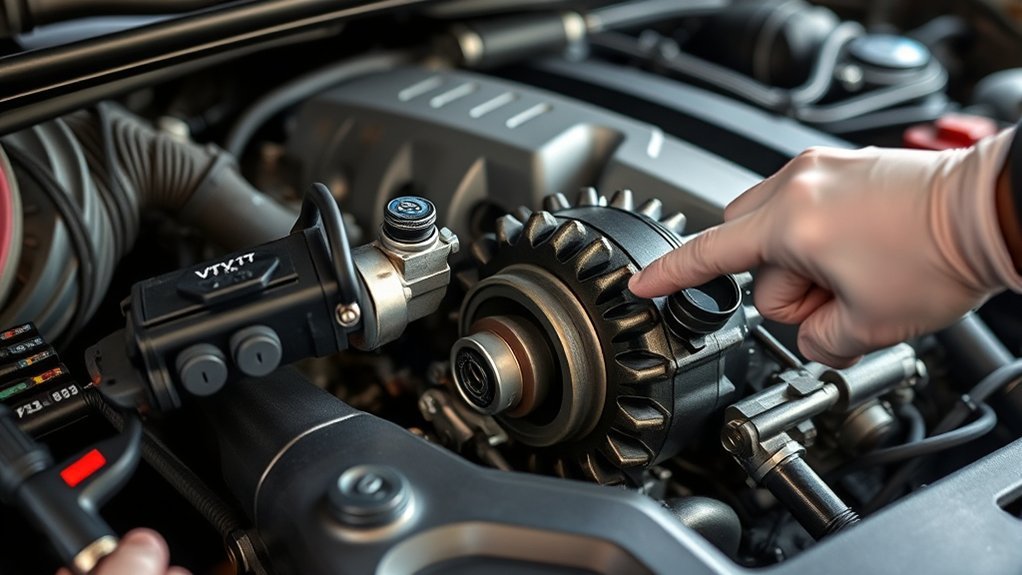
When your Camry shows a brief rattling at cold start, fault codes, or a drop in power or fuel economy, you’re likely seeing signs of VVT‑i malfunction that demand prompt diagnosis. You’ll hear a rattling noise for 3–5 seconds on cold start in engines like the 2ZR‑FE, 1AR‑FE, and 2AR‑FE; don’t dismiss it. Diagnostic trouble codes point you toward oil control valve (OCV) faults, camshaft position sensor errors, or timing chain anomalies. Performance issues and reduced fuel economy stem from improper valve timing.
Brief cold-start rattles, fault codes, or power loss often signal VVT‑i issues—diagnose OCV, cam sensor, or timing chain now.
- Short cold-start rattle (3–5s) localized to VVT‑i components
- DTCs indicating OCV, cam sensor, or timing chain-related faults
- Measurable drop in power and fuel efficiency from mistimed valves
- Persistent rattle suggesting seized gear or failing lock pin — urgent risk
You should act decisively to diagnose and repair. Early intervention preserves your engine’s freedom from catastrophic failure and restores reliable performance.
Maintenance Checklist: Oil, OCV, VVT‑i Gears, Timing Chain
Start with a strict oil and VVT‑i inspection routine: change high‑quality oil every 5,000 miles, check the oil control valve (OCV) for correct operation and electrical/connective integrity, visually and tactilely inspect VVT‑i gears for play, scoring or seizure, and confirm timing‑chain alignment by comparing paint marks and tensioner condition — replace any component showing wear, hesitation, or contamination to prevent rattles and timing drift.
You’ll perform an oil change and valve inspection as the core preventive act. Verify oil viscosity and cleanliness to maintain hydraulic control of the VVT‑i system. Test OCV electrical continuity and apply bench pressure to confirm spool movement. Probe gears for axial/endplay and inspect teeth for scoring; seized or noisy gears demand removal. Check timing‑chain paint marks and tensioner preload; faded marks or slack indicate service. Maintain records to detect degradation trends. This regimen preserves engine timing fidelity, reduces cold‑start rattle, and frees you from avoidable failures.
| Task | Frequency | Pass Criteria |
|---|---|---|
| Oil change | 5,000 mi | Clean, correct viscosity |
| Valve inspection | Every service | Functional OCV |
| Gear/chain check | Periodic | No play/scoring |
Repair Options: DIY Checks, When to Replace Parts
Although you can catch many issues with a careful DIY inspection, you should prioritize specific checks and limits to know when to replace parts. You’ll perform DIY inspections focusing on rattling at cold starts, oil pressure, lock pin sizing, and visible wear on VVT-i gears and timing components. Follow measured criteria to decide on part replacements rather than guesswork.
Prioritize cold-start rattles, oil pressure, lock-pin sizing, and visible VVT‑i/timing wear—measure, document, and replace decisively.
- Listen: prolonged rattling >3–5 seconds at cold start → replace VVT-i gears.
- Inspect: visually check gears, cam phasers, and chain for scoring, play, or metal debris.
- Measure: verify oil pressure and confirm oil changes every 5,000 miles with high-quality oil.
- Verify: on older models check lock pin diameter; replace if undersized or damaged to prevent seizure.
You’ll document findings, source OEM or equivalent parts, and act decisively. If diagnostics exceed your tools or repairs affect engine timing, seek professional service to protect your liberty to drive without risking catastrophic damage.
Frequently Asked Questions
How Does the Toyota VVT-I Engine Work?
You control cam timing: VVT-i shifts camshaft phase via an oil-controlled actuator and lock pin, optimizing valve events for engine efficiency and performance benefits across RPMs, using oil pressure and electronic control for adaptive timing.
Are Toyota VVT-I Engines Good or Bad?
Think of a well-tuned clockwork: you’re getting dependable engine performance if you follow maintenance tips. You’ll enjoy efficiency and longevity, though older designs may demand vigilance; timely oil changes and monitoring prevent failures.
How Often Does VVT-I Need Servicing?
You should service VVT-i every 30,000–60,000 miles, with oil changes about every 5,000 miles; this VVT i maintenance frequency preserves VVT i benefits like optimized timing, efficiency, reduced emissions, and prevents sludge-related failures.
Conclusion
You’ve seen how VVT‑i quietly choreographs timing to wring power, economy and emissions from your Camry; a brief morning tick isn’t always a calamity, but it’s not a sound you should ignore. Keep oil clean, monitor codes, and inspect the OCV, gears and chain before a minor nuisance becomes a costly lesson. If checks point to wear, replace the worn components—don’t let a small whisper turn into a louder surrender.