
You should rotate your Toyota Camry’s tires every 5,000–8,000 miles (or with each oil change) to guarantee even wear, predictable handling, and warranty protection. Adjust the interval to 3,000–5,000 miles if you drive aggressively, carry heavy loads, or have AWD. Follow Toyota’s rotation pattern and log service to preserve claims. Inspect tread depth, pressure, and damage at each rotation. Keep rotations coordinated with alignment or balancing when you notice uneven wear for best results — more specifics follow.
Camry Tire Rotation: Recommended Interval (Miles and Time)

For most Toyota Camry models, you should rotate the tires every 5,000–8,000 miles (or roughly every oil change) to keep tread wear even and extend tire life. You’ll follow that interval to balance wear across all four tires, which delivers clear rotation benefits: improved handling, preserved tread depth, and a longer tire lifespan. Stick to manufacturer guidance to protect warranty coverage and avoid disputes over premature wear.
You’ll choose a rotation pattern—front-to-rear or forward cross—based on drivetrain and tire type; applying the correct method prevents uneven wear linked to steering and drive forces. Time-based checks (every six months if mileage’s low) guarantee you don’t miss service windows. Regular rotations reduce long-term replacement costs and maintain predictable vehicle dynamics, letting you move freely without being tethered to avoidable maintenance failures. Schedule rotations with oil changes to streamline upkeep and keep control over your vehicle’s performance and costs.
Why Rotating Camry Tires Every 5,000–8,000 Miles Matters
Rotating your Camry’s tires every 5,000–8,000 miles keeps tread wear balanced, which can extend tire life by as much as 10,000 miles and preserves predictable handling. You’ll get more uniform wear because front tires on a Camry handle extra braking and steering loads; moving tires on schedule counters that imbalance. That means steadier handling, fewer vibrations, and preserved traction when conditions tighten. Regular rotation also helps you keep warranty coverage intact and supports overall driving safety.
- Feel the relief of longer-lasting tires and fewer unexpected costs.
- Embrace control with consistent handling and reduced vibration.
- Gain confidence from maintained traction in adverse conditions.
- Protect your investment and freedom to drive without avoidable risk.
Follow these tire maintenance tips as a simple, liberating discipline: schedule rotations with oil changes or at set mileage. You’ll improve performance, uphold warranties, and remove a small but critical obstacle to safer, freer driving.
How Driving Habits and Tire Type Affect Rotation Frequency
Because how you drive and which tires you fit directly change wear patterns, you should adjust rotation frequency based on habits and tire type: aggressive acceleration, hard braking, frequent rough-road use, heavy towing, or high-performance tires typically call for rotations closer to 3,000–5,000 miles, while gentle driving with quality all-season tires can stretch toward the 5,000–8,000-mile guideline. You’ll monitor wear patterns and adapt tire maintenance accordingly. Aggressive driving behavior and harsh driving conditions create edge and shoulder wear; performance tires compound that by using softer compounds that trade longevity for grip. Load effects from towing or hauling accelerate tread loss and heat buildup, so rotate sooner to preserve tire longevity and control. Older or lower-quality tires need closer attention; age-related deterioration alters contact patches and safety margins. Use rotations as a proactive safety measure—inspect tread depth, irregular wear, and pressures at each service. That practical regimen liberates you from unexpected failures, optimizes handling, and extends usable life while keeping safety front and center.
Camry Rotation Patterns: FWD, RWD, and AWD Explained
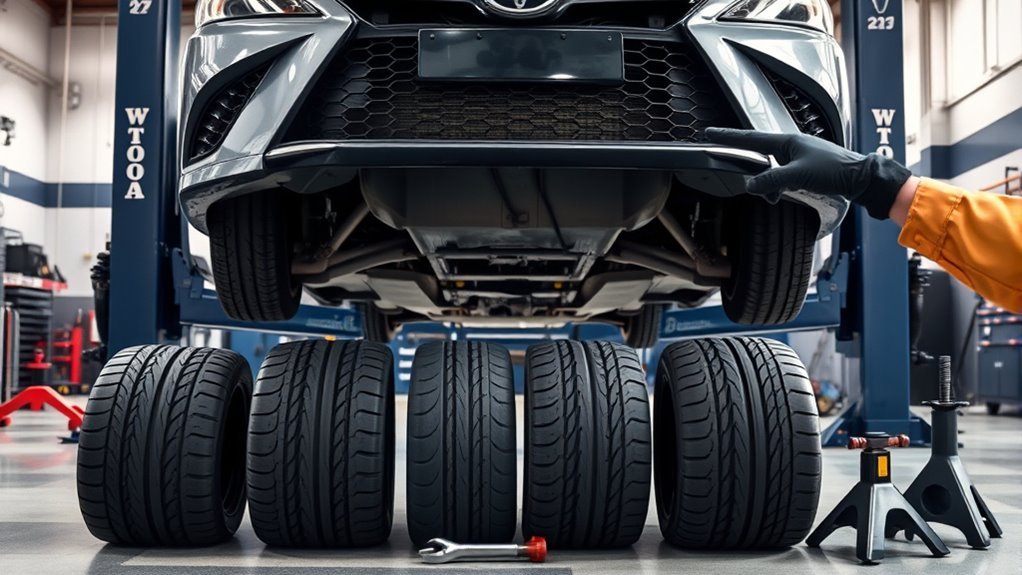
For a typical FWD Camry, you’ll rotate the rear tires to the front and cross them to the opposite sides while keeping the front tires on the same side. If you have a rare RWD Camry, move the front tires to the rear and cross them, leaving the rear tires in place. AWD models need more frequent rotations—about every 3,000–5,000 miles—and follow manufacturer guidelines to manage uneven wear.
FWD Rotation Pattern
When you own a front-wheel-drive Camry, follow a regular rotation schedule—typically every 5,000 to 7,500 miles—to even out wear and extend tire life. You’ll move the rear tires straight to the front and cross the front tires to the rear (keeping front tires on the same side), which combats accelerated tire wear from steering and braking. Stick to manufacturer intervals to protect warranty and preserve handling.
- Reclaim control: precise maintenance tips keep you moving.
- Reduce anxiety: balanced tires cut vibration and restore calm.
- Extend freedom: even wear maximizes range between replacements.
- Preserve value: consistent care defends performance and warranty.
Be methodical, track rotations, and rotate on schedule to maintain traction and a smoother ride.
RWD Rotation Pattern
If your Camry has been set up or modified to rear-wheel drive, follow a specific rotation pattern to counteract uneven wear caused by drive torque at the rear axle. You’ll move the front tires to the opposite rear positions, while keeping the rear tires on the same side. This X-to-straight swap equalizes stress from propulsion and steering, preserving tread life and consistent vehicle handling.
Rotate every 5,000–7,500 miles, adjusting for aggressive driving or heavy loads. Always check the owner’s manual for model-specific guidance. When you rotate, inspect tire pressure and valve condition, and balance or align as needed. Regular, disciplined rotation liberates you from premature replacements and maintains predictable handling, safety, and performance in an RWD Camry configuration.
AWD Rotation Guidelines
All-wheel-drive Camrys need more frequent rotations—typically every 3,000–5,000 miles—to prevent uneven wear from distributed torque and preserve drivetrain health. You’ll rotate sooner than FWD models to control tire wear and protect AWD components. Check tread depth before swapping; differences must stay within 2/32″ to guarantee consistent traction maintenance and handling. Follow the owner’s manual for the exact pattern; technicians often use a cross pattern that equalizes wear across all four tires. You want freedom from premature replacements and safer, predictable performance.
- Feel empowered by predictable maintenance
- Reject avoidable breakdowns with proactive care
- Gain confidence from balanced traction
- Liberate your driving with disciplined upkeep
Camry DIY Tire Rotation Checklist (Step‑by‑Step)
Before you start, gather the jack, jack stands, torque wrench, and a pressure gauge so you’ve got all required tools on hand. Park on a flat surface, engage the parking brake, and follow the Camry’s recommended rotation pattern (front-to-rear for FWD) as you lift and secure each corner. After reinstalling wheels, torque the lug nuts to spec and check/adjust tire pressure to the PSI in the owner’s manual.
Tools And Equipment
A compact toolkit makes DIY tire rotations faster and safer, so gather a hydraulic jack, quality jack stands, a lug wrench, and a calibrated torque wrench before you start. You’ll use tire maintenance tips and essential tools to take control of maintenance, loosening lug nuts on the ground, lifting the car, and supporting it securely with jack stands. Rotate tires per your Camry’s pattern, then tighten lug nuts in a star sequence with the torque wrench to spec.
- Feel empowered using professional-grade equipment.
- Trust precision tools to protect you and your Camry.
- Enjoy the freedom of self-reliance on the road.
- Respect safety: never rely on the jack alone.
Keep gear clean, inspect for wear, and store securely.
Step‑By‑Step Procedure
With your tools checked and safety gear in place, start the rotation by slightly loosening each lug nut while the Camry still sits on the ground to prevent wheel spin. Raise the vehicle with a jack and install jack stands at manufacturer‑specified lift points. Remove lug nuts fully and take off tires, marking original positions. For a front‑wheel‑drive Camry, move rear tires to the front on opposite sides and shift front tires straight to the rear on the same side. Reinstall wheels, hand‑thread lug nuts, then lower the car until tires touch to prevent overloading the studs. Fully lower and torque lug nuts in a crisscross pattern to the specified value. This stepwise procedure supports tire maintenance and delivers clear safety benefits for autonomy and control.
What Technicians Check During a Professional Camry Rotation
While your Camry’s wheels are off the ground, technicians inspect each tire for cuts, punctures, and uneven tread wear, measure tread depth, and adjust tire pressure to the manufacturer’s specs. You get a clear, technical check that protects performance and freedom on the road. The process centers on tire inspection and tread assessment, plus systems that affect longevity.
- You feel reassured when they verify tread depth and report remaining life.
- You’re relieved when punctures or cuts are found and addressed before failure.
- You gain confidence as pressure is set to spec, improving economy and handling.
- You’re empowered when rotation is logged, preserving warranty and resale value.
They also evaluate wheel alignment and balance, since misalignment causes asymmetric wear and degrades control. Finally, they record the service in maintenance history so you can move forward unburdened, knowing your Camry’s tires were professionally tended.
Signs You Should Rotate Sooner: Uneven Wear, TPMS, Tread Depth
Watch your tread patterns for uneven wear—cupping, edge scalloping, or one-sided wear means you should rotate earlier to even out load and alignment stresses. If the TPMS warns of persistent pressure differences, that can point to uneven wear and prompts an immediate inspection and rotation. And don’t wait if tread depth approaches 2/32″, since low depth compromises traction and makes prompt rotation or replacement necessary.
Uneven Tread Patterns
If you spot one tire wearing noticeably more than the others, rotate your tires sooner to redistribute load and extend tread life. You’ll catch uneven tread patterns early by measuring tread depth and inspecting for scalloping, cupping, or edge wear. A 2/32″ difference between tires means act now. Regular tire maintenance preserves tread lifespan and frees you from avoidable breakdowns.
- Frustration fades when you prevent vibration and noise that signal imbalance.
- Confidence grows as you correct irregular wear before it cripples performance.
- Freedom returns when routine checks keep TPMS surprises at bay.
- Control solidifies as even tread extends handling, safety, and economy.
Rotate proactively to reclaim control and maximize tire life.
TPMS Warning Lights
When your TPMS lights up, don’t ignore it—low pressure or a failing sensor often goes hand-in-hand with uneven wear and can mean you need to rotate or inspect tires sooner than scheduled. You’ll want to verify TPMS functionality quickly: check pressure, scan for a faulty sensor, and compare readings across all four tires. A persistent warning requires troubleshooting to rule out leaks, sensor faults, or wear-driven pressure loss. Uneven wear can make one tire run low, triggering the system and degrading handling; rotate immediately if measurements differ by 2/32″ or you feel vibrations. Keep rotations every 5,000–8,000 miles as baseline, but let TPMS warning troubleshooting and worn patterns dictate earlier action to reclaim control and safety.
Low Tread Depth
Low tread depth—especially below 2/32″—is a clear signal you should rotate or replace tires immediately because it reduces traction, increases hydroplaning risk, and often reflects uneven wear that rotation can’t always fix. You’ll want to act decisively: uneven tread wear undermines handling and tire performance, and a TPMS warning can point to low pressure worsened by worn areas. Use the penny test and visual checks for balding or one-sided wear. Rotate sooner when signs appear, or replace if depth is critical.
- Fearless maintenance frees you from roadside risk.
- Take control before traction fails.
- Prevent hydroplaning; protect your autonomy.
- Don’t wait—restore reliable tire performance.
How Rotations Interact With Toyota and Tire Warranties

Because tire wear directly affects warranty eligibility, you should follow the rotation interval specified by Toyota and your tire maker—typically every 5,000–8,000 miles—to avoid uneven wear that can void coverage. You’ll confront clear tire warranty implications if you skip rotations: manufacturers often require documented adherence to their schedule as a condition for replacement or repair claims. Check your Toyota owner’s manual and the tire warranty terms to confirm intervals and any special procedures.
You should get rotations performed by a professional and insist on written proof; maintenance record importance is critical when you file a claim or sell the vehicle. A dated invoice showing mileage and rotation pattern strengthens your position and limits disputes over wear causation. Stay proactive: follow specified intervals, keep documentation, and consult warranty language. That disciplined approach protects coverage, extends tire life, and preserves your leverage—freedom from unnecessary expense.
When to Combine Rotation With Alignment and Balancing
If you notice steering pull, uneven tread wear, or feel vibrations, schedule an alignment and balancing at the same time you rotate the tires. Combining services frees you from repeat visits and protects your investment: annual alignments or sooner if wear or pull appears, and balancing during every rotation prevents vibrations and evens tread wear. That coordinated approach can extend tire life by roughly 5,000–10,000 miles and delivers clear alignment benefits for steering precision.
Notice pull, uneven wear, or vibrations? Combine rotation, alignment, and balancing to save time and extend tire life.
When you act, consult your owner’s manual for model-specific guidance. Prioritize combined service when post-rotation issues arise, or whenever routine tire maintenance is due.
- Reclaim control: stop drift and uneven wear
- Save time: one appointment, multiple fixes
- Preserve tires: longer life, fewer replacements
- Drive confidently: smoother steering, less vibration
Be practical and assertive: combine rotation, alignment, and balancing to maintain safety, maximize performance, and sustain the freedom of the road.
Scheduling Options: Dealer vs. Independent Shops and Costs
When weighing dealer service against an independent shop, consider cost, scope, and consistency: you’ll find dealer advantages in trained technicians, thorough inspections, and loyalty specials that lower effective price. Dealers like Jeff Wyler Springfield Toyota typically charge $20–$50 per rotation but include checks for uneven wear and damage that protect warranty and prolong tire life.
Independent shop considerations focus on lower base rates—often $15–$30—and flexible scheduling. You can save money, but you must vet reputation, certifications, and equipment to avoid inconsistent service that could undermine tire performance or warranty eligibility.
You should choose based on priorities: if you value documented inspections and integrated service history, pick the dealer; if you prioritize cost and speed, a reputable independent shop will suffice. Regardless of venue, maintain a regular rotation interval and record receipts or service reports to preserve warranty protection and guarantee ideal Camry handling and longevity.
Frequently Asked Questions
How Often Should I Rotate the Tires on My Camry?
Rotate your Camry’s tires every 5,000–8,000 miles to manage tire wear; adjust frequency based on driving habits, check alignment, and follow the manual so you’ll keep control, longevity, and warranty protection.
Is It Okay to Rotate Tires Every 10,000 Miles on a Toyota?
No — you shouldn’t wait 10,000 miles; that risks uneven tire wear and reduced rotation benefits. You’ll preserve handling, safety, warranties and extend tire life by sticking to 5,000–7,500 miles based on driving habits.
What Does Toyota Recommend for Tire Rotation?
Toyota recommends rotating your tires every 5,000 to 8,000 miles to manage tire wear; follow specified rotation patterns for FWD or AWD, consult the manual, and schedule rotations with routine maintenance to maintain performance and warranty.
Conclusion
Rotate your Camry’s tires every 5,000–8,000 miles (or with every oil change) to extend tread life and maintain safe handling. Check wear, TPMS, and balance; rotate sooner if you spot cupping or uneven depth. Match rotation pattern to FWD/RWD/AWD and record service to protect warranties. Combine rotation with alignment when steering pulls or vibration appears. Whether dealer or independent, expect a quick, inexpensive visit—like swapping a floppy disk for a thumb drive of traction.