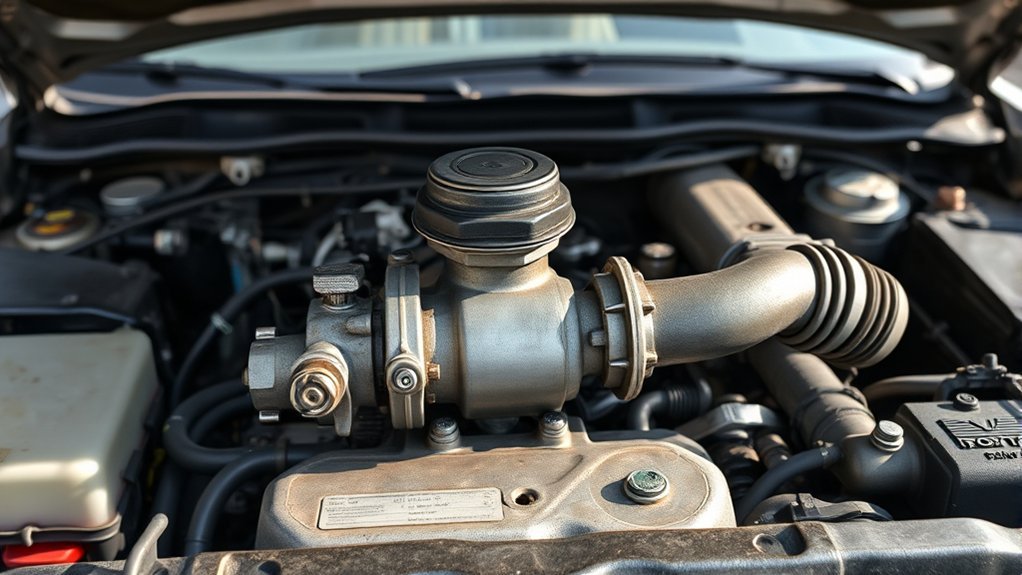
On older Toyota Camrys, the EGR system routes exhaust back into the intake to lower combustion temperature and cut NOx; you’ll find an EGR valve, vacuum modulator, VSV and sometimes feedback sensors. Carbon clogs, sticking valves or vacuum leaks cause rough idle, poor accel and codes like P0401/P0402. You can test with an OBD-II scanner, apply vacuum to the valve, and inspect passages; cleaning helps but replace worn parts for reliability — continue and you’ll get step‑by‑step diagnostics and fixes.
What the EGR System Does in Older Toyota Camrys
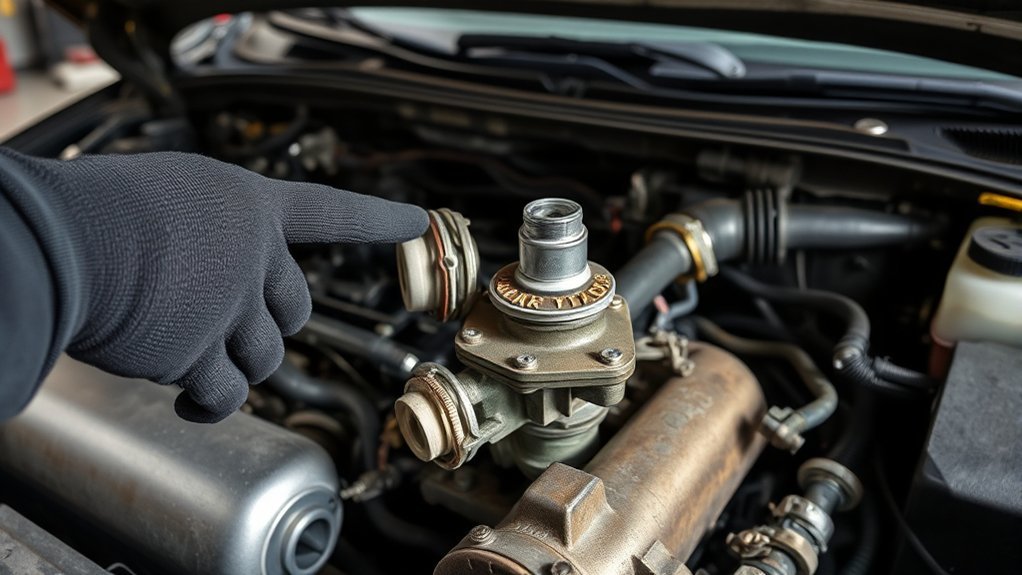
The EGR (Exhaust Gas Recirculation) system in older Toyota Camrys redirects a controlled portion of exhaust gas back into the intake manifold to lower combustion temperatures and cut NOx formation, primarily during steady-state cruising. You’ll rely on this subsystem to balance emissions compliance with drivability: it reduces peak cylinder temperatures to prevent knock and keeps the engine within emissions targets, especially in 2.2L models like the 1995 Camry. Expect symptoms when it fails—rough idle, reduced acceleration, or a Check Engine Light—and recognize carbon accumulation on the EGR valve as the usual culprit. For practical EGR functionality overview, note valve operation, passage routing, and cruise-focused duty cycles. You’ll want routine inspections: remove the valve, inspect ports, and clean deposits before they obstruct flow. Follow targeted EGR maintenance tips—scheduled checks, carbon removal, and gasket replacement—to restore function, reclaim performance, and assert control over your vehicle’s emissions and responsiveness.
How EGR Lowers Combustion Temperatures and NOx in Camrys
Because it redirects a measured portion of exhaust back into the intake, the EGR system lowers peak oxygen concentration in the combustion chamber, which drops flame temperature and sharply reduces thermal NOx formation in older Camrys. You’ll see EGR benefits immediately: reduced combustion temperatures limit the high-temperature reactions that form NOx, so emissions fall without complex fuel changes. The valve opens when the engine’s warm and at steady speeds, letting inert exhaust dilute the fresh charge only under conditions where combustion stability is preserved. That dilution reduces knock tendency, so you can run ideal ignition timing and maintain fuel efficiency while cutting NOx. Practically, the system balances emissions compliance and engine performance by controlling when and how much exhaust recirculates. You get liberation from punitive emissions exposure and from sacrificing drivability for compliance — EGR provides a targeted, mechanical approach to NOx reduction while keeping the Camry reliable and efficient.
EGR Parts on Older Camrys: Valve, Modulator, VSV, Sensors
Think of the EGR system on older Camrys as a small network of parts—valve, modulator, VSV, and sensors—that work together to recirculate exhaust gases and cut NOx. You’ll focus first on the EGR valve: it routes exhaust into the intake to lower combustion temperatures, so regular EGR valve maintenance is nonnegotiable to prevent carbon build-up and preserve emissions control. The vacuum modulator meters vacuum to the valve; use vacuum modulator troubleshooting when you see erratic operation or timing issues. The VSV acts as the on/off gate for that vacuum; follow VSV operation tips to test solenoid function and check electrical continuity. Some later or modified units replace vacuum parts with electronic sensors for tighter control—consider sensor upgrade options for improved feedback and easier diagnostics. You want reliable parts that free you from recurring faults: inspect, test, replace with quality components, and prefer upgrades that simplify maintenance and strengthen control of the EGR loop.
Common Failure Modes: Soot, Sticking, Vacuum Leaks, Sensor Faults
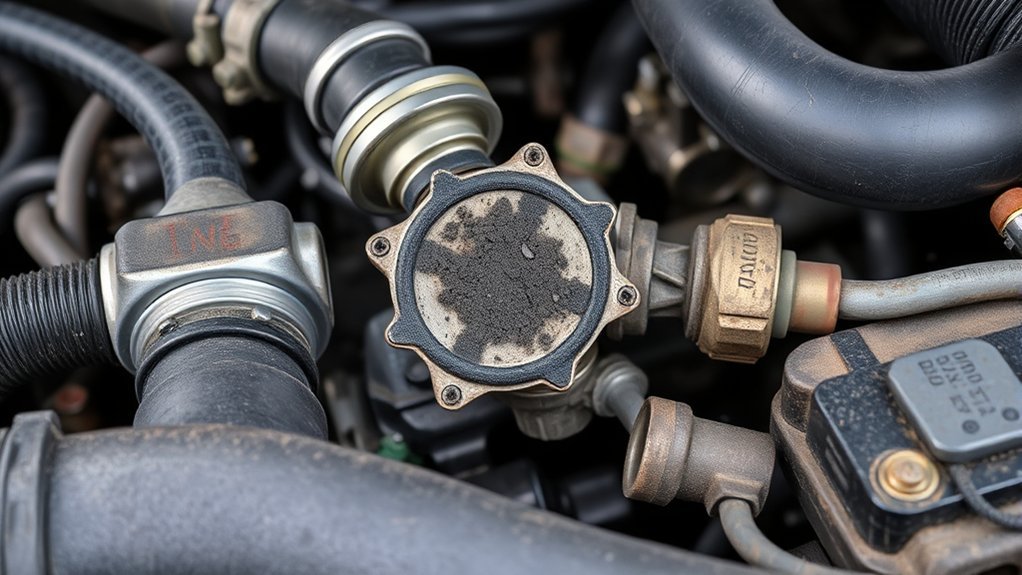
Now that you’ve covered parts and upkeep, look at how those components fail in everyday use. You need an EGR functionality overview to diagnose root causes quickly. Soot accumulation clogs passages on older Camrys, especially with short urban trips, reducing flow and binding valves. Sticking — open or closed — alters combustion: open causes rough idle and stalls; closed raises combustion temps and NOx. Vacuum leaks in hoses or the modulator prevent proper modulation, degrading driveability and emissions control. Sensor faults can set codes (e.g., P0401/P0402) and mislead diagnostics without thorough testing.
- Soot: blocks ports, demands regular cleaning to restore flow and prevent locking.
- Sticking: inspect valve movement; a freed mechanism restores control of recirculation.
- Vacuum/sensor failures: pressure-test lines and bench-test sensors to confirm true faults.
Common symptoms will point you to targeted repairs; act decisively to reclaim control and emissions compliance.
Symptoms and EGR Trouble Codes to Watch For
One clear sign you’ve got an EGR issue is a change in drivability—rough idle, stalling, poor acceleration, or higher fuel use—because the valve isn’t recirculating exhaust gases correctly. You’ll notice EGR symptoms like increased fuel consumption, hotter engine temps, and higher emissions. The check engine light often appears; don’t ignore it. Use an OBD-II scanner to capture EGR codes and act.
| Symptom | Likely code |
|---|---|
| Rough idle / stalling | P0401 |
| Poor acceleration | P0401 / P0402 |
| Increased fuel use | P0401 |
| Rising engine temperature | P0402 |
When you see P0401 (EGR flow insufficient) the valve or passages are clogged or stuck closed. P0402 (EGR flow excessive) usually means a stuck-open valve or sensor fault. These codes free you from guesswork; they tell you where to focus repairs so you can regain control and keep the Camry reliable.
Quick DIY EGR Diagnostic Checks for Camry Owners
If your Camry is showing EGR-related symptoms or codes, start with a quick visual and hands-on inspection: pull the EGR valve and look for carbon buildup in the valve and passages, check the vacuum hoses and modulator for cracks or leaks, and apply direct vacuum to the valve—if it’s working you’ll see an immediate change in RPM. You’ll act fast, reclaim control, and avoid getting stranded.
- Use an OBD-II scanner to read codes (P0401, P0402). Codes guide further checks and focus your EGR troubleshooting tips.
- Inspect vacuum modulator and hoses for leaks. A leaking line causes EGR performance issues and inconsistent idle or stumble.
- Apply direct vacuum to the valve: if RPM doesn’t drop or valve feels stuck, you’ve isolated a mechanical fault needing attention.
These steps are practical, technical, and empowering—do them before escalating to deeper diagnostics or parts intervention.
Cleaning vs. Replacement: When to Clean the EGR or Replace Parts
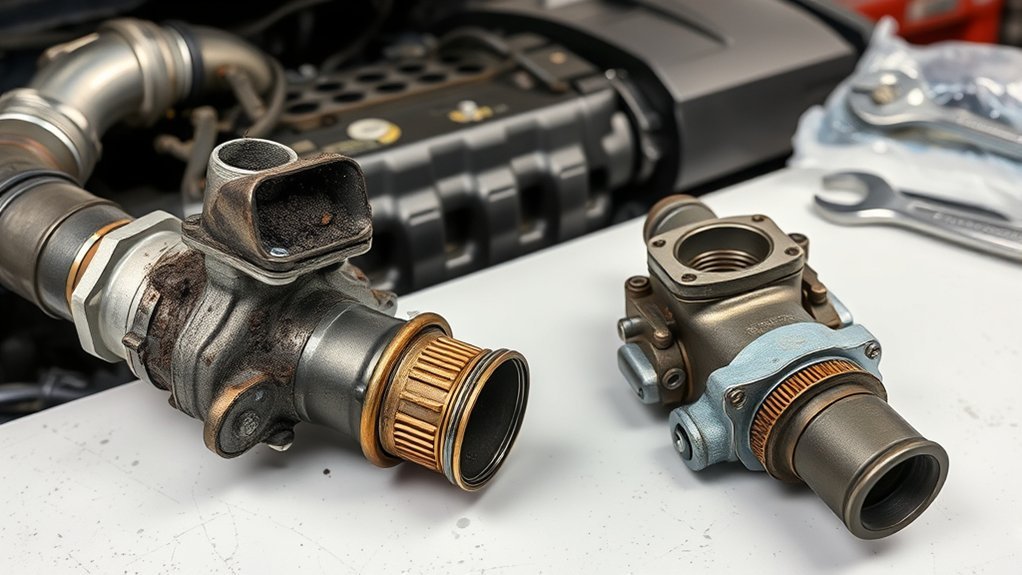
You’ll start by cleaning the EGR when carbon deposits are light and the valve moves freely after a basic inspection. If the valve remains stuck, shows erratic operation, or recurring blockages happen despite cleaning, you should replace the valve and inspect associated sensors and vacuum lines. Decide between DIY cleaning for simple cases and professional service for stuck valves, sensor faults, or when replacement and system diagnostics are needed.
When To Clean
When your Camry shows rough idling, hesitation on acceleration, or a persistent check-engine light tied to EGR codes, inspect and clean the EGR valve first—minor carbon buildup often restores proper flow and saves replacement costs. Use EGR maintenance tips: schedule inspections, clean ports with approved solvents, and verify vacuum lines. You want liberation from recurring faults, so act early.
- If symptoms are mild and buildup is light, remove and clean the valve and passages; test the EGR vacuum modulator while it’s apart.
- After cleaning, recheck drivability and codes; successful cleaning reduces emissions and overheating risk.
- If performance doesn’t return or deposits are heavy, plan for replacement rather than repeated cleanings.
Signs You Need Replacement
Cleaning often fixes minor EGR issues, but you’ll need replacement when wear or heavy carbon buildup prevents proper flow and causes recurring faults. You’ll recognize that replacement is necessary when rough idling, stalling, or clear performance degradation persist after cleaning. Diagnostic importance is high: ECU codes like P0401/P0402 signal EGR valve malfunction that often won’t stay fixed by cleaning. Consider long-term engine efficiency and emission standards compliance—replacement restores reliable flow, reduces repeat shop visits, and secures emissions performance. Factor cost: cleaning can seem cheaper, but labor, repeated failures, and secondary repairs erode savings. If deposits have hardened, valve mechanics are worn, or diagnostics keep returning the same fault, replace the EGR valve to reclaim performance and maintain your vehicle’s operational freedom.
DIY Versus Professional
Although DIY cleaning can fix many EGR-related drivability issues and costs less upfront, you should opt for replacement or professional service whenever cleaning doesn’t clear hardened carbon, recurring ECU codes persist (like P0401/P0402), or the vacuum modulator shows wear. You can save money using basic EGR cleaning techniques, but be realistic about tools, access, and rusted bolts.
- Assess: try targeted EGR cleaning techniques first if you have basic skills; document symptoms and codes.
- Replace: choose new valve or vacuum modulator when carbon is bonded, codes recur, or timing is off—replacement guarantees compliance and reliability.
- Professional: pay several hundred dollars for diagnosis and installation to avoid wasted time and cascading engine damage.
Cost comparison: DIY lowers cost; pros buy certainty.
EGR Repair Checklist for Camrys: Parts, Tools, Torques, Tips
If you’re working on an older Toyota Camry’s EGR system, start by gathering the right parts and tools: a replacement EGR valve, an EGR vacuum modulator if your model uses one, new gaskets, a socket set, wrenches, screwdrivers, a torque wrench, and a vacuum pump for testing. You’ll also want an OBD-II scanner for EGR troubleshooting tips and a solvent for carbon cleaning. Follow FSM torque specs on reassembly; don’t guess.
| Item | Purpose |
|---|---|
| EGR valve | Replace failed unit |
| Vacuum pump/modulator | Test and operate diaphragm |
| Gaskets | Guarantee leak-free seal |
Perform diagnosis: read codes like P0401/P0402, test vacuum response, and inspect passages for carbon. Clean passages before fitting a new valve to restore flow. Use torque wrench to meet FSM values. Apply EGR maintenance practices: verify operation after warm-up, recheck codes, and secure fittings. Work methodically and reclaim control of your vehicle’s emissions system.
Preventive Driving and Maintenance to Extend EGR (and DPF) Life
After you finish the repair checklist and verify the EGR system works, focus on driving and maintenance habits that keep soot from rebuilding quickly. You want preventive driving and maintenance habits that free you from frequent failures and keep emissions systems functional.
- Drive steady at highway speeds (above 40 mph) periodically to burn off soot in the EGR and DPF; short, slow trips let deposits accumulate.
- Schedule routine maintenance: clean the EGR valve, inspect the vacuum modulator, use high-quality fuel, and follow the manufacturer’s service intervals to prevent premature failure.
- Run periodic diagnostics to catch rising backpressure or fault codes early; address issues before they cascade into costly repairs.
These steps are technical and practical: highway purge cycles, component cleaning, fuel quality, and diagnostic monitoring. Adopt them deliberately to extend EGR and DPF life, improve engine performance, and reclaim control over maintenance costs and vehicle reliability.
Frequently Asked Questions
What Is the EGR System on a Toyota?
The EGR system recirculates exhaust into intake to lower combustion temperatures. You’ll use EGR function knowledge to diagnose issues and perform EGR maintenance, cleaning valves and modulators so your engine runs cleaner and you stay empowered.
What Are the Different Types of EGR Systems?
EGR types include positive-pressure, negative-pressure, electronic, differential, and cooled EGR; you’ll use this knowledge to control EGR functions precisely, reduce NOx, improve efficiency, and adapt recirculation to engine load for cleaner, freer driving.
Conclusion
Keep calm, clean, and check: caring for your Camry’s EGR cuts NOx, cools combustion, and curbs carbon. Catch clogged passages, cracked hoses, and faulty VSVs early with simple vacuum and resistance checks. Clean carbon carefully, replace worn valves or modulators, and secure sensors to prevent slipping symptoms and codes. Regular road routines and routine inspections reduce soot buildup, saving service time and spare parts. Consistent care creates calmer combustion and cost-conscious confidence.