Comparing 4Runner KDSS vs SDM comes down to which generation you drive and how much you plan to modify your suspension. On 5th-generation models (2010–2024), the Kinetic Dynamic Suspension System (KDSS) links both the front and rear sway bars with hydraulic cylinders to reduce body roll on pavement and unlock passive wheel articulation off-road. On 6th-generation models (2025–2026), Toyota replaced KDSS with the Stabilizer with Disconnection Mechanism (SDM), a push-button electric actuator that disconnects the front sway bar on demand while simplifying aftermarket lifts.
Quick Answer
Choose KDSS on a used 5th-gen 4Runner (2010–2024) if you want automatic, full-time hydraulic roll control across both axles and plan to keep your lift at 2.5 to 3 inches or less. Choose SDM on a 6th-gen 4Runner (2025–2026) if you want button-controlled front articulation and simpler suspension upgrades.
Last checked: October 17, 2026. Dates and figures were verified against official sources.
Quick Answer: 4Runner KDSS vs SDM – Which to Choose?
Your choice between KDSS and SDM depends first on vehicle generation and second on how you build and drive your truck. Because Toyota never offered both systems in the same model year, shopping between them means deciding between a 5th-gen 4Runner with hydraulic sway bars and a 6th-gen 4Runner with an electronic front disconnect.
You will favor KDSS when you want hands-free operation. Its linked hydraulic cylinders adjust front and rear sway bar stiffness continuously, improving on-road handling and off-road articulation without driver input. KDSS transitions automatically between firm highway cornering and compliant wheel travel over uneven rocks, letting you maintain momentum without pressing a button.
You will favor SDM when you want direct mechanical control and easier upgrades. Standard on the 6th-generation 2025 Toyota 4Runner lineup on TRD Pro and Trailhunter grades, SDM lets you disengage the front stabilizer bar via a dashboard switch for independent front wheel droop on steep ruts. Once you accelerate past roughly 18 mph (29 km/h), SDM automatically re-engages the bar to restore road stability.
What KDSS and SDM Mean for the 4Runner
For 4Runner owners, KDSS and SDM represent two distinct engineering answers to the same physics problem: stiff sway bars stop body roll on asphalt, but they bind the suspension on uneven trails. KDSS solves this passively across both axles with hydraulics, whereas SDM solves it actively on the front axle with an electromechanical clutch.
On 5th-gen TRD Off-Road and Trail trims, KDSS was a $1,750 factory option using thick sway bars connected by pressurized hydraulic lines. On 6th-gen models, SDM comes standard on TRD Pro and Trailhunter and is optional on 2026 i-FORCE MAX TRD Off-Road Premium grades as a $1,230 factory upgrade. Removing the frame-length hydraulic plumbing makes the 6th-gen 4Runner much easier to modify with aftermarket coilovers and long-travel arms.
| Specification | KDSS (5th-Gen 4Runner, 2010–2024) | SDM (6th-Gen 4Runner, 2025–2026) |
|---|---|---|
| Actuation Type | Passive closed hydraulic cylinders and accumulators | Push-button electric motor actuator on stabilizer bar |
| Axles Controlled | Both front and rear sway bars simultaneously | Front sway bar only (conventional rear sway bar) |
| Driver Input | None; engages and releases automatically by load | Manual dash button; auto-relocks above ~18 mph |
| Trim Availability & Option Cost | $1,750 option on TRD Off-Road and Trail editions | Standard on TRD Pro/Trailhunter; $1,230 option on TRD Off-Road |
| Practical Lift Limit | 2.5 to 3 inches with sway bar adapters; no long-travel | 3+ inches supported; compatible with long-travel kits |
How KDSS and SDM Work on the Front Axle
When you push a 4Runner into a highway curve or across staggered trail ledges, KDSS and SDM manage stabilizer bar torsion through completely different mechanics. KDSS uses hydraulic pressure cylinders and accumulators joining the front and rear sway bars, while SDM uses an electric motor built straight into a two-piece front sway bar.
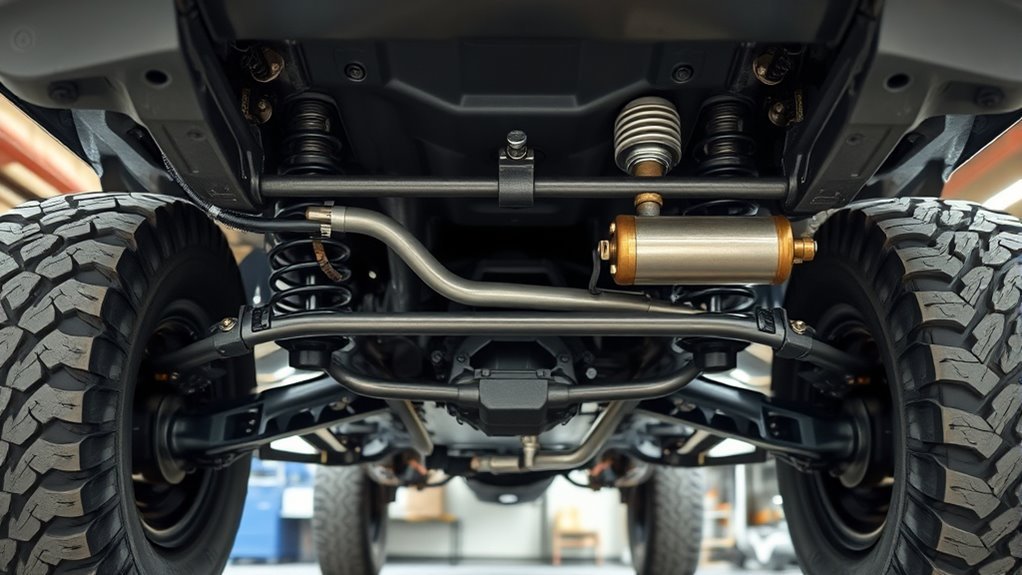
In a KDSS-equipped 4Runner, the passenger-side end link on the front sway bar and the driver-side link on the rear sway bar are replaced by double-acting hydraulic rams connected by steel fluid lines. During cornering, both front and rear cylinders compress on the outside of the turn; fluid cannot flow between them, locking the bars rigid to resist body roll. When one front wheel drops into a rut off-road, the opposing axle displaces fluid through the lines, letting both sway bars articulate freely.
By contrast, according to the Dr. KDSS Gen 6 SDM vs. KDSS suspension guide, SDM eliminates all hydraulic lines and rear sway bar links from the disconnect circuit. Pressing the SDM button uncouples an internal spline clutch inside the front stabilizer bar so the left and right halves rotate independently for maximum wheel travel.
4Runner KDSS vs e‑KDSS: Key Differences
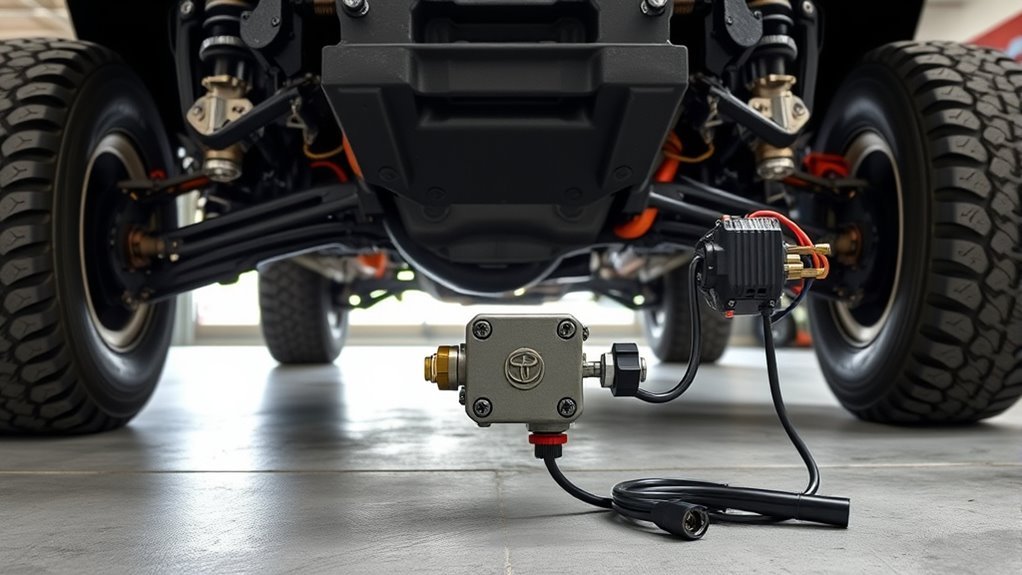
While Toyota moved the 6th-gen 4Runner to SDM, it evolved the hydraulic KDSS architecture into Electronic Kinetic Dynamic Suspension System (e‑KDSS) exclusively for Lexus off-road flagships. Standard on the Lexus GX 550 Overtrail and Overtrail+, e‑KDSS replaces mechanical interconnection between the front and rear axles with independent, ECU-controlled electronic solenoid valves for each stabilizer cylinder.
Because classic 4Runner KDSS cross-links the front and rear cylinders together, it works best when diagonally opposite wheels articulate. If both front wheels hit a washboard or ledge at the same time, classic KDSS stays partially locked. Lexus e‑KDSS solves this by controlling the front and rear hydraulic cylinders separately based on wheel-speed, steering-angle, and G-sensor data, unlocking up to 2.7 inches more wheel articulation than a standard sway bar.
| Feature | Impact |
|---|---|
| Mechanism | KDSS: cross-linked hydraulics; SDM: front electric clutch; e‑KDSS: independent electro-hydraulic valves |
| Control | KDSS: passive mechanical; SDM: manual button (locks above 18 mph); e‑KDSS: ECU software-driven |
| Access & Mod | KDSS (Gen 5) & SDM (Gen 6) on 4Runner; e‑KDSS exclusive to Lexus GX 550 Overtrail / LX |
You will choose based on whether you prefer the mechanical self-sufficiency of 5th-gen KDSS, the straightforward front disconnect of 6th-gen SDM, or the luxury multi-axle computer control of a Lexus Overtrail with e‑KDSS.
Real‑World Benefits: Handling, Roll Control, and Articulation
On the road and trail, KDSS and SDM trade pavement cornering flatness for low-speed trail flexibility in noticeable ways. KDSS shines during daily driving and high-speed mountain switchbacks because its thicker stabilizer bars stay locked until cross-axle articulation occurs. SDM feels like a conventional 4Runner on the street but provides complete front-axle separation when unlocked on the trail.
On pavement, a KDSS-equipped 4Runner corners much flatter than a standard TRD Off-Road or TRD Pro. The oversized hydraulic sway bars suppress body roll and nose dive under braking without requiring stiff coil springs that ruin ride comfort.
Off-road, KDSS automatically releases sway bar tension over staggered moguls and rocks so each tire maintains ground contact and traction. SDM requires you to press the cabin button in 4WD, but once disengaged, the front sway bar offers zero torsional resistance—even when both front wheels hit an obstacle simultaneously.
Failures, Repair Costs, and Common Maintenance Issues
Most KDSS problems stem from road-salt corrosion on the frame-mounted accumulator valve assembly, leaking cylinder seals, or “KDSS lean” where the passenger side sits 0.5 to 1 inch lower than the driver side. Expect minor valve servicing or system bleeding to cost $250 to $600, while replacing a corroded accumulator or leaking hydraulic cylinder assembly typically runs $1,200 to $3,000 at a dealership.
Common Failure Modes
When a KDSS failure occurs, it usually starts with external corrosion around the accumulator housing and shutter valves mounted inside the driver-side frame rail, or worn rubber sway bar end-link bushings. If rust eats through the valve seals or hydraulic lines, fluid pressure drops, triggering the dash KDSS warning light and causing excessive body roll.
Another frequent complaint on 5th-gen 4Runners is KDSS lean, where internal piston tension or unequal hydraulic equalization pulls the front passenger corner downward. Because KDSS is a sealed, pressurized hydraulic circuit charged with nitrogen accumulators, there is no under-hood reservoir to top off; losing fluid pressure requires a Toyota technician with a specialized high-pressure service pump (SST) to bleed and recharge the circuit.
Warning: Never unscrew the KDSS accumulator shutter valves more than 3 full turns when leveling a leaning 4Runner. Backing the tapered screws out past their internal stops releases pressurized hydraulic fluid that can only be refilled using a Toyota dealership SST pump.
Repair Cost Breakdown
Repair expenses for KDSS vary sharply depending on whether you simply need a geometry correction and shutter-valve balance or a full hydraulic assembly replacement. Because the hydraulic lines, cylinders, and accumulator are sold and serviced as specialized assemblies, out-of-warranty hydraulic leaks carry high parts and labor bills.
- Hydraulic cylinder or accumulator replacement: $1,200–$3,000 including OEM parts, specialized SST high-pressure bleeding, and labor.
- Toyota SST system bleed and pressure recharge: $250–$500 at a dealership or Toyota off-road specialist.
- Sway bar link or bushing upgrade: $150–$350 for heavy-duty billet links to cure clunking and binding.
- SDM electric actuator replacement (6th-Gen): $900–$1,600 estimated out of warranty, with no hydraulic lines or fluid bleeding required.
KDSS, Lifts, and Aftermarket Suspension Compatibility
When planning a suspension lift for a KDSS-equipped 4Runner, keep the lift height at or below 2.5 to 3 inches to preserve sway bar link angles and hydraulic cylinder travel. You must choose KDSS-specific coilovers, sway bar drop brackets, and rear track bar correction kits, and avoid long-travel conversions unless you permanently delete the KDSS sway bars.
KDSS Lift Limitations
The primary constraint on KDSS-equipped 4Runners is that the rigid front hydraulic cylinder and thick sway bar were engineered around factory ride height. Lifting the suspension more than 3 inches steepens the sway bar angle, pulls the bar backward toward the front skid plate, and forces the hydraulic piston to operate near the end of its stroke.
- Preserve link geometry: Keep your lift at 2.5 to 3 inches or less to prevent hydraulic cylinder topping-out and bushing bind.
- Watch coilover reservoir clearance: Thick KDSS sway bars sit closer to the lower control arm, requiring KDSS-specific remote-reservoir brackets from brands like King, Fox, or ICON.
- Avoid long-travel kits: Extended lower control arms (+2 inches to +3.5 inches per side) exceed the mechanical reach of the KDSS sway bar and cylinder.
- Correct rear track bar angle: Lifting shifts the rear axle laterally, which strains the rear KDSS cylinder unless corrected with a panhard drop bracket.
Aftermarket Compatibility Options
Because KDSS and SDM both alter front stabilizer bar packaging, your aftermarket suspension components must specifically list compatibility with your trim’s sway bar setup. On 5th-gen KDSS trucks, installing billet sway bar drop spacers, longer adjustable end links, and a bolt-on track bar bracket restores stock operating angles after a 2- to 3-inch lift. On 6th-gen SDM trucks, lifting is simpler because there are no hydraulic lines, though a rear track bar correction bracket and extended front sway bar links are still recommended above 2 inches of lift.
Pro Tip: If you lift a 5th-gen KDSS or 6th-gen SDM 4Runner by 2 to 3 inches, install a bolt-on rear track bar correction bracket alongside front sway bar drop adapters. Centering the axle eliminates lateral bind on the sway bar bushings and prevents false KDSS dashboard fault lights.
Buying Advice: Who Should Pick KDSS, SDM, or None?
Whether you should seek out KDSS, pay extra for SDM, or stick with standard fixed sway bars depends on your daily highway miles and how aggressively you plan to modify your 4Runner. Daily drivers who tackle moderate trails without extreme lifts get the best all-around manners from KDSS or SDM, while dedicated rock crawlers building 3.5-inch or long-travel rigs are better off with standard sway bars.
- KDSS (5th-Gen 2010–2024) — Pick this if you want a used 4Runner that corners flat on twisty highways, articulates automatically on rocky trails, and will stay at a 0- to 2.5-inch lift.
- SDM (6th-Gen 2025–2026) — Pick this on a new TRD Off-Road, TRD Pro, or Trailhunter if you want on-demand front articulation at the push of a button without hydraulic lines restricting future suspension upgrades.
- Standard Sway Bars (Neither) — Pick a non-KDSS/non-SDM 4Runner if you live in a heavy road-salt state, want the lowest long-term maintenance cost, or plan to install a long-travel suspension kit.
- Decision rule — Match your choice to your target lift height: up to 2.5 inches favors KDSS or SDM; 3 inches and above favors SDM or a standard sway bar setup.
Simple Troubleshooting and KDSS‑Compatible Mods
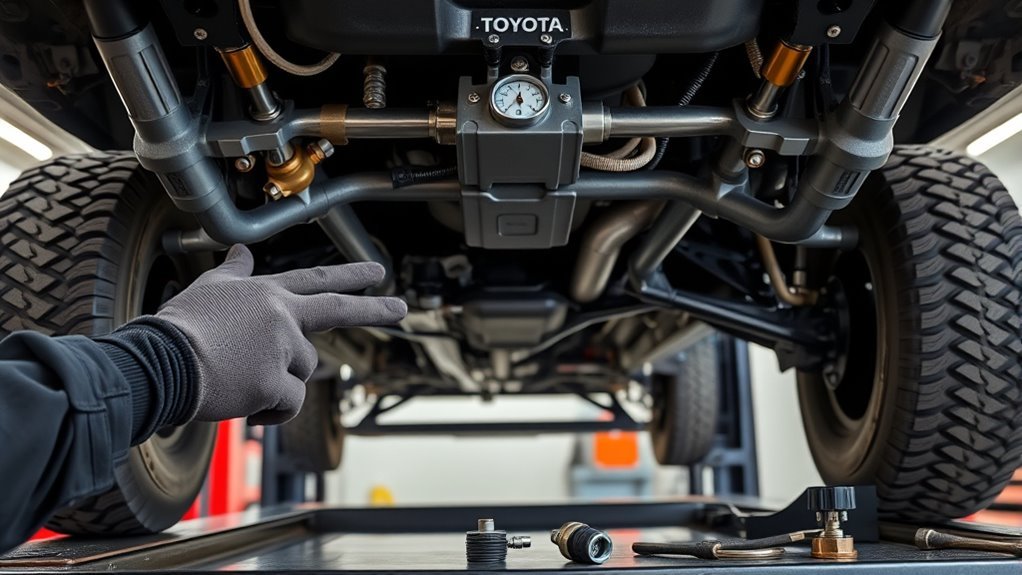
When troubleshooting KDSS problems, begin with a visual inspection of the front and rear hydraulic cylinders, steel lines, and the frame-mounted accumulator housing for wet fluid residue or heavy rust scale. Because low pressure or sensor faults trigger the amber KDSS warning light, always pull chassis diagnostic trouble codes (C-codes) with a Toyota Techstream-capable scanner before replacing parts.
To prevent costly accumulator failure in northern climates, unbolt the skid shield over the driver-side frame accumulator box once a year, flush out trapped mud and road salt, and coat the shutter valves with a lanolin-based corrosion inhibitor like Fluid Film or Woolwax. If your 4Runner develops a passenger-side lean after off-roading or lifting, park the left rear tire on a 3-inch wooden block on level ground, loosen the two 5mm Allen shutter valves no more than 2.5 to 3 turns for 15 minutes to equalize fluid pressure, retighten them securely, and drive off the block.
Frequently Asked Questions
Does KDSS Make a Difference On-Road?
Yes, KDSS makes a dramatic difference on-road by locking oversized front and rear stabilizer bars via hydraulic pressure during turns. This sharply reduces body roll and front-end dive compared with standard 4Runner suspension while keeping straight-line highway ride quality smooth over expansion joints.
Does the 2025 or 2026 Toyota 4Runner Have KDSS?
No, Toyota discontinued hydraulic KDSS on the 6th-generation 4Runner starting in 2025 and replaced it with the electronic Stabilizer with Disconnection Mechanism (SDM). Hydraulic electro-KDSS (e-KDSS) is now reserved for Lexus off-road models such as the GX 550 Overtrail.
Which 6th-Gen 4Runner Trims Come With SDM?
SDM comes standard on the 2025 and 2026 Toyota 4Runner TRD Pro and Trailhunter grades. It is also available as a $1,230 factory option on TRD Off-Road grades, including the 2026 i-FORCE MAX TRD Off-Road Premium, while SR5, TRD Sport, Limited, and Platinum use conventional fixed sway bars.
Can You Install a manual Disconnect Switch on a 5th-Gen KDSS 4Runner?
Yes, aftermarket wiring kits such as the Dr. KDSS Control Harness let 5th-gen 4Runner owners manually open the KDSS accumulator shutter valves from a dashboard switch at any speed. This gives hydraulic KDSS on-demand trail compliance similar to SDM over high-speed washboard roads.
Conclusion
Choose KDSS on a 5th-gen 4Runner if you want automatic, two-axle roll control on the highway and seamless passive articulation on the trail with a mild 2- to 2.5-inch lift. Choose SDM on a 6th-gen 2025–2026 4Runner if you prefer push-button front sway bar disconnection, lower maintenance complexity, and the freedom to install taller suspension lifts. Before buying a used KDSS rig or ordering a new SDM trim, inspect the frame-mounted sway bar hardware and confirm that your planned coilover kit supports your exact stabilizer setup.
Sources
- Toyota USA Newsroom – 2025 Toyota 4Runner: Confirms 6th-generation 4Runner grades, TRD Pro and Trailhunter equipment, and platform specifications.
- Toyota USA Newsroom – 2026 Toyota 4Runner: Verifies Stabilizer Disconnect Mechanism (SDM) availability as an option on 2026 i-FORCE MAX TRD Off-Road Premium models.
- Olathe Toyota Parts Center – How Kinetic Dynamic Suspension Works: Details how KDSS hydraulic cylinders, lines, and accumulators manage front and rear stabilizer bars.
- Dr. KDSS – Gen 6 4Runner SDM vs. KDSS Technical Comparison: Explains front-and-rear KDSS vs. front-only SDM mechanics and post-lift track bar and sway bar link geometry corrections.
- Lexus USA Newsroom – Lexus GX 550 Overtrail E-KDSS: Confirms standard Electronic Kinetic Dynamic Suspension System (E-KDSS) on Lexus GX 550 Overtrail and Overtrail+ grades.