If your Toyota Supra has multiple warning lights appear at the same time, low system voltage is one possible cause, but it is not the only one. A weak or discharged battery, charging-system fault, loose connection, poor ground, wiring problem, or an actual failure in one of the warned systems can produce similar symptoms. The safest approach is to identify the warnings first, then diagnose the electrical system in a logical order.
Quick Answer
Yes, low battery voltage can trigger several Toyota Supra warnings together, especially when the car also cranks slowly, has dim or flickering electronics, or shows a battery-related message. However, do not assume every warning is false. Check urgent red warnings first, then test the battery, charging system, cables, grounds, and stored fault codes.
Last checked: October 5, 2026. Dates and figures were verified against official sources.
At a Glance
| Difficulty | Easy for visual checks; moderate for electrical testing; professional diagnosis may be needed for persistent faults. |
| Tools Needed | Digital multimeter, flashlight, model-specific service information, and a suitable scan tool if warnings remain. |
Identifying Your Warning Lights on the Toyota Supra
Start by identifying every light or message before assuming the battery caused them. Toyota’s warning-light guidance says the charging-system warning indicates a charging-system malfunction, while low oil pressure, ABS, SRS, coolant-temperature, and other warnings describe their own monitored systems.
Low voltage can make several modules report faults at once, but the pattern matters. A cluster of warnings combined with slow cranking, dim displays, flickering lights, or a battery-discharge message makes an electrical supply problem more likely.
Warning: Do not dismiss a red oil-pressure or high-coolant-temperature warning as a battery problem. Stop in a safe place and follow the owner’s manual instructions for that warning. Toyota identifies red warnings as conditions requiring immediate attention.
| Warning or symptom | What to consider first |
|---|---|
| Battery or charging warning | Battery state of charge, charging system, belt, cables, grounds, or battery-management fault. |
| Several warnings plus slow cranking | Low battery voltage or excessive voltage drop is a strong possibility. |
| Warnings appear while driving and electronics dim | Investigate the charging system and major electrical connections promptly. |
| One specific warning stays on | Diagnose that system instead of assuming low voltage caused it. |
Common Electrical Issues and Dashboard Alerts in Your Toyota Supra
The most useful way to approach multiple warnings is to separate a common power-supply problem from several unrelated faults. Battery discharge, charging failure, loose terminals, bad grounds, damaged wiring, or battery-management problems can affect several electronic modules at once.
For the 2020 GR Supra, Toyota issued Tech Tip T-TT-0591-20 explaining that a “replace battery” message can appear when voltage drops too low. Toyota also warned that the car can discharge its battery relatively quickly if its electronic systems are not properly shut down.
- Weak or discharged battery: may cause slow starting, low-voltage messages, flickering electronics, and several stored faults.
- Charging-system problem: may allow the engine to start but gradually reduce available electrical power while driving.
- Loose or corroded connections: can create voltage drops even when the battery itself is good.
- Poor grounds: can cause intermittent or seemingly unrelated electrical symptoms.
- Wiring, fuse, or control-module faults: become more likely when the battery and charging system test correctly but the same warnings return.
A failed voltage regulator can also overcharge the electrical system. The original advice suggested waiting for readings above 18 volts, but that is not an appropriate universal threshold. Charging voltage should stay within the specification for your exact Supra and battery system.
How to Diagnose Battery and Alternator Problems?
Diagnose the problem from easiest to hardest: document the warnings, check for an urgent mechanical warning, inspect connections, test the battery correctly, evaluate charging performance, and scan the vehicle. Avoid replacing a battery or alternator only because several lights appeared together.
- Photograph or write down every warning before shutting the car off or clearing codes.
- Check whether any warning requires you to stop immediately, especially oil-pressure or overheating warnings.
- Inspect visible battery cables, charging connections, grounds, and the accessory-drive belt where applicable.
- Test the battery using the correct procedure for your Supra generation.
- Check charging-system performance and compare the results with model-specific service data.
- Scan all available control modules for stored and current fault codes.
- Repair the confirmed fault, then restart and verify which warnings return.
[Products Worth Considering]

This WEJOWE OBD2 scanner helps drivers quickly identify check engine causes, read and clear trouble codes, and view live vehicle data with built-in DTC lookup. It also includes battery voltage testing, I/M readiness checks, freeze frame retrieval, and support for printing diagnostic reports to help simplify repairs and maintenance. Designed for most OBDII vehicles since 1996, it offers an easy-to-use solution for DIY car diagnostics.

The ANCEL BA101 helps diagnose 12V batteries quickly with clear readings for battery health, charge level, voltage, CCA, cranking, and charging system performance. Designed for a wide range of vehicles and battery types, it offers easy-to-read results, reliable clamp connections, and built-in protection to make testing safer and more convenient.

This automotive test light combines a bright LED voltage display with quick polarity indication for fast, accurate circuit checks in a wide range of vehicle systems. It helps diagnose battery, charging, lighting, and fuse issues with a sharp stainless probe, long spring wire, and easy-to-use alligator clip for efficient troubleshooting.
Battery Voltage Checks
A multimeter can tell you whether system voltage is obviously low, but one voltage reading cannot fully determine battery health. A battery can show reasonable open-circuit voltage yet fail when asked to supply high current, so a proper battery test is more useful when symptoms persist.
Do not treat 13.5–14.4 volts with the engine running as a universal Supra pass/fail specification. Older Supra charging systems and the MkV GR Supra use different hardware and diagnostic procedures, so compare your readings with service information for the exact model year and engine.
On the 2020 GR Supra, Toyota’s battery-testing procedure specifically says the battery is in the rear of the vehicle. For accurate testing, Toyota instructs technicians to connect the positive test clamp directly to the battery’s positive post and the negative clamp to the ground wire after the Intelligent Battery Sensor, or IBS. Connecting the tester directly to the negative post or before the IBS can set fault codes or damage the sensor.
Alternator Function Tests
A charging-system test should show whether the alternator or generator can support the vehicle while maintaining the battery. Look for abnormal voltage behavior, charging warnings, dimming electronics, or a voltage drop that becomes more obvious as electrical loads increase.
The original troubleshooting method also suggested measuring AC voltage at the battery and treating a reading above 0.5 volts AC as a possible sign of alternator diode trouble. That can be a useful clue, but AC-ripple limits depend on the test method and vehicle. Confirm a suspected diode problem with the correct service procedure or a bench test.
If the alternator has already been replaced and the problem remains, inspect the regulator connection, power cable, grounds, battery condition, fuses, and stored fault codes before replacing more parts.
Connection Inspections and Repairs
Bad connections can mimic a failing battery or alternator because resistance reduces the voltage available to control modules. Inspect for looseness, corrosion, damaged cable insulation, overheated terminals, and broken wiring before condemning expensive components.
Generation matters here. The original troubleshooting guidance refers to a 15 amp engine fuse behind the driver’s side kick panel, an alternator regulator plug, and other layouts found in older Supra troubleshooting information. Do not assume those locations apply to a MkV GR Supra; confirm them against the wiring diagram for your exact year.
Likewise, a fuse that looks intact can still have a connection problem. If visual checks do not reveal the fault, use an appropriate voltage-drop or continuity test rather than replacing fuses at random.
Why Ground Connections Matter in Your Supra’s Electrical System
Ground connections complete the electrical path back to the battery. If a ground becomes loose, corroded, damaged, or resistive, several systems can see unstable voltage even though the battery and alternator themselves are capable of working normally.
[Products Worth Considering]

This plug-and-play OBD2 scanner helps drivers quickly read and clear engine error codes while providing live data, freeze frame information, I/M readiness, and MIL status for more confident troubleshooting. It adds a built-in voltage test and clear status indicators to support electrical checks and faster diagnostics, making it a practical choice for home users, car enthusiasts, and repair professionals. Compatible with most OBDII vehicles since 1996 and designed with an easy-to-use interface, it offers broad coverage and simple operation in one compact tool.

The TOPDON BT100 helps you quickly check the health and charge status of 12V lead-acid batteries with clear analytical results, including state of health, state of charge, voltage, and cranking performance. It supports a wide range of battery types and vehicles, making it a practical tool for diagnosing starting and charging issues at home or in the shop. Compact and easy to use, it provides fast, reliable testing without needing to charge the device first.

The ANCEL AD410 PRO combines engine diagnostics and 12V battery testing in one easy-to-use tool, helping you read and clear check engine codes while checking battery health, cranking, and charging performance. It also provides live data, freeze frame details, and I/M readiness checks to help you diagnose issues faster and prepare for emissions testing. With plug-and-play operation, a clear screen, and broad vehicle compatibility, it is a practical solution for home mechanics and everyday drivers.
Importance of Solid Grounding
Good grounds help the starter, charging system, engine controls, lighting, sensors, and dashboard modules operate from a stable electrical supply. A weak ground can create intermittent symptoms that change with vibration, engine load, temperature, or electrical demand.
- Voltage stability: good grounds reduce unwanted voltage drops.
- Reliable starting and charging: high-current components depend on low-resistance connections.
- Accurate diagnostics: fixing a bad ground first can prevent misleading fault codes and unnecessary parts replacement.
Common Ground Connection Issues
Look for white or green corrosion, a terminal that can move by hand, damaged ground straps, overheated connection points, or repairs that were not tightened correctly. A connection can also look clean outside while having excessive resistance under load.
The original article specifically referenced an earth strap under the intake manifold. Treat that as a generation-specific older-Supra check rather than a universal location. On a different Supra generation, identify engine-to-body and battery grounds from the correct wiring or service information before disassembling anything.
Diagnosing Grounding Problems Efficiently
A visual inspection is the first step, but a voltage-drop test under load is more useful for finding resistance that cannot be seen. Compare the ground side and positive side of the circuit while the affected component is operating.
- Check battery and chassis ground connections for looseness or corrosion.
- Inspect engine-to-body ground straps and their mounting points.
- Look for voltage instability when electrical loads are switched on.
- Repair damaged cables or terminals instead of simply cleaning a connection that is physically failing.
How to Prevent Electrical Problems in Your Toyota Supra
Good battery care matters most on a Supra that sits for long periods, makes frequent short trips, or has added electrical equipment. Keep connections clean, avoid unnecessary discharge, and use charging equipment that matches the battery type and the manufacturer’s procedure.
Toyota’s GR Supra service information identifies the MkV battery as an AGM type. A Toyota Supra reprogramming bulletin says charging equipment should be connected to the under-hood charging terminals rather than directly to the battery during that procedure, and specifies that charging voltage must not exceed 14.6 volts.
A later 2022 Supra pre-delivery bulletin gives a 14.8-volt maximum at room temperature and prohibits rapid charging during that procedure. The difference is a good reason not to use one generic charging-voltage target for every model year and service operation.
Pro Tip: If you use a maintainer such as the CTEK MXS 5.0 mentioned in the original article, confirm that its selected mode is suitable for the battery and that you connect it at the points specified for your Supra. Do not use an alternator upgrade as a substitute for diagnosing the real fault.
For early MkV cars, Toyota’s 2020 tech tip also advised locking the vehicle with the key fob after exiting so the electronics can shut down correctly. When the original battery was retained after a low-voltage “replace battery” message, Toyota instructed technicians to re-register its serial number through the diagnostic system.
For an older modified Supra with unusually high electrical demand, a higher-output alternator may sometimes be appropriate. However, the original suggestion to install a “robust MKIII alternator” is not a universal preventive fix; alternator choice must match the generation, engine, wiring, and electrical load.
[Products Worth Considering]

This automotive circuit tester checks low-voltage DC systems from 3-65V, making it useful for diagnosing headlights, taillights, fuses, sockets, and other vehicle wiring issues. The digital backlit display provides clear voltage readings with fine accuracy, while the bidirectional polarity indicator helps you test from either ground or positive. Built with a durable probe, insulated tip, and extra-long spring wire, it is designed for dependable everyday use in automotive and household electrical work.

BlueDriver Pro turns your phone or tablet into a powerful vehicle diagnostic scanner with wireless Bluetooth connectivity and no subscription fees. It reads and clears enhanced trouble codes for systems like ABS, SRS, Airbag, TPMS, and Transmission, while also providing technician-verified repair reports, live data, freeze frame views, smog readiness checks, and Mode 6 test results. Built for broad coverage on gas vehicles sold in North America, it offers professional-grade diagnostics with easy setup and 24/7 North American support.
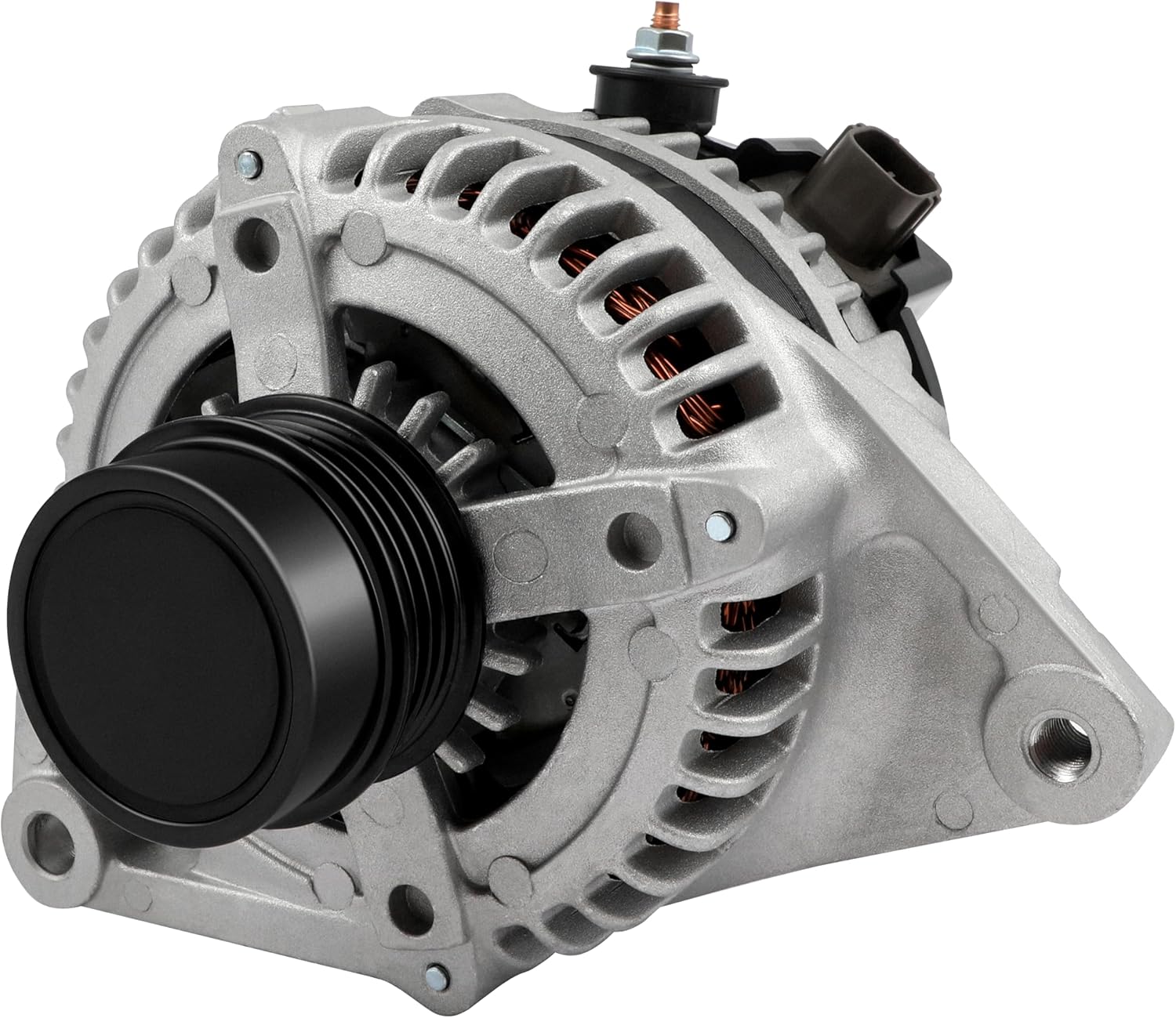
This high output alternator is designed to fit select Toyota, Scion, and RAV4 2.5L applications, delivering reliable charging performance for everyday driving. Built with a 12-volt, 100-amp design and precision-engineered components, it helps support battery recharge, stable electrical output, and consistent operation when your vehicle shows signs of charging issues.
Community Troubleshooting Tips for Supra Electrical Issues
Older Supra owners have long associated a sudden cluster of warning lamps with loss of charging output, poor grounds, or alternator faults. Those clues are useful, but they should be combined with factory wiring information because the electrical architecture changed substantially across Supra generations.
Multiple warning lights are a symptom, not a diagnosis. Confirm the power-supply problem before replacing the battery, alternator, sensors, or control modules.
- Check whether the warning cluster appears only during starting, at idle, under electrical load, or continuously while driving.
- Inspect battery terminals and grounds for looseness or corrosion.
- On older models, verify the referenced 15 amp engine fuse and alternator-regulator wiring only if your model-year diagram shows them in those locations.
- If AC ripple testing suggests a failed alternator diode, confirm the result with a model-appropriate charging-system test or bench test.
- After repairs, scan the vehicle again. A warning that immediately returns may represent a separate system fault rather than leftover low-voltage history.
When to Consult a Professional for Electrical Problems?
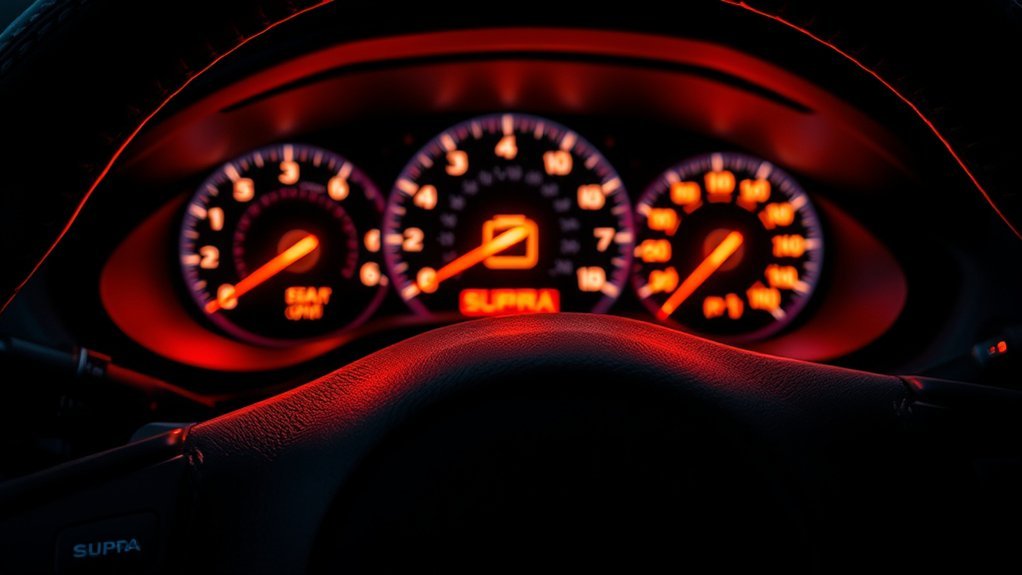
Professional diagnosis makes sense when the same warnings return after the battery is fully charged and properly tested, when charging output is unstable, or when wiring and grounds look normal but multiple modules continue to report faults. A technician can test the system under load and read faults from modules that a basic code reader may miss.
Get help promptly if the car stalls, repeatedly fails to start, has overheated cables, develops a burning smell, or shows a red oil-pressure or overheating warning. Also seek professional diagnosis when a new battery or alternator does not solve the problem; repeated parts replacement is usually more expensive than finding the actual circuit fault.
Key Takeaways
- Several Supra warnings appearing together can result from low system voltage, but each safety-critical warning still needs to be taken seriously.
- Do not diagnose every Supra generation with one fixed running-voltage number; use the correct service procedure for the year and charging system.
- MkV GR Supra battery testing and charging use specific locations because the vehicle has an Intelligent Battery Sensor and AGM battery.
- If the battery and alternator test correctly, inspect grounds, cables, wiring, fuses, and stored module faults before replacing more parts.
Frequently Asked Questions
Can a Bad Battery Cause Multiple Warning Lights?
Yes, a weak or discharged battery can cause multiple warning lights when system voltage becomes too low for the vehicle’s electronic modules to operate normally. However, replacing the battery should not be the automatic first step. Test its condition and check the charging system, connections, and stored faults.
What Does It Mean When Multiple Warning Lights Come On?
Multiple warning lights can mean one electrical problem is affecting several systems, or several systems have recorded separate faults. Start by identifying any urgent red warnings, then inspect and test the battery, charging system, cables, grounds, and fault codes before deciding which component has failed.
Why Did All of My Dash Lights Come on at Once?
A sudden group of dashboard lights can appear when battery voltage falls, charging output is lost, or a major electrical connection becomes unstable. It can also happen when the engine stops and several normal engine-off warnings illuminate. Record the exact sequence and diagnose the underlying cause.
Can Warning Lights Randomly Pop Up Because of the Battery?
Yes, unstable or low battery voltage can cause intermittent warnings, especially during starting or after the vehicle has been discharged. Random warnings can also come from poor grounds, loose terminals, damaged wiring, or individual system faults, so voltage alone should not be used as the final diagnosis.
Can You Drive a Supra With the Battery or Charging Warning On?
You should not assume it is safe to continue driving. A charging-system fault can eventually leave the vehicle without enough electrical power to keep running. If the warning appears while driving, reduce unnecessary electrical loads, move to a safe location, and have the charging system diagnosed.
Does a GR Supra Battery Need Special Testing or Registration?
Yes, MkV GR Supra battery service has model-specific procedures because the system uses an Intelligent Battery Sensor. Toyota’s service guidance specifies particular battery-testing connection points, and its 2020 low-voltage guidance instructs technicians to re-register the original battery serial number when that battery is retained after charging.
Conclusion
Multiple warning lights on a Toyota Supra can come from low voltage, but the battery is only one part of the diagnosis. Identify urgent warnings first, then test the battery correctly, verify charging performance, inspect connections and grounds, and read stored fault codes. Most importantly, use procedures for your exact Supra generation instead of applying an older model’s electrical layout to a MkV GR Supra.
Sources
- Toyota Dashboard Symbols & Warning Lights: Warning-light meanings and urgency.
- Toyota Tech Tip T-TT-0556-19: 2020 Supra battery-testing connection points and Intelligent Battery Sensor precautions.
- Toyota Tech Tip T-TT-0591-20: 2020 Supra low-voltage “replace battery” message, shutdown guidance, and battery re-registration.
- Toyota T-SB-0151-19 Supra Reprogramming Guide: AGM battery information, charging-terminal location, and charging-voltage limit for the procedure.
- Toyota T-SB-0052-21 2022 Supra Pre-Delivery Service: Battery state-of-charge procedure, under-hood charging posts, and charging precautions.