Last updated: September 16, 2026.
Quick answer: For a 2020–2026 GR Supra, the safest DIY engine-bay cleaning method is to work on a cool, switched-off car, remove dry debris first, and use the least moisture necessary. Start with a vacuum, soft brush, and damp microfiber towels. For heavier grime, protect the air intake and exposed electrical parts, use a cleaner labeled safe for automotive paint, aluminum, plastic, and rubber, and rinse only with a pump sprayer or gentle hose flow. Toyota warns that high-pressure cleaning can damage vehicle components; because Toyota does not provide a DIY pressure-washing procedure for the engine compartment, this guide takes the more conservative approach and does not recommend using a pressure washer under the hood.
This guide focuses on the 2020–2026 GR Supra. Older A70 and A80 models, modified cars, vehicles with exposed aftermarket intakes, and cars with added wiring can have different water-sensitive areas and require additional precautions. This is a documentation-led safety procedure based on GR Supra owner guidance and product-label directions; it does not claim hands-on testing of every cleaner, modification, or intake configuration.
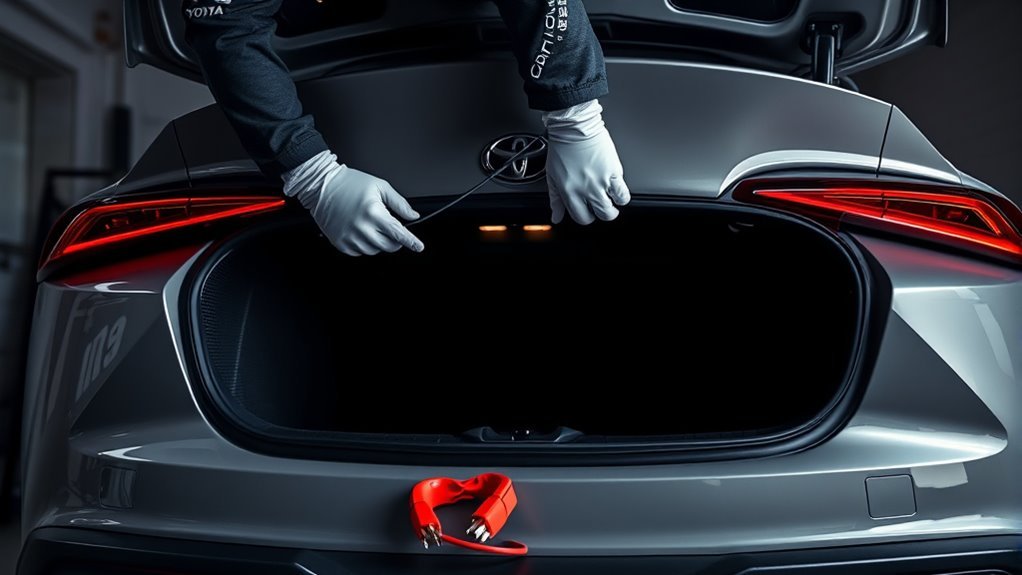
Supra-specific safety note: Toyota’s GR Supra owner information warns that certain engine-compartment components, including the radiator fan, can move even when the vehicle is switched off. The positive starting-aid terminal and the corresponding negative body connection under the hood are also service/jump-start points rather than components that need to be disconnected for a low-moisture cosmetic clean. Review the Toyota GR Supra owner information for your exact model year before performing work beyond routine cleaning.
Essential Safety Measures Before Cleaning Your Supra Engine Bay
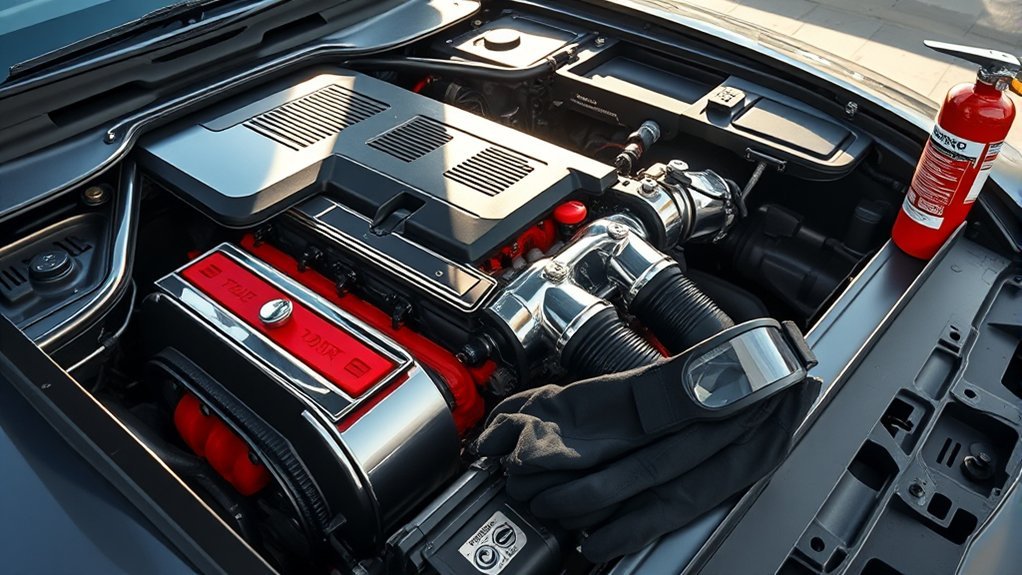
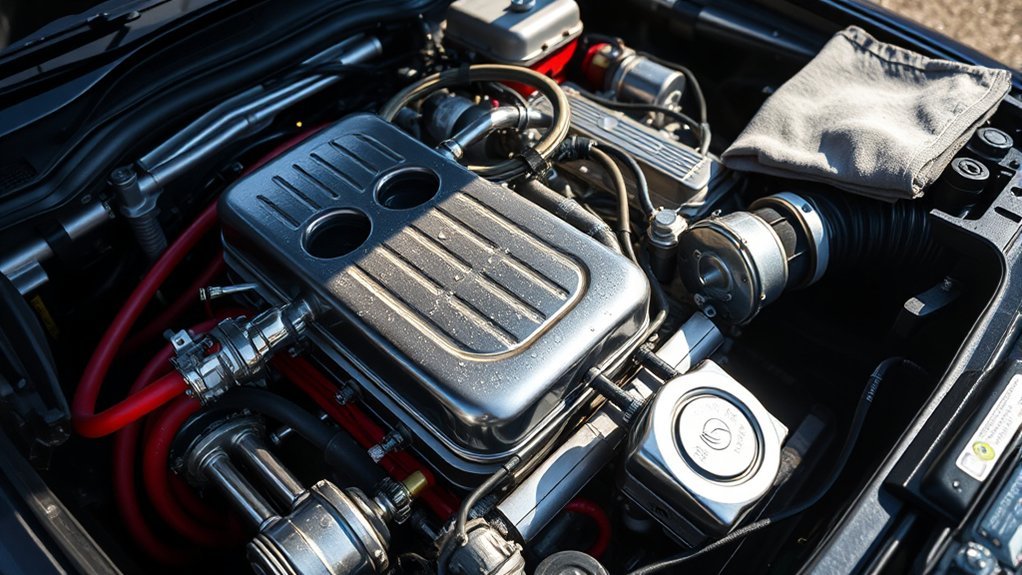
Park the Supra in the shade on a level surface, set the parking brake, switch the ignition fully off, and keep the key away from the vehicle. Let the engine bay cool before touching components or applying cleaner. Toyota warns that moving parts such as the radiator fan can operate even when the vehicle is switched off, so keep your hands, clothing, brushes, and towels away from fans, belts, and pulleys.
Battery isolation is not part of the low-moisture cleaning method in this guide. The positive starting-aid terminal and negative body connection under the hood are intended for starting-aid and related service procedures. If repair-level work requires the vehicle electrical system to be isolated, follow the official procedure for your exact model year or have a qualified technician perform it.
- Do not clean a running engine. Fans, belts, pulleys, and hot surfaces can cause injury.
- Do not spray a hot engine. Heat can make cleaner dry too quickly and increases the risk of burns.
- Do not start with water. Remove loose leaves, grit, and dust with a vacuum or soft brush first.
- Inspect before cleaning. Stop if you find damaged wiring, cracked connectors, missing covers, loose caps, an exposed intake opening, or an active fluid leak.
- Be more conservative with modifications. If the bay contains exposed aftermarket wiring, an open-element intake, damaged connector seals, or missing factory covers, default to hand cleaning until those areas can be protected.
- Control runoff. Do not rinse concentrated cleaner or oily residue into a storm drain.
[Products Worth Considering]

This A-Premium engine air filter is designed to help maintain clean airflow for compatible Lexus and Toyota vehicles, supporting better engine performance and efficiency. It uses fine filtration media to capture debris while minimizing airflow restriction, making it a practical replacement for routine maintenance. With fitment for multiple popular models and a convenient boxed single-pack design, it offers a straightforward solution for keeping your engine protected.

The HI-TECH Vortex II Air Cleaning Gun delivers powerful deep-cleaning action for automotive interiors, exteriors, and hard-to-reach areas. Driven by compressed air, it uses a pulsating vortex motion to lift dust, dirt, grease, and grime from carpets, upholstery, dashboards, and engine bays, while its wet and dry cleaning modes help speed up detailing workflows. Built for demanding use, it is a versatile tool for professional shops and home garage cleaning projects.

This 4-piece automotive electrical disconnect pliers set helps safely remove stubborn push-tab connectors from mass air flow sensors, fuel injectors, and ignition coils without damaging delicate tabs. It includes straight and 60-degree angled pliers, a hose clamp plier, and a dual-ended terminal pin remover to handle a wide range of under-hood wiring tasks. Organized in a rugged storage case, it is built for mechanics and DIYers who need reliable access to tight engine bay spaces.
What Should You Cover Before Cleaning a Supra Engine Bay?
Protect openings and exposed electrical parts before applying cleaner or rinse water. A sealed factory airbox is less vulnerable than an exposed aftermarket filter, but neither should receive a direct spray. Use plastic bags, plastic sheeting, or dry microfiber towels as splash shields, and secure them without pulling on wires or trapping water underneath.
| Component | Protection Method | Notes |
|---|---|---|
| Air intake or exposed filter | Plastic bag or sealed cover | Prevents cleaner or water from entering the intake |
| Electrical connectors | Shield from direct spray | Do not force water past connector seals |
| Fuse and relay boxes | Plastic splash cover | Confirm the factory lid is fully latched first |
| Alternator and visible modules | Plastic bag or towel shield | Avoid direct cleaner and rinse water |
| Starting-aid terminals | Keep clean and dry | Do not disconnect them for routine cosmetic cleaning |
| Belts and pulleys | Avoid cleaner and dressing | Residue can cause slipping or contamination |
| Fluid filler caps | Confirm each cap is closed | Prevents water or cleaner from contaminating fluids |
| Engine covers | Remove only if easily released | Do not force clips or expose parts you cannot protect |
Point the openings of protective bags downward so they do not collect rinse water. Remove every bag, towel, and piece of tape before starting the vehicle.
[Products Worth Considering]

This silicone vacuum hose kit provides a versatile selection of tubing sizes and connector pieces for automotive, marine, and industrial routing tasks. Built for heat resistance and durability, it supports air and water applications in engine bays, custom intake setups, turbo piping, and cooling system projects. The included size variety makes it a practical choice for repairs, fabrication, and DIY maintenance work.

This cordless sub-compact ratchet delivers strong torque and fast performance in a compact design built for tight spaces and engine bays. Its low-profile head, variable-speed trigger, integrated LED light, and fuel gauge help improve control, visibility, and convenience during repair and maintenance work. Designed for mechanics and technicians, it offers durable, portable power without the need for an air hose.

This professional-grade RTV silicone squeezer is designed to make automotive repairs, HVAC sealing, and custom modifications easier and more efficient. Its heavy-duty steel frame helps reduce hand fatigue while delivering smooth, even extrusion for cleaner results and less wasted sealant. The one-hand lever design and upgraded chain lock make it a reliable choice for tight engine bays and demanding shop use.
What Supplies Do You Need to Clean a Supra Engine Bay?
Gather the supplies before applying any product. Stopping midway can allow cleaner to dry on a surface.
- Vacuum with a soft nozzle or compressed air used cautiously
- Soft detailing brushes in two or more sizes
- Several clean microfiber towels
- Plastic bags or plastic sheeting and low-tack tape
- A pH-neutral car shampoo or engine-bay cleaner labeled safe for paint, aluminum, plastic, and rubber
- A pump sprayer, spray bottle, or hose with a gentle flow setting
- Gloves and eye protection
- A container or absorbent material for capturing oily runoff
Do not use brake cleaner as a general engine-bay spray. Even non-chlorinated formulas may damage paint, plastic, rubber, or other nearby materials. Avoid strong acids, caustic degreasers, tire shine, solvent-heavy dressings, and any product whose label does not identify the surfaces on which it is safe.
Before applying cleaner, inspect for loose fluid caps, damaged wiring, cracked connector seals, missing fuse-box covers, an exposed filter, aftermarket electrical equipment, or an active oil or coolant leak. Repair or isolate the problem first. Cleaning should not be used to hide a leak that needs diagnosis.
[Products Worth Considering]

This 16-piece hose clamp pliers set provides a complete solution for removing and installing a wide range of automotive hose clamps. It is designed to reach tight engine spaces and handle spring, flat band, and ring-type clamps on radiator, coolant, fuel, and vacuum hoses. Built from durable heat-treated steel and organized in a carrying case, it helps simplify repairs for cars, trucks, motorcycles, and DIY maintenance.

This engine water pump kit is designed to help maintain reliable cooling performance across a wide range of compatible Toyota, Lexus, Scion, and Pontiac vehicles. Built with aluminum and tested for leak-free operation, it offers a direct replacement solution that supports engine efficiency and long-term service life. The kit includes a professional water pump and gasket for a convenient installation-ready repair.

This complete Deutsch connector kit provides a versatile assortment of sealed DT-style connectors for reliable automotive and industrial wiring repairs. Built with waterproof, dustproof, and corrosion-resistant materials, it helps maintain secure electrical connections in harsh, high-vibration environments. The included pin removal tool, contacts, seal plugs, and storage case make installation, servicing, and organization simple and efficient.
How Much Water Should You Use in a Supra Engine Bay?
Use the least-aggressive method that will remove the contamination. Most regularly maintained Supra engine bays do not need to be soaked. If dry brushing or a damp microfiber towel can do the job, there is little reason to introduce free-flowing water.
| Engine-Bay Condition | Recommended Method | Reason |
|---|---|---|
| Light dust and fingerprints | Soft brush, vacuum, and damp microfiber | Uses almost no free water |
| Localized oily film | Spot-clean one small area | Limits chemical and moisture exposure |
| Mud or road-salt residue | Protected low-pressure rinse | Removes contamination without a concentrated jet |
| Heavy oil or coolant contamination | Diagnose and repair the leak first | Prevents repeated buildup and helps preserve evidence of the leak source |
How to Clean a Supra Engine Bay Safely: Step by Step
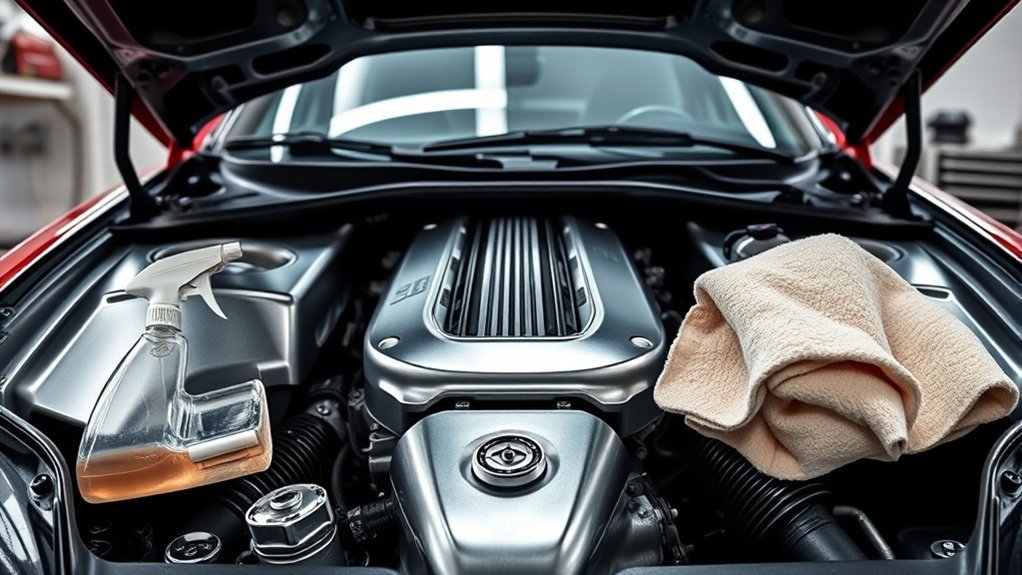
- Cool and secure the car. Park in the shade, set the parking brake, switch the ignition fully off, keep the key away from the vehicle, and let the engine bay cool.
- Remove loose debris. Vacuum or brush away leaves, sand, and grit from the cowl, engine covers, hood edges, and corners. Do not push debris into openings.
- Inspect and protect. Confirm that filler caps and fuse-box lids are closed. Cover the intake opening or exposed filter, alternator, visible modules, and vulnerable connectors. Give aftermarket wiring and intake parts extra attention.
- Clean the underside of the hood separately. Apply cleaner to a towel or brush rather than spraying toward the engine bay. Avoid saturating hood insulation.
- Work in small sections. Apply automotive-safe cleaner to the brush or surface according to its label. Follow the product’s stated dwell time and do not let it dry.
- Agitate gently. Use a soft brush around textured plastic, brackets, covers, and painted surfaces. Do not scrub labels, damaged wiring, connector seals, belts, or pulleys.
- Remove the residue. For a lightly dirty bay, wipe with damp microfiber towels. For mud or road salt that requires rinsing, use a pump sprayer or gentle hose flow and work from the top down. Do not aim water into the intake, fuse boxes, electrical connectors, alternator vents, plug wells, or under the edges of control modules.
- Dry immediately. Blot standing water with clean towels. If using compressed air, use low pressure cautiously around crevices and connectors and keep the nozzle far enough away that it cannot drive water deeper into a connection.
- Remove every temporary cover. Take off all bags, towels, tape, and temporary plugs. Check that no plastic or cloth is resting near a belt, pulley, fan, or hot component.
- Inspect before startup. Look for pooled water, loose connectors, displaced hoses, an obstructed intake, or cleaner residue. Start the vehicle only when the bay is visibly dry and everything has been returned to its normal position.
After startup, let the engine idle while you watch for warning messages, rough running, misfiring, unusual noises, or a charging-system warning. Switch the engine off if any problem appears and do not drive until the cause has been identified.
If you believe water entered an open intake or intake tube rather than merely landing on an exterior surface, do not crank the engine to “see if it starts.” Water inside the intake path requires inspection before the engine is turned over.
How to Keep Your Supra Engine Bay Clean
Use condition rather than a fixed calendar interval. A garaged street car may need only an occasional damp-towel wipe. Clean sooner after exposure to road salt, mud, heavy dust, leaves, animal nesting material, or fluid residue. Toyota’s vehicle-care guidance also calls for more frequent washing in winter because heavy contamination and road salt can damage the vehicle. Address an oil, coolant, or washer-fluid leak before repeating cosmetic cleaning.
- Wipe light dust early: A damp microfiber towel prevents loose contamination from becoming a heavy cleaning job.
- Remove leaves from the cowl: Debris can hold moisture and obstruct drains.
- Inspect while cleaning: Look for cracked hoses, damaged loom, loose caps, fresh stains, or missing clips.
- Avoid greasy dressings: Heavy shine products can attract dust and should never reach belts, pulleys, connectors, or hot exhaust parts.
For an optional satin finish, apply a thin layer of a water-based dressing only to clean, dry plastic and rubber trim. CARPRO lists PERL engine-bay dilution at 1:1 to 1:3. Apply it to a towel or applicator, wipe it evenly, remove excess, and keep it away from belts, pulleys, electrical contacts, pedals, and hot metal.
Frequently Asked Questions
Can I Use a Pressure Washer on a Supra Engine Bay?
The conservative DIY answer is no. Toyota warns that excessive pressure or temperature from high-pressure cleaning can damage vehicle components, but it does not provide a DIY pressure-washing procedure specifically for the Supra engine compartment. A concentrated jet can also force water past connector seals or into an exposed intake, fuse box, or alternator opening. Use damp towels for light dirt and a pump sprayer or gentle hose flow only when contamination requires rinsing.
Should I Disconnect the Battery Before Cleaning?
Battery disconnection is not part of the low-moisture cleaning method in this guide. The positive starting-aid terminal and corresponding negative body connection under the hood are intended for starting-aid and related service procedures. For routine cosmetic cleaning, keep these areas dry and use the official model-year procedure if repair work requires electrical isolation.
What Should I Do if Water Gets Into the Engine?
If water only reached the outside of a connector or component, keep the ignition off and dry the area before starting. If water may have entered an open intake, intake tube, spark-plug well, or combustion chamber, do not crank the engine. Arrange professional inspection or towing if necessary.
How Often Should I Clean the Engine Bay?
There is no universal six-month requirement. Clean when dust, road salt, mud, leaves, or fluid residue accumulates. A garaged car may need only occasional wipe-downs, while a vehicle driven on salted or dusty roads may need attention sooner.
Which Products Should I Avoid?
Avoid using brake cleaner as a general spray, strong acids, caustic degreasers, solvent-heavy dressings, and products not labeled safe for automotive paint, aluminum, plastic, and rubber. Never let cleaner dry on a surface, and do not apply dressing to belts, pulleys, electrical contacts, or hot parts.
Is It Safe to Drive Immediately After Cleaning?
Drive only after all temporary covers have been removed, visible water has been dried, the intake is open and correctly assembled, and the engine starts and idles normally without a warning. Switch the engine off if it runs roughly, misfires, makes an unusual noise, or displays an electrical or charging-system warning.
Conclusion
Use the least water necessary when cleaning a 2020–2026 GR Supra engine bay. Work on a cool, fully switched-off vehicle, protect the intake and exposed electrical parts, choose a surface-compatible cleaner, and avoid concentrated high-pressure spray under the hood. Dry the bay, remove every temporary cover, and inspect the vehicle before startup. If water may have entered the intake, do not crank the engine; if the engine runs roughly or a warning appears after cleaning, switch it off and identify the cause before driving.