You should plan a full transmission fluid change for your 4Runner at about 100,000 miles, with partial drain‑and‑fills (~3.5 qt) every 30,000 miles under normal use. If you tow, off‑road, or run in high heat, shorten intervals to 10,000–30,000 miles and inspect fluid color and smell frequently. Use Toyota WS or a compatible ATF (Red Line D6 noted), check levels on level ground, and consider dealer service for warranty or complex issues—more specifics follow.
Recommended 4Runner Transmission Fluid Intervals
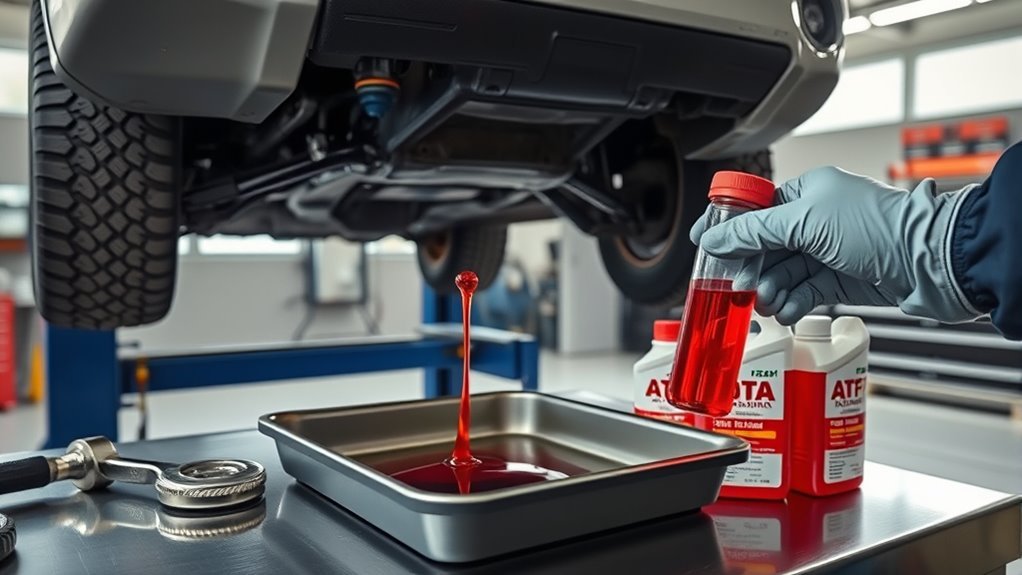
For most 4Runner owners, Toyota’s guideline to change transmission fluid by 100,000 miles under normal driving is a baseline, but you should perform partial drain-and-fill services more frequently—about 3.5 quarts every 30,000 miles—to maintain fluid quality and shift performance; many users shorten that to 10,000–15,000 miles, especially under heavy load or severe conditions, recognizing that small amounts of old fluid remain after each service.
You’ll treat intervals as a proactive metric: the 100,000-mile recommendation is a maximum, not ideal practice. Schedule 3.5-quart drain-and-fills to control contamination, preserve additive balance, and extend fluid longevity. Expect residual original fluid after each service; that’s why repeat intervals matter. Beware maintenance myths that full factory intervals suffice for all use cases—those simplify complex wear dynamics. You’ll monitor condition via color and odor checks, track mileage rigorously, and adopt the shorter, modular service cadence if you value reliable shifts and long-term transmission health.
When to Shorten Intervals: Towing, Off‑Road, and Heat
If you frequently tow heavy loads, you should shorten your transmission fluid change interval because higher loads raise fluid temperature and accelerate degradation. Operating in high ambient heat or sustained towing in hot climates likewise requires more frequent fluid checks and changes. Heavy off‑road use that increases contamination and heat buildup also justifies a proactive 30,000‑mile (or sooner) schedule versus standard intervals.
Towing Frequency Impacts
Because towing and frequent off‑road use raise transmission temperatures and mechanical load, you should shorten fluid-change intervals to preserve fluid lubricity and protect components. You’ll cut intervals to about 30,000 miles under sustained heavy towing, severe off‑road duty, or regular hot‑climate operation. Apply sound towing techniques and prioritize fluid monitoring to spot degradation early.
- Inspect fluid color and smell after long tows; dark or burnt fluid signals accelerated wear.
- Service every 30,000 miles if you tow often, carry heavy loads, or drive aggressively off‑road.
- Monitor transmission temperatures when available; sustained high readings demand earlier changes.
- Keep a log of towing frequency, trailer weight, and service dates to guide proactive maintenance.
Shorter intervals preserve gears, clutches, and valve bodies—protect your freedom to go farther.
High Heat Exposure
When you expose your 4Runner’s transmission to sustained high heat—through frequent towing, heavy loads, or aggressive off‑road use—fluid chemistry breaks down faster and service intervals should be shortened accordingly. You’ll want to target a 30,000‑mile interval for regular towing/heavy loading; increased thermal stress accelerates additive depletion, raising risk of transmission overheating and reduced lubrication. Off‑road exposures that raise operating temperatures similarly justify earlier changes to limit fluid contamination and wear. Inspect fluid color and viscosity after hot duty: dark, burnt, or gritty fluid demands immediate service. Consult your owner’s manual to align shortened intervals with manufacturer limits. Act proactively—shortening intervals preserves component life, maintains shift quality, and frees you from avoidable drivetrain failure.
Heavy Off‑Road Use
Although the 4Runner’s transmission is built for rugged use, heavy off‑road driving and frequent towing raise operating temperatures and contaminate fluid faster, so you should shorten service intervals accordingly. You’ll prevent transmission overheating and limit fluid degradation by adopting stricter schedules and inspections. For typical severe use follow these targets:
- Off‑road, muddy or rock‑crawling duty: change every 30,000 miles to remove contaminants and heat‑stressed fluid.
- Regular towing or hauling: change every 60,000 miles because sustained load elevates temperatures.
- Severe combined use (extreme towing + off‑road): inspect fluid color and smell every 5,000 miles; change earlier if dark or burnt.
- Watch for delayed shifts, slipping, or unusual noises; these are early indicators of compromised fluid or overheating.
Act decisively—shorter intervals preserve performance and freedom to push your vehicle.
Signs to Act: How to Check Fluid Level and Condition
Curious how to tell if your 4Runner’s transmission needs attention? Inspecting fluid level and condition is direct work toward vehicle freedom. Park on level ground, start the engine, pull the dipstick, and check level against marks. Note fluid discoloration signs: ideal is pinkish-red; dark or burnt fluid signals contamination. Low level requires Toyota WS ATF to prevent damage. Watch transmission performance indicators — delayed shifts, gear slippage — and act immediately.
| Check | Normal | Problem |
|---|---|---|
| Color | Pinkish-red | Dark/burnt (contaminated) |
| Level | At dipstick full mark | Low — add WS ATF |
| Performance | Crisp shifts | Slippage/delay |
Make these checks routine, especially after heavy use. If you see degraded fluid or performance issues before 30,000 miles, change fluid sooner. You’ll maintain control and avoid escalation by acting on clear, measurable signs rather than hoping problems resolve themselves.
Drain‑and‑Fill vs. Partial Flush: Steps, Volumes, and Trade‑Offs
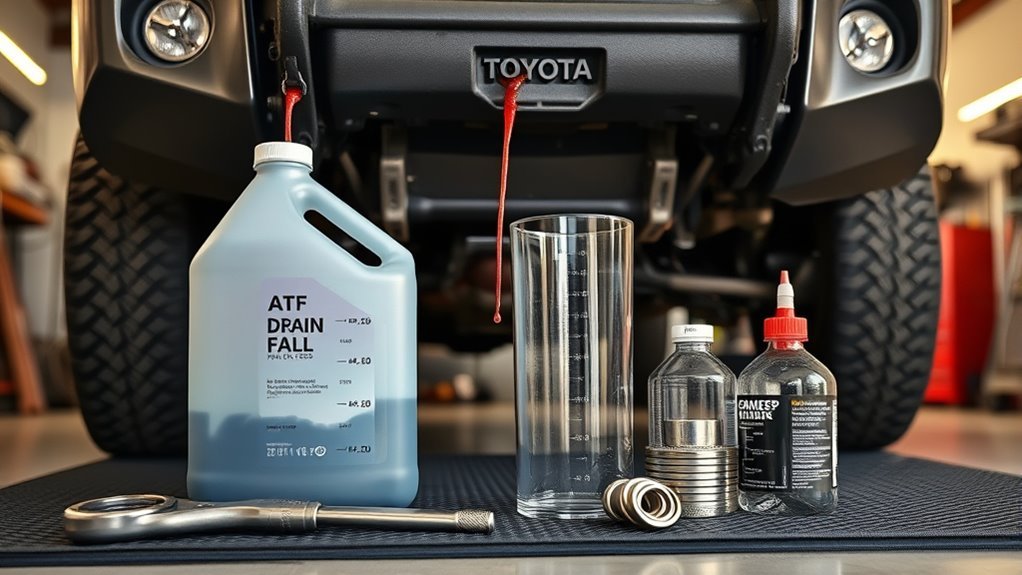
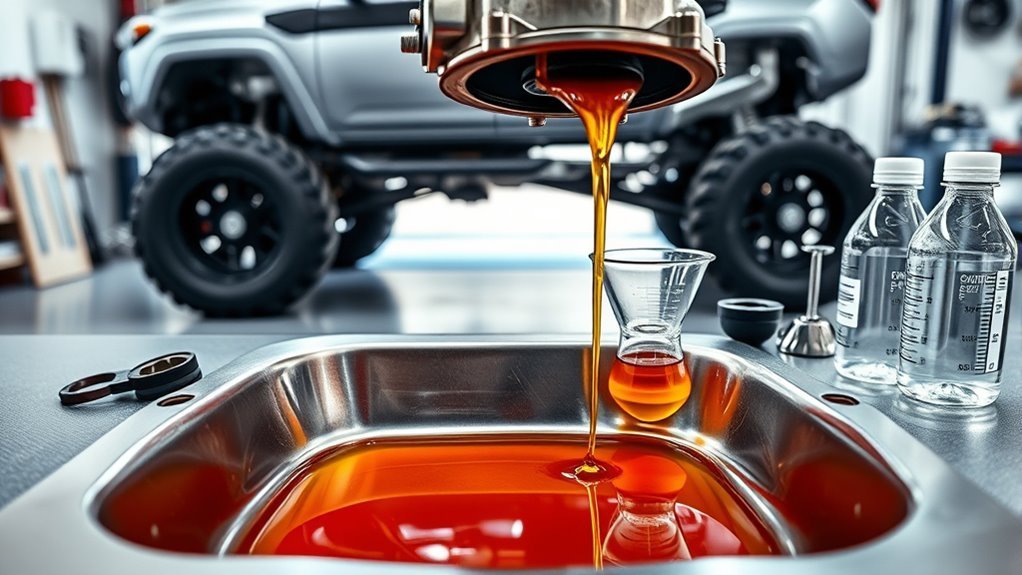
Decide whether a drain-and-refill or a partial radiator flush best fits your maintenance goals and mileage schedule. A drain-and-refill removes the pan plug and replaces roughly 3 quarts (30–40% of the circuit) and is recommended about every 30,000 miles to maintain fluid quality. A partial radiator flush involves disconnecting the return hose and cycling fluid until fresh runs clear—using roughly 3 gallons for near-complete replacement—so you’ll weigh greater fluid renewal against increased complexity and potential radiator contamination.
Drain And Refill
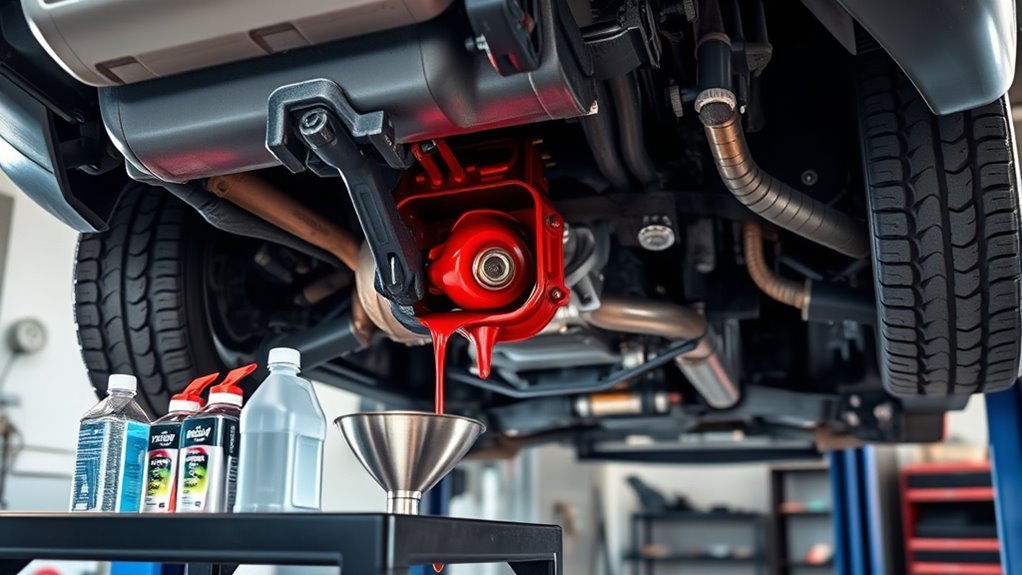
Compare drain‑and‑fill and partial‑flush procedures by focusing on how much fluid they actually replace, the steps involved, and the trade‑offs for wear and contamination. You’ll perform a drain‑and‑refill to swap roughly 30–40% of the fluid: drain about 3 quarts from the pan, reinstall the plug, and add the same volume of new fluid. Do it every 30,000 miles as a core fluid maintenance tips routine and as part of transmission troubleshooting.
- It’s less invasive, so you won’t disturb torque converter deposits.
- It’s quick, affordable, and reduces service downtime.
- It leaves residual old fluid, so contaminants remain.
- It’s best for preventive maintenance on healthy transmissions.
Monitor level and color; dark or burnt fluid signals contamination and escalation.
Partial Radiator Flush
A partial radiator flush for the 4Runner—often called a transmission cooler or ATF cooler flush—pushes much more old fluid from the circuit than a simple pan drain. You’ll decide between a drain‑and‑fill (about 3 quarts removed, replacing 30–40% of fluid) and a partial flush that can approach full exchange if you circulate up to ~3 gallons. Steps: drain pan, refill, circulate via cooler lines, or use a pump to force new Toyota WS ATF through the cooler loop. Trade‑offs: drain‑and‑fill is simpler and safer, minimizing the risk of dislodging debris that causes clogs; partial flushes remove more contamination but can stir deposits. Follow maintenance frequency: drain‑and‑fill ~30,000 miles, partial flush ~60,000 miles.
Choosing 4Runner Transmission Fluid: Toyota WS and Alternatives
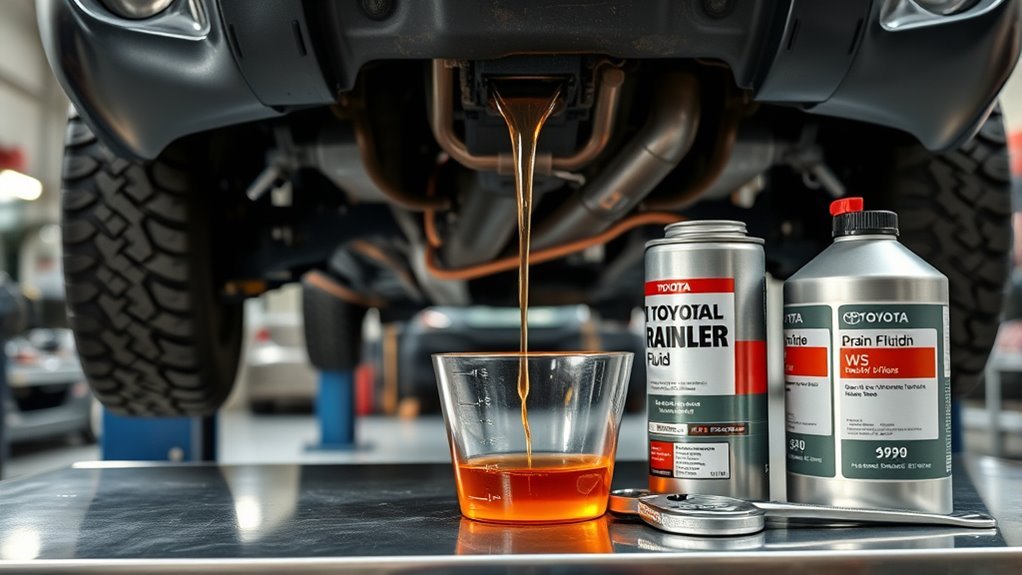
While Toyota specifies WS ATF for the 4Runner and recommends changes by 100,000 miles under normal use, you’ll often improve longevity and shift quality by draining and refilling roughly every 30,000 miles; this keeps contaminants and degraded additive fractions from accumulating, since small amounts of old fluid remain after each service. You should prioritize fluid compatibility: WS-formulated fluids maintain friction modifiers and seal swell compounds Toyota designed into the transmission. Aftermarket options exist, but choose those explicitly labeled compatible with Toyota WS. Red Line D6 ATF is a documented compatible alternative that preserves shift characteristics and thermal stability.
- Confirm OEM spec and part numbers before purchasing.
- Select aftermarket options with documented WS compatibility.
- Prefer products with thermal-oxidation and shear-stability data.
- Avoid unknown blends that lack published test results.
You’re freeing your drivetrain from premature wear by selecting compatible fluids and measured service intervals; don’t gamble with vague substitutes.
DIY Checklist, Costs, and When to Go to a Dealer
One practical way to save on maintenance is to perform a drain-and-refill every 30,000 miles using Toyota WS ATF (or a documented WS-compatible alternative), but you’ll need the right tools—socket set, oil catch pan, fluid pump—and 8–10 quarts of fluid, plus a new fill/inspection plug crush washer where applicable. Create a concise DIY checklist: verify fluid spec, gather DIY Tools (sockets, torque wrench, drain pan, pump, funnel, shop rags, jack stands), warm the transmission, remove drain plug, collect fluid, reinstall crush washer, torque plug to spec, add fluid through fill/inspection, run engine and cycle gears, confirm level on service indicator. For Cost Comparison, expect $50–$100 DIY (fluid, washer, basic tools amortized) versus $150–$300 at a dealer. Inspect color and odor; dark or burnt fluid demands immediate attention. If you lack confidence, face warranty constraints, or detect hard shifts, go to a dealer—secure your vehicle and maintain freedom through informed choices.
Frequently Asked Questions
Is Toyota Transmission Fluid Lifetime?
No — manufacturers label it “lifetime” for warranty terms, but investigating shows you should perform transmission maintenance with periodic fluid replacement. You’ll preserve performance, avoid degradation, and retain control over vehicle longevity.
Conclusion
Keep transmission fluid service on your 4Runner predictable: follow Toyota’s baseline intervals, shorten them for towing, off‑road use, or persistent heat, and check level and color regularly to spot issues early. Prefer drain‑and‑fill for routine maintenance, partial flushes only when symptoms or contamination require it, and choose Toyota WS or a manufacturer‑approved equivalent. Want longer life and fewer repairs—won’t a small, regular investment beat a major transmission job later?