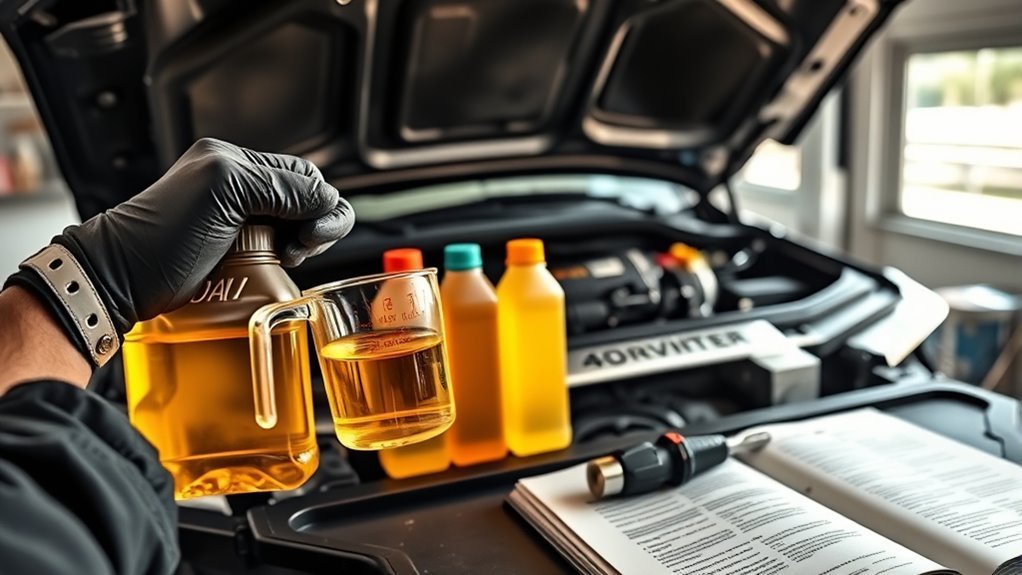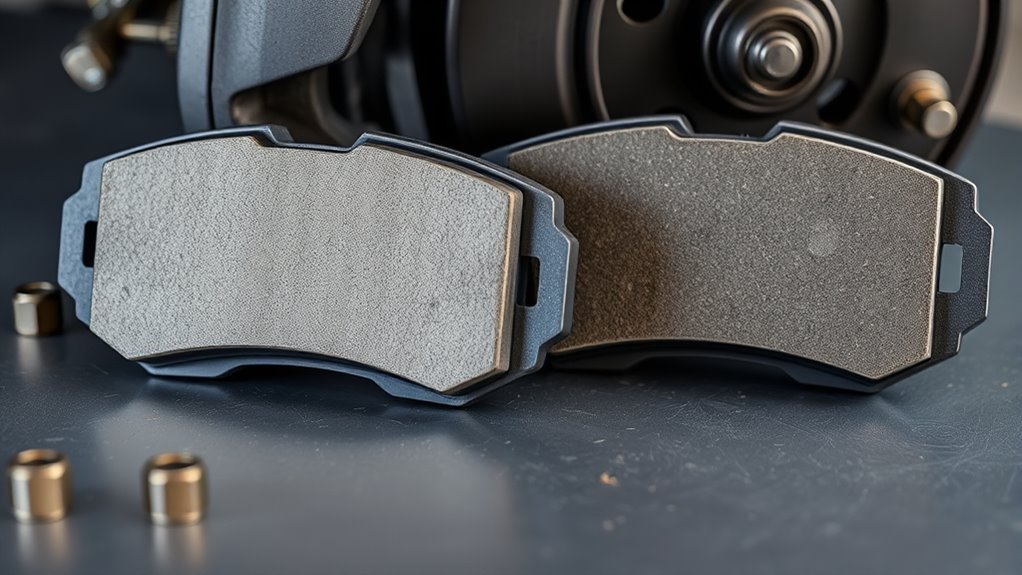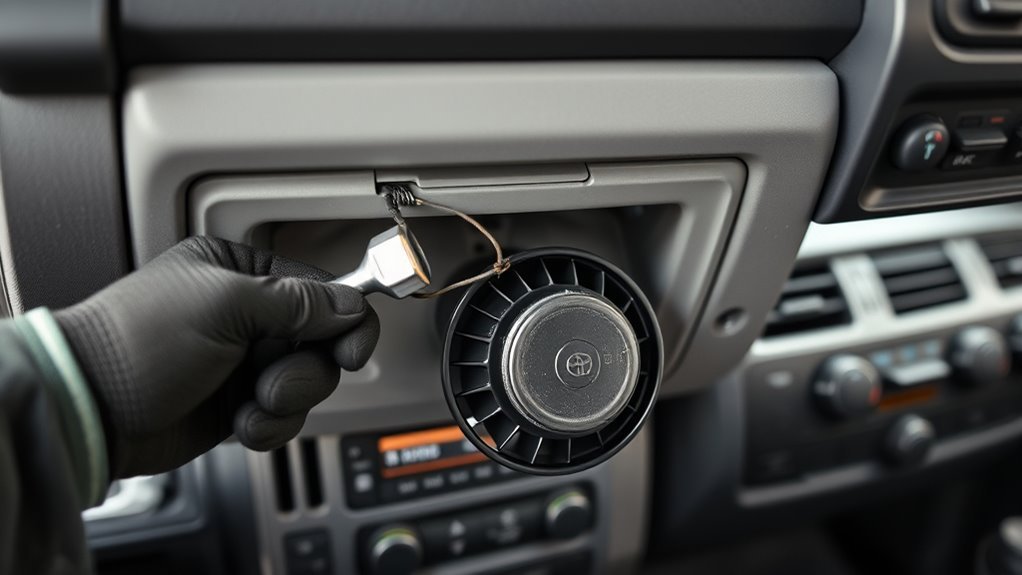

On your 4Runner a P0171 means Bank 1 is running too lean—too much air or too little fuel—so start with vacuum leaks, intake boot and PCV checks, and a MAF inspection. Verify fuel pressure against the spec for your engine, listen for pump operation, and test injector balance. Clean or swap the MAF if faulty, replace cracked hoses or filters, and use a scan tool to watch fuel trims and O2 responses. Continue for step-by-step tests, fixes, and cost guidance.
What Does P0171 Mean on a 4Runner?
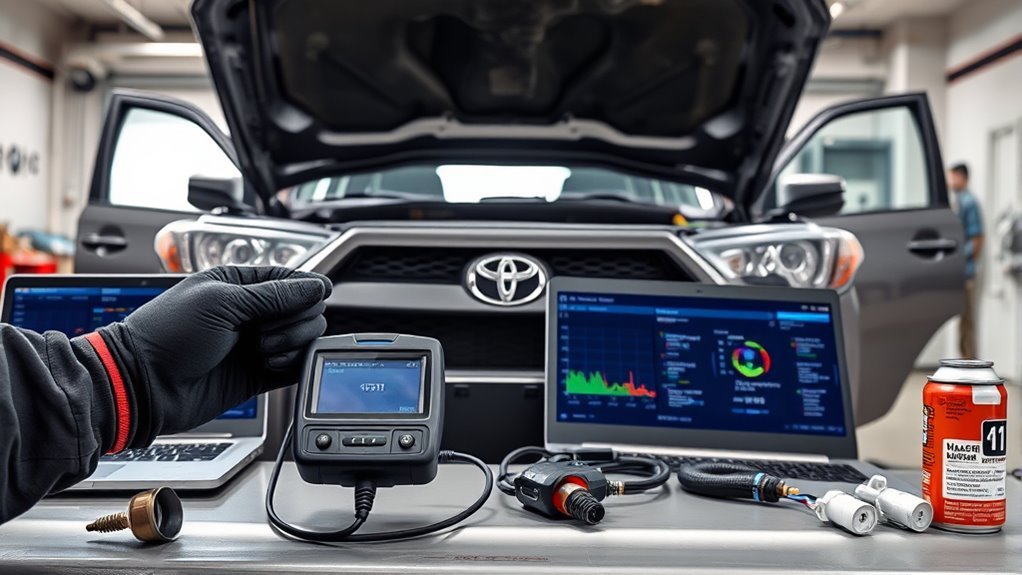
When your 4Runner throws a P0171 code, it means the engine control module has detected a “System Too Lean” condition on Bank 1 — there’s too much air or not enough fuel entering the combustion chamber. You’ll see a check engine light, possible rough idle, stalling, and reduced acceleration as symptoms. P0171 diagnosis techniques focus on isolating lean condition factors: inspect for vacuum leaks, test the mass airflow (MAF) sensor, and verify fuel system integrity. Measure fuel pressure to confirm the pump and regulator deliver required flow; inspect and clean or test injectors for proper spray. Scan live fuel-trim and oxygen sensor data to pinpoint whether the ECU is compensating long-term for lean inputs. Don’t ignore the code—prolonged lean conditions can damage the catalytic converter and cause costly repairs. You want freedom from breakdowns; systematic, technical troubleshooting frees you from guesswork and restores reliable performance.
Quick P0171 Checks You Can Do First
Start by checking for vacuum leaks — listen for hissing, inspect hoses and use a smoke machine if available to pinpoint unmetered air. Next, inspect and clean the MAF sensor with approved cleaner, since fouled readings often mimic a lean condition. Finally, verify fuel pressure with a gauge to confirm the pump and regulator meet spec.
Check For Vacuum Leaks
Why not begin by checking for vacuum leaks that often cause a P0171 lean code? Start with a vacuum hose inspection: visually scan hoses at the intake manifold for cracks, hardening, or disconnections that admit unmetered air. With the engine idling, listen for hissing that pinpoints breaches. Use smoke machine detection to force visible smoke from leaks; note and mark escape points for repair. As a quick functional test, spray carburetor cleaner or soapy water around suspect joints—an RPM change confirms a leak. Don’t overlook the PCV valve and its fittings; a loose or faulty PCV creates a persistent lean condition. You’ll free the engine from false sensors by targeting and sealing these air paths first.
Inspect Mass Airflow Sensor
After you’ve checked hoses and sealed any vacuum leaks, move on to the mass airflow (MAF) sensor since it directly measures incoming air and a dirty or faulty MAF will produce the same lean P0171 symptom. Visually inspect the MAF sensor for dirt, oil, or debris that skews readings. Use approved MAF sensor cleaning techniques with a specialized cleaner—spray gently, don’t touch the element—and let it dry fully. Check electrical connections for corrosion or looseness; repair or replace damaged terminals. Start the engine and monitor idle and drivability; noticeable improvement points to the MAF as the source. If symptoms persist, test the MAF sensor with a multimeter against manufacturer specs to confirm output and airflow response before replacing components.
Verify Fuel Pressure
Verify the fuel pressure next—it’s one of the fastest ways to confirm whether a lean P0171 is caused by inadequate fuel delivery. You’ll attach a fuel pressure gauge and follow the specification in the repair manual for your engine and model year. Perform gauge installation at the fuel rail, start the engine, and compare running and key-on/engine-off readings. If pressure is low or unstable, inspect the fuel filter and lines for clogs, kinks, or leaks that could restrict flow. After shutdown, monitor for pressure drop; a significant bleed-down often points to leaking injectors or a failing pump. Fix the identified fault, then recheck pressure to verify you’ve restored proper fuel delivery and eliminated the lean condition.
How to Spot P0171: Symptoms on a 4Runner
You’ll notice P0171 through drivability changes: rough idle and intermittent stalling signal a lean condition that needs inspection. Expect reduced acceleration and power loss under load, especially uphill, often accompanied by misfire or hesitation. Check spark plugs for white tips and listen for hissing vacuum leaks as visual and audible confirmation of excess air.
Rough Idle And Stalling
When your 4Runner runs rough at idle or stalls, it’s often because the engine’s air-fuel mix has gone lean, which the P0171 code flags by detecting too much air relative to fuel. You’ll notice shaking, stalling, or misfires at stoplights; the CEL usually illuminates. Check engine performance data and consider idle adjustments only after diagnosing vacuum leaks, MAF sensor faults, or fuel delivery issues. Listen for knock or pinging—signs of incomplete combustion from excess air.
| Symptom | Diagnostic focus |
|---|---|
| Rough idle/stall | Vacuum leaks, MAF, intake leaks |
| Misfire/jerk | Fuel pressure, injector function |
| CEL on | Read PIDs, fuel trims |
Address faults to regain control and move toward mechanical liberation.
Loss Of Power
After rough idle and stalling, the next clear sign of a P0171 lean condition is a loss of power under load: you’ll notice reduced acceleration, sluggish response on grades, and slower merging or passing. You’ll feel the engine struggle as it gets too little fuel; acceleration issues become obvious when you demand more throttle. Engine performance drops—misfires, jerking, and occasional pinging under load confirm the mixture is lean. The CEL often accompanies these symptoms, prompting inspection of the intake, MAF, and vacuum system so you can reclaim control.
- Frustration: reduced hill-climb ability limits your freedom.
- Anxiety: slower merging threatens safety.
- Resolve: diagnosing fuel/air imbalance restores liberation through repair.
Visible Spark Plug Wear
Inspecting the spark plugs gives a direct, visible clue to a P0171 lean condition on your 4Runner: plugs with white, blistered tips or unusually light deposits indicate lean combustion from excess air, while normal plugs have tan or light brown deposits. During a spark plug inspection you’ll correlate white-tipped plugs with rough idle, misfires, loss of power and an illuminated check engine light. Treat the plugs as a combustion analysis tool: white glazing pinpoints air-fuel imbalance rather than ignition failure. Remove, photograph and compare plugs across cylinders to isolate lean zones or intake leaks. If multiple plugs show identical white deposits, pursue intake, vacuum or fuel-delivery diagnostics. Use data-driven action to restore freedom from drivability constraints.
Find the Most Likely Causes of P0171
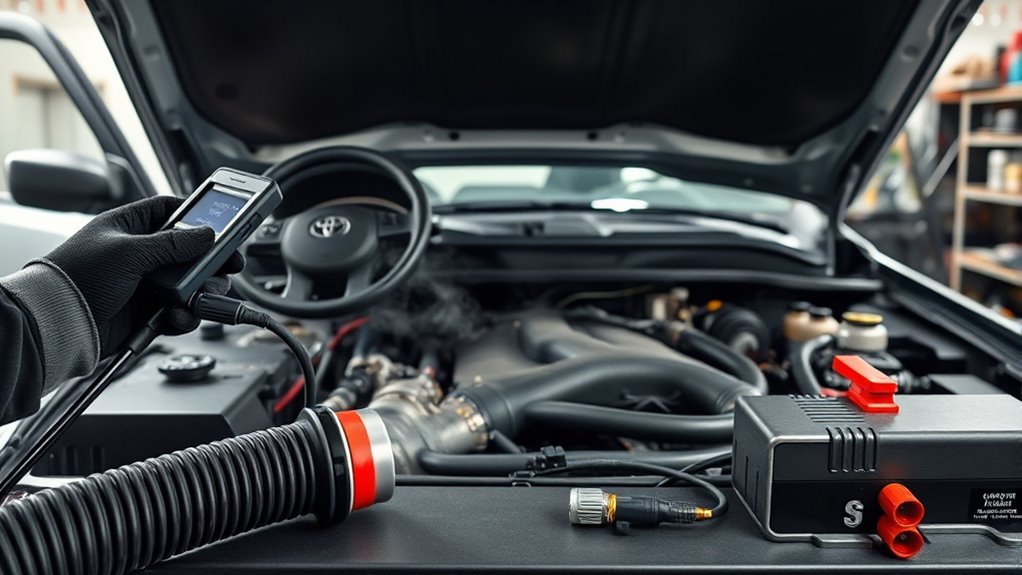
Start by narrowing the cause to either excess air or inadequate fuel delivery, since P0171 signals a lean condition where the engine’s air-fuel ratio is too high. You want freedom from guesswork, so focus on two pathways: unmetered air via the air intake and compromised fuel delivery. Inspect intake boots, vacuum hoses, and the PCV for leaks that let extra air bypass sensors. Then assess fuel system integrity: fuel pressure, pump output, filter condition, and injector flow.
Narrow P0171 to excess air or weak fuel delivery: check intake leaks, vacuum hoses, PCV, fuel pressure, pump, and injectors.
- Trace audible hisses and pressurize the intake to find vacuum leaks — liberation comes from sealing unwanted air.
- Measure fuel rail pressure and test pump current — weak delivery strips power and control.
- Scan for sensor anomalies and prioritize repairs that restore balance between air intake and fuel delivery.
Act methodically, document readings, and replace only failing components to free the 4Runner from persistent lean faults.
P0171: Test & Clean the MAF on a 4Runner
Check the MAF (mass airflow) sensor first whenever a P0171 lean code appears, because a contaminated or faulty MAF will report wrong airflow and force the ECU to run too lean. You’ll start with MAF sensor maintenance: remove the sensor, inspect the intake boot for cracks or leaks, and only use dedicated MAF cleaner on the sensing elements. Let it dry fully before reinstalling.
Perform voltage testing with a multimeter at the sensor connector while the engine runs; confirm voltage output matches Toyota specs. If readings are out of range, replace the sensor. After cleaning or replacement, disconnect the battery for a few minutes to reset the ECU and clear stored lean-code adaptations.
| Action | Tool | Purpose |
|---|---|---|
| Visual inspect boot | Hands/flashlight | Find unmetered air |
| Clean sensor | MAF cleaner | Remove contamination |
| Voltage testing | Multimeter | Verify signal integrity |
| ECU reset | Battery disconnect | Clear learned trim |
Fuel System Tests : Pressure, Pump, Filter, Injectors
When diagnosing a P0171 lean condition on a 4Runner, verify the entire fuel delivery system—pressure at the rail, pump operation, filter condition, and injector performance—because any restriction or electrical fault can reduce fuel flow and skew the air/fuel ratio. You’ll measure fuel pressure with a gauge at the rail—compare to the repair-manual spec for your engine. If pressure is low or fluctuates, proceed to pump inspection: listen for the prime hum, test voltage at the pump, and measure current draw. Check the fuel filter for contamination or restriction and perform filter replacement if it’s clogged or service interval is exceeded. For injector testing, run a flow or balance test and check injector resistance with a multimeter; uneven flow or out-of-spec resistance reveals blockages or electrical failure. Addressing these items restores proper fuel delivery and frees you from ongoing lean faults.
- Confirm rail fuel pressure.
- Validate pump operation electrically and audibly.
- Perform filter replacement and injector testing.
Use a Scan Tool for O2 Sensors, Exhaust Leaks & Fuel Trim
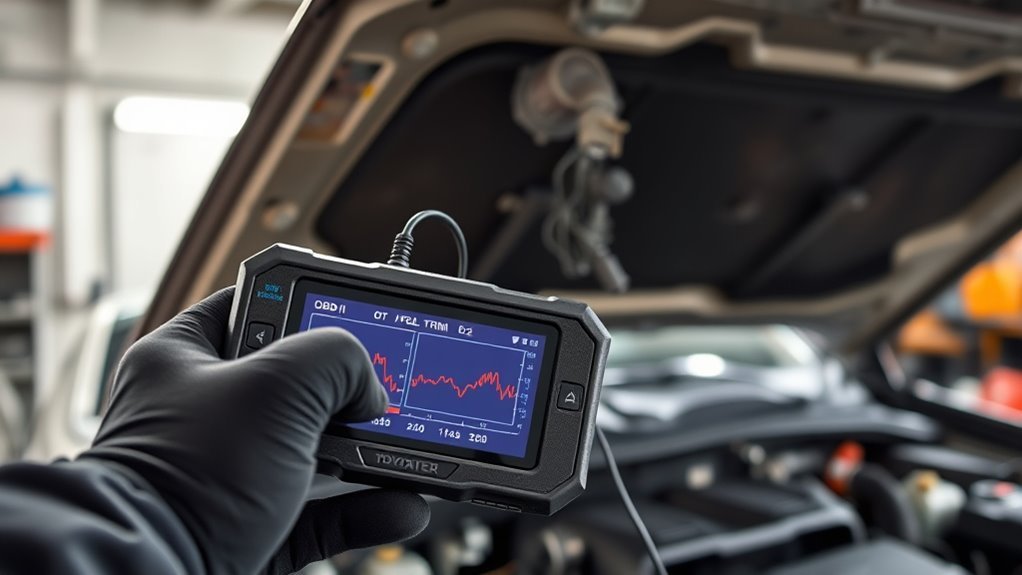
After you’ve verified fuel pressure, pump operation, filter condition and injector performance, plug in a scan tool to read O2 sensors and fuel trim in real time so you can pinpoint whether the ECM is compensating for a lean condition or the sensors/exhaust are misleading it. Use O2 Sensor Diagnostics to watch upstream and downstream voltages, switching behavior and response time; slow or biased readings flag sensor failure or unmetered air. Run Fuel Trim Analysis at idle and under load: short-term and long-term trim percentages reveal whether the ECM is adding fuel (positive trim) to correct a lean condition. Compare pre- and post-catalyst O2 sensors to locate exhaust leaks—unexpected upstream-like signals downstream indicate leak-induced false lean reports. Log data while you provoke the condition: throttle changes, vacuum tests or controlled revs. Interpreting these live parameters gives you actionable evidence to free yourself from guesswork and target repairs precisely, minimizing wasted parts and restoring proper air-fuel balance.
When to Replace Parts or Call a Pro (Costs & Next Steps)
If basic checks and sensor cleaning don’t clear the P0171, you’ll need to decide whether to replace parts yourself or bring the truck to a pro based on cost, complexity and diagnostic certainty. You want freedom from repeated failures, so weigh replacement considerations: MAF sensors run $100–$300 installed; fuel pumps $200–$800; filters and injectors $150–$400. Small vacuum hose fixes cost $10–$50, but professional diagnostics can cost up to $150 and labor often starts around $100.
Make a clear plan: prioritize low-cost, high-impact parts first; avoid throwing parts at the problem without data. If symptoms persist, seek professional diagnostics for a definitive fix and to reclaim time and confidence.
- Replace inexpensive hoses/filters first to free yourself from small leaks and clogged delivery.
- Swap MAF or fuel pump when diagnostics or symptoms point clearly to them.
- Call a pro when diagnostic certainty is low or repairs exceed your comfort or toolset.
Frequently Asked Questions
What Is the Code P0171 on a Toyota 4runner?
P0171 means your engine’s running too lean on Bank 1, indicating a fuel system imbalance that hurts engine performance; you’ll check for vacuum leaks, MAF faults, low fuel pressure, or clogged injectors to regain control.
How Long Can You Drive With a P0171 Code?
You can drive briefly, but don’t push it — hours to a few hundred miles at most. Monitor driving duration and engine performance closely; act fast to avoid catalytic damage, worsening lean condition, or limp-mode restrictions.
Conclusion
P0171 means your 4Runner’s engine is running too lean — fix it like diagnosing a patient: methodically and without guesswork. Start with quick checks (air filter, gas cap), then test the MAF, fuel pressure, pump, filter, and injectors. Scan O2 sensors, look for exhaust leaks, and monitor fuel trims. Replace parts only after testing; if diagnostics or repairs exceed your tools, call a pro. Treat the car like a watch — precise, not forceful.