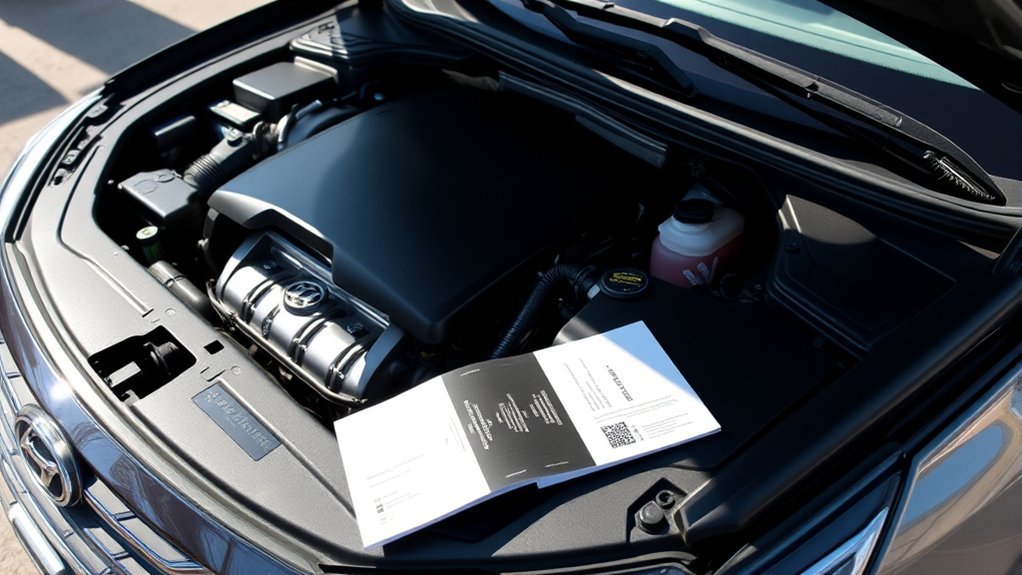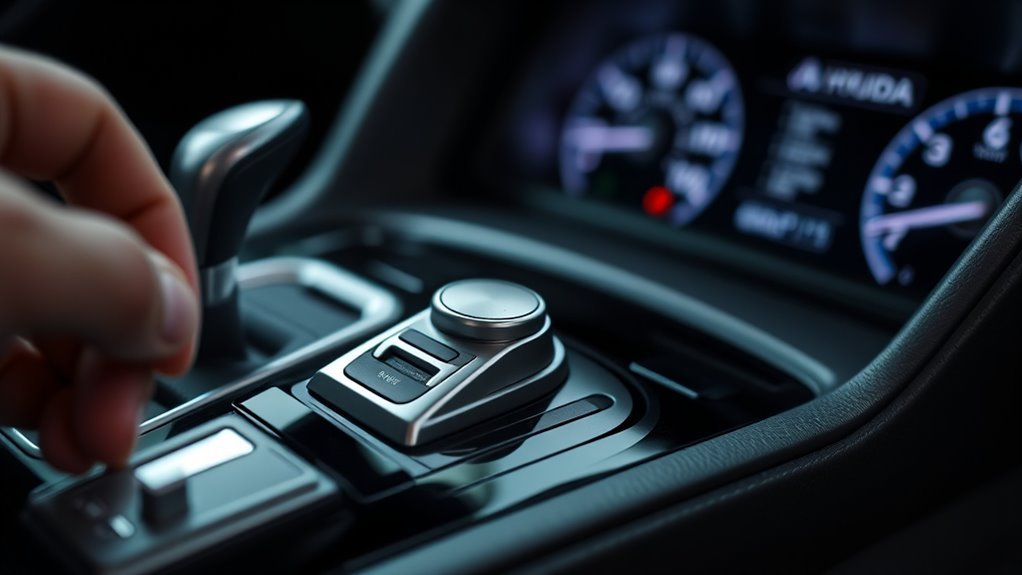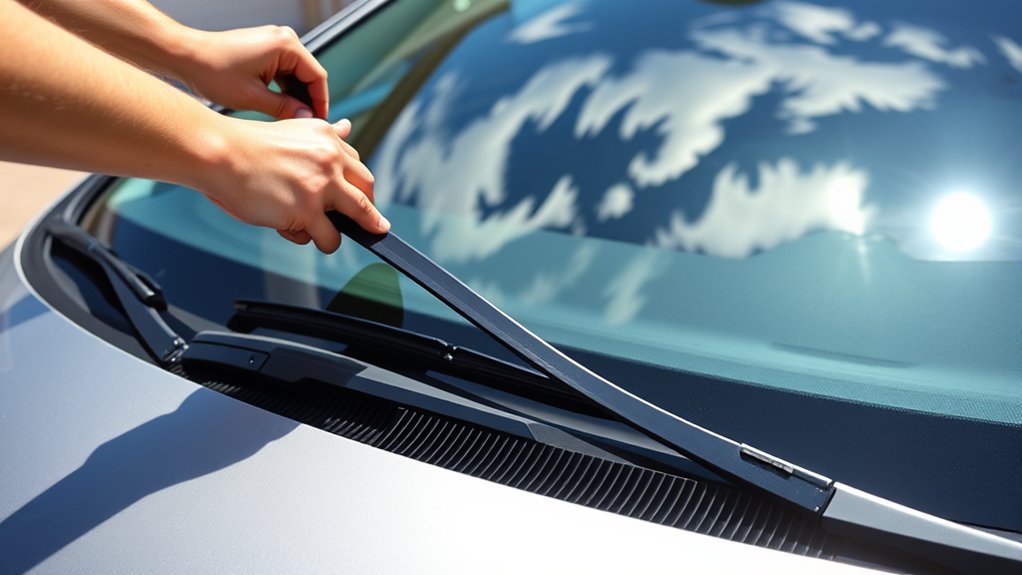
Replacing the wiper blades on a Hyundai Sonata is usually an easy DIY job, but the correct blade size and removal procedure depend on the model year. Many recent Sonatas use a 26-inch driver blade and an 18-inch passenger blade, while older generations can differ. Newer DN8 models also use hidden wipers that must be moved into their service position before you lift the arms.
Quick Answer
To replace Hyundai Sonata wiper blades, first verify the blade sizes for your exact model year. On newer DN8 Sonatas, switch the vehicle off and use the MIST control to move hidden wipers to the top service position. Support each arm, release the blade clip, install the replacement securely, and test the wipers before driving.
Key Takeaways
- Check your model year before buying. A 26-inch driver blade and 18-inch passenger blade fit many recent Sonata LF and DN8 applications, but they are not universal across every Sonata generation.
- Newer hidden wipers require a service position. Do not force the arms upward while they are parked below the hood line.
- Protect the windshield. Keep control of the metal wiper arm whenever the blade is removed so it cannot snap against the glass.
- Replace blades based on condition. Streaking, chatter, cracks, torn rubber, or consistently poor clearing are better replacement signals than relying on one fixed calendar date.
- Test before driving. Make sure each blade is locked in place and wipes smoothly without hitting trim, overlapping incorrectly, or leaving major unwiped areas.
At a Glance
| Time Required | About 5–15 minutes |
| Difficulty | Easy |
| Tools Needed | Usually none; a clean towel is useful for windshield protection |
| Cost | Common replacement pairs are roughly $20–$80, depending on brand and blade type |
How to Replace Your Wiper Blades on Your Hyundai Sonata
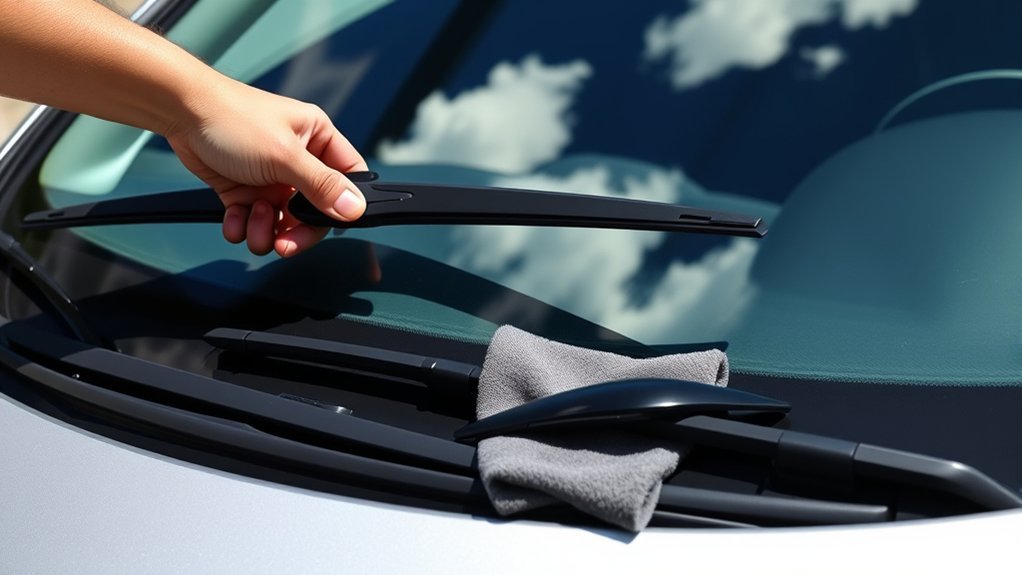
Replacing the wiper blades on your Hyundai Sonata can restore clear wiping during rain, road spray, and winter weather. Before touching the wiper arms, identify your Sonata’s model year and confirm the replacement blades are listed as compatible with that exact application.
For many recent Sonata models, the job follows this basic sequence:
- Verify the correct blade sizes and attachment. Do not rely on length alone; the connector must also fit your Sonata’s wiper arm.
- Park on a level surface and switch the wipers off.
- Move hidden wipers to the service position if required. Newer DN8 Sonatas cannot safely have their arms lifted while the wipers are fully parked below the hood line.
- Lift one wiper arm carefully. Keep control of it throughout the replacement.
- Release and remove the old blade. Depending on the application, you may rotate the blade and press a clip or lift a blade clip before sliding the blade from the arm.
- Install the new blade. Slide it into the connector until it locks securely.
- Lower the arm gently. Never allow the bare metal arm to fall against the windshield.
- Repeat on the other side and test the system.
Warning: A spring-loaded wiper arm can strike and crack or chip the windshield if it slips while the blade is removed. Keep one hand on the arm and consider placing a folded towel on the glass beneath it while you work.
Hyundai advises using specified replacement blades and returning the arms to the windshield before driving. For newer hidden-wiper systems, follow the service-position procedure in your model-year owner’s manual rather than forcing the arms past the hood. You can confirm the procedure through the Hyundai Digital Owner’s Manual.
Choosing the Correct Wiper Blade Size for Your Sonata
Choosing the correct Hyundai Sonata wiper blade size requires more than knowing the vehicle name. Sonata dimensions and wiper systems have changed across generations, so always match the blade to the exact model year before buying.
[Products Worth Considering]

This activated carbon cabin air filter is designed as a replacement for select Hyundai Sonata gas models and Kia Cadenza vehicles, helping improve in-cabin air quality. It is engineered to capture odors, VOCs, and common pollutants for a fresher driving environment, while matching multiple OE and reference numbers for convenient fitment confirmation.
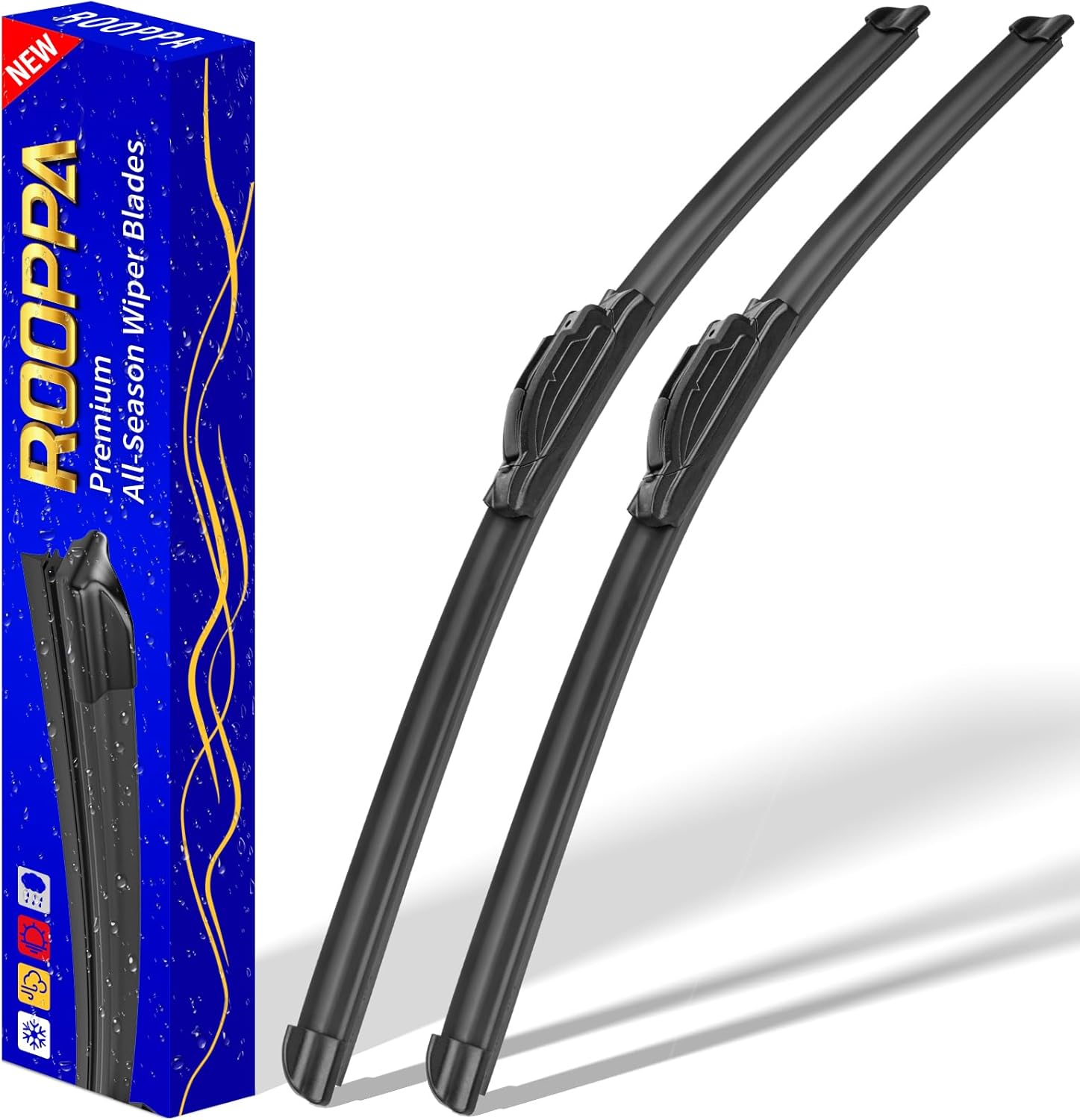
These front windshield wiper blades are designed as a direct replacement for compatible Hyundai models, helping restore clear visibility in rain and road grime. The hard-molded frame and stronger spring support smooth, reliable wiping performance, while the easy plug-and-play installation makes replacement simple. Included as a two-piece set, they are built for dependable everyday use with a one-year warranty for added confidence.

Bosch ICON beam wiper blades are designed to deliver reliable all-weather performance with a custom-contoured fit for improved windshield contact. Their dual-rubber blade technology helps resist heat and ozone deterioration for longer life, while the asymmetrical spoiler maintains steady pressure to reduce lift-off and improve visibility at higher speeds. Installation is quick and easy with a hook-style adapter compatible with common 9x3mm and 9x4mm wiper arms.
Verify Blade Size Specifications
A 26-inch driver blade and an 18-inch passenger blade are common on recent Sonata applications. Current fitment catalogs list that combination for the LF generation and DN8 generation through the covered model years. Older Sonata generations can use different lengths, so the safest method is to check your model year in the owner’s manual, an OEM parts catalog, or a reputable manufacturer’s vehicle-fitment lookup.
Also verify the attachment style. Two blades can have the same length yet use different adapters. A blade that is physically the right length but does not lock properly to the arm is not a correct fit.
Driver vs. Passenger Sizes
The driver’s blade is normally longer because it must clear a larger viewing area directly in front of the driver. For recent LF and DN8 Sonata applications, 26 inches on the driver side and 18 inches on the passenger side is a commonly listed combination.
| Application | Driver | Passenger | Important Note |
|---|---|---|---|
| Many LF Sonata applications | 26 in. | 18 in. | Verify your exact model year before ordering |
| Many DN8 Sonata applications | 26 in. | 18 in. | Newer models may also require the hidden-wiper service position |
| Older Sonata generations | Varies | Varies | Do not assume 26/18 fits every Sonata |
Note: If a retailer’s lookup, your existing blade, and an online size chart disagree, use a fitment source tied to your exact model year or VIN rather than guessing from blade length alone.
Importance of Accurate Sizing
An incorrectly sized blade may leave part of the windshield unwiped, extend beyond the intended wiping path, contact surrounding trim, or interfere with the other blade. A wrong connector can also prevent the blade from locking securely onto the arm.
Before leaving the store or discarding the packaging, compare the new blades with the old ones and confirm that both the length and connector match the application listed for your Sonata.
Understanding Different Wiper Blade Designs
Two different concepts are easy to confuse when shopping for Sonata wipers: the blade construction itself and the attachment/arm design. Conventional, beam, and hybrid blades describe how the wiping blade is built. Clips, locks, and adapters describe how it connects to the arm. A hidden wiper, meanwhile, refers to where the wiper arms rest when they are not being used.
Types of Wiper Designs
You may find several replacement-blade constructions listed for a Sonata:
- Conventional blades: Use an exposed articulated frame that presses the rubber element against the windshield.
- Beam blades: Use a frameless or low-profile design with a curved internal structure that distributes pressure along the windshield.
- Hybrid blades: Combine a supporting frame with a more streamlined outer cover.
Any of these can work well when the manufacturer lists the blade for your exact Sonata application. Compatibility and secure attachment matter more than choosing a design based only on appearance.
Hidden Wiper Features
Recent DN8 Sonatas use a hidden-wiper arrangement in which the blades rest low near the hood line. This improves the parked appearance of the wiper system, but it also changes the replacement procedure because the arms should not simply be forced upward from their normal resting position.
Hyundai’s DN8 procedure instructs the owner to switch the vehicle off and, within about 20 seconds, hold the wiper control at the MIST position for about two seconds. The wipers move to the top wiping position, where the arms can then be lifted for service. The exact stalk direction or wording can vary by market and model year, so verify it in the manual for your vehicle.
| Wiper Arrangement | Replacement Consideration |
|---|---|
| Exposed / normally liftable arm | The arm can generally be raised normally once the vehicle and wipers are switched off. |
| Hidden DN8-style arm | Move the wipers to the top service position before lifting the arms. |
Clip Blade vs. Arm Lock
Hyundai replacement instructions show more than one blade-attachment procedure depending on the vehicle configuration. One type is rotated to expose a clip before the clip is pressed and the blade is pulled downward. Another uses a blade clip that is lifted before the blade is pulled down and removed.
Do not force a replacement blade if it does not release in the expected direction. Look closely at the adapter and compare it with the replacement-blade instructions. A compatible blade should release and install without bending the arm or using excessive force.
Pro Tip: Replace one blade at a time. Leaving the other blade installed gives you a quick visual reference for blade orientation and reduces the chance of leaving both metal arms exposed over the windshield.
How to Remove Old Wiper Blades in Simple Steps
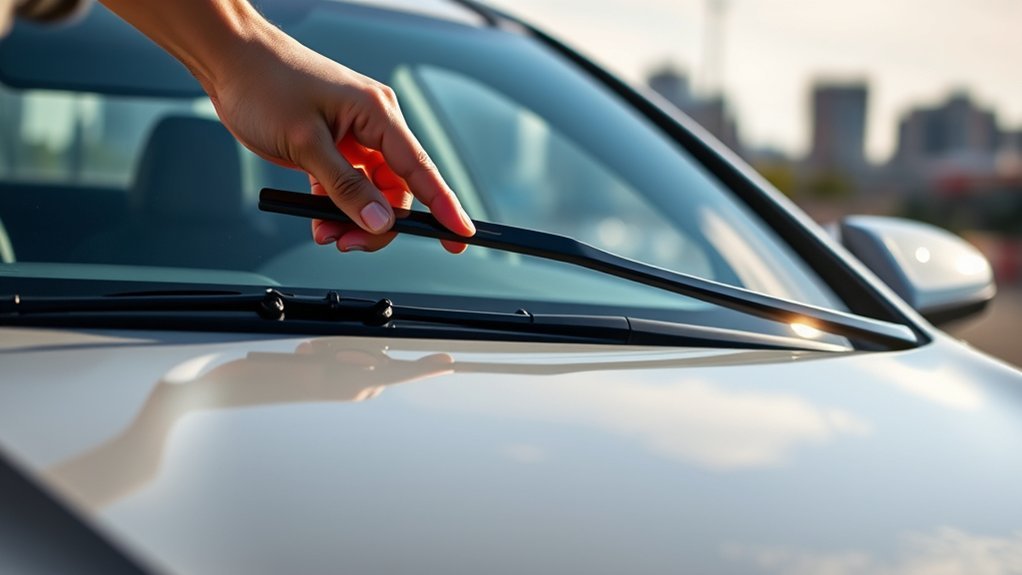
Start with the vehicle parked safely and the wipers switched off. If your Sonata uses hidden wipers, move them into the service position before attempting to lift the arms.
- Place the wipers in the correct service position if required. On newer DN8 models, switch the vehicle off and use the MIST procedure described in the owner’s manual.
- Lift one arm carefully. Raise only as far as the arm is designed to travel.
- Identify the release. Rotate the blade if necessary to expose the clip or lift the blade clip, depending on the connector.
- Press or release the locking mechanism.
- Slide the blade away from the arm. Do not twist or pry aggressively.
- Keep hold of the arm. Do not let it spring back against the windshield while the blade is off.
Older Sonata models may have a simpler exposed-arm procedure. For example, Hyundai’s earlier Sonata instructions describe raising the arm, lifting the blade clip, pulling the blade assembly down, and reinstalling in reverse order. That is why the exact model-year manual should take priority over a generic removal diagram.
Install New Wiper Blades Correctly and Securely
Once the old blade is removed, compare the replacement with it before installation. The length should be correct for that side, and the adapter should match the wiper arm.
- Orient the blade correctly. Position the new blade in the same direction as the one you removed.
- Insert the arm into the adapter. Slide the blade into place using the direction specified by the replacement-blade manufacturer.
- Engage the lock. You may hear or feel a click when the connector seats fully.
- Check the connection. Give the installed blade a gentle pull to make sure it cannot slide off the arm.
- Lower the arm slowly onto the windshield.
- Repeat on the other side.
- Return hidden wipers to their normal parked position. On newer Hyundai procedures, switching the vehicle on and operating the wiper control returns the arms to the lower resting position.
- Test with washer fluid. Confirm smooth movement, correct coverage, and secure attachment.
If a blade hits the cowl, trim, windshield edge, or the other blade, stop using the wipers and recheck the fitment. That usually indicates the wrong size, incorrect adapter, or improper installation.
[Products Worth Considering]

This all-season wiper blade set is designed to deliver smooth, streak-free visibility for a wide range of vehicles, including popular Toyota, Ford, Dodge, Chrysler, and Acura models. Built with premium silicone and a reinforced steel frame, these blades are made for dependable performance in wet or dry conditions while offering easy J/U-hook installation and long-lasting durability.

These RaidBee windshield wiper blades are designed as a replacement fit for Toyota Rav4 models from 2006 through 2012. They feature a premium rubber compound and corrosion-resistant frame for smooth, streak-free wiping, while the precision spoiler helps maintain steady windshield contact for clearer visibility in rain, snow, sleet, and mist. The OE-style clip-on design makes installation quick and tool-free for a secure, vibration-free fit.

These silicone windshield wiper blades are designed as replacement fitments for a wide range of Toyota, Kia, Hyundai, GMC, Chevrolet, and Ford vehicles. They deliver smooth, streak-free wiping with quieter operation and improved resistance to cracking and deformation across changing weather conditions. The easy-install design helps drivers replace worn blades quickly without tools.
How to Make Your Wiper Blades Last Longer
Good maintenance can improve wiping performance and may prevent you from replacing a blade simply because it is dirty. Hyundai notes that insects, tree sap, car-wash wax, and other contamination can reduce wiping effectiveness.
If your blades begin leaving a light film or small streaks, first clean both the windshield and blade edges using a suitable automotive glass cleaner or mild detergent, then rinse thoroughly with clean water. If poor wiping continues, inspect the rubber for cracks, splits, hardening, deformation, or torn sections.
Avoid using gasoline, kerosene, paint thinner, or similar solvents on or near the blades. Hyundai specifically warns that these products can damage wiper components.
Also avoid running the wipers over a dry windshield when possible. In freezing weather, do not use the wipers as ice scrapers. Remove heavy snow and thaw blades that are frozen to the glass before operating the system.
Replace a blade because it is worn or no longer clears the glass properly—not simply because a fixed number of months has passed.
A practical habit is to inspect the blades every few months and before seasons with heavy rain, snow, or road salt. Many drivers replace blades somewhere around the six-to-twelve-month range, but climate, parking conditions, blade material, contamination, and mileage can shorten or extend their useful life.
What Are Common Wiper Blade Problems and How to Troubleshoot Them?
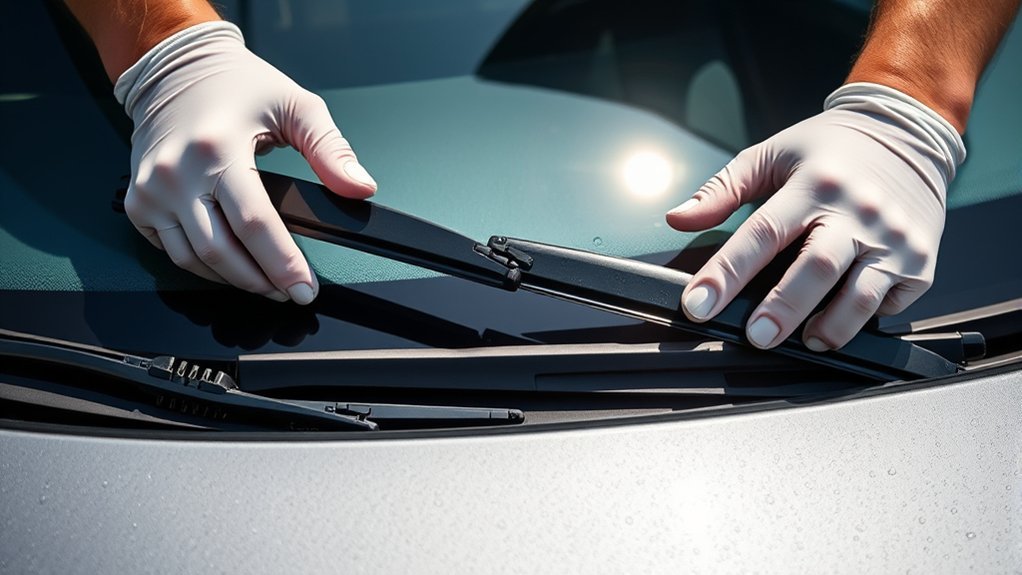
Most wiper problems show up as streaking, smearing, skipping, chatter, missed areas, or unusual movement. The cause is not always a worn blade, so a quick inspection can prevent unnecessary replacement.
| Symptom | Likely Causes | What to Do |
|---|---|---|
| Streaking | Dirty glass, contaminated rubber, cracked blade edge | Clean the glass and blade; replace the blade if damage remains visible. |
| Smearing or haze | Wax, oil, road film, worn rubber | Clean both surfaces thoroughly and retest. |
| Skipping | Wrong blade, incorrect installation, damaged rubber | Verify size and adapter, then reinstall or replace as needed. |
| Chattering | Contamination, hardened rubber, damaged arm, poor blade contact | Clean first; inspect the blade and arm if chatter remains. |
| Large unwiped area | Incorrect blade length, poor attachment, damaged blade or arm | Confirm exact fitment and secure installation. |
| Blade comes loose | Wrong adapter or connector not fully locked | Stop using the wipers and reinstall the correct blade securely. |
If both blades suddenly stop moving, move abnormally, or an arm appears bent or loose, the problem may extend beyond the replaceable rubber blade. In that situation, inspect the mechanism or have the vehicle checked professionally rather than repeatedly operating the wipers.
[Products Worth Considering]
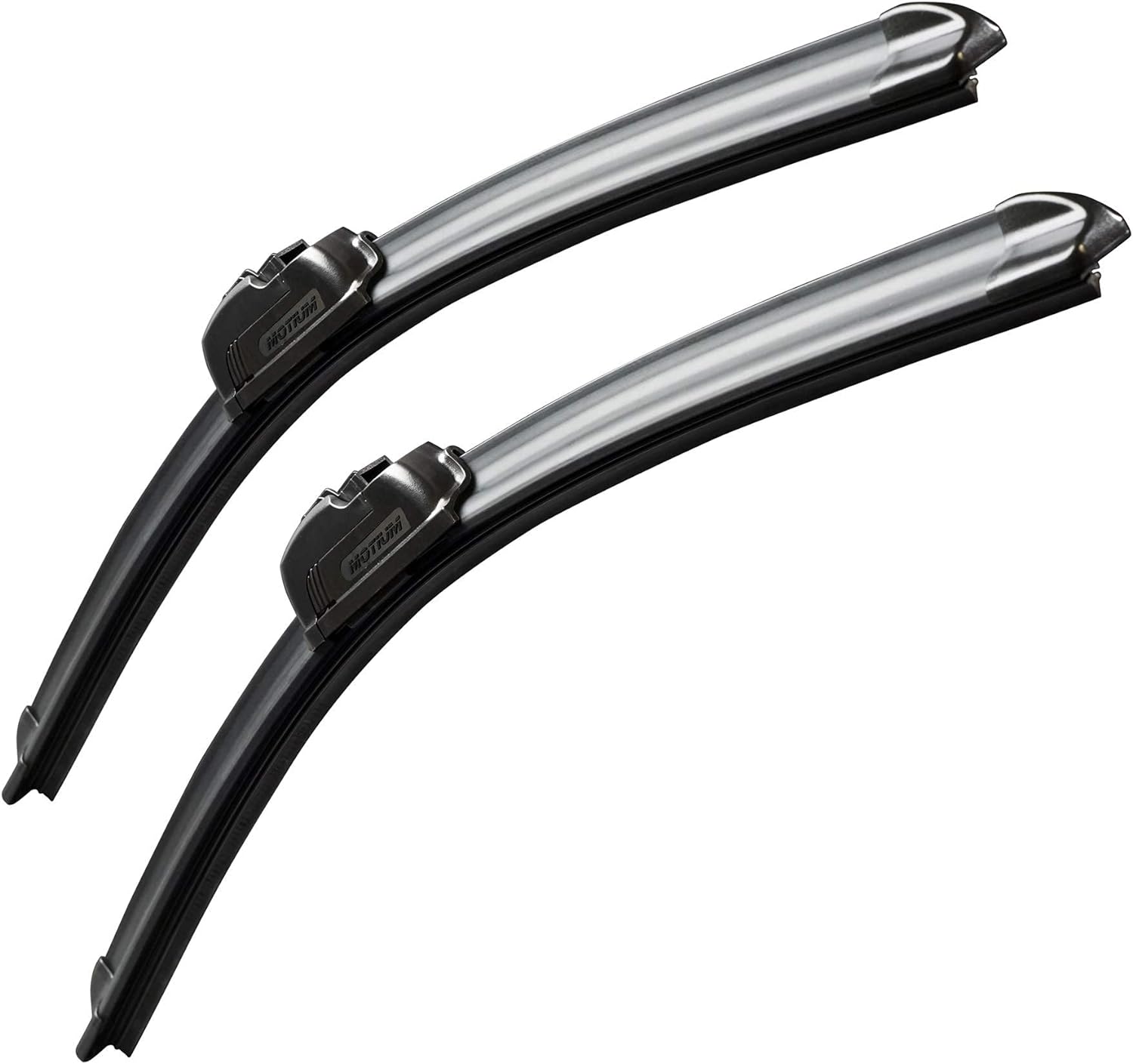
These MOTIUM windshield wiper blades deliver clear, streak-free wiping for improved visibility in rain, snow, and extreme heat. Designed for quiet, smooth operation and easy installation, they include both driver and passenger blades for a quick replacement solution that helps keep driving safer in all seasons.

These premium all-season windshield wiper blades are designed for reliable original equipment replacement across a wide range of compatible vehicles. The natural rubber edge helps deliver smooth, streak-free wiping, while the aerodynamic, corrosion-resistant construction supports quiet performance in rain, snow, and extreme temperatures.

These 5 PLUS silicone windshield wiper blades are designed for select Toyota RAV4 models and include a full three-piece set for front and rear coverage. The silicone wiping edge helps promote streak-free visibility, while the all-weather design resists heat, cold, UV exposure, and harsh driving conditions. An upgraded metal base with precision spring strips helps the blades conform to the windshield for a cleaner, quieter wipe.
Where to Buy Wiper Blades and Get Installation Help
You can buy Sonata wiper blades through Hyundai parts departments, automotive-parts stores, online retailers, and wiper manufacturers. Prices vary widely by construction and brand, so the most important purchase criterion is correct fitment rather than a particular price point.
For a recent Sonata, current retail listings commonly include conventional, beam, and hybrid blades. A pair can cost roughly $20 at the budget end and approach $80 for premium blades. Prices change, so treat those figures as a shopping range rather than a fixed Sonata replacement cost.
Before purchasing, enter the exact model year into the seller’s fitment tool. If you have a newer DN8 Sonata, also verify that the replacement blade includes the correct adapter for the factory arm.
If the blade will not release, the connector does not lock securely, or you are uncomfortable moving hidden wipers into service position, a Hyundai dealer or qualified repair shop can handle the installation. Many auto-parts stores also provide basic wiper installation assistance when compatible blades are purchased there.
Frequently Asked Questions
What size windshield wipers does a Hyundai Sonata use?
Many recent Hyundai Sonata LF and DN8 applications use a 26-inch driver blade and an 18-inch passenger blade. However, older Sonata generations can use different sizes. Always verify the exact model year before purchasing.
How do I put Hyundai Sonata wipers into service position?
On newer DN8 models with hidden wipers, Hyundai instructs owners to switch the vehicle off and, within about 20 seconds, hold the wiper lever in the MIST position for roughly two seconds. The wipers move toward the top of the windshield so the arms can be lifted. Check your model-year manual because control details can vary.
How often should Hyundai Sonata wiper blades be replaced?
There is no single replacement date that suits every Sonata. Inspect the blades regularly and replace them when they are cracked, torn, hardened, chattering, or no longer clearing the windshield adequately. Climate and exposure can make blades wear faster.
Do I need tools to change Sonata wiper blades?
Usually no. Most compatible replacement blades use a clip or locking adapter that can be released by hand. A clean folded towel is useful for protecting the windshield while the blade is removed.
Should I replace both Sonata wiper blades at the same time?
You do not have to replace both solely because one blade is worn, but replacing them as a pair can provide more consistent wiping if both are the same age. Inspect each blade and replace any that are cracked, damaged, or performing poorly.
Why are my new Sonata wipers still streaking?
Clean the windshield first because wax, oil, tree sap, road film, and other contamination can cause streaks even with new blades. If streaking remains, confirm that the blades are the correct size, fully locked into the adapters, and making even contact with the glass.
Conclusion
Replacing Hyundai Sonata wiper blades is normally a quick job once you know the correct fitment and wiper-arm procedure. The biggest mistake is assuming every Sonata uses the same blades. A 26-inch driver and 18-inch passenger combination fits many recent models, but you should still verify your year before buying.
On newer DN8 Sonatas, remember to move the hidden wipers into their service position before lifting the arms. Support the arm whenever a blade is removed, lock the new blade securely, lower the arm gently, and test the system with washer fluid. Regular cleaning and inspection will help you catch worn blades before poor visibility becomes a problem.
Sources
- Hyundai Digital Owner’s Manual — model-year-specific Hyundai operating and maintenance guidance.
- 2025 Hyundai Sonata Owner’s Manual — official U.S. DN8 documentation covering wipers, washers, maintenance, and wiper blades.
- Hyundai DN8 Blade Replacement Instructions — hidden-wiper service position and Type A/Type B replacement procedure.
- Hyundai Sonata LF Owner’s Manual — earlier Sonata blade removal and installation procedure.
- Continental Aftermarket Wiper Application Catalog — current manufacturer application data for Sonata DN8 replacement wipers.