You’ll find factory Hyundai Sonata tire sizes by year and trim—from 185/70R14 on early base models to 245/40R19 on recent N Line cars—plus common upgrades and safe plus‑size limits. Match load and speed ratings, keep diameter within ±3% for speedometer accuracy, and verify clearance, offset, and TPMS compatibility. Maintain correct pressures, rotate every 5–7k miles, and replace tires around five years. Continue for model‑specific charts, upgrade examples, and maintenance tips.
Quick Reference: Hyundai Sonata Tire Sizes by Year
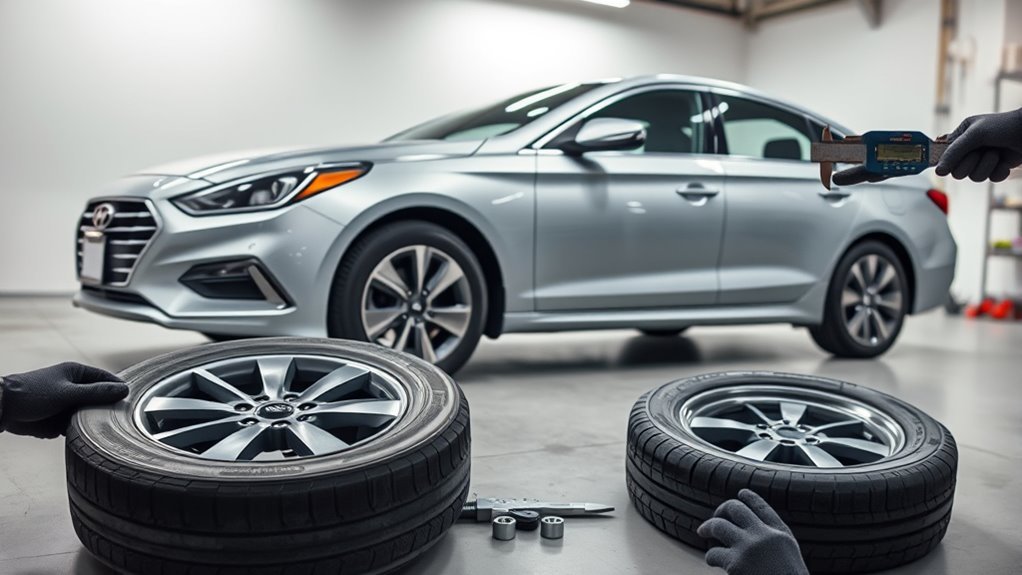
Start with the chart below to quickly match your Sonata’s model year and trim to common factory tire sizes. You’ll see 1989–1994 Base: 185/70R14 or 195/70R14; GLS: 195/70R14 or 205/60R15. For 2000–2006 Base: 205/65R15; later GLS: 205/60R16. The 2007–2013 range includes GLS: 215/60R16 and Limited: 225/50R17. From 2014–2020 Hybrids commonly use 205/65R16; Limited may run 235/45R18. Recent 2023 models list Hybrid Limited 215/55R17 and N Line 245/40R19. Use this reference to select correct replacements, maintain recommended tire pressure, and adjust for seasonal changes. Accurate sizing preserves handling, efficiency, and your freedom to drive confidently.
1970s–1999 Sonata Tire Sizes (Years & Trims)
For 1989–1999 Sonatas you’ll find early models offered 185/70R14 or 195/70R14 on Base trims and 195/70R14 or 205/60R15 on GLS, with 1999 moving the Base to 195/70R14 while GLS retained 205/60R15. You’ll want to track trim-based size changes when replacing tires to match load and speed ratings and maintain correct rolling circumference. If you’re considering wheel upgrades, verify bolt pattern, offset and brake clearance before upsizing to preserve handling and speedometer accuracy.
Early Models Tire Options
Although the early Sonata lineup spans a decade of modest changes, you’ll find its tire options concentrated in a narrow range of 14- and 15-inch sizes that match each trim’s load and handling needs. You’ll see consistent patterns: base models lean on 185/70R14–195/70R14 sizing, while GLS variants use 205/60R15 from mid-90s onward. Stay vigilant about tire pressure and seasonal changes when selecting replacements to preserve ride quality and safety.
- 1989–1994: Base 185/70R14 or 195/70R14; GLS adds 195/70R14 or 205/60R15.
- 1995–1998: Base holds 185/70R14/195/70R14; GLS retains 205/60R15.
- 1999: Base standardizes to 195/70R14; GLS remains 205/60R15.
Trim-Based Size Changes
When comparing trim-based tire changes across the 1989–1999 Sonatas, you’ll notice base models stuck with narrower 185/70R14–195/70R14 sizes while GLS trims stepped up to 195/70R14 and the wider 205/60R15, a pattern that reflects load and handling differentiation rather than radical design shifts. You’ll see consistent trim differences: 1989–1994 and 1995–1998 base cars used 185/70R14 or 195/70R14, while GLS offered 195/70R14 and 205/60R15. In 1999 the base shifted to 195/70R14 and GLS kept 205/60R15. Read this as incremental liberation through specification: GLS prioritized handling with larger contact patches, hinting at performance upgrades without upheaval. The data’s clear, functional, and actionable for informed choices.
Wheel Upgrade Considerations
If you’re planning wheel or tire upgrades on a 1989–1999 Sonata, start by matching overall diameter and bolt pattern to avoid rubbing, altered gearing, or speedometer error; the era’s common sizes (185/70R14, 195/70R14, 205/60R15) give you limited room for upsizing without recalibrating suspension or instrument calibration. You’ll need to assess wheel compatibility and expected handling impact before buying. Use the vehicle’s trim history (base vs GLS) to confirm stock diameters and offsets.
- Check bolt pattern, offset, and hub bore for wheel compatibility; small mismatches cause vibration or hub stress.
- Validate clearance against suspension and wheel wells to prevent rubbing under compression.
- Anticipate handling impact and speedometer variance; consult specs or a shop for calibration.
2000–2010 Sonata Tire Sizes (Model & Trim)
Across the 1989–2010 Sonata lineup you’ll see a clear progression from smaller 14‑inch tires to wider, lower‑profile sizes as trims moved up, so pick tires that match your model and trim. You’ll find 1989–1998 Base models using 185/70R14 or 195/70R14, while GLS added 195/70R14 or stepped to 205/60R15. By 2000 bases standardized on 195/70R14 and GLS kept 205/60R15. From 2002–2005 the Base moved to 205/65R15; GLS advanced to 205/60R16 for improved handling. In 2006 GLS you can expect 215/60R16 or 225/50R17, reflecting sportier fitments. When swapping sizes, respect recommended tire pressure, verify speedometer calibration, and consider seasonal tires for traction and liberation through variable conditions.
2011–2019 Sonata Tire Sizes and Generation Fitments
For Sonata models from 2004 through 2019 you’ll see clear generation-specific fitments—V (2004–2010), VI (2009–2014), and VII (2014–2019)—each offering distinct tire diameters and widths based on trim and suspension. You’ll need to respect fitment importance: wrong sizes harm tire performance, steering, and clearance.
- V (2004–2010): common sizes include 205/70R15, 215/60R16, 225/50R17; choose based on trim and ride preference.
- VI (2009–2014): sizes like 205/65R16, 215/55R17, 225/45R18 improve handling and comfort when matched correctly.
- VII (2014–2019): offers 205/65R16, 215/55R17, 235/45R18 for better efficiency and control.
Select factory-recommended sizes to maximize tire performance and maintain vehicle freedom on the road.
2020–2026 Sonata Tire Sizes (Hybrid & N Line)
Although Hyundai has kept several consistent tire choices for its Sonata hybrids and N Line models, you’ll see clear year-to-year shifts in diameter and width that reflect changing trim and performance goals. You’ll note 2023 Hybrid Limited uses 215/55R17 while the N Line jumps to 245/40R19, emphasizing grip and cornering. By 2025, Hybrid Limited and SEL return to 215/55R17, with SEL Sport at 235/45R18—an intermediate compromise between comfort and sport. The 2026 Hybrid Blue moves to a narrower 205/65R16, prioritizing efficiency and ride refinement, whereas the 2026 N Line retains 245/40R19 for sustained performance gains. Track tire performance factors, ride comfort, and hybrid advantages when selecting replacements or upgrades to match intended use.
How to Read a Tire Size (215/55R17 Explained)
When you see a size like 215/55R17 on a tire, it tells you three critical specs: the tire is 215 millimeters wide, its sidewall height is 55% of that width (the aspect ratio), and it fits a 17‑inch radial wheel (R indicates radial construction). You use this code to confirm compatibility and maintain performance.
- Width — 215 mm is the tread-to-tread measurement; it affects grip and fuel efficiency.
- Aspect ratio — 55 means sidewall height = 0.55 × width; lower ratios give sharper handling, higher ones more comfort.
- Wheel diameter & construction — 17 refers to rim inches; R denotes radial tire construction, the standard that balances flexibility and durability.
Read sizes precisely to choose tires that free you from compromise.
Sonata Replacement Tire Options and Safe Plus-Size Swaps
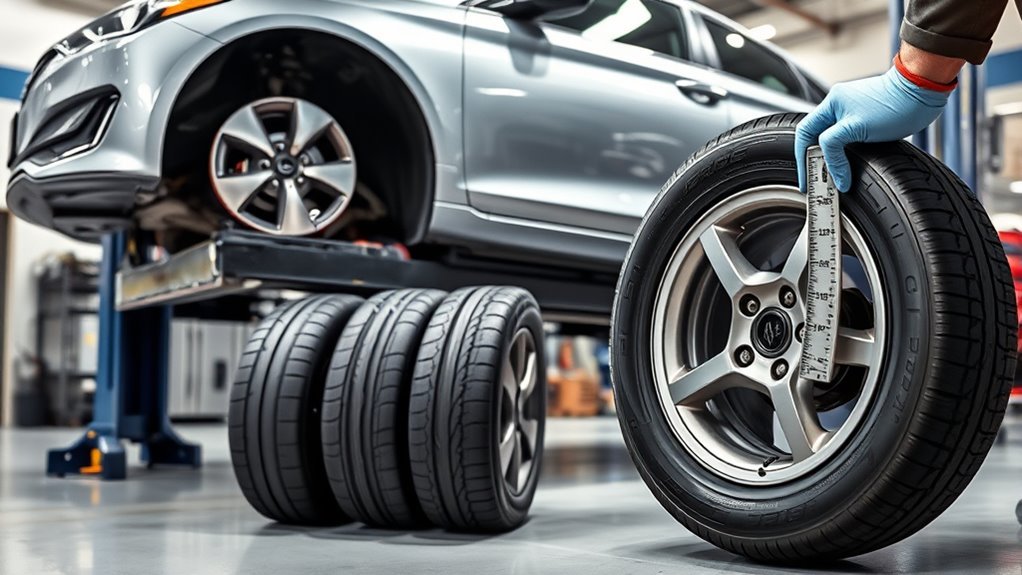
When replacing Sonata tires, you can choose OEM-fit options from brands like Michelin or Goodyear or select aftermarket lines such as Lionhart that match the factory diameter and load/speed ratings. If you’re considering a plus-size swap (for example, 205/65R16 → 215/55R17), verify overall diameter, wheel offset, and clearance and have a professional confirm compatibility. Always match or exceed the original load and speed ratings to maintain safety and handling.
OEM Replacement Options
If you need OEM-equivalent replacements for your Sonata, choose tires that match the factory size, load index, and speed rating—or consult a qualified tire professional to confirm acceptable plus-size alternatives. You’ll find OEM-compatible options across brands like Lionhart; use tire brand comparisons and performance ratings to pick a tire that preserves handling, ride quality, and safety. Verify size range for your generation—examples span 185/70R14 to 245/40R19—and confirm load/speed parity.
- Match: replicate factory size, load index, speed rating to retain designed dynamics.
- Assess: compare brands by tread compound, wet/dry traction, rolling resistance, and published performance ratings.
- Adjust: if you pursue a vetted plus-size swap, a professional will advise pressure and fitment changes to maintain stability and load capacity.
Safe Plus-Size Rules
Although a plus-size swap can improve traction and appearance, you must keep the new tire diameter within ±3% of the original to preserve speedometer accuracy and handling. When you consider larger wheels, verify clearance, suspension compatibility, and consult a trained professional to prevent rubbing. Choose reputable brands and confirm the replacement meets or exceeds load and speed ratings on the driver’s door label. Adjust tire pressure for the new size to maintain contact patch behavior and braking performance; incorrect inflation undermines traction control effectiveness. Expect trade-offs: wider tires can increase grip and visual impact but may reduce ride comfort and fuel efficiency. Make swaps deliberately—measure, validate specifications, and prioritize safety over aesthetics.
Load & Speed Matching
Because tire ratings directly affect vehicle safety and performance, you should match or exceed the load and speed ratings shown on the Hyundai Sonata’s tire placard when choosing replacements or doing a plus-size swap. You’ll preserve handling, braking, and structural integrity by selecting tires whose load ratings meet or surpass the original. Speed ratings must also equal or exceed factory specs to avoid thermal or structural failure at higher velocities. For plus-size swaps, consult a qualified professional to confirm compatibility and maintain liberated control of your vehicle.
- Verify placard: note original load ratings and speed ratings before shopping.
- Choose equal/greater ratings: prioritize safety over aesthetics.
- Professional check: confirm plus-size impact on dynamics and ABS/TPMS systems.
Tire Maintenance, Lifespan, and When to Replace Them
When you follow a regular inspection and maintenance routine, your Sonata’s tires will give safer, more predictable service and reach their expected lifespan more often. Use tire maintenance tips: check pressure against the driver’s door label weekly, inspect for cuts, bulges, and uneven wear, and rotate tires every 5,000–7,000 miles to equalize wear patterns. Note that the average driver covers 12,000–15,000 miles yearly, so plan rotations and inspections accordingly. Replacement timing: replace tires every five years regardless of tread due to material degradation, and use UTQG ratings only as mileage estimates because driving style and conditions alter longevity. Stay proactive—accurate pressure, regular rotation, and calendar-based replacement preserve safety and free you from avoidable risk.
Frequently Asked Questions
What Size Tires Are on a Hyundai Sonata?
Tire sizes vary by Sonata trim and year—common sizes range from 185/70R14 to 245/40R19. You’ll check your placard, rotate tires regularly, follow tire maintenance tips, and respect tire pressure importance for safety and freedom.
What Size Tires Are on a 2018 Hyundai Sonata?
The 2018 Sonata uses 205/65R16 (base), 215/55R17 (mid), or 225/45R18 (Sport 2.0T). You’ll follow tire maintenance tips, monitor tire pressure importance, rotate regularly, and free yourself with confident, safe driving.
What Size Tires Are on a 2010 Hyundai Sonata?
205/65R16 (base) or 215/55R17 (higher trims). You’ll want tire maintenance tips like regular pressure checks and tread inspections; seasonal tire changes free you from unsafe traction, improving handling and preserving fuel-efficient performance.
Conclusion
You’ve seen the Sonata’s tire evolution by year and trim, so you can pick sizes that match factory specs or safe plus-size swaps. Follow load index and speed rating recommendations, match rolling circumference, and keep pressures and alignment within spec to preserve handling and fuel economy. Rotate, inspect, and replace worn or aged tires promptly. Like a well-tuned suspension, the right tires keep your Sonata precise and predictable on the road.