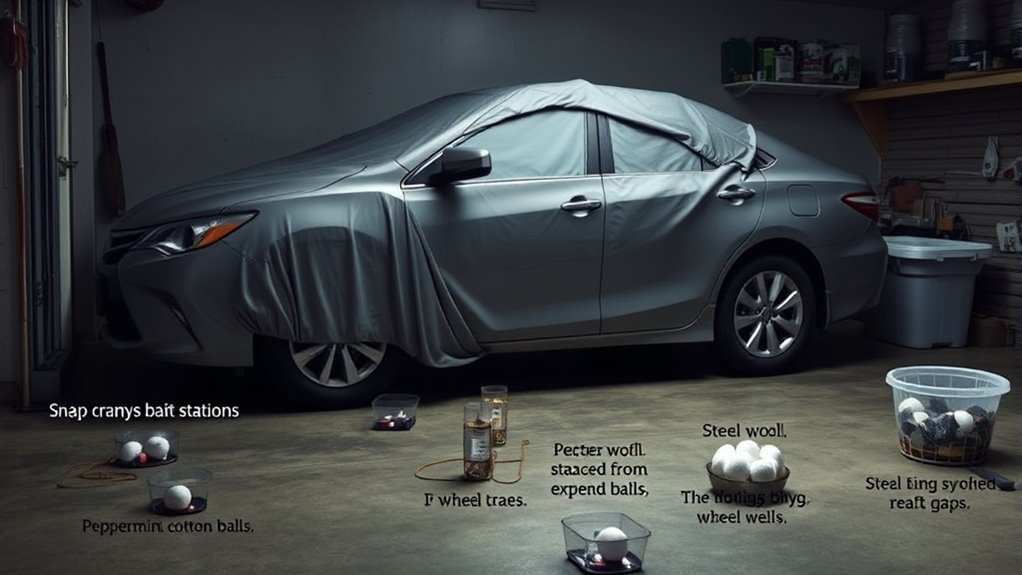
You’ll keep rodents out of your stored Toyota Camry by sealing quarter-sized gaps with fine mesh or steel wool, patching torn grommets and vents, and clearing leaves and debris around the car. Inspect wheel wells, firewall, hoses, and wiring for chew marks and nests, document damage, and clean droppings with gloves and a mask. Use motion lights, camera monitoring, peppermint oil or wire guards, and check often—follow these steps and you’ll learn practical fixes and maintenance tips.
Immediate Checklist: Seal Gaps & Check the Engine
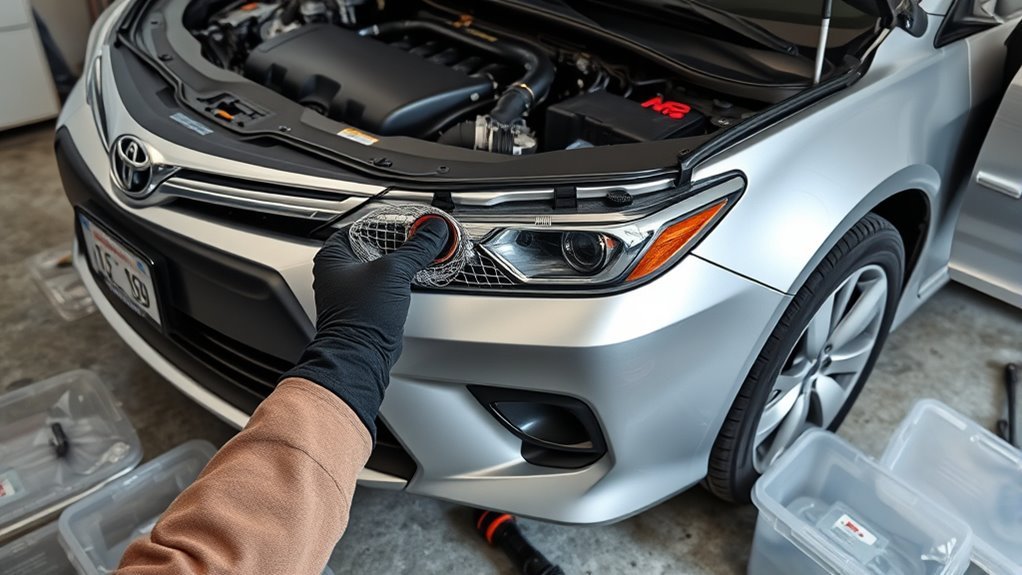
Before you store your Camry, do a focused walkaround and under-hood check to seal any gaps and remove nesting materials: inspect wheel wells, hood seams, firewall grommets, and cable or hose pass-throughs for holes the size of a quarter or smaller, stuff openings with fine mesh or steel wool, clear leaves and debris from around the car, and fit motion-sensing battery lights in the storage area to deter larger rodents and reveal activity. You’ll want a short checklist: identify openings, probe for soft insulation or chewed edges, and note areas needing durable patching. Prioritize engine maintenance tasks that reduce bite points and ignition risk—secure wiring looms, tuck loose hoses, and cover air intakes. Understand rodent behavior: they seek shelter, warmth, and nesting materials, so eliminate attractants and tighten access. Keep grass low and sweep away leaf piles weekly. Finish by photographing vulnerable spots and labeling repairs; that record frees you to act decisively and keep the Camry ready and rodent-free.
Find Signs of Nesting in a Stored Toyota Camry
When you inspect a stored Camry for nesting, work methodically from the outside in: scan wheel wells and tires, lift the hood to check the engine bay, and probe around the firewall and air intake for shredded paper, fabric, or insulation. Start by visually confirming nesting materials — look for compacted, shredded fibrous piles tucked into corners or behind components. Check tires and wheel wells for gnaw marks and concealed debris. Move to the engine bay: inspect under the battery tray, near wiring looms, and around the airbox where warmth attracts rodents. Identify droppings locations; small dark pellets cluster near entry points, beneath dashboards, or along floor seams. Listen quietly for scratching or squeaks while doors are closed; sound pinpoints activity after dark. Note and photograph everything so you can act decisively. Catalog entry points and affected components; liberation comes from knowledge and swift corrective steps, not guesswork.
How to Seal Your Camry: Mesh, Steel Wool, and Vents
Start by inspecting and sealing all engine-bay gaps and undercarriage openings with fine mesh and steel wool to block rodent access. Protect vents and cable or hose penetrations with snug-fit grommets or mesh patches, and add weather stripping around doors and the trunk for extra deterrence. Check these seals regularly and replace any degraded materials before they become new entry points.
Seal Entry Points
Check the engine bay, wheel wells, and vents for gaps or holes and block them with fine hardware mesh or tightly packed steel wool, which rats and mice can’t chew through. You’ll use entry point materials that resist gnawing and weather; pick stainless mesh or galvanized steel wool and trim to fit tightly. Use sealing techniques: anchor mesh with zip ties or metal crimps, pack wool into cavities, and finish with automotive-grade sealant where needed. Inspect vent perimeters and fasten covers without blocking airflow. Maintain freedom from infestation by clearing debris around the car and rechecking seals monthly. Stay exact: seal, secure, inspect. The table below images common spots and simple fixes.
| Spot | Material | Action |
|---|---|---|
| Engine bay | Mesh | Zip-tie |
| Wheel well | Wool | Pack |
| Air vent | Cover | Screw |
| Undercarriage | Mesh | Crimp |
| Trim gaps | Sealant | Caulk |
Protect Vents and Openings
Because vents and openings give rodents easy access, seal them with fine stainless mesh or tightly packed galvanized steel wool and fasten the material so it can’t be pulled out. You’ll inspect engine bays, wheel wells, and door gaps, fitting vehicle-specific vent covers that preserve airflow while denying rodents. Protect the air intake and exhaust with mesh screens, and replace worn weather stripping on doors and windows to remove hidden entry routes. Use peppermint oil sparingly around perimeter openings to disrupt scent trails without contaminating systems. Be systematic: check quarterly and after storms.
- Fit fine stainless mesh for permanent vent protection.
- Pack galvanized steel wool into small gaps, then reinforce with sealant.
- Install snap-on vent covers for serviceable airflow.
Safe Cleaning: Remove Nests and Droppings Step-by-Step
Put on gloves, a face mask, and eye protection before you touch anything — hantavirus and other pathogens make handling nests and droppings risky. You’ll use clear nest removal techniques and safety precautions: don’t sweep or blow; instead, seal the nest in a plastic bag or vacuum with a HEPA filter while minimizing disturbance. After removal, disinfect with a 1:10 bleach solution, let it sit, then wipe clean. Inspect seams and gaps; seal with fine mesh or steel wool to deny re-entry.
| Step | Action |
|---|---|
| 1 | Gear up: gloves, mask, eye protection |
| 2 | Remove nest gently or HEPA-vacuum |
| 3 | Bag and seal debris; dispose safely |
| 4 | Disinfect (1:10 bleach), dry, reseal gaps |
You’ll check every few weeks and refresh peppermint oil if you use it. Act decisively, protect yourself, and take back control of your stored Camry without delay.
Storage Habits to Stop Rodents Returning to Your Car
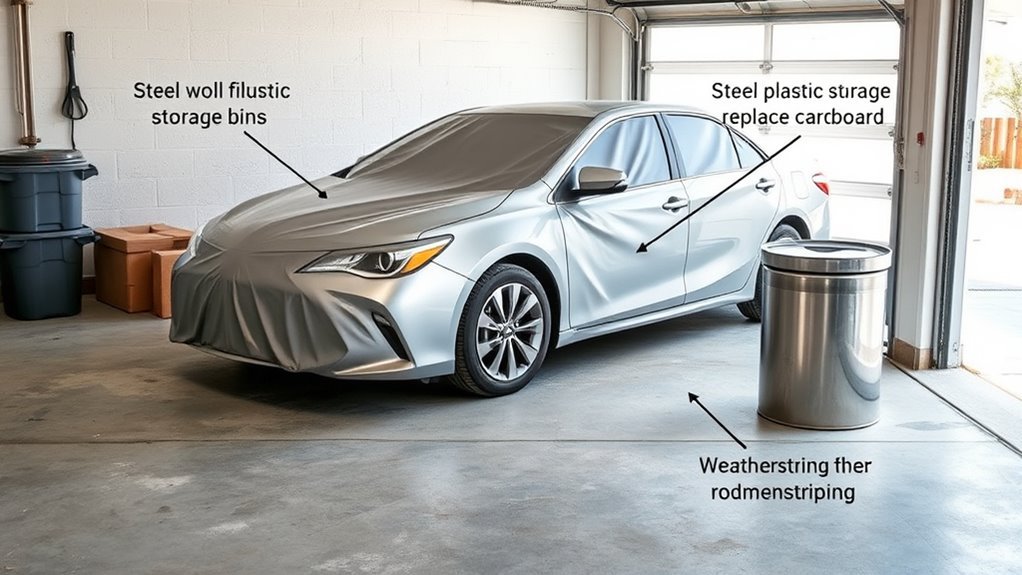
Keep rodents out by sealing entry points with fine mesh or steel wool so they can’t squeeze into the engine bay or cabin. Remove all food sources — store pet food and snacks in airtight containers and keep trash 30–50 feet away. Inspect the engine compartment and wheel wells regularly for nesting signs and replace repellents like peppermint oil in non-heated areas as needed.
Seal Entry Points
When you store a Camry, seal every possible entry point so rodents can’t get in and come back; inspect gaps around windows, doors and the engine bay, then apply proven entry point materials and sealing techniques to block access. Be precise: stuff small holes with steel wool, cover vents with fine mesh, and use silicone or automotive-grade sealant for larger seams. Check the engine compartment regularly—mice love sheltered spaces. Keep the surrounding area orderly so your work isn’t undone by nearby clutter or grass that invites nesting. Add motion-sensing lights to discourage larger intruders and park on gravel or pavement to reduce habitat. Take these steps and you’ll reclaim control of your stored Camry’s safety.
- Steel wool for small holes
- Fine mesh for vents
- Silicone sealant for seams
Remove Food Sources
Sealing entry points cuts off the routes rodents use, but stopping them from coming back means removing the things that attract them in the first place: food. You control this by strict food storage: put snacks, pet food, and any edibles into airtight plastic containers so rodents can’t smell or access them. Clean the interior and exterior thoroughly after each use — crumbs and residues change rodent behavior and invite return visits. Keep garbage at least 30–50 feet away from the car and never park under bird feeders; spilled seed is a beacon. Empty the trunk and check under seats before storing the Camry so no items get left behind. These habits deny rodents motivation to approach and free you from constant worry.
Regular Visual Inspections
Do an exterior and under-hood walkaround at least once every two weeks while the Camry is in storage, focusing on the engine bay and wheel wells where rodents like to nest. You’ll catch early signs of rodent behavior by keeping inspection frequency consistent, especially in cooler months when they seek shelter. Use a flashlight to probe hidden gaps, seals and insulation.
- Scan for shredded nesting materials, droppings and fresh gnaw marks.
- Check seals, hoses and wiring for bite damage or new entry paths.
- Note locations and set targeted deterrents or repairs immediately.
Stay disciplined: document findings, tighten inspection frequency if you see activity, and act swiftly to remove attractants. Liberation comes from control and routine.
Cheap Deterrents & Monitors: Oils, Lights, Cameras, Wire Guards
If you want simple, low-cost ways to keep rodents away from a stored Camry, focus on a mix of scent deterrents, physical barriers, and basic monitoring so you can spot problems early. Use spice deterrents like peppermint oil: soak kitchen sponges and stash them in non-heated compartments to disrupt scent trails and discourage nesting. Pair that with deliberate light placement—install motion-sensing battery lights near the vehicle to scare larger rodents and reduce nighttime activity. For camera positioning, mount inexpensive nighttime cameras facing tire wells and the undercarriage so you catch incursions early and act. Protect wiring by wrapping exposed cables in aluminum foil; rodents dislike the taste and texture and often avoid it. As an added barrier, a shallow water moat around tires can deter access—rodents typically won’t cross it. These measures cost little, demand minimal upkeep, and let you reclaim control over your stored Camry without harsh poisons or constant vigilance.
Frequently Asked Questions
How to Keep Rats Out of Stored Vehicles?
Use rodent deterrents, seal gaps with steel wool or mesh, remove nearby food, and keep vehicle maintenance current—inspect engine and undercarriage regularly, apply natural repellents, and store on clean gravel to reclaim your space.
How to Keep Mice Out of Parked Vehicles?
You keep mice out of parked vehicles by taking preventive measures: inspect and seal gaps, remove nearby food and debris, use natural repellents like peppermint oil, and park in tidy, open areas so you reclaim control and safety.
How to Keep Mice Out of Toyota?
You’ll act: 1 in 4 cars face rodent damage yearly. Seal gaps, use rodent repellents like peppermint, keep vehicle maintenance current, remove food, inspect for droppings, and install lights or traps to reclaim control.
Conclusion
You’ve got this — seal every gap, clear any signs of nesting, and keep the car tidy so rodents won’t treat your Camry like a five-star hotel. Check under the hood regularly, stuff vents with mesh or steel wool, and clean droppings safely if you find them. Use deterrents and monitors, rotate stored items, and park with the car on blocks if needed. A tiny prevention step now saves you from a catastrophic wiring mess later.