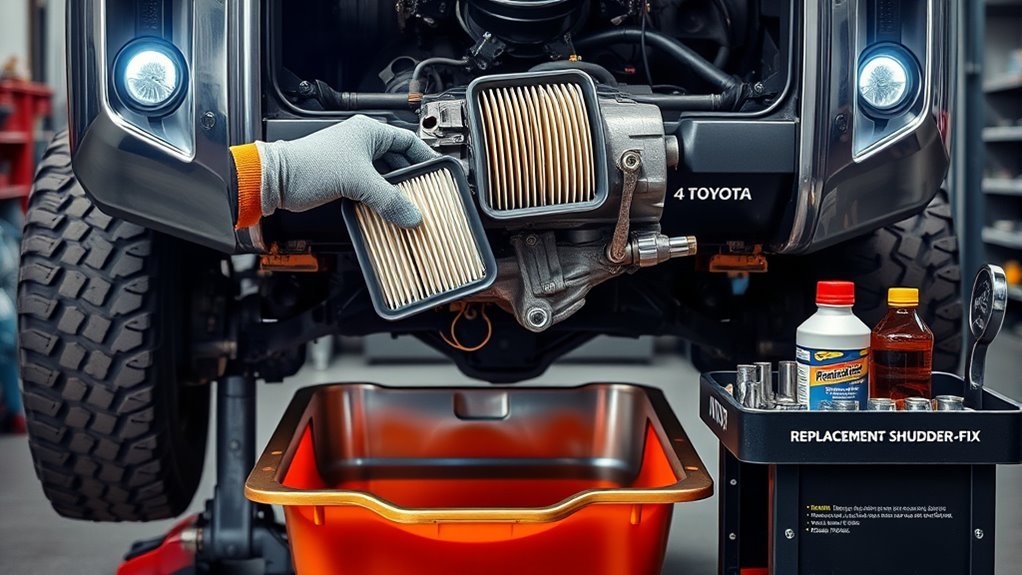
You can stop a 4Runner transmission shudder fast by confirming torque‑converter clutch engagement, logging RPM/gear/throttle during a controlled road test, and doing a drain‑and‑refill with Genuine Toyota WS ATF while checking the fluid level at the temperature Toyota specifies and replacing the inline filter or pan gasket.
Warm the vehicle, note fluid color/volume, and shift through gears after adding fresh fluid. If shudder persists, deeper valve‑body or TC diagnostics are next — keep going for step‑by‑step fixes.
Diagnose 4Runner Transmission Shudder: Quick Checks and When It Happens

When your 4Runner shudders—often like a washboard vibration in 4th gear just before shifting to 5th, or as a brief stutter under light acceleration or uphill—you should confirm it with a controlled road test and targeted checks. You’ll want to reproduce the vibration symptoms at consistent speed and load, feeling the seat and floor for rhythmic pulses.
Log RPM, gear, and throttle position; DTCs rarely flag transmission faults, so rely on observation. Inspect for common shudder causes: torque converter clutch engagement issues, degraded fluid quality, and drivetrain strain from oversized tires or modifications.
Check engine health too—misfires in specific cylinders can mimic transmission shudder and worsen clutch behavior. Prioritize simple transmission maintenance diagnostics: fluid color and odor, pan magnet debris, and proper drive-cycle replication. Record your findings clearly so you can choose repairs that free you from repeat symptoms and avoid unnecessary parts swaps or prolonged downtime.
Try a Drain-and-Refill, Check Fluid Level, and Safe Additive Options
After you’ve confirmed the shudder and logged gear/RPM/throttle, try a drain-and-refill as a first-line corrective step: changing degraded ATF often reduces torque converter clutch chatter and eliminates contaminants that worsen engagement. You’ll want Genuine Toyota WS to restore proper friction characteristics; aftermarket blends can aggravate fluid degradation.
Check the fluid level at the temperature specified in Toyota’s repair procedure for your transmission (the overflow-plug check is done with the fluid warm, not cold) — overfill or underfill will amplify shudder and risk damage. Consider a Magnefine or similar filter during service to trap debris and support longevity.
| Item | Purpose |
|---|---|
| Drain-and-refill | Remove degraded ATF |
| Fluid type | Toyota WS recommended |
| Level check | At Toyota’s specified fluid temperature |
| Filter upgrade | Catch internal debris |
| Additives | Temporary relief (e.g., ShudderFix) |
Transmission additives can offer short-term liberation from shudder, but use only proven, safe products and view them as interim measures. If symptoms persist after correct fluid, pursue deeper diagnostics rather than repeated additives.
DIY Step-by-Step: Parts, Tools, and Procedure for a Fluid-Based Fix
Start by gathering parts and tools so the job goes smoothly: you’ll need Genuine Toyota WS ATF (enough for a full exchange), the sockets and hex bit for your transmission’s fill and drain plugs, a drain pan, graduated clear jugs to measure fluid removed and added, a Magnefine or equivalent inline filter, new pan gasket or crush washer as required, and basic shop supplies (jack stands, ramps, gloves, and shop rags).
Warm the vehicle to operating temp, level it, and secure on stands. Loosen the fill plug first so you know you can refill, then remove the drain plug and collect the fluid in jugs, note color and volume for fluid maintenance tips and transmission health records. Replace pan gasket or crush washer, install inline filter, and torque fasteners to spec.
Add fresh WS fluid, shift through all gears with the engine running to circulate, then recheck the level at the specified fluid temperature and adjust. Repeat partial drain/refill cycles at roughly 500-mile intervals if shudder persists. Follow the inspection and replacement schedule in your maintenance guide; proactive maintenance preserves freedom from roadside failure and protects transmission health.
Full Flush vs Exchange: When It Helps and When It Can Hurt Your 4Runner
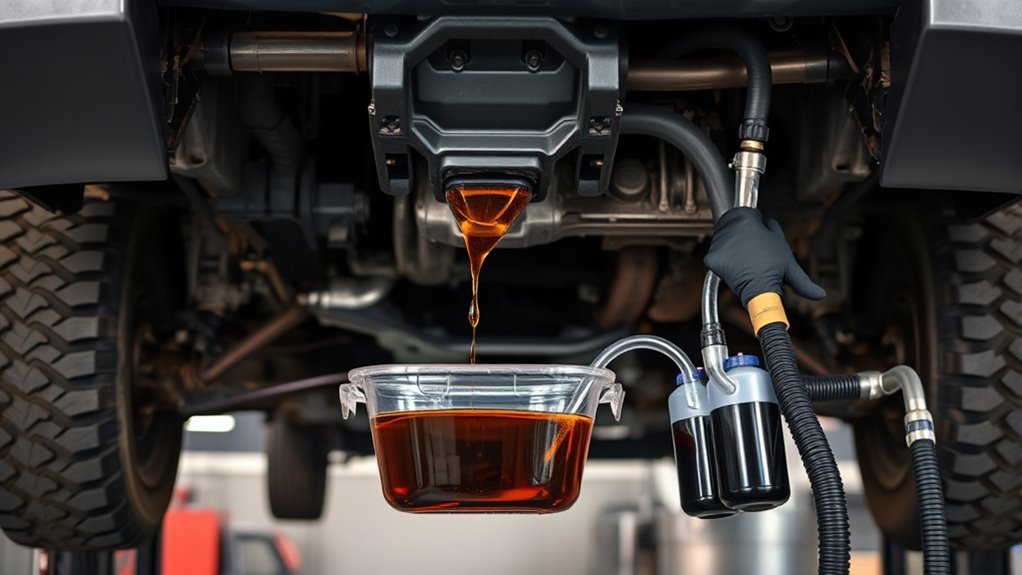
Because a full flush replaces every drop of fluid, it can rapidly remove heavy contamination but also risks dislodging settled debris that a worn transmission can’t tolerate, so you should weigh the potential benefit against the likelihood of stirring up particles that can clog valves or worsen shudder.
A full flush delivers maximum cleaning power and the flush benefits are clear when contamination is severe and internal wear is minimal. However, if your 4Runner shows signs of age or internal breakdown, a full flush can make things worse. An exchange replaces only a portion of fluid, letting you refresh the system gradually and reducing exchange risks from released particles.
Always use genuine Toyota WS fluid; aftermarket variants can undermine both procedures and aggravate shudder. For preventive care, perform fluid service at the interval in your maintenance guide so you minimize the need for aggressive flushing later. Choose based on contamination level, wear indicators, and your tolerance for risk.
Valve Body, Torque Converter, Filter : Signs You Need Deeper Repairs
If a fluid exchange or flush didn’t stop the shudder, the problem may be deeper in the valve body, torque converter, or a clogged filter—these components govern pressure and flow, so failures there produce the same symptoms you tried to fix with fluid service.
You’ll want to inspect for telltale signs: metal flakes or burnt ATF indicate internal wear; inconsistent pressure or delayed gear shifts point to valve body faults; shudder during acceleration often traces to the torque converter, especially Flex Lock designs. A clogged filter will restrict flow and mimic other shudder causes, so replace it as part of basic fluid maintenance.
Act early: cleaning or rebuilding the valve body and replacing a failing torque converter stop progressive damage. You’re aiming for independence from recurring breakdowns—address these mechanical root causes rather than chasing symptoms with repeated fluid work that won’t resolve internal component failure.
When to See a Shop, Expected Costs, and Warranty Tips
If shuddering continues after a fluid change or you notice slipping, take the 4Runner to a qualified transmission shop so they can test for torque converter or valve body faults. Expect costs from about $200 for a fluid exchange to well over $5,000 for a full rebuild, and insist on Genuine Toyota WS fluid to avoid worsening the issue. If you’re under warranty, document every service visit and talk to your dealer about coverage before authorizing major repairs.
When To Seek Help
When shuddering continues after a fluid change or gets worse, you should take the 4Runner to a shop promptly to avoid further transmission damage. You’ll preserve transmission health by proving timely fluid maintenance and showing records. Bring service receipts and note when symptoms began; clear documentation strengthens warranty arguments if a TSB applies.
Expect shops experienced with Toyota transmissions to perform diagnostic scans, road tests, and pressure checks before recommending repairs. If you’re unsure, get a second opinion from a reputable transmission specialist. Understand that repairs can be expensive, so ask the shop to outline diagnostics, probable causes, and options. Stay assertive: demand written estimates, part numbers, and warranty coverage details so you control choices and avoid unnecessary work.
Repair Costs & Warranty
Although a simple fluid exchange can fix many shudder cases, persistent or internal damage can push repair bills well past $5,000 for a rebuild, so you should weigh cost, warranty status, and diagnostic certainty before committing to work. Get firm repair estimates up front: dealer fluid exchanges usually run over $200, DIY parts/fluids about $100–$150, and full rebuilds exceed $5,000.
Check warranty options immediately — factory or extended plans may cover torque converter failures or related labor. Document every service visit and fluid change; that record strengthens claims. If shudder continues after a proper exchange, seek a diagnostic from a trusted transmission specialist, compare quotes, and use community-sourced shop ratings to avoid inexperienced providers.
Frequently Asked Questions
What Fluid Stops Torque Converter Shudders?
Use Genuine Toyota WS transmission fluid; it targets torque converter shudder by matching OEM friction characteristics. You can try thicker high-quality fluids or friction modifiers for temporary relief, but stick with recommended WS for reliable, liberating results.
What Causes Transmission Shudder at Low Speed?
You’re experiencing transmission shudder at low speed because transmission wear, fluid degradation, incorrect level and valve/solenoid faults impair torque converter lockup; engine load and aggressive driving habits amplify vibration, so address fluid, components, and habits promptly.
Conclusion
You’re close — act fast. A shudder’s often a fluid or torque-converter whisper, so start with level, color, and a drain-and-refill before deeper surgery. Use compatible ATF, avoid harsh flushes on high-mileage 4Runners, and swap the filter if accessible. If shudder persists or valves feel crunchy, pull the torque converter/valve body or see a shop — repairs bite into money but stop transmission carnage. Treat symptoms early; prevention is your cheapest gearbox medicine.