You’re choosing between tunable electric brakes and self-contained surge (hydraulic) units. Electric brakes give you direct, proportional control via an in-cab controller, easier diagnostics, and better heat management—ideal for heavy loads and varied terrain. Surge brakes are waterproof, simpler to maintain, and activate automatically—best for boat trailers and level runs—but they lag on heavy stops and need hydraulic upkeep. Below you’ll find detailed comparisons, maintenance tips, legal points, and a practical selection checklist.
Electric Trailer Brakes: How They Work and Best Uses
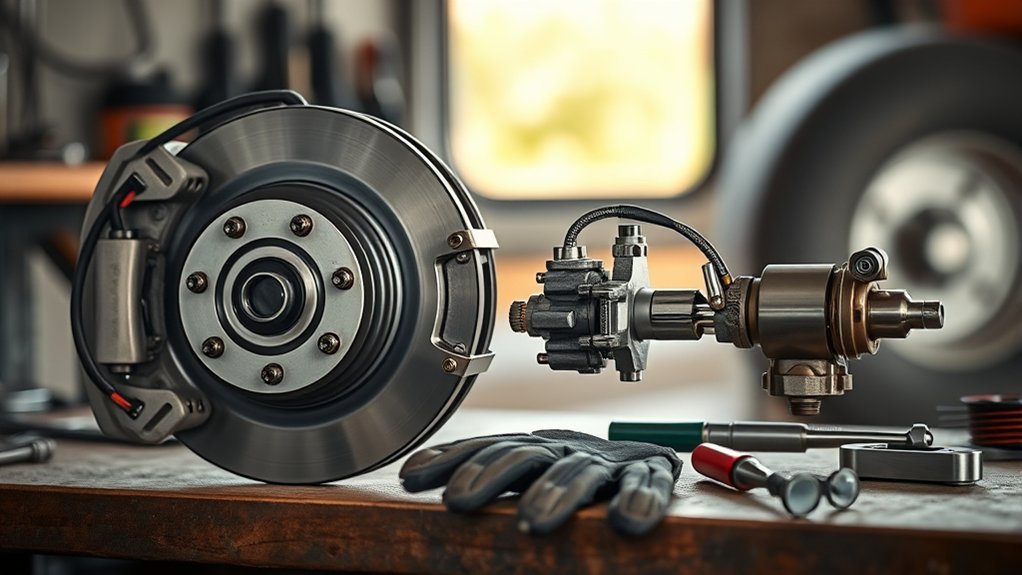
Electric trailer brakes use a brake controller in your tow vehicle to send an electrical signal to the trailer’s brake assemblies, activating the shoes or pads as the vehicle decelerates. You’ll rely on precise brake controller functionality to modulate current proportionally, so braking mirrors your deceleration rather than jolting it. Compared to surge systems, electric units give you direct, tunable control: you set gain and use load weight adjustment to match braking force to cargo mass and road grade. You’ll prefer electric brakes when you need predictable, serviceable hardware—controllers like the Tekonsha Prodigy P3 deliver smooth proportional engagement that improves stability under heavy loads. Maintenance is simpler, with fewer wear-prone hydraulic parts and easier diagnostics. Be mindful that electrical systems can short if submerged, so they’re less suited for repeatedly wet environments like boat launch ramps. Ultimately, choose electric brakes when you want controllable, low-maintenance performance and the freedom to dial braking precisely to your payload.
Surge (Hydraulic) Trailer Brakes: How They Work and Best Uses
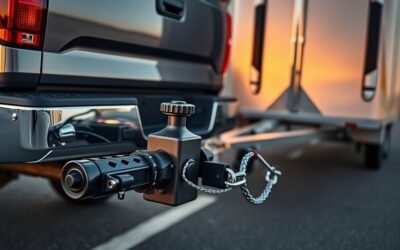
Because they harness the trailer’s own momentum, surge (hydraulic) brakes engage automatically as the tow vehicle slows, using a compressing actuator to force hydraulic fluid into the wheel cylinders and apply the shoes or pads. You’ll appreciate that their self-contained nature removes the need for wiring or a brake controller—installation tips: align actuator, bleed lines, and secure mounting to avoid binding. Surge systems excel for boat trailers because their sealed, waterproof design tolerates submersion and salt exposure.
Technically, you trade electronic control for mechanical simplicity; that grants independence but imposes limits. They perform best on level terrain and with moderate loads; heavy loads or steep descents can reveal delayed engagement and reduced effectiveness. You must consider legalities: manual reverse lock-outs can prevent unwanted braking but may be restricted in some jurisdictions. maintenance advice: inspect seals, check fluid, and test actuator travel regularly to preserve reliability and your freedom to tow without dependency on complex electronics.
Performance: Stopping Power, Heat Handling, and Responsiveness
Having covered how surge systems operate and where they shine, let’s compare how each brake type performs when you need reliable stopping power, heat management, and quick responsiveness. You’ll find electric brakes deliver superior brake efficiency and load adaptability: adjustable gain and controller tuning let you modulate stopping power precisely across weights and grades. Surge brakes, driven by trailer momentum, produce a slower, less predictable response under heavy loads.
- Stopping power: electric systems offer immediate, proportional deceleration; surge systems delay as actuator compresses.
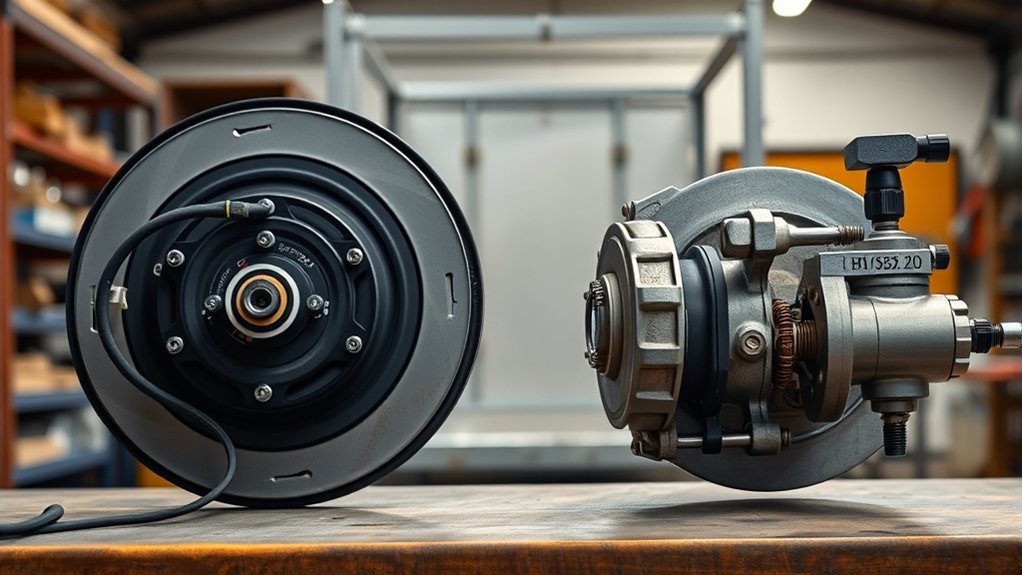
- Heat handling: electric setups commonly use disc brakes for better dissipation; surge-associated drums retain more heat and can fade.
- Responsiveness: electric brakes engage via vehicle signal almost instantly; surge engagement is inherently lagged by physical movement.
If you seek freedom from unpredictable braking on steep descents or varying cargo, electric brakes give the controllable performance and thermal resilience that align with that goal.
Durability & Maintenance: Water Exposure, Wiring, and Service Needs
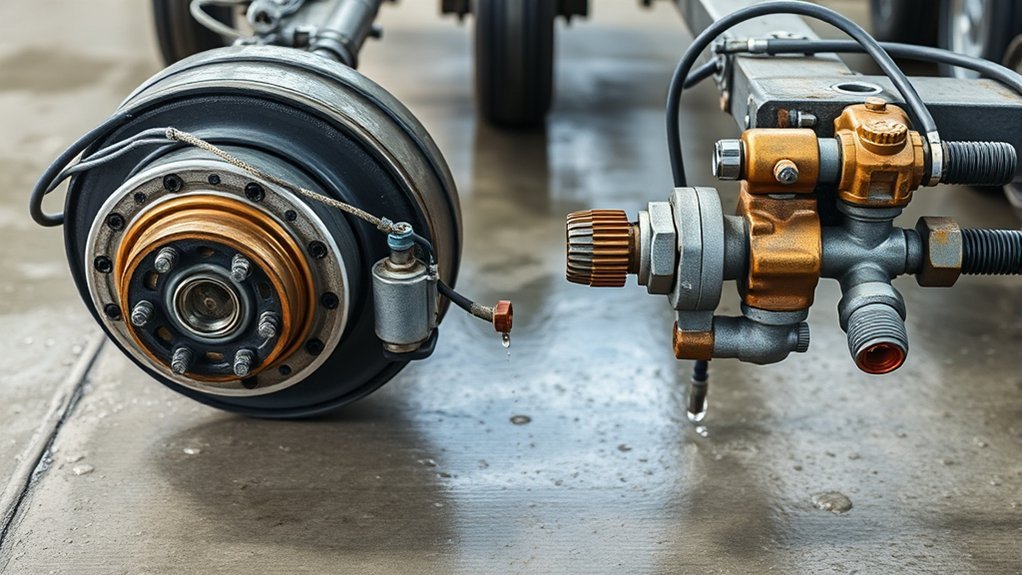
When you choose between electric and surge brakes, consider how water resistance and wiring impact long-term reliability. Surge systems tolerate marine exposure with fewer failures, while electric setups need sealed connectors and routine electrical checks to avoid shorts. Expect surge brakes to demand hydraulic inspections and fluid service, whereas electric brakes require periodic wiring and gain adjustments to maintain performance.
Water Resistance Needs
If you frequently launch or cross rivers, pick a braking system that tolerates immersion: surge brakes are mechanically sealed and stay functional when submerged, while electric brakes can short or corrode if water reaches their wiring and magnets. Surge systems employ waterproof design and inherently offer superior corrosion resistance because they eliminate vulnerable electrical components. You’ll gain operational freedom and reduced upkeep in marine environments.
- Surge brakes: sealed hydraulic/mechanical components, minimal service after exposure.
- Electric brakes: susceptible to shorts and magnet corrosion; need vigilant inspection.
- Maintenance impact: surge reduces water-driven failure modes; electric demands proactive protection.
Choose surge for reliability in immersion-prone use; choose electric only if you can rigorously manage water-related risks and maintenance obligations.
Wiring And Service
Water exposure highlighted the differing vulnerability of these systems, but wiring and service needs define day-to-day durability and upkeep. You’ll find electric brakes depend on robust wiring integrity: they require a brake-controller feed, weatherproof connectors, and protective sheathing to resist moisture, abrasion, and corrosion. That wiring increases inspection tasks and potential failure points compared with surge brakes, which omit electrical connections and tolerate submersion better.
For service frequency, electric systems demand regular wiring checks for frays and corrosion, periodic controller adjustments for varying loads, and component inspections. Surge brakes need less frequent attention due to a simpler hydraulic mechanism and more automatic operation, though you’ll still inspect mechanical and fluid components. Choose based on your tolerance for wiring maintenance versus hydraulic simplicity.
Safety & Legal: Breakaways, Controllers, and Compliance
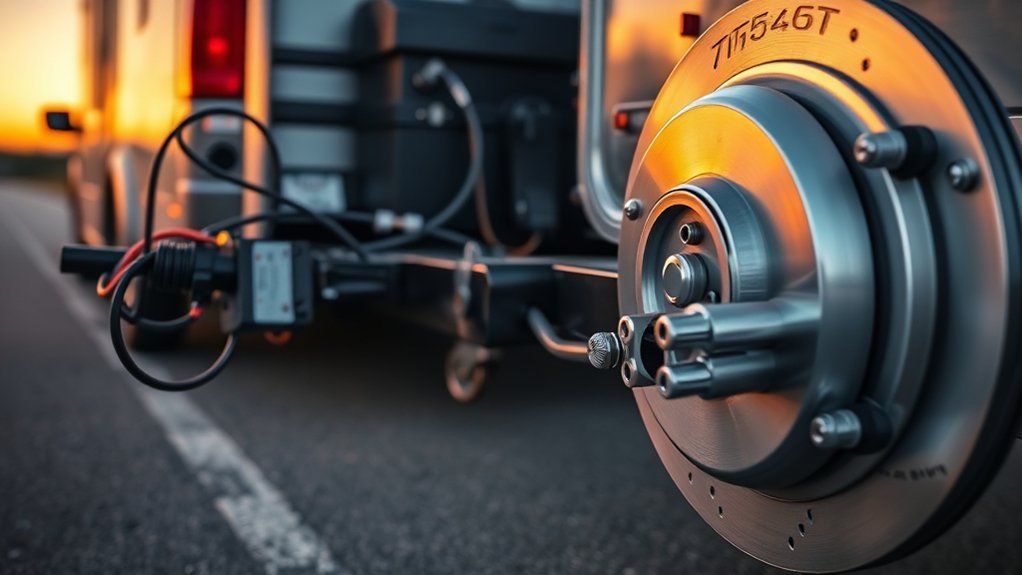
Because trailer braking systems serve different mechanisms and legal obligations, you need to match breakaway devices, controllers, and maintenance practices to both the brake type and local regulations. You’ll prioritize brake safety and legal compliance differently for electric and surge systems: electric brakes need a compatible in-cab controller and breakaway switch; surge brakes rely on mechanical actuation and often lack independent emergency activation. Verify state rules—some jurisdictions mandate breakaway systems regardless of brake type.
- Inspect wiring, connectors, battery (for breakaway), and controller calibration regularly to maintain compliance and operational readiness.
- For electric brakes, install a rated controller and test proportional/adjustable settings under load; document tests for audits.
- For surge brakes, confirm mechanical integrity, coupler function, and whether your state requires an auxiliary emergency system.
You’re responsible for selecting, installing, and documenting devices that free you from regulatory risk while maximizing safety and towing autonomy.
Choose One: Checklist by Load, Terrain, Tow Vehicle, and Budget
Having matched breakaway devices and controllers to your brake type and local rules, you now pick the braking system that fits your load, terrain, tow vehicle, and budget. Start by matching load capacity to brake response: choose electric if loads vary or often approach gross trailer weight limits, since adjustable modulation handles shifting mass better; opt for surge only for consistently light, predictable loads. Evaluate terrain challenges—steep grades and frequent descents favor electric brakes for fine-tuned retardation and reduced fade, while surge systems can lag on rapid deceleration. Assess vehicle compatibility: electric brakes need a brake controller fitted to your tow vehicle, so verify wiring and controller capacity; surge brakes operate independently, easing initial setup but limiting integrated control. Run a clear cost analysis: electric systems carry higher upfront and installation costs but offer safety features (breakaway activation) and potentially lower long-term wear; surge brakes cost less initially but may incur maintenance or compliance costs. Choose for control and liberation.
Frequently Asked Questions
What Are Surge Brakes on a Trailer?
Surge brakes are self-contained hydraulic brakes that activate from trailer inertia; you’ll appreciate simplicity for towing safety, but they demand specific brake maintenance and offer less manual control compared to electric systems, limiting heavy-load flexibility.
How Do I Know if My Trailer Has Electric Brakes or Surge Brakes?
You check wiring and hitch: if you see a controller cable and electromagnets it’s electric; if you find a hydraulic actuator on the coupler it’s surge. You’ll improve brake maintenance and trailer safety, so you’re liberated.
Can You Reverse With Surge Brakes?
Yes — you can reverse with surge brakes, but you’ll need to engage the lock-out to avoid brake performance issues. Doing so preserves towing safety, prevents drag, and gives you freer, more controlled maneuvering.
Conclusion
You now know the core differences: electric brakes give precise, controller-managed modulation while surge (hydraulic) brakes act automatically under tow-vehicle deceleration. Choose electric when you need adjustable response and integration with brake controllers; choose surge for simplicity and reliable self-actuation on lighter, marine, or off-road loads. Like a well-tuned instrument, the right brake type delivers predictable, repeatable stopping. Match brake type to load, terrain, tow capacity, maintenance access, and legal requirements.