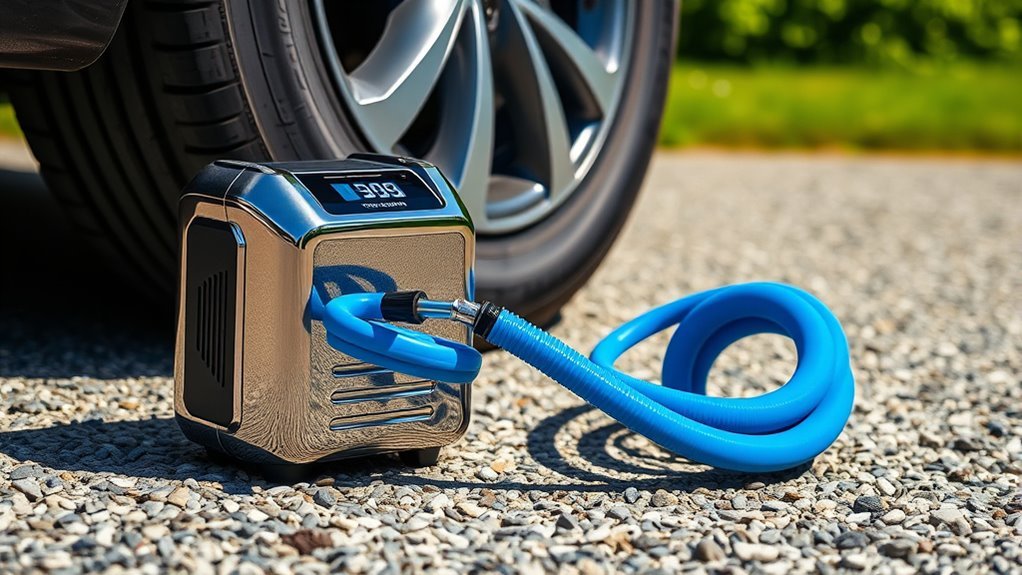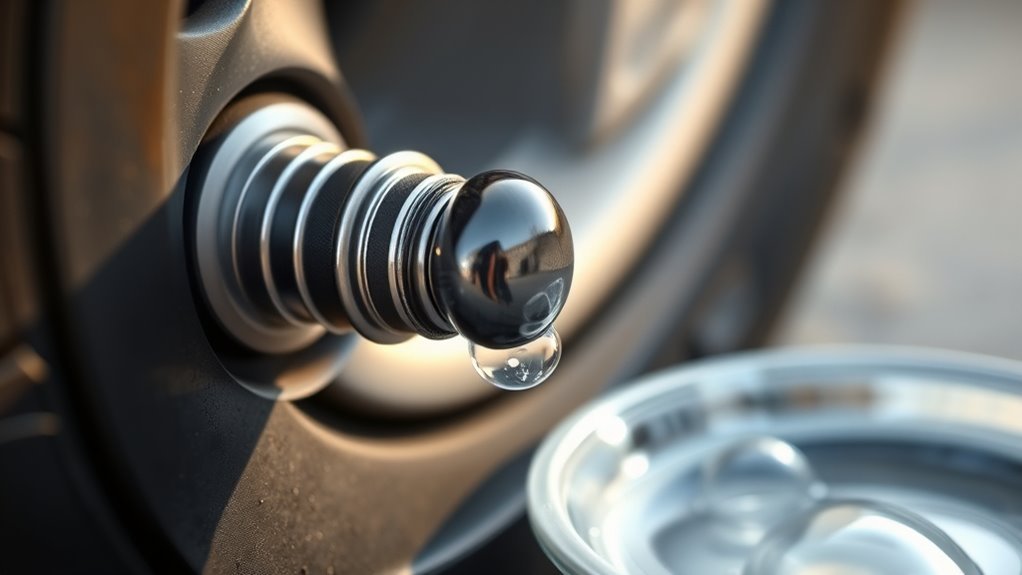
If your tire inflator is leaking air, first check the common leakage points: hose-to-inflator, hose-to-chuck, and chuck-to-valve stem junctions. Perform a soap bubble test on these connections to identify leaks. Tighten the valve core and inspect for damaged O-rings or cracks. If the valve components are worn or broken, replace them. Regular maintenance can prevent future leaks, and there’s more to explore about enhancing the durability of your inflator.
Identifying Common Causes of Air Leaks in Tire Inflators
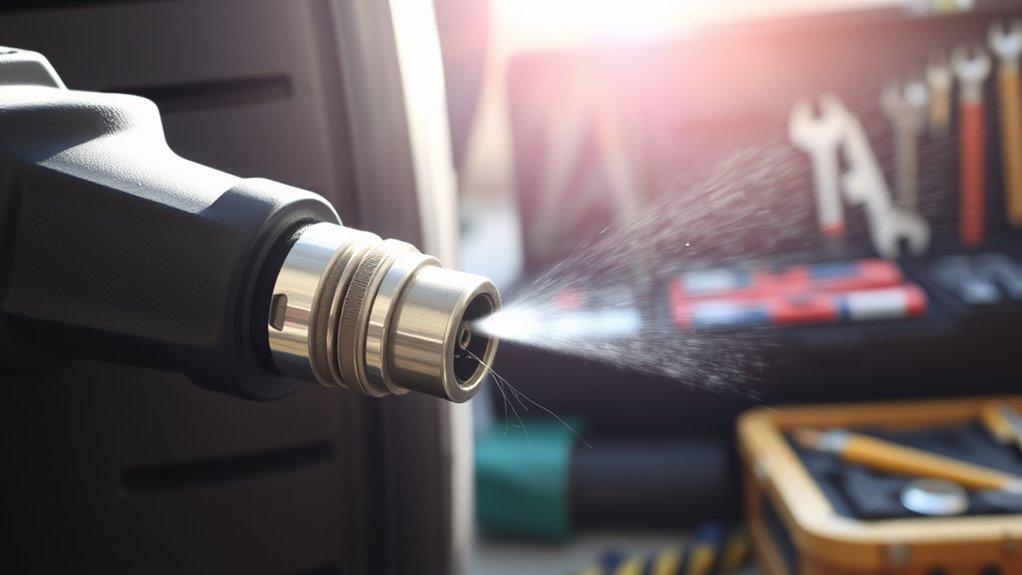
When you’re using a tire inflator, it’s crucial to recognize that air leaks often stem from specific connection points. Approximately 80% of these leaks occur at the hose-to-inflator, hose-to-chuck, and chuck-to-valve stem junctions. A defective nozzle or a faulty valve stem can release air rather than add it to the tire. Additionally, loose or damaged valve cores may result in significant air loss during inflation, requiring inspection with a valve core tool for replacement if necessary. Cracks or corrosion in the valve stem can also compromise the seal, leading to air escape. Performing a soap bubble test around these connections can help you visually identify leaks, empowering you to maintain ideal tire pressure effectively.
How to Identify the Leak’s Source?
To effectively identify the source of an air leak in your tire inflator, start by conducting a soap bubble test on all connection points. Apply a soapy solution to each joint and watch for bubbles that indicate air loss. While manipulating hoses and connections, listen for hissing sounds; these can reveal worn components or loose fittings. Next, check the valve core for tightness and integrity, as a loose or damaged valve can lead to significant air loss under pressure. Inspect all connection points, particularly the hose-to-inflator and hose-to-chuck interfaces, for visible damage. If you detect air loss, re-torque connections and replace any degraded rubber grommets or O-rings—these steps are often a simple fix.
Troubleshooting Air Leaks
Although air leaks in tire inflators can be frustrating, troubleshooting them methodically can restore perfect function. Start by identifying common leakage points—80% of air leaks occur at the hose-to-inflator, hose-to-chuck, and chuck-to-valve stem connections. To diagnose leaks, perform a soap bubble test; spray a soapy solution on connections and watch for bubbles. If you find leaks, tighten the brass screw on the handle or inspect the air chuck for a broken internal o-ring that may need replacement. Verify proper sealing by using thread seal tape and snugging connections at quick-connect plugs and couplers. Regularly maintain rubber grommets and O-rings to prevent air leaks, guaranteeing your air compressors work effectively.
What to Do If Your Valve Components Are Damaged?
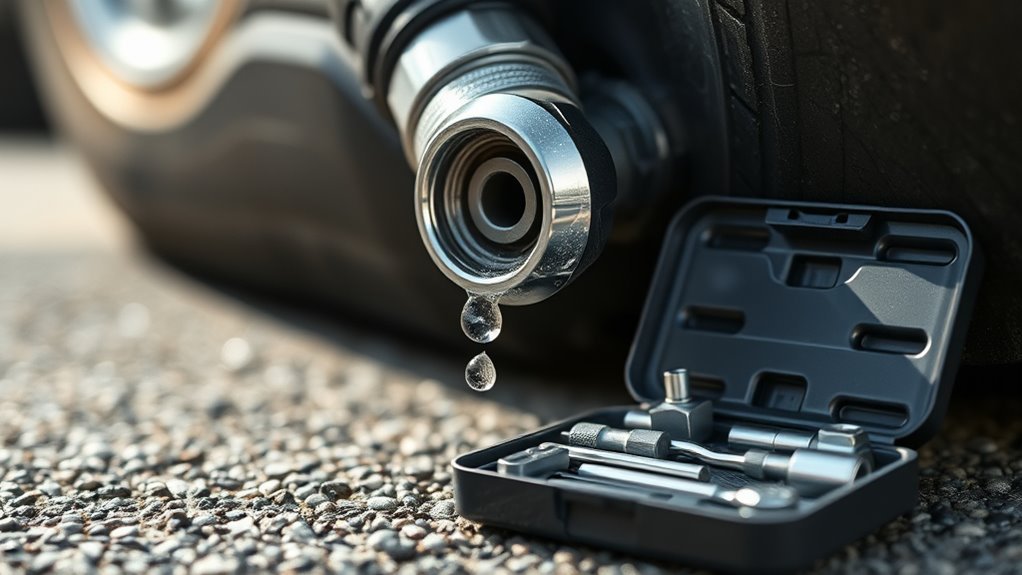
If you discover damage to your valve components, start by inspecting the valve stem for any visible cracks or signs of corrosion, as these issues can lead to air leaks. Use a valve core tool to check if the valve core is loose; tightening or replacing it often resolves the problem where air is escaping. If the valve stem shows significant wear, consider replacing it entirely to guarantee a proper seal and prevent future leaks. To detect air leaks, apply soapy water around the valve; bubbles will indicate where repairs are needed. Always handle valve components with care during inspection and replacement to avoid losing small parts and maintain the functionality of your tire inflator.
How to Maintain Your Tire Inflator to Avoid Future Leaks
Maintaining your tire inflator is essential for preventing future air leaks, as neglect can lead to costly repairs and reduced efficiency. Follow these steps to guarantee proper tire maintenance:
- Inspect and replace rubber grommets and O-rings every 12-18 months to prevent air leaks.
- Clean the chuck with a dry cloth to remove debris that can hinder sealing.
- Store the inflator in a cool, dark place to avoid UV damage that degrades seals.
- Perform the soap bubble test on connections periodically; large bubbles indicate major leaks and small ones suggest slow leaks.
Lastly, if your inflator’s battery is low, don’t hesitate to replace the battery to maintain ideal tire pressure and prevent future issues.
Frequently Asked Questions
Why Does My Air Compressor Keep Leaking Air?
Your air compressor keeps leaking air due to improper sealing or worn parts. Regular maintenance, employing leak detection techniques, and applying pressure loss solutions can help you troubleshoot effectively and maintain peak performance.
Why Is My Tire Pressure Gauge Not Sealing?
Is your tire pressure gauge not sealing? It could stem from seal deterioration causes or gauge calibration issues. Regular tire maintenance tips, like checking connections and ensuring proper alignment, can aid in pressure loss prevention.
Why Is My Tire Leaking Air but No Hole?
Your tire’s likely leaking due to valve stem issues, rim corrosion, or poor sealing at the tire bead. Consider using puncture sealant for minor leaks, but inspect thoroughly for hidden defects before proceeding.
What Causes an Air Release Valve to Leak?
Air release valve leaks often stem from inadequate sealing issues, valve maintenance neglect, or pressure regulation faults. Make certain you regularly inspect the valve for cracks and debris, which can compromise its sealing effectiveness and lead to air loss.
Conclusion
To sum up, pinpointing and fixing air leaks in your tire inflator is essential for maintaining its efficiency. By systematically checking connections and components, you can patch up any issues before they spiral out of control like a slow leak in a balloon. Regular maintenance will keep your inflator performing at its peak, ensuring you’re never left stranded with underinflated tires. Stay proactive, and your inflator will serve you well, like a trusty companion on your journeys.