EPA MPG is a useful starting point for comparing Toyota Tundra trims, but it is not a promise of what your truck will get every day. For the 2023 Toyota Tundra TRD Pro, the official EPA estimate is 18 city, 20 highway, and 19 combined mpg, while mixed real-world driving often lands in the mid-teens depending on speed, tires, terrain, payload, and towing. Use the EPA number as a baseline, then verify your own Tundra’s fuel economy with simple fill-up math.
Quick Answer
The 2023 Toyota Tundra TRD Pro is EPA-rated at 18 city, 20 highway, and 19 combined mpg. In normal mixed driving, many owners and long-term tests see closer to 14–16 mpg, while careful highway driving can reach or beat the EPA highway number under ideal conditions.
Key Takeaways
- EPA MPG is best used for comparing vehicles, not predicting your exact fuel bill.
- The 2023 Tundra TRD Pro uses Toyota’s i-FORCE MAX twin-turbo V6 hybrid, not a V-8.
- Speed, hard acceleration, towing, payload, tire pressure, tire type, terrain, and weather can all move real MPG up or down.
- Hand-calculated MPG at each fill-up is usually more reliable than relying only on the dashboard average.
Official 2023 Toyota Tundra TRD Pro EPA MPG
The official FuelEconomy.gov listing for the 2023 Toyota Tundra 4WD PRO shows the following EPA estimate:
| Model | City MPG | Highway MPG | Combined MPG | Fuel |
|---|---|---|---|---|
| 2023 Toyota Tundra 4WD PRO | 18 | 20 | 19 | Regular gasoline |
FuelEconomy.gov also lists the 2023 Tundra 4WD PRO with a 5.3 gal/100 mi consumption figure and a 22.5- to 32.2-gallon tank-size range, depending on configuration. For owners, the important point is simple: a high-capacity fuel tank can give the Tundra a long driving range, but it does not mean the truck is especially fuel-efficient.
Note: The 2023 Tundra TRD Pro uses Toyota’s i-FORCE MAX twin-turbo V6 hybrid powertrain. Toyota lists this system at 437 horsepower and 583 lb-ft of torque. It is not the older Tundra V-8.
How the EPA Tests MPG and What It Includes/Excludes
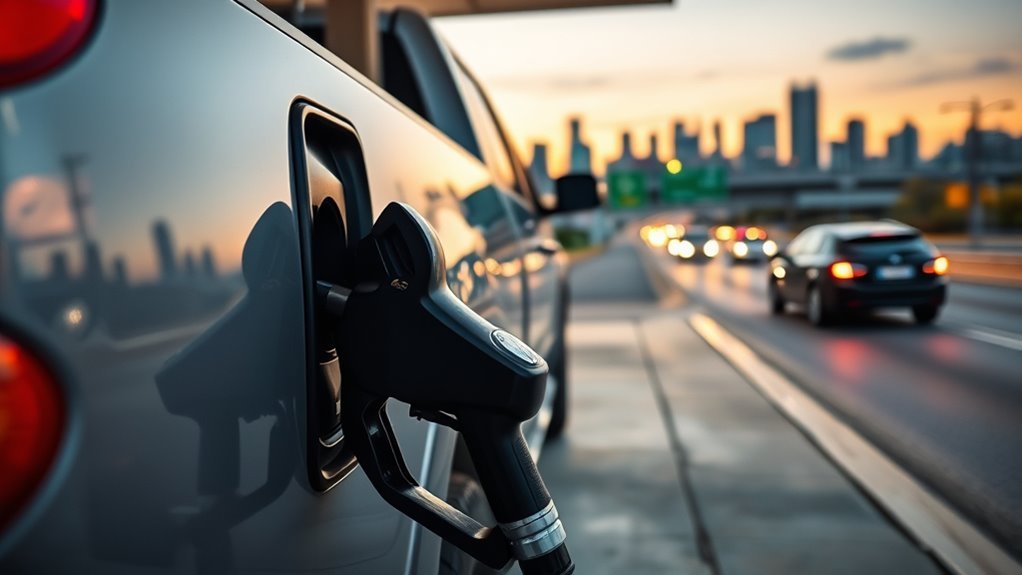
The EPA fuel economy number comes from controlled laboratory testing. According to FuelEconomy.gov’s testing explanation, a vehicle’s drive wheels are placed on a dynamometer, and the test equipment simulates road load, wind resistance, and vehicle weight. The driver then follows standardized drive cycles that represent city and highway driving.
Modern EPA estimates are more complete than a simple city/highway loop. Since 2008, EPA estimates have used additional adjustment tests that account for higher speeds, air conditioning use, and colder temperatures, as described in FuelEconomy.gov’s detailed test information. That said, EPA testing still cannot perfectly recreate every real-world variable.
EPA ratings do not fully predict how your Tundra will perform with oversized tires, roof racks, off-road accessories, steep grades, strong headwinds, heavy cargo, towing, long idle time, or an aggressive right foot. That is why two drivers with the same truck can see very different fuel economy.
EPA MPG is a comparison tool first. Your real MPG is the result of your truck, your route, your tires, your load, and your driving habits.
Realistic Tundra MPG You Can Expect
For a 2023 Tundra TRD Pro, a realistic mixed-driving expectation is often around 14–16 mpg. That range fits many owner reports and long-term test impressions, especially when the truck is used like a full-size off-road pickup instead of a highway commuter. Efficient highway driving can do better, while towing, heavy cargo, larger tires, and frequent city traffic can do worse.
[Products Worth Considering]

Vehicle Fit:The Car Gear Shift Panel Trim Cover is compatible with Tundra / Sequoia 2022-2025 2026. Simply remove the double-sided adhesive and stick it on, will not affect the use of the gear shift or button.

CUSTOM FIT-The Car Phone Holder Only Suitable for Toyota Tundra 2022 2023 2024 2025 2026 /Sequoia 2023 2024 2025 2026 with 14-inch screen (Limited/Platinum/1794 Editon/TRD Pro/Capstone). The specially customized adjustable base allows the phone holder to be installed on the screen, preventing obstruction of the air outlet and ensuring safer driving.
Real-World Highway MPG
Highway MPG depends heavily on speed and wind resistance. A steady, moderate-speed cruise on stock tires can bring the Tundra closer to its EPA highway estimate. In careful economy-style driving, a 2023 Tundra TRD Pro has been shown to beat the EPA highway number, but that type of result usually requires ideal conditions, smooth inputs, limited traffic, and restraint with speed.
- Steady speeds usually help more than repeated acceleration and braking.
- Fuel economy often drops as highway speeds rise, especially in a tall, square full-size truck.
- Headwinds, roof accessories, bed cargo, and all-terrain tires can reduce highway MPG.
- The dashboard MPG display is useful for trends, but fill-up math gives the cleaner number.
City Versus Highway
City driving usually lowers Tundra MPG because the truck spends more time idling, accelerating from a stop, braking, and moving at inefficient low speeds. Highway driving is usually better because the powertrain can settle into a steadier rhythm, although high speeds can erase that advantage.
| Driving Situation | Realistic MPG Pattern | Why It Changes |
|---|---|---|
| Stop-and-go city driving | Lower | Idling, braking, short trips, repeated acceleration |
| Steady highway cruising | Higher | Fewer stops and smoother engine load |
| High-speed interstate driving | Variable to lower | Aerodynamic drag rises quickly with speed |
| Towing or heavy payload | Much lower | Added weight, rolling resistance, and aerodynamic load |
Real-World vs. EPA: Common Gaps and Why They Happen
The gap between EPA MPG and real-world MPG is normal, especially in a full-size pickup. The 2023 Tundra TRD Pro is powerful, heavy, off-road-oriented, and shaped more for capability than low aerodynamic drag. Its hybrid system helps torque and drivability, but it does not turn the truck into a compact hybrid commuter.
The biggest reasons your Tundra may fall below EPA MPG are:
- Driving speed: Higher highway speeds increase aerodynamic drag.
- Aggressive acceleration and braking: FuelEconomy.gov says aggressive driving can lower gas mileage by roughly 15%–30% at highway speeds and 10%–40% in stop-and-go traffic.
- Tire setup: Wider, heavier, or more aggressive all-terrain tires can increase rolling resistance.
- Payload and towing: More weight and trailer drag require more fuel.
- Terrain and weather: Hills, cold starts, heat, headwinds, and rough surfaces all matter.
- Short trips: The engine and fluids spend more time below efficient operating temperature.
- Idling: Sitting still with the engine running returns 0 mpg.
[Products Worth Considering]

[Vehicle Fitment]: Lift Kits Block Compatible with 1995-2023 Toyota Tacoma, 2000-2022 Tundra

Compatibility: OEDRO drop running boards will perfectly compatible with 2022-2026 Toyota Tundra Double Cab. if you’re not sure what model you have, please check the cab size picture

【Compatibility】: YZONA Two Stairs Design Drop Running Boards are compatible with 2022 2023 2024 2025 2026 Tundra Crew Max Cab Model (4 Full-Size Doors). If you are not sure about your model, please check the cab dimensions picture.
Driving Habits and Conditions That Change Tundra Fuel Economy
Small changes in driving style can make a noticeable difference in a Tundra because the truck is heavy and powerful. Smooth inputs matter. Instead of launching hard from every light, roll into the throttle. Instead of braking late, look farther ahead and coast when traffic allows. On the highway, avoid unnecessary speed changes and keep a consistent pace.
Use Eco mode when it fits the drive. It will not magically add several MPG in every situation, but it can soften throttle response and encourage smoother driving. Cruise control can also help on flat roads with light traffic, though it may not be ideal on hilly routes where it constantly adds throttle to hold speed.
Pro Tip: If you want better MPG, start with the free changes first: slow down slightly, accelerate gently, reduce idle time, remove unnecessary cargo, and check tire pressure before long trips.
[Products Worth Considering]

Enhanced Visibility in Low Light: Features a green backlit LCD screen and integrated flashlight, allowing for clear reading of tire pressure even in dark or dimly light conditions.

PROCESS LEVEL ACCURACY: Each ETENWOLF’s digital tire pressure gauge is calibrated manually to ANSI B40.7 Grade 2A(plus-minus 1 PSI).Presta valve adapter not included, if used for bicycles, it must be purchased separately
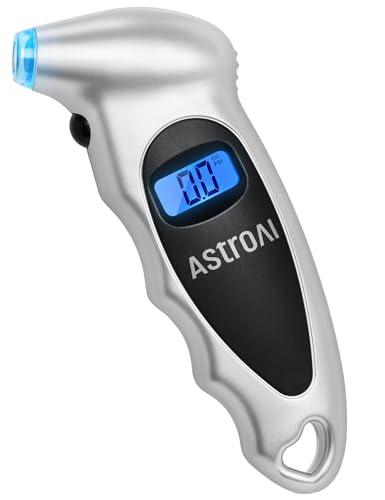
Accurate, Dependable Readings: Factory‑calibrated to ±1 PSI, so you can confidently match your vehicle’s recommended PSI (check the door jamb sticker). Ideal for monthly checks and road trips — consistent results every time, cold or warm.
How Engine, Tires, Load, and Towing Affect Tundra MPG
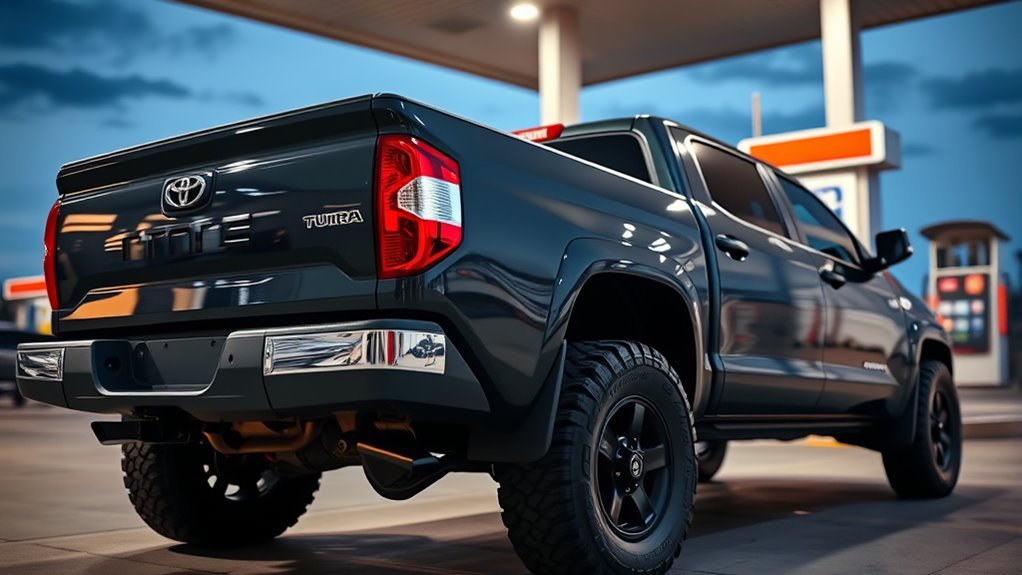
The 2023 Tundra TRD Pro’s i-FORCE MAX twin-turbo V6 hybrid is built for strong torque and capability. Toyota describes the system as a twin-turbo V6 paired with a motor generator and a 10-speed automatic transmission. That setup gives the TRD Pro strong acceleration and towing confidence, but real-world fuel economy still depends on how much work the truck has to do.
Engine and Powertrain
The i-FORCE MAX hybrid system helps deliver quick torque, but it is not designed only for maximum fuel savings. In full-size truck use, the hybrid system still has to move a large, heavy vehicle with four-wheel drive hardware, off-road tires, and a tall body. That is why the official combined rating is 19 mpg, not a compact-car-style number.
Tires and Rolling Resistance
Tires are one of the easiest MPG factors to overlook. Larger-diameter tires, wider tires, heavier tires, and aggressive all-terrain tread can all increase the energy needed to keep the truck moving. Under-inflation also adds rolling resistance. FuelEconomy.gov says keeping tires inflated to the proper pressure can improve gas mileage by 0.6% on average and up to 3% in some cases.
Use the tire pressure listed on the driver-side door-jamb label or in the owner’s manual. Do not use the maximum pressure printed on the tire sidewall as your normal target unless the vehicle manufacturer’s guidance calls for it.
Load Weight And Towing
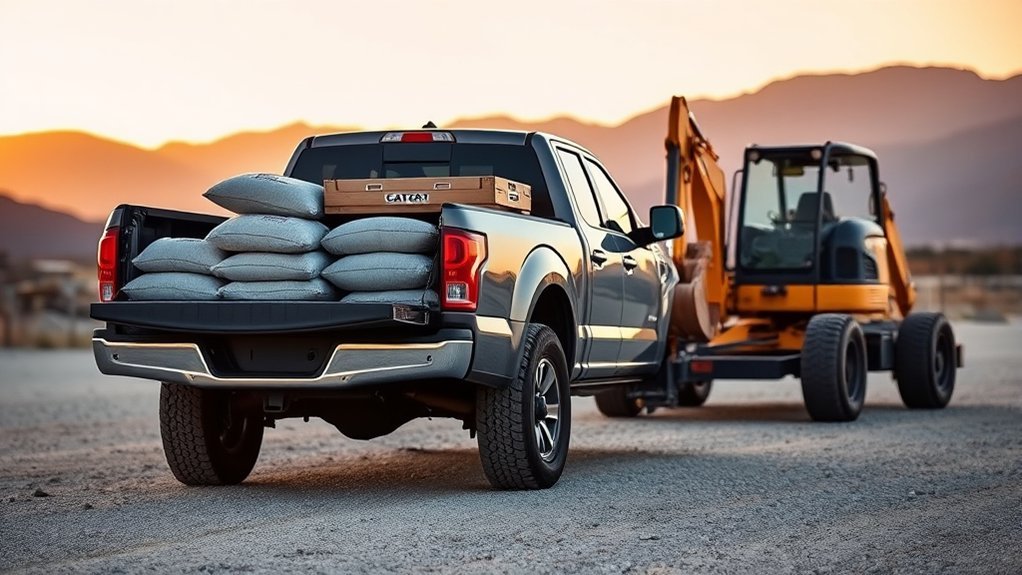
Payload and towing can reduce MPG quickly. Heavy cargo adds rolling load, while trailers add both weight and aerodynamic drag. Toyota’s 2023 Tundra owner information on trailer towing notes that towing can affect handling, performance, braking, durability, and fuel consumption.
Warning: Never exceed your Tundra’s published towing, payload, gross vehicle weight, or axle ratings. Check the door-jamb labels, owner’s manual, hitch rating, trailer weight, tongue weight, and tire ratings before towing or hauling heavy loads.
- Balance cargo so the truck remains stable and predictable.
- Remove unnecessary weight before long highway trips.
- Keep tires properly inflated when loaded.
- Use the correct tow/haul settings when towing.
- Expect MPG to drop when pulling tall, wide, or heavy trailers.
How to Track Your Tundra’s Real MPG (Hand Calculations + Dash Tips)
At a Glance
| Time Required | 2–3 minutes at each fill-up |
| Difficulty | Easy |
| Tools Needed | Odometer, fuel receipt, calculator or spreadsheet |
| Cost | Free |
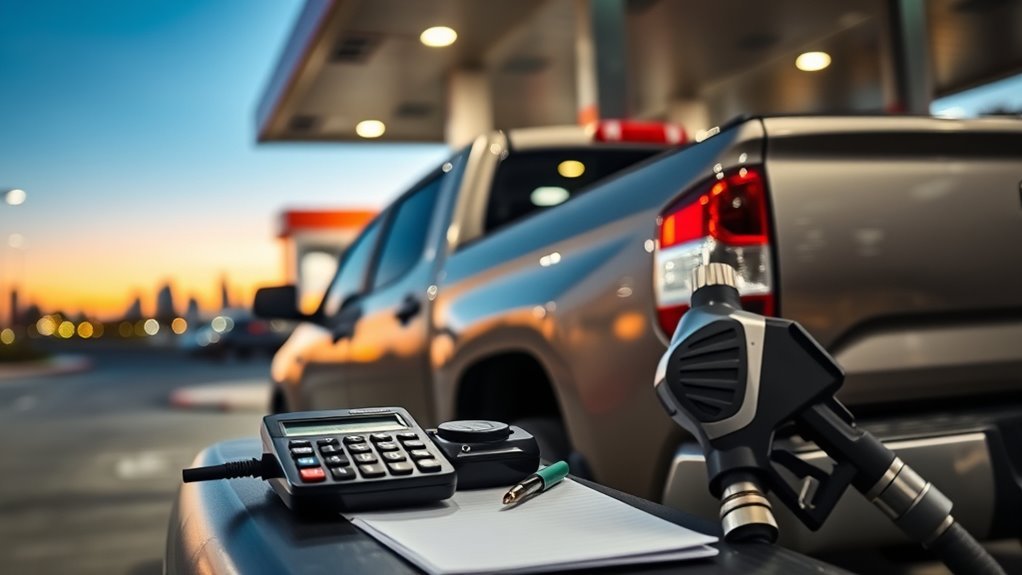
The most reliable way to know your Tundra’s real MPG is to calculate it at the pump. The dashboard average is helpful for quick feedback, but it can differ from fill-up math because of rounding, tire-size changes, idle time, and how the truck estimates fuel use.
Use this simple method:
- Fill the tank until the pump clicks off. Do not overfill.
- Reset your trip odometer.
- Drive normally until the next fill-up.
- Fill up at the same pump style when possible.
- Write down the miles driven and gallons added.
- Divide miles driven by gallons added.
Example: if you drove 410 miles and added 25.6 gallons, the calculation is 410 ÷ 25.6 = 16.0 mpg.
Pro Tip: Track at least three to five tanks before judging your average. One tank can be skewed by wind, traffic, towing, idling, cold starts, or a pump that clicks off early.
Practical Tips to Improve Tundra Fuel Economy on Long Trips
Long trips give you the best chance to improve MPG because you can control speed, route, tire pressure, cargo, and driving rhythm. Before you leave, remove unnecessary weight, check tire pressure, confirm maintenance is current, and plan your route to avoid the worst traffic.
- Keep speed reasonable: A small speed reduction can make a large difference in a full-size pickup.
- Accelerate smoothly: Use the Tundra’s torque without flooring it.
- Limit idle time: Long warm-ups and parking-lot idling waste fuel.
- Use Eco mode when appropriate: It can encourage smoother throttle response.
- Check tire pressure cold: Proper inflation supports fuel economy and tire life.
- Reduce drag: Remove unused roof gear and secure bed cargo.
- Plan fuel stops: A large tank helps range, but heavy towing can shorten that range quickly.
Realistic MPG Benchmarks for Tundra Trims and Use Cases
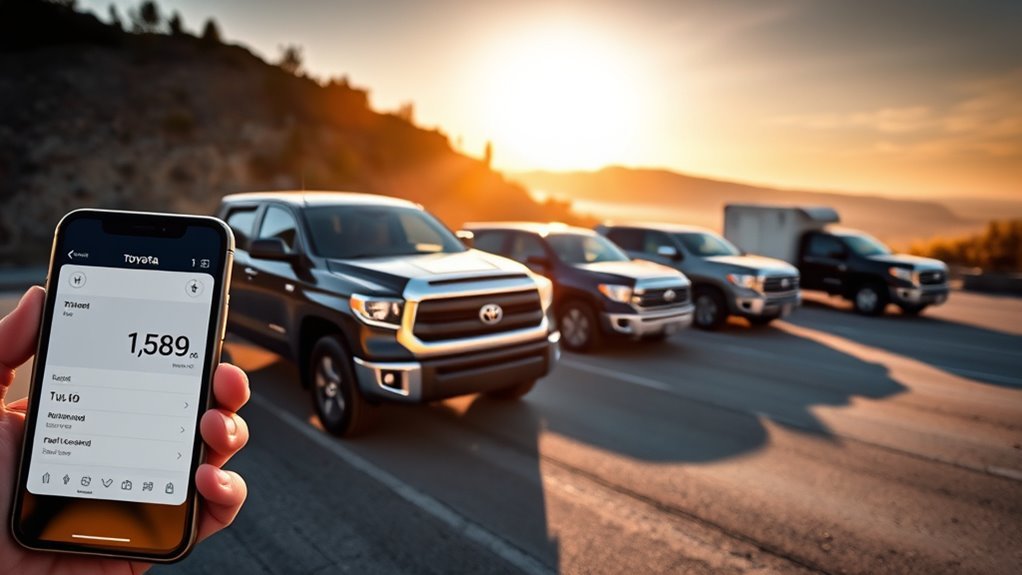
Different Tundra trims, tire setups, and use cases can return very different MPG. A stock truck on a steady highway drive can come closer to EPA ratings. A lifted or modified truck with aggressive tires may sit well below them. Towing can drop fuel economy even more, especially with a tall enclosed trailer.
| Trim / Use Case | Typical Real-World MPG Pattern | Notes |
|---|---|---|
| 2023 Tundra TRD Pro, mixed driving | Often 14–16 mpg | Common for real daily use with city, highway, idle time, and normal throttle inputs |
| Stock highway cruising | High teens to low 20s | Best results require steady speeds, low traffic, and good tire pressure |
| Modified / off-road setup | Lower than stock | Lift kits, heavier wheels, and aggressive tires usually reduce MPG |
| Towing or heavy hauling | Often much lower | Trailer weight, frontal area, speed, grade, and wind make a major difference |
The best benchmark is your own log. Once you track several tanks, you can see whether a tire change, roof rack, camping gear, commute change, or towing setup is costing you MPG.
Frequently Asked Questions
What is a good EPA MPG for a Toyota Tundra?
For a full-size pickup like the Toyota Tundra, a combined EPA rating around the high teens to low 20s is typical, depending on trim, drivetrain, and powertrain. The 2023 Tundra 4WD PRO is rated at 19 mpg combined.
Which Toyota Tundra gets the best MPG?
The best MPG depends on model year, drivetrain, cab, bed, trim, tire package, and powertrain. For the 2023 model year, some lower-drag, non-TRD Pro configurations have higher EPA highway or combined ratings than the off-road-focused TRD Pro.
Is EPA MPG the same as real MPG?
No. EPA MPG is a standardized estimate used to compare vehicles. Real MPG is what your truck actually gets on your roads with your driving style, tires, traffic, terrain, cargo, weather, and towing load.
Why does my Tundra get worse MPG than the window sticker?
Common reasons include higher highway speeds, hard acceleration, stop-and-go traffic, oversized or underinflated tires, heavy cargo, towing, cold weather, steep terrain, and long idle time. Any combination of these can pull real MPG below the EPA estimate.
Does the 2023 Tundra TRD Pro have a V-8?
No. The 2023 Toyota Tundra TRD Pro uses Toyota’s i-FORCE MAX twin-turbo V6 hybrid powertrain. It replaced the older V-8 approach with a turbocharged hybrid V6 setup.
How do I calculate my Tundra’s real MPG?
Fill the tank, reset the trip odometer, drive normally, then refill and divide miles driven by gallons added. For example, 410 miles divided by 25.6 gallons equals 16.0 mpg.
Conclusion
The Toyota Tundra’s EPA MPG rating gives you a fair comparison point, but real fuel economy depends on how the truck is used. For the 2023 Tundra TRD Pro, expect the official 18/20/19 mpg rating to be easier to match on steady highway drives than in mixed city, off-road, towing, or modified-truck use. Keep your tires properly inflated, drive smoothly, avoid unnecessary weight and idle time, and track MPG by hand at each fill-up. That simple habit will tell you more about your own Tundra than any window sticker or dashboard estimate alone.
Sources
- FuelEconomy.gov — 2023 Toyota Tundra 4WD PRO — official EPA MPG, fuel type, fuel consumption, range, and tank-size range.
- FuelEconomy.gov — How Vehicles Are Tested — EPA laboratory testing and dynamometer explanation.
- FuelEconomy.gov — Detailed Test Information — city, highway, high-speed, air-conditioning, and cold-temperature test details.
- Toyota USA Newsroom — 2023 Toyota Tundra i-FORCE MAX — hybrid twin-turbo V6 powertrain output and system description.
- FuelEconomy.gov — Driving More Efficiently — aggressive driving, speed, and fuel-economy guidance.
- FuelEconomy.gov — Keeping Your Vehicle in Shape — tire pressure and maintenance effects on MPG.