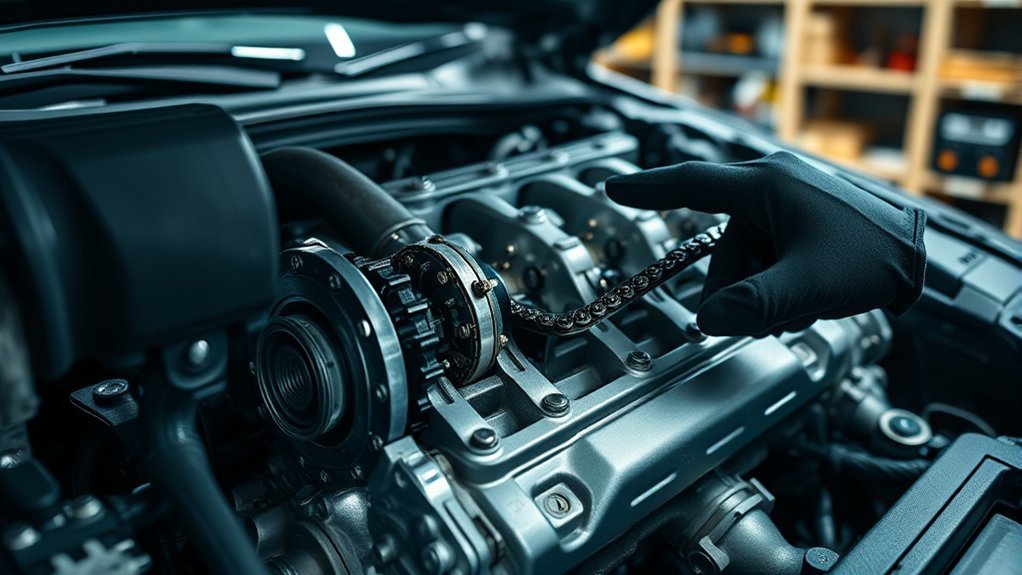
Toyota’s VVT-i system is the part of your Camry’s engine management that helps the valves open and close at better times for starting, idling, cruising, and accelerating. In simple terms, it lets the engine avoid using one fixed cam timing setting for every driving situation. That can improve drivability, fuel economy, emissions, and low-speed response when the system is clean and working correctly.
Quick Answer
Toyota Camry VVT-i uses engine control signals and oil-controlled cam timing to adjust valve timing while you drive. A brief cold-start rattle can happen on some older engines, but repeated noise, check-engine codes, rough running, or low-oil symptoms should be diagnosed before the timing gear, oil control valve, or chain is damaged.
Key Takeaways
- VVT-i stands for Variable Valve Timing with intelligence, Toyota’s system for adjusting cam timing as engine speed and load change.
- Most VVT-i problems are oil-related, electrical, or mechanical: low oil, dirty oil, a sticking oil control valve, wiring faults, worn cam gears, or timing-chain issues.
- A very brief rattle after a cold soak may match known Toyota service-bulletin conditions on some older engines, but longer or repeated rattles deserve diagnosis.
- Do not treat “change oil every 5,000 miles” as universal. Follow your Camry’s maintenance guide; special operating conditions can require shorter intervals.
- DIY checks can cover oil level, oil condition, scan codes, and visible connectors. Cam gear or timing-chain work is a professional-level repair.
At a Glance
| Time Required | 10–20 minutes for basic owner checks; 1–3 hours or more for professional diagnosis, depending on symptoms. |
| Difficulty | Easy for oil and code checks; advanced for oil control valve testing; professional for VVT gear or timing-chain work. |
| Tools Needed | Owner’s manual, clean rag, flashlight, dipstick access, basic OBD-II scanner, and service records. |
| Cost | Basic checks are usually free. Diagnosis and repairs vary by engine, parts, labor rate, and whether the issue is an OCV, sensor, cam gear, or timing-chain fault. |
VVT-i Explained: Why Camry Owners Should Care
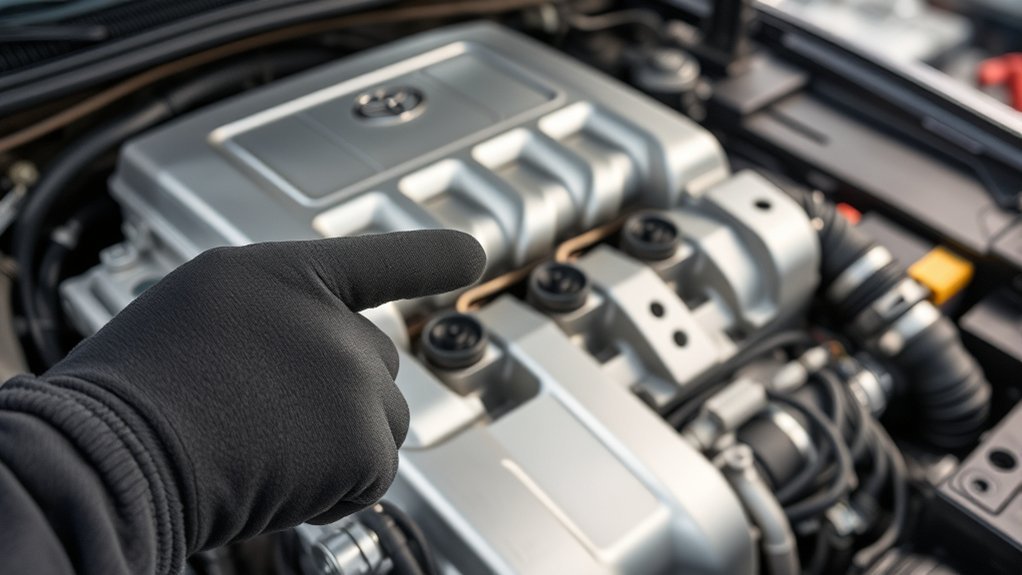
VVT-i means Variable Valve Timing with intelligence. Toyota introduced the technology to continuously change valve timing based on driving conditions instead of relying on one fixed camshaft position. Toyota’s own technical release describes the system as using an electronic control unit, an oil control valve, and hydraulic pressure to change intake valve timing, improving torque, output, fuel economy, and emissions control in the right operating conditions. Toyota Global explains the original VVT-i system here.
For a Camry owner, the practical benefit is simple: the engine can breathe differently at idle, during light cruising, and under heavier acceleration. When everything is working, VVT-i helps the car feel smoother and more responsive without forcing the engine to waste fuel with poor valve timing.
Camry engines vary by model year and market. Older 4-cylinder Camrys may use systems tied to the 1AR-FE or 2AR-FE engine families. Newer Camrys, including the 2024 model range, list Dynamic Force 4-cylinder, V6, and hybrid powertrains with Dual Variable Valve Timing with intelligence. Toyota’s 2024 Camry brochure lists those Dual VVT-i engine specifications.
Note: Before diagnosing VVT-i noise or codes, confirm your Camry’s model year, engine code, oil specification, and maintenance schedule. The correct answer can differ between a 2010 2AR-FE, a 2024 Dynamic Force 4-cylinder, a V6, and a hybrid.
How Toyota’s Oil-Controlled VVT-i Works
Most Toyota hydraulic VVT-i systems use engine oil as the working fluid. The engine control module decides where the cam timing should be, then commands an oil control valve to route pressurized oil toward the advance or retard side of the cam timing mechanism. As oil pressure moves inside the cam phaser or VVT pulley, the camshaft angle changes relative to the crankshaft.
Oil Control Valve
The oil control valve, often shortened to OCV, is the gatekeeper for VVT-i oil flow. Toyota describes its cam timing oil control valve as a part that regulates oil flow within the variable valve timing system so cam timing can respond correctly. Toyota’s genuine OCV part description explains this oil-flow role.
If the OCV sticks, its screen clogs, its connector corrodes, or the wiring fails, the camshaft may not move when commanded. That can trigger rough running, slow acceleration, poor fuel economy, or check-engine codes related to cam timing.
Camshaft Timing Adjustment
The cam phaser, sometimes called a VVT gear or camshaft timing gear, physically changes the camshaft’s position. In a healthy system, the gear can advance, retard, or hold timing smoothly. The engine computer watches sensor feedback and keeps adjusting as conditions change.
- At idle: timing is controlled for stable combustion and smooth operation.
- At light load: timing can improve efficiency and reduce pumping losses.
- Under acceleration: timing can support stronger torque and better airflow.
- At shutdown/startup: lock-pin behavior and oil pressure become especially important on some older designs.
Why Clean Oil Matters
Because VVT-i relies on oil pressure and small oil passages, dirty oil, low oil, sludge, or the wrong viscosity can slow the system down. That does not mean every Camry must get an oil change at the same mileage. It means the oil must match the owner’s manual and be changed on the correct schedule for how the car is used.
For example, Toyota’s 2024 Camry maintenance guide shows 5,000-mile service visits and oil/filter replacement at 10,000 miles under the normal schedule, while special operating conditions such as repeated short trips in freezing weather, dusty roads, towing/heavy loading, or extended idling can require earlier oil/filter replacement. Check Toyota’s Camry maintenance guide for the exact interval that applies to your vehicle.
Pro Tip: If you bought the Camry used and do not know the service history, start with a fresh oil change using the correct Toyota-specified viscosity and filter. Then monitor startup noise, oil level, and any returning codes before assuming the cam gear has failed.
Quick Triage: Is a Cold-Start Rattle Dangerous?
A short rattle right after a cold start can come from several places: VVT-i cam gear lock-pin behavior, delayed oil pressure, a timing-chain tensioner, low oil, old oil, or unrelated engine accessories. The key is the pattern.
Some older Toyota engines have service-bulletin history for a brief knock or rattle after a cold soak. Toyota service bulletin T-SB-0041-13, filed through NHTSA, addresses a brief engine knock/rattle at cold startup on certain vehicles with 1AR-FE or 2AR-FE engines, including specific Camry production ranges. The bulletin applies only to listed vehicles and production ranges, so do not assume every Camry rattle has the same fix.
Warning: Do not ignore a rattle that is getting longer, happens at every start, continues after oil pressure builds, appears with a low-oil warning, or comes with cam/crank timing codes. Stop extended driving and get the engine inspected.
Use this simple triage:
- One quick rattle after sitting overnight: document it, check oil level, and compare it with known service-bulletin conditions for your engine.
- Rattle lasting more than a moment: check oil level and condition immediately, then scan for codes.
- Rattle plus check-engine light: treat it as a diagnostic issue, not a normal aging sound.
- Rattle plus rough idle, stalling, or poor acceleration: avoid hard driving until the VVT-i system and timing components are inspected.
A brief cold-start tick is information, not a diagnosis. The diagnosis comes from the engine code, oil condition, rattle duration, scan data, and inspection of the VVT-i oil control and timing components.
Camry VVT-i Symptoms: Rattles, Codes, Performance Drops
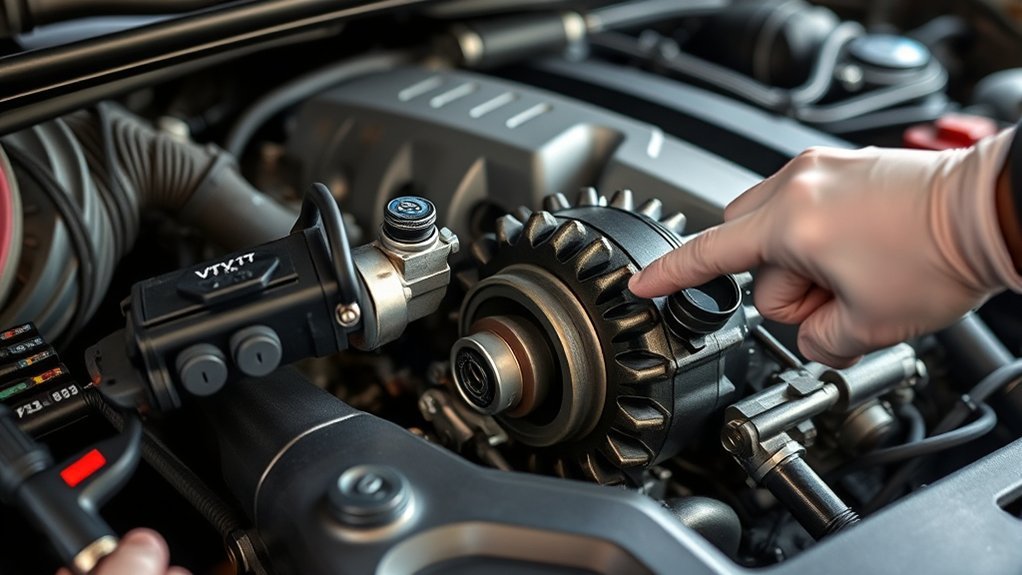
VVT-i problems do not always announce themselves with one obvious sound. Sometimes the first clue is a check-engine light. Other times it is sluggish acceleration, rough idle, or a short rattle at startup.
Common warning signs include:
- Brief cold-start rattle: often heard from the timing cover area after the car sits for several hours.
- Check-engine light: possible cam timing, cam/crank correlation, or oil control valve codes depending on engine and scan-tool wording.
- Rough idle or hesitation: the cam timing may be stuck advanced, stuck retarded, or slow to respond.
- Reduced fuel economy: incorrect valve timing can reduce efficiency.
- Oil-related symptoms: low oil level, dirty oil, oil-pressure warnings, or sludge can interfere with VVT-i operation.
- Persistent mechanical noise: a worn cam timing gear, weak tensioner, or timing-chain issue may need professional repair.
If you scan the car and see codes in the P0010–P0019 family, do not replace parts blindly. Those codes can involve oil control valves, oil pressure, camshaft position sensors, crankshaft position sensors, wiring, timing chain alignment, or the VVT gear itself. The code points you toward a system; it does not automatically name the failed part.
Maintenance Checklist: Oil, OCV, VVT-i Gears, Timing Chain
The best way to protect a Camry VVT-i system is boring but effective: correct oil, correct interval, clean electrical connections, and early diagnosis when symptoms appear. VVT-i does not usually have a separate “service every X miles” item. It depends on the engine’s normal maintenance schedule and symptom-based inspection.
| Task | When to Do It | Why It Matters |
|---|---|---|
| Check oil level | Monthly and before long trips | Low oil can delay VVT-i response and increase mechanical wear. |
| Use correct oil viscosity | Every oil change | Wrong viscosity can affect oil pressure and cam timing response. |
| Follow the maintenance guide | Normal or special-condition interval | Toyota schedules differ by model year and driving conditions. |
| Scan check-engine codes | Any time the light appears | Codes help separate OCV, sensor, wiring, and timing-mechanical issues. |
| Inspect OCV connector and wiring | When VVT-i codes or symptoms appear | A loose or corroded connector can mimic a failed oil control valve. |
| Evaluate VVT gear and timing chain | If noise persists or cam timing codes return | Mechanical timing faults can become expensive if ignored. |
Good records help. If the same cold-start noise starts happening more often after a longer oil interval, a different oil brand, or a missed service, that pattern gives the technician useful evidence.
Repair Options: DIY Checks, When to Replace Parts
You can safely do several checks before paying for deeper diagnosis, but VVT-i repair has a clear boundary. Checking oil and scanning codes is owner-level work. Opening timing covers, removing camshaft timing gears, locking tensioners, and setting timing marks is professional-level work unless you have the correct service manual, tools, and experience.
Safe DIY Checks
- Check oil level on the dipstick: correct low oil before further testing.
- Look at oil condition: thick, black, gritty, or sludgy oil can point to maintenance-related VVT-i trouble.
- Read the codes: record the exact code numbers and freeze-frame data before clearing anything.
- Inspect visible connectors: look for loose plugs, broken clips, oil-soaked wiring, or rodent damage near the OCV and cam sensors.
- Record the startup sound: a short phone video from a cold start helps a shop confirm the symptom.
When the OCV May Be the Problem
An oil control valve becomes suspect when cam timing codes appear with sluggish response, rough idle, or symptoms that change after an oil service. A technician may test the valve electrically, inspect oil passages or screens where applicable, and compare commanded cam timing with actual cam timing on a scan tool.
Replacing an OCV without testing can waste money. The same symptoms can come from dirty oil, wiring, low oil pressure, a camshaft position sensor, or a mechanical timing issue.
When the VVT Gear or Timing Chain Needs Attention
A camshaft timing gear or timing-chain repair becomes more likely when the rattle is mechanical and repeatable, when timing correlation codes return after oil and OCV checks, or when scan data shows the camshaft cannot reach the commanded position. Toyota’s cold-start rattle bulletin for certain 1AR/2AR vehicles includes camshaft timing gear replacement procedures and warns not to disassemble the camshaft timing gear. That repair procedure requires correct timing alignment and special care.
Warning: If a timing chain is installed one tooth off, the engine can run poorly or suffer serious damage. Do not attempt cam gear or timing-chain work without the correct service information and tools.
What to Tell Your Mechanic
Bring the exact details. Tell the shop when the noise happens, how long it lasts, whether the oil level was low, what oil was used, and which codes appeared. Ask them to verify oil pressure, OCV operation, cam/crank correlation, and service-bulletin applicability before replacing major timing parts.
Frequently Asked Questions
How does the Toyota VVT-i engine work?
Toyota VVT-i changes camshaft timing while the engine runs. In hydraulic systems, the engine computer controls an oil control valve, which routes oil pressure to the cam timing mechanism. That movement advances or retards valve timing so the engine can idle smoothly, cruise efficiently, and respond better under acceleration.
Are Toyota VVT-i engines good or bad?
They are generally good, proven systems when maintained with the correct oil and service schedule. The weak points are usually not the concept of VVT-i itself, but oil neglect, low oil, clogged passages, OCV faults, worn cam timing gears, or timing-chain issues on specific engines.
How often does VVT-i need servicing?
VVT-i usually does not have a separate routine service interval. The best maintenance is using the correct oil, replacing it on the schedule in your Camry maintenance guide, and inspecting the VVT-i system when symptoms or codes appear. Special operating conditions may require shorter oil-change intervals than normal driving.
Is a Camry cold-start rattle always the VVT-i gear?
No. A cold-start rattle can come from a VVT gear, timing-chain tensioner, low oil, dirty oil, delayed oil pressure, or another engine accessory. The duration, location, codes, engine model, and service-bulletin applicability all matter before parts are replaced.
Can I drive with a VVT-i problem?
If the car only has a brief occasional noise and no warning lights, drive gently and schedule diagnosis. If the check-engine light is flashing, oil pressure warning appears, the engine runs rough, stalls, or the rattle is loud and persistent, avoid driving and have it inspected.
Conclusion
VVT-i is one of the reasons a Toyota Camry can feel smooth in traffic, efficient on the highway, and responsive when you ask for more power. The system depends on clean oil, correct pressure, responsive oil control, and accurate cam timing. Treat cold-start rattles and cam timing codes as early clues, not instant proof of one failed part.
The best approach is simple: verify your engine, follow the correct Toyota maintenance schedule, keep oil level and viscosity right, scan codes before clearing them, and get professional help when timing components are involved. A small rattle caught early is much easier to handle than a neglected timing problem.
Sources
- Toyota Global — Toyota Develops New VVT-i Engine Technology — backs up VVT-i definition, hydraulic oil control, ECU/OCV role, and performance goals.
- Toyota Genuine Parts — Cam Timing Oil Control Valve Assembly — backs up the OCV’s oil-flow role in variable valve timing.
- Toyota 2024 Camry Warranty & Maintenance Guide — backs up normal and special-condition maintenance interval guidance.
- NHTSA / Toyota T-SB-0041-13 — backs up the specific 1AR/2AR cold-start knock/rattle bulletin and repair cautions.
- Toyota 2024 Camry Brochure — backs up Camry engine listings and Dual VVT-i specifications.