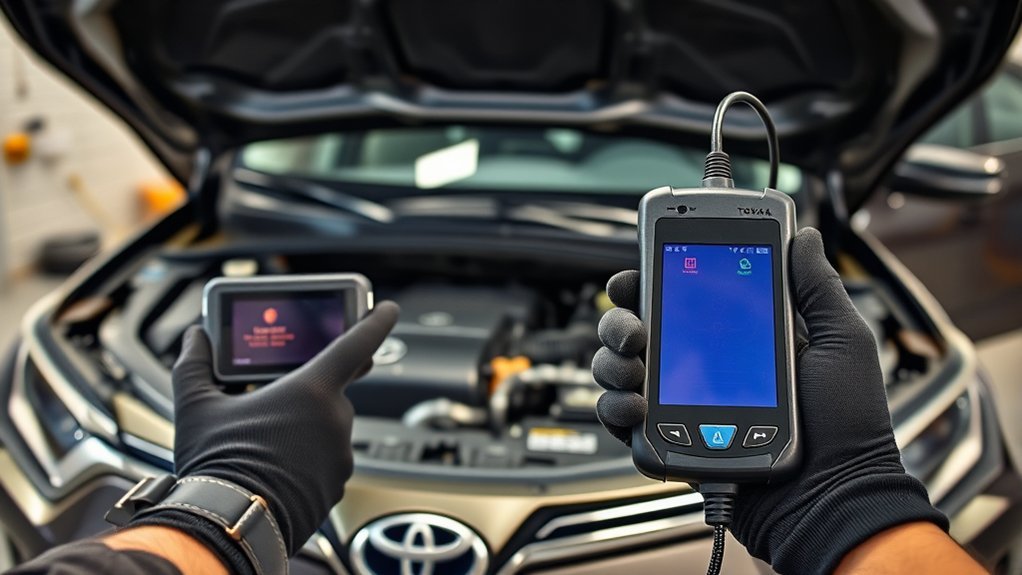
P0128 on a Toyota RAV4 is usually a cooling-system temperature code, not an immediate engine-failure warning. The engine control module expected the coolant temperature to rise into the thermostat’s regulating range, but the live engine coolant temperature signal stayed too low for the conditions. Start with scan-tool data, coolant level, thermostat operation, and the engine coolant temperature sensor circuit before replacing parts.
Quick Answer
P0128 on a Toyota RAV4 means the engine is running cooler than expected or warming up too slowly. The most common cause is a thermostat stuck open, but low coolant, trapped air, an inaccurate engine coolant temperature sensor, wiring problems, or abnormal cooling-fan operation can also trigger it.
Key Takeaways
- P0128 means “Coolant Thermostat (Coolant Temperature Below Thermostat Regulating Temperature).”
- The RAV4 is usually safe for short, gentle driving if coolant level is correct and there are no overheating warnings.
- Do not replace the ECT sensor just because P0128 appears; compare live coolant temperature data to ambient temperature and actual engine temperature first.
- A stuck-open thermostat is common, but low coolant, air pockets, damaged wiring, or the wrong thermostat can make the code return.
- After repair, clear the code, complete a drive cycle, and confirm that monitors reset and the check-engine light stays off.
At a Glance
| Time Required | 30–60 minutes for diagnosis; 1–3 hours for thermostat replacement on many RAV4 models |
| Difficulty | Beginner to intermediate, depending on model year and engine access |
| Tools Needed | OBD-II scan tool with live data, digital multimeter, basic hand tools, drain pan, coolant funnel, service information |
| Cost | About $50–$150 DIY for common parts and supplies; often $150–$400 at a repair shop depending on diagnosis and labor rates |
What P0128 Means on a Toyota RAV4
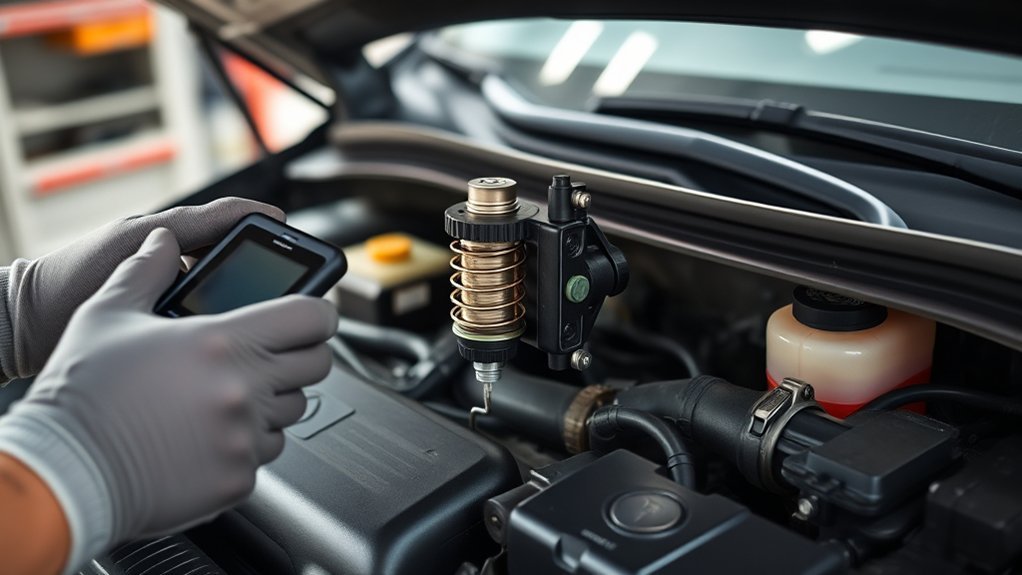
When your Toyota RAV4 stores P0128, the powertrain control module or engine control module has decided that coolant temperature is below the thermostat’s expected regulating temperature. In plain language, the engine is taking too long to warm up, staying too cool, or reporting a coolant temperature that looks too low.
This matters because the engine uses coolant temperature to control fuel mixture, idle speed, emissions readiness, radiator fan strategy, and heater performance. An engine that stays too cold may run richer than normal, use more fuel, produce higher emissions, and delay some OBD readiness checks. The U.S. EPA explains that onboard diagnostics monitor emission-related systems and illuminate the malfunction indicator lamp when a fault can affect emissions-related operation.
On a RAV4, P0128 does not automatically prove that the coolant temperature sensor is bad. It can be caused by:
- A thermostat stuck open or opening too early
- Low coolant level
- Air trapped in the cooling system after service
- An inaccurate engine coolant temperature sensor
- Corroded, loose, or damaged ECT sensor wiring
- Incorrect thermostat temperature rating or poor aftermarket fitment
- A cooling fan that runs when it should not
- Related diagnostic trouble codes that affect engine warm-up logic
Diagnose it in order: confirm the code, check live data, inspect coolant level and leaks, compare sensor readings, test the thermostat, then clear the code and verify the repair.
P0128 on RAV4: Is It Safe to Drive?
In many cases, you can drive a Toyota RAV4 with P0128 for short trips if the coolant level is full, the temperature gauge is not in the red zone, there is no steam, and the vehicle drives normally. However, you should not ignore it. A cold-running engine can hurt fuel economy, reduce cabin heat, delay emissions readiness, and mask other cooling-system problems.
Warning: Stop driving and shut the engine off if the coolant temperature gauge enters the red zone, the display shows an engine coolant temperature warning, steam comes from under the hood, the heater suddenly blows cold with a hot engine, or you see a major coolant leak. Toyota’s owner information advises stopping in a safe place when an overheating warning appears.
If the only symptom is the check-engine light and a stored P0128, drive gently until you can diagnose it. Avoid towing, long high-speed trips, heavy throttle, and extended idling in extreme weather until the cooling system is confirmed healthy.
Confirm P0128 With a Diagnostic Scan: What to Look For
Before replacing the thermostat or sensor, plug in an OBD-II scanner and confirm the stored code. A scan tool with live data is much more useful than a simple code reader because it lets you watch the engine coolant temperature value during warm-up.
Check these items first:
- Stored and pending codes: Record P0128 and any additional codes. If other codes are present, diagnose them first because they may change the repair path.
- Freeze-frame data: Note coolant temperature, intake-air temperature, ambient temperature, vehicle speed, RPM, and load when the code set.
- Cold-start ECT reading: After the vehicle sits overnight, the ECT reading should be close to ambient air temperature. A large mismatch can point to a sensor or circuit problem.
- Warm-up curve: During a normal warm-up, coolant temperature should rise steadily. If it climbs slowly and drops during highway driving, suspect a thermostat stuck open.
- Cooling-fan behavior: Make sure fans are not running constantly during a cold start unless commanded by A/C operation, high temperature, or another valid reason.
Note: Exact thermostat opening temperatures, resistance values, and component locations vary by RAV4 model year, engine, and hybrid/non-hybrid configuration. Use Toyota service information or a model-specific repair manual when you need the factory specification.
Quick Checklist: Immediate Fixes and What to Try First

Use this checklist before you buy parts. It keeps the diagnosis focused and prevents the common mistake of replacing the coolant temperature sensor when the thermostat or coolant level is the real problem.
[Products Worth Considering]

Ensure accurate engine cooling with Toyota's genuine water temperature sensor, designed for precise coolant monitoring and reliable performance. This OEM part fits seamlessly into your vehicle, offering durability and consistent temperature readings for optimal engine health.

The Pigenius windshield sunshade protects your Tundra's interior from heat and UV damage while keeping the cabin cool. Its accordion design folds easily for storage and quick setup, and the triple‑laminate construction provides durable, reflective protection. Ideal for long trips and daily commutes, it guards dashboards, seats, and steering wheels from sun‑related wear.

Upgrade your vehicle's interior with a stylish boho‑inspired center console cover that adds comfort and a striking visual appeal. Made from premium polyester fiber, anti‑skid cloth, and a plush 5 mm sponge, it provides soft support while reducing hand fatigue during long drives. The anti‑slip adhesive backing keeps it securely in place, and the elastic straps ensure a snug fit on most cars, trucks, SUVs, and vans.
Check Coolant Level and Condition
Only inspect the cooling system when the engine is fully cool. Check the reservoir level and look for signs of leaks around the radiator, hoses, thermostat housing, water pump area, heater hoses, and under the vehicle. Toyota owner information specifies Toyota Super Long Life Coolant or a similar high-quality coolant that matches the required chemistry. Mixing incorrect coolant types can shorten service life or create deposits.
If coolant is low, top it up with the correct coolant mixture, pressure-test the system if you have the tools, and find the leak. Low coolant can expose the sensor to air or disrupt coolant flow, which can confuse temperature readings.
Compare ECT Data to Ambient Temperature
With the engine cold, compare the scan tool’s engine coolant temperature reading to outside air temperature. A small difference is normal, but a reading that is far too cold or too hot before startup suggests a sensor, wiring, connector, or PCM input issue.
Then start the engine and watch the live data. The temperature should rise smoothly. A reading that jumps suddenly, drops out, or stays fixed is more likely an electrical or sensor issue than a thermostat issue.
Inspect Thermostat Operation
The thermostat is the next major suspect when the engine runs too cool. A thermostat stuck open lets coolant circulate through the radiator too early, slowing warm-up and often triggering P0128. On some Toyota service procedures, the thermostat is tested in hot water and expected to begin opening in a specified temperature range. The exact value depends on the engine, so verify the factory spec for your RAV4.
| Check | What You Want to See | What It May Mean |
|---|---|---|
| Cold-start ECT | Close to ambient temperature | Large mismatch suggests sensor or circuit fault |
| Warm-up pattern | Steady temperature rise | Slow rise suggests stuck-open thermostat or overcooling |
| Highway temperature | Stable normal operating range | Temperature drop at speed often points to thermostat stuck open |
| Coolant level | Full when cold, no leaks | Low coolant or trapped air can set false temperature faults |
Clear and Re-Scan Codes
After repairs, clear the code with your scan tool, Zeus app, or any reliable OBD-II tool that can erase diagnostic trouble codes. Then immediately rescan, road-test the RAV4, and check live coolant temperature again.
- Clear the code only after the repair or test is complete.
- Record the coolant temperature before and after the repair.
- Perform a cold start and a normal drive cycle.
- Check for pending codes after the road test.
- Confirm emissions readiness monitors are setting before an inspection.
Test the ECT Sensor: Location and Expected Readings
The engine coolant temperature sensor is usually installed near a coolant passage on or near the engine, often close to the thermostat housing or cylinder head area. Location varies by engine and model year, so confirm with a RAV4-specific service diagram before removing parts.
To test it, use both scan data and a multimeter. On many negative-temperature-coefficient coolant sensors, resistance is high when cold and drops as temperature rises. Some sensors may read roughly a few thousand ohms around room temperature, but the correct pass/fail value is the Toyota specification for your exact vehicle.
| Test | Expected Result | Next Step |
|---|---|---|
| Cold ECT vs. ambient air | Readings should be close after an overnight cold soak | If far apart, inspect sensor and circuit |
| Resistance check | Resistance should match the service-manual chart for that temperature | Replace only if out of spec after circuit checks |
| Connector inspection | Clean pins, tight fit, no corrosion or broken lock | Repair terminals or wiring as needed |
| Live-data stability | Temperature rises smoothly with no dropouts | Investigate wiring if the signal jumps or disappears |
Do not apply sealant or thread tape unless the service procedure calls for it. Some sensors ground or seal in specific ways, and incorrect installation can create leaks or inaccurate readings.
Replace the Thermostat and Bleed the Cooling System Correctly
If scan data and testing point to a stuck-open thermostat, replace it with a thermostat that matches the Toyota temperature rating and fitment. An incorrect thermostat can open too early and cause P0128 to return even after the repair seems complete.
General thermostat replacement steps:
- Let the engine cool completely.
- Disconnect the 12-volt battery if the service procedure requires it.
- Drain coolant to a safe level into a clean drain pan.
- Remove the thermostat housing or outlet as directed by the repair manual.
- Note the old thermostat orientation before removal.
- Install the new thermostat and gasket in the correct position.
- Reinstall the housing and torque fasteners to specification.
- Refill with the correct coolant.
- Bleed air from the cooling system.
- Warm the engine, check for leaks, and verify heater output.
Pro Tip: Air pockets can mimic a bad thermostat or bad ECT sensor. After any coolant service, use the correct bleed procedure, run the heater, watch the temperature gauge, and recheck the reservoir level after the engine cools.
Some RAV4 engines use a jiggle valve or bleed feature on the thermostat. If your thermostat has one, install it in the orientation specified by the service manual. Guessing the orientation can trap air and cause repeat temperature-control problems.
[Products Worth Considering]

These valve stem caps feature a durable die‑cast construction with an electroplated finish that resists rust and wear, providing a sleek look for your wheels. The built‑in rubber O‑ring ensures a tight seal to prevent air loss, while the tool‑free design lets anyone install or remove them in seconds. Ideal for a wide range of Toyota models, they combine style, safety, and easy maintenance.

Upgrade your vehicle's exterior look with these glossy black, snap‑on door handle covers that provide full coverage and protect against scratches and wear. Made from high‑quality ABS plastic, they fit Toyota Rav4 models from 2019‑2025 and Highlander models up to 2025, offering a sleek, adhesive‑free installation. The cover’s smooth surface adds a stylish, personal touch while preserving the original handle functionality.
Clear the Code and Verify the Repair With an OBD-II Tool

Clearing P0128 removes the stored fault from memory, but it does not prove the repair worked. Verification comes from a successful warm-up, stable live coolant temperature, no pending P0128, and readiness monitors completing normally.
Use this verification process:
- Cold start: Confirm ECT starts close to ambient temperature.
- Warm-up: Watch for a steady temperature rise with no sudden dropouts.
- Road test: Include light city driving and steady cruise when safe.
- Heater check: Confirm consistent cabin heat once the engine is warm.
- Leak check: Inspect the thermostat housing, hoses, radiator area, and reservoir after the engine cools.
- Readiness check: Confirm monitors are completing before an emissions inspection.
A cleared check-engine light is not the finish line. A stable warm-up curve and completed readiness monitors are what confirm the P0128 repair.
Troubleshooting: Why P0128 May Return After Repairs
If P0128 comes back after replacing the thermostat or sensor, the original diagnosis may have missed a supporting fault. Recheck the system instead of replacing the same parts again.
- Wrong thermostat: The thermostat may fit physically but open at the wrong temperature.
- Air in the system: Trapped air can prevent accurate coolant temperature sensing.
- Low coolant or slow leak: A small leak can return after a few heat cycles.
- Connector damage: A loose or corroded ECT connector can create intermittent readings.
- Wiring resistance: Damaged wiring can bias the temperature signal colder than reality.
- Cooling fan issue: A fan stuck on can overcool the engine during warm-up.
- Related DTCs: Other engine-management faults can affect how the ECM judges warm-up.
- Incomplete drive cycle: A readiness or pending-code check too soon after clearing codes can be misleading.
Document each reading: ambient temperature, ECT at startup, ECT after 5 minutes, ECT at steady cruise, parts installed, coolant used, and whether the heater output is normal. Those notes make a repeat diagnosis faster and more accurate.
Time and Cost: DIY vs. Professional Repair Estimates
Repair cost depends on the RAV4 year, engine, thermostat location, local labor rate, and whether diagnosis finds leaks or wiring faults. A basic thermostat or ECT sensor job is usually not the most expensive repair, but guessing wrong can double the cost.
DIY Time and Cost
DIY diagnosis can be inexpensive if you already own a scan tool and multimeter. Expect to spend about 30–60 minutes confirming the code and reviewing live data. Replacing a thermostat may take 1–3 hours on many RAV4 models, with extra time for draining, refilling, and bleeding coolant.
- Basic OBD-II scanner: often $25–$100, more for live-data and graphing features
- Digital multimeter: often $10–$50
- Thermostat and gasket: commonly about $20–$80 depending on brand and model
- ECT sensor: commonly about $20–$100 depending on model and quality
- Coolant and supplies: commonly about $20–$60
The biggest DIY advantage is control: you can test before replacing parts. The biggest risk is trapped air, incorrect coolant, overtightened fasteners, or installing the wrong thermostat.
Professional Repair Estimate
A professional repair often costs about $150–$400 for common P0128 repairs, but pricing can rise if access is difficult, diagnostics take longer, or leaks and wiring problems are found. Shops may charge a diagnostic fee before parts replacement, which is often worthwhile if it prevents unnecessary sensor or thermostat replacement.
Ask the shop for a written estimate that separates diagnostic labor, parts, coolant, and repair labor. Also ask whether the repair includes clearing codes, road testing, leak checking, and confirming readiness monitor status.
Tools, Free Scanners, and Where to Get Expert Help
You can start with a basic code scan, but live data is what makes the diagnosis accurate. Use tools that let you see coolant temperature, intake-air temperature, freeze-frame data, pending codes, and readiness monitor status.
- OBD-II scanner with live data: Needed to view ECT temperature during cold start and warm-up.
- Digital multimeter: Useful for sensor resistance and circuit checks.
- Infrared thermometer or contact thermometer: Helpful for comparing actual temperature to scan-tool data.
- Cooling-system pressure tester: Useful when coolant level drops or leaks are suspected.
- Factory service information: Toyota provides official repair publications through its Technical Information System.
If you are not comfortable working around hot coolant, electric fans, or hybrid components, use a qualified repair shop. On hybrid RAV4 models, follow all Toyota safety procedures and do not disturb high-voltage components.
Frequently Asked Questions
What is code P0128 on a Toyota RAV4?
P0128 means the engine coolant temperature is below the thermostat’s expected regulating temperature. On a Toyota RAV4, that usually means the engine is warming up too slowly, running too cool, or reporting a coolant temperature signal that is lower than the real temperature.
What is the most common cause of P0128 on a RAV4?
A thermostat stuck open is one of the most common causes because it allows coolant to circulate through the radiator too early. However, low coolant, trapped air, ECT sensor problems, wiring faults, or the wrong thermostat can also trigger the code.
Can I drive my Toyota RAV4 with P0128?
Short, gentle driving is usually acceptable if coolant level is correct and there are no overheating symptoms. Do not tow, ignore coolant loss, or keep driving if the temperature gauge enters the red zone, steam appears, or an engine coolant temperature warning is displayed.
Will replacing the coolant temperature sensor fix P0128?
Only if the sensor or its circuit is actually inaccurate. Many P0128 repairs involve the thermostat, not the sensor. Compare cold ECT data to ambient temperature and test the sensor circuit before replacing it.
Can low coolant cause P0128?
Yes. Low coolant or trapped air can disrupt coolant flow and make the temperature sensor report an inaccurate reading. Always check coolant level and leaks before replacing the thermostat or sensor.
How do I know the P0128 repair worked?
The repair is verified when the engine warms up normally from a cold start, coolant temperature stays stable during a road test, the check-engine light does not return, no pending P0128 appears, and readiness monitors complete normally.
Conclusion
P0128 on a Toyota RAV4 means the engine is not reaching or reporting the coolant temperature the ECM expects. Start with data, not guesswork: confirm the code, review freeze-frame information, compare cold ECT to ambient temperature, check coolant level, inspect for leaks, and watch the warm-up curve. If the thermostat is stuck open, replace it with the correct part, bleed the cooling system carefully, clear the code, and verify the repair with live data and a road test.
Sources
- Toyota 2024 RAV4 Owner’s Manual: If Your Vehicle Overheats — supports overheating warnings and safe-response guidance.
- Toyota 2021 RAV4 Owner’s Manual: Engine Compartment — supports coolant type and under-hood cooling-fan safety guidance.
- Toyota Support: Toyota Technical Information System — supports using official Toyota service publications for model-specific specifications.
- U.S. EPA: On-Board Diagnostic Regulations and Requirements — supports the explanation of OBD systems, emission-related monitoring, and malfunction indicator lights.
- U.S. EPA: Vehicle Emissions Inspection and Maintenance Information — supports readiness-monitor and emissions-inspection context.
- California Bureau of Automotive Repair: OBD Test Reference — supports OBD readiness and inspection pass/fail context.