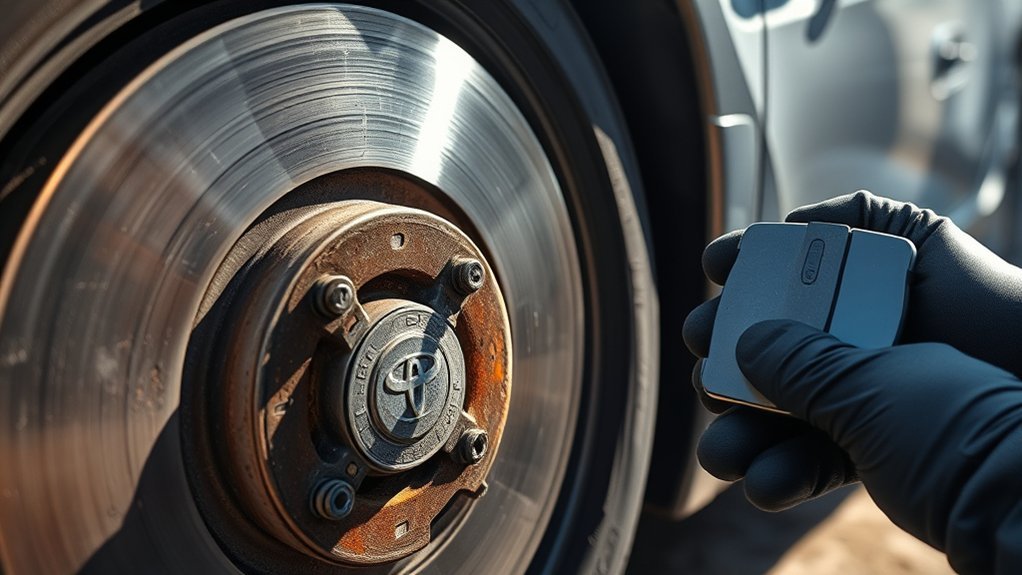
If your Toyota Camry’s brakes are squealing, it’s likely due to low-quality brake pads, improper installation, or inadequate lubrication. Cheaper materials in pads lead to noise, while rough rotor surfaces or worn shims can amplify it. To fix this, choose high-quality ceramic pads, guarantee proper installation, and regularly inspect components. Keeping brake pins greased and rotor surfaces smooth can also help. Discover the most effective solutions to silence those brakes and enhance overall performance.
Why Are Your Camry Brakes Squealing?
Why are your Camry brakes squealing? The issue often stems from the use of Value Line TCMC brake pads, which rely on cheaper brake materials and lack effective noise reduction features. Additionally, inadequate lubrication between the pads and shims can amplify squealing, as can rough rotor surfaces or misaligned shims due to improper installation. If you haven’t applied grease on the back of the pads, increased friction can lead to more noise. User experiences show that upgrading to higher-quality aftermarket ceramic pads or OEM pads typically alleviates these problems. Regular maintenance, including proper bedding procedures and ensuring all components are clean and well-greased, plays an essential role in minimizing brake noise. By addressing these factors, you can reclaim a quieter driving experience, liberating yourself from the annoyance of squealing brakes.
Choosing Brake Pads for Less Noise
When selecting brake pads to reduce noise, opting for ceramic pads is often your best choice. Unlike semi-metallic pads that tend to squeak, ceramic pads are designed for quieter operation. For peak performance, consider the Raybestos EHT Element 3 pads, which have garnered positive feedback for their noise reduction capabilities.
You might also explore hybrid pads that blend ceramic and semi-metallic materials. These can effectively minimize noise while ensuring your braking performance remains intact.
Key Installation Techniques to Prevent Brake Squeaking
To prevent brake squeaking, it’s crucial to focus on key installation techniques that improve performance and longevity. Start with proper brake pad installation; make sure you grease the brake pad pins to allow smooth operation. Replace rubber boots during installation to maintain effective sealing and avoid unwanted noise. Follow the manufacturer’s guidelines for bedding in new pads, using moderate stops from 40 to 10 mph to minimize initial squeaking.
Additionally, check the rotor surfaces. If they aren’t smooth, consider turning or replacing them to greatly reduce potential noise generation. Thoroughly clean the pads and rotors with brake cleaner, and don’t forget to apply lubricant to the back of the pads. These noise reduction techniques not only enhance braking efficiency but also extend the lifespan of your components. By implementing these practices, you’ll create a quieter, more reliable braking experience in your Toyota Camry.
Ongoing Maintenance to Prevent Brake Noise
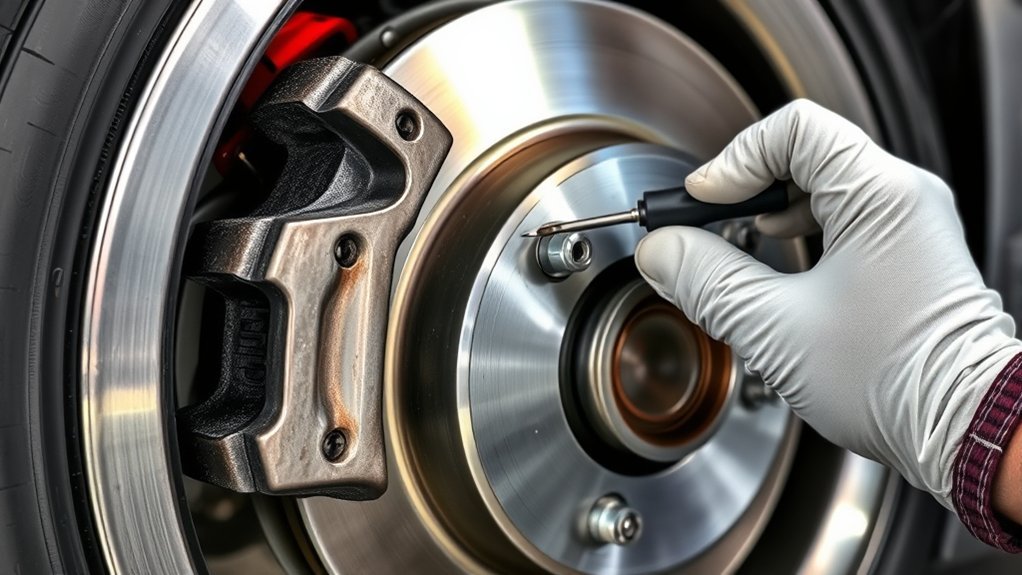
To keep your Toyota Camry’s brakes quiet, you need to implement ongoing maintenance practices. Regularly inspect and clean brake components, ensuring proper lubrication techniques are followed to reduce friction. Additionally, adhere to the correct pad bedding procedures to condition new pads and minimize noise during operation.
Regular Inspection Practices
Regular inspections are essential for maintaining your Toyota Camry’s braking system and preventing annoying brake noise. By implementing routine checks, you can guarantee effective noise reduction and enhance your vehicle’s performance. Focus on these key practices:
- Brake pad inspection: Regularly check for wear to avoid friction-related noise.
- Shim condition: Confirm shims are intact; replace any worn or missing parts to maintain noise dampening.
- Brake pins: Keep them greased and functioning freely to prevent squeaking.
- Brake cleaning: Use brake cleaner to remove dust and debris from pads and rotors.
Proper Lubrication Techniques
Maintaining your Toyota Camry’s braking system goes beyond inspections; proper lubrication techniques play an essential role in preventing noise. Use high-quality brake lubricant on the back of the pads to reduce friction noise. Regularly inspect and re-grease caliper pins to guarantee they function freely, as seized pins contribute to brake noise. Apply an anti-squeal compound when installing new pads, particularly on high-friction surfaces.
| Brake Lubricant Types | Lubrication Frequency |
|---|---|
| High-quality brake grease | Every 6 months |
| Anti-squeal compound | With new pad installation |
| Caliper pin grease | Every brake service |
| Rubber boot replacement | As needed |
Pad Bedding Procedures
When you install new brake pads on your Toyota Camry, bedding them properly is essential for ideal performance and noise reduction. This process helps create an even transfer layer between the pads and rotors, minimizing squeaks. Here are some effective bedding techniques:
- Perform moderate stops from 40 to 10 mph.
- Complete the bedding in a safe area with minimal traffic.
- Follow the manufacturer’s guidelines to enhance brake performance.
- Regularly re-bed pads after installation or replacement.
Proven Solutions for Eliminating Brake Noise
To eliminate brake noise effectively, start by considering the type of brake pads you’re using. High-quality ceramic brake pads, like Raybestos EHT Element 3, greatly reduce noise compared to semi-metallic options. Also, confirm proper installation; adequate lubrication on the pins and back of the pads prevents squeaking from friction.
Re-bedding new brake pads through a series of moderate stops helps seat them properly against the rotors, eliminating initial squeaking. Regular maintenance, such as cleaning the pads and rotors with brake cleaner, maintains peak performance and minimizes noise.
| Brake Material | Noise Reduction Technique | Benefits |
|---|---|---|
| Ceramic | Re-bedding | Less noise, better performance |
| Semi-Metallic | Lubrication | Cost-effective, decent performance |
| OEM | Regular Maintenance | Consistent quality, reliability |
Consider these solutions to enhance your driving experience while enjoying a quieter ride.
When to Consult a Professional for Brake Issues
Although you might attempt various DIY fixes for brake noise, knowing when to consult a professional is vital for safety and performance. Here are some key indicators that warrant expert attention:
- If brake noise persists after replacing pads and rotors, it’s important to verify proper installation and lubrication.
- A professional can assess the quality of brake pads, as cheaper options often lead to increased noise.
- Seek help if noise accompanies other symptoms like reduced brake performance or vibrations.
- Regular inspections by a mechanic can uncover installation issues or worn components contributing to brake noise.
Don’t overlook the value of a noise diagnosis from an expert. If your vehicle is under warranty, consulting a dealer is also recommended to check if the noise issue qualifies for warranty coverage. Prioritize your safety and vehicle performance by recognizing when to seek professional assistance.
Frequently Asked Questions
Why Do Camry Brakes Squeak?
Your Camry brakes squeak due to insufficient lubrication, rough rotor surfaces, or misalignment. Implement brake maintenance tips like regular lubrication and bedding new pads, and use noise reduction techniques to minimize or eliminate the squeaking.
How Do You Fix Squeaky Brakes on a Toyota?
To silence those squeaky brakes, apply effective brake maintenance tips: grease caliper pins, switch to quality ceramic pads, inspect shims, and follow noise reduction techniques like proper bedding. Your ride deserves the peace of smooth stops.
Why Are My Brakes Squealing but My Brake Pads Are Good?
Your brakes might squeal despite good pads due to improper lubrication or rough rotors. Follow brake maintenance tips and conduct noise troubleshooting to guarantee proper alignment and greasing, minimizing friction and enhancing performance.
Conclusion
In summary, addressing your Toyota Camry’s brake squeal isn’t just about comfort; it’s essential for safety. You might think it’s too complicated or costly to fix, but with the right brake pads and installation techniques, you can greatly reduce noise and enhance performance. Regular maintenance also plays an important role in preventing issues. Don’t ignore those squeaks—taking action now guarantees a smoother, quieter ride down the road, keeping you and your passengers safe.