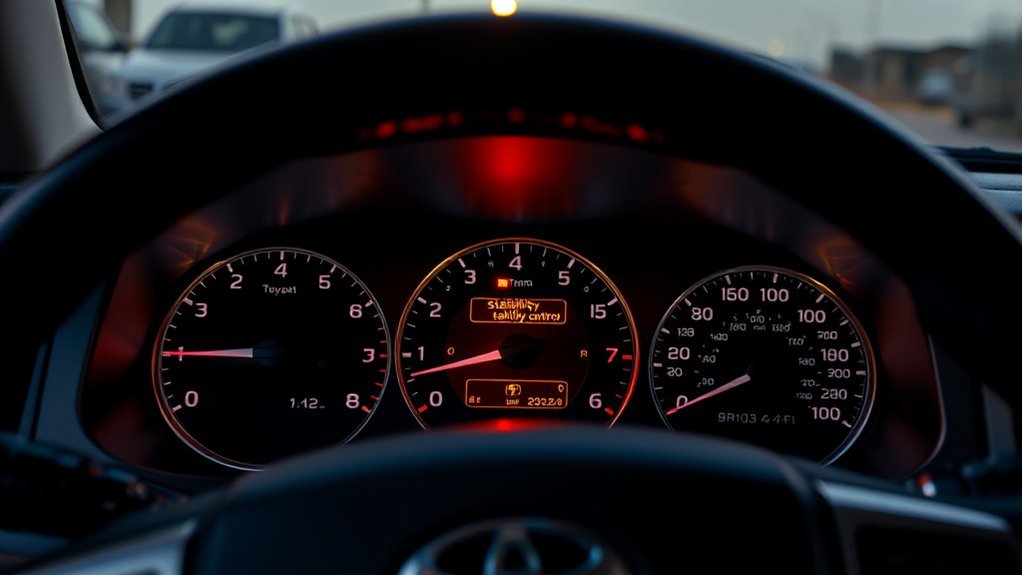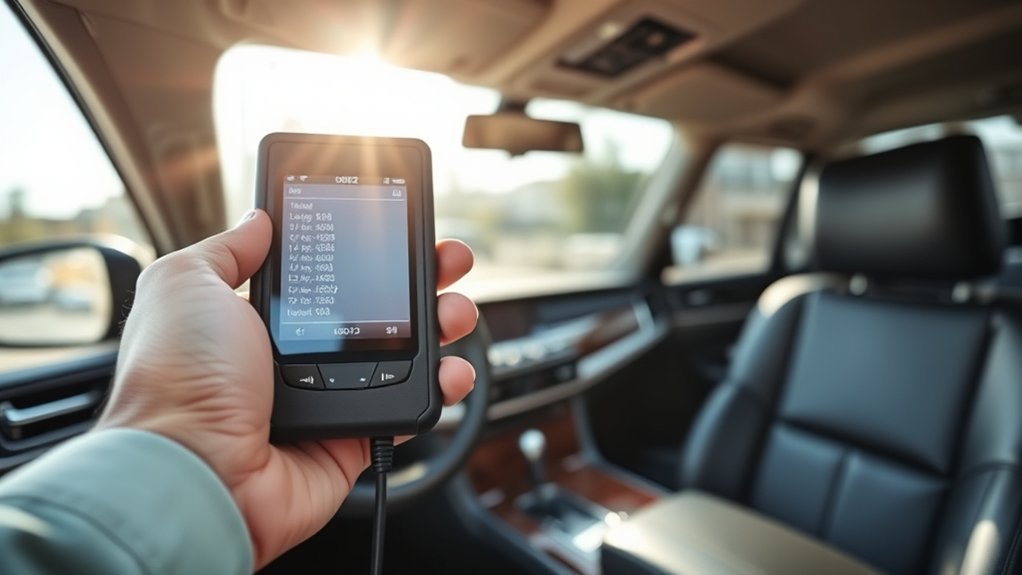
Toyota Land Cruiser OBD2 codes can narrow down a check-engine problem quickly, but the code itself is only the starting point. The best approach is to read the code, save the surrounding data, inspect the likely causes, and verify the repair before clearing anything. This guide explains that process for OBD-II-equipped Land Cruisers while noting important differences for older and non-U.S. models.
Quick Answer
To check Toyota Land Cruiser OBD2 codes, plug a compatible scanner into the 16-pin diagnostic connector, switch the ignition or power mode on as the scanner requires, and read the codes before clearing anything. Save freeze-frame and pending-code data too. A DTC points to a system or test failure; it does not prove one part is bad.
Last checked: October 5, 2026. Dates and figures were verified against official sources.
At a Glance
| Difficulty | Basic for reading codes; diagnosis can range from simple inspection to advanced electrical testing. |
| Tools Needed | OBD-II scanner; a Toyota-capable scan tool may be needed for ABS, airbag, hybrid, 4WD, body, and manufacturer-enhanced data. |
Why Toyota Land Cruiser OBD2 Codes Matter
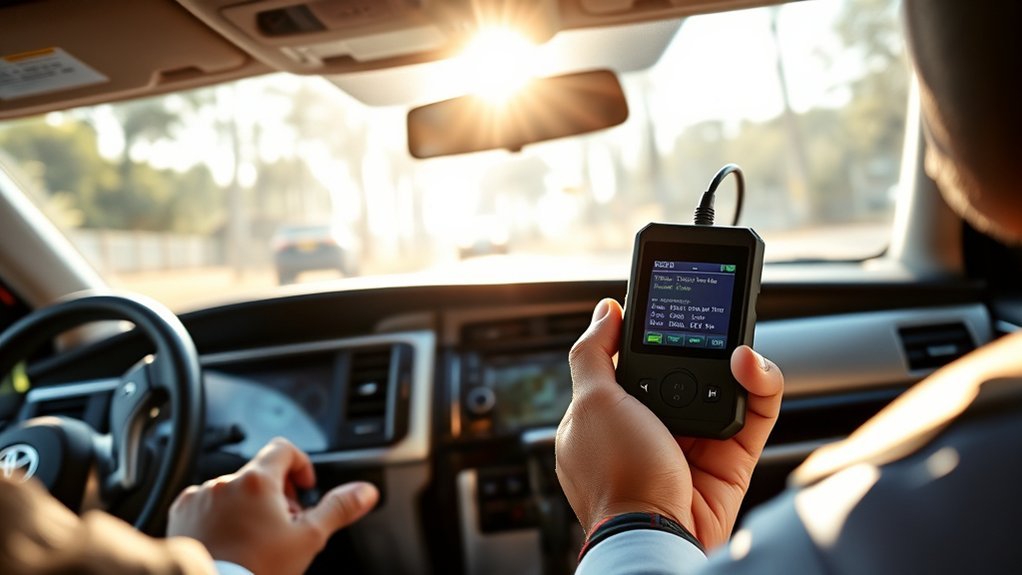
An OBD-II code tells you which monitor or circuit detected a problem. It can make troubleshooting much faster, but it should not be treated as an instruction to replace the component named in the code.
The California Air Resources Board’s OBD II guidance explains that the system monitors emissions-related components, turns on the malfunction indicator lamp when qualifying faults occur, and stores diagnostic information for repair.
A useful scan therefore includes more than the code number. Stored codes, pending codes, freeze-frame data, live sensor readings, and related codes can reveal whether the problem is caused by a sensor, wiring fault, air leak, low voltage, mechanical problem, or another system that triggered several secondary codes.
[Products Worth Considering]

This enhanced OBD2 scanner helps drivers quickly diagnose check engine light issues, read and clear trouble codes, and check emissions readiness before a smog test. It also adds EVAP and O2 sensor testing, live data, freeze frame capture, and a one-click battery health check in a simple plug-and-play tool with a bright color screen.

The FOXWELL NT301 is a plug-and-play OBD2 code reader designed to help drivers and home mechanics diagnose check engine light issues with ease. It reads fault codes, clears emissions-related warnings, displays live sensor data in graph form, and shows I/M readiness so you can quickly check vehicle status before an emissions test. With broad compatibility across many OBD2 vehicles and a clear color screen, it offers a practical, user-friendly way to monitor and troubleshoot engine performance.

This plug-and-play OBD2 scanner helps drivers quickly read and clear engine error codes while providing live data, freeze frame information, I/M readiness, and MIL status for more confident troubleshooting. It adds a built-in voltage test and clear status indicators to support electrical checks and faster diagnostics, making it a practical choice for home users, car enthusiasts, and repair professionals. Compatible with most OBDII vehicles since 1996 and designed with an easy-to-use interface, it offers broad coverage and simple operation in one compact tool.
How to Check OBD2 Codes on Your Land Cruiser
Start by confirming that your Land Cruiser uses OBD-II, then connect a compatible scanner to the diagnostic connector under the driver’s side lower dash area. Exact connector placement can vary by generation and market, so use your year-specific manual if it is not immediately visible.
- Park safely. Put the transmission in Park, apply the parking brake, and switch off unnecessary electrical accessories.
- Locate the diagnostic connector. OBD-II models use the standardized 16-pin data link connector, often called DLC3 in Toyota service information.
- Connect the scanner. Push the connector in straight and firmly. Do not force it if the plug does not line up.
- Turn the ignition or power mode on. Follow the scan-tool instructions for your exact vehicle. On push-button and hybrid models, ignition/power modes differ from older keyed vehicles.
- Let the scanner communicate. Select the vehicle automatically or enter the requested year, model, engine, or VIN information if your scanner requires it.
- Read every available code status. Record confirmed/stored, pending, and permanent codes if the tool displays them.
- Save freeze-frame data. Record engine speed, coolant temperature, load, fuel trims, voltage, vehicle speed, and other available data associated with the fault.
- Scan other modules when possible. A basic generic scanner may concentrate on emissions-related powertrain information. A Toyota-capable tool can access much more of the vehicle.
- Diagnose before clearing. Investigate the fault and related codes first. Clear codes only after you have saved the diagnostic information and completed the repair or test.
Pro Tip: Photograph or export the code list and freeze-frame screen before touching anything. That information can disappear after codes are cleared or power is disconnected, and it often shows the conditions that caused the fault.
Toyota Land Cruiser Fault Codes You May Encounter
Some DTCs are standardized across OBD-II vehicles, while others are manufacturer-specific. SAE J2012 defines the standardized DTC format and the ranges reserved for manufacturer-specific diagnostic codes.
| Code | General Meaning | What to Check First |
|---|---|---|
| P0171 / P0174 | System too lean, Bank 1 / Bank 2 | Unmetered-air leaks, intake plumbing, MAF data, fuel delivery, and companion codes. |
| P0420 / P0430 | Catalyst efficiency below threshold, Bank 1 / Bank 2 | Other engine faults, exhaust leaks, sensor data, and catalyst performance before replacing the catalytic converter. |
| P0340 | Camshaft position sensor circuit | Battery voltage in freeze-frame data, wiring/connectors, sensor circuit, and engine timing-related causes. |
| P0441 | EVAP system incorrect purge flow | Purge valve operation, EVAP hoses, wiring, canister-related faults, and leaks according to the exact engine’s diagnostic procedure. |
| U0073 | Control module communication bus “A” off | 12-volt battery condition, network-related codes, connectors, wiring, and module communication before condemning a control unit. |
Toyota has also published a useful warning about P0340 diagnosis. A Toyota technical tip covering multiple vehicles, including specified Land Cruiser model years, states that low battery voltage can contribute to P0335 and P0340. Toyota recommends checking freeze-frame voltage before assuming the crankshaft or camshaft sensor itself has failed.
Note: Do not interpret P3000 by itself as proof that a Land Cruiser’s high-voltage battery needs replacement. Toyota has used P3000 with additional information codes in hybrid diagnostics. A Toyota P3000 diagnostic bulletin illustrates why the information code and accompanying battery-control DTCs matter, although that particular bulletin applies to Prius rather than Land Cruiser.
How to Interpret Diagnostic Trouble Codes Correctly
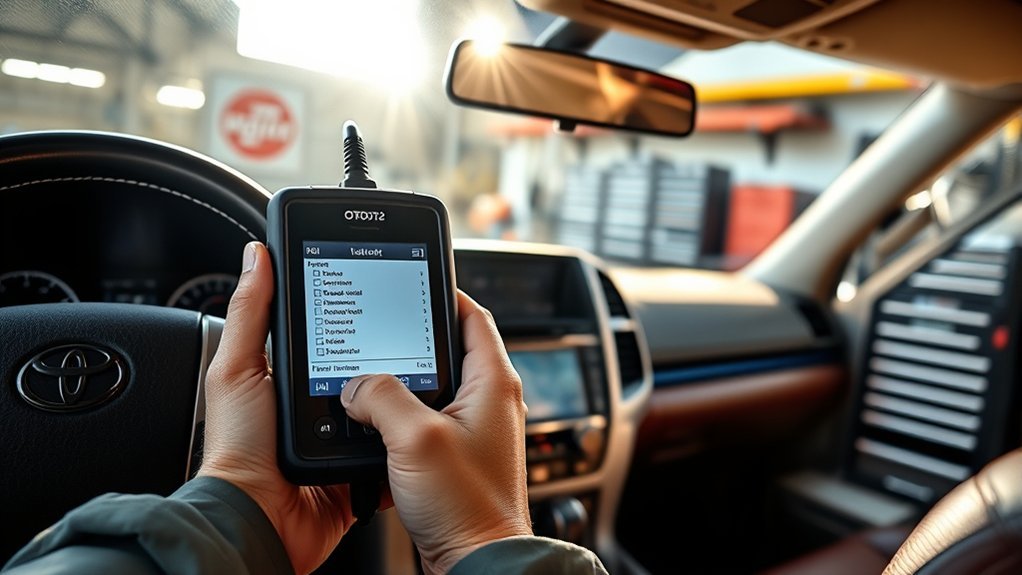
The strongest diagnosis comes from combining the DTC with its status, freeze-frame data, related codes, symptoms, and the exact Land Cruiser engine. Reading only the short scanner description can lead to unnecessary parts replacement.
- Write down the full code. Do not rely on a description such as “sensor fault.” P0340, P0341, and similar codes can point to different failure conditions.
- Check whether it is stored, pending, or permanent. A pending code may indicate a monitor has detected a problem that has not yet met the criteria for a confirmed code.
- Review freeze-frame data. Look for unusual voltage, temperature, load, fuel-trim, RPM, or speed conditions.
- Read all related codes before choosing a suspect part. Several codes can share one root cause, such as low system voltage, an intake leak, lost module communication, or damaged wiring.
- Verify the description for your exact vehicle. Manufacturer-enhanced codes and information codes can mean different things depending on model, engine, drivetrain, and market.
- Test the circuit or system. Inspect connections and mechanical causes before replacing a sensor or control module.
- Repair, clear when appropriate, and verify. Recheck for codes after the relevant monitor has had a chance to run.
The EPA’s OBD guidance on permanent diagnostic trouble codes explains an important limitation: supported permanent DTCs cannot simply be erased with a scan tool or battery disconnect. After the fault is repaired, the OBD system must confirm through its monitor logic that the problem is no longer present.
Symptoms That Can Accompany Land Cruiser Fault Codes
A stored code may appear with obvious driving symptoms, or you may notice nothing beyond the warning light. Use symptoms to support the diagnosis, not to replace the scan data.
- Rough idle, hesitation, or stalling: may accompany mixture, ignition, air-metering, timing, or sensor-circuit faults.
- Reduced power: can occur when an engine or hybrid control system enters a protective operating strategy.
- Poor fuel economy: may accompany fuel-trim, sensor, EVAP, or catalyst-related problems.
- Hard starting: can occur with low 12-volt battery voltage, crank/cam signal problems, fuel-delivery faults, or other engine-control issues.
- Several warning lights at once: can happen when modules share data and one primary fault affects several systems.
- No noticeable symptom: is also possible, especially with some emissions-monitor faults.
Do not assume a code such as P0420 means the catalytic converter is automatically bad, or that P0340 automatically means the camshaft sensor needs replacement. The diagnostic test has identified an abnormal result; the cause still has to be proven.
What to Check Before Replacing Parts
Start with the easiest causes that can affect several systems at once. Battery condition, loose connectors, damaged intake plumbing, obvious hose problems, and poor electrical connections deserve attention before expensive components are ordered.
Understand What the Code Actually Identifies
A DTC identifies a failed diagnostic test or detected condition, not necessarily the failed part. That difference matters because several faults can produce the same code.
For example, P0171 can be associated with unmetered air, MAF-related data, fuel-delivery problems, exhaust leaks affecting mixture feedback, or other causes. P0420 can follow unresolved misfires or mixture problems, exhaust leakage, sensor-data problems, or actual catalyst deterioration.
P2004 means the control system detected an intake-manifold-runner-control condition described as stuck open on Bank 1. However, you should not assume every Land Cruiser engine uses that exact system. Confirm the DTC against the repair information for your engine before buying an actuator or manifold.
Quick Troubleshooting Steps From Easiest to Hardest
Work from simple checks toward system-specific testing. This reduces the chance of replacing a good sensor because another fault affected its signal.
- Record all codes and freeze-frame data.
- Check the 12-volt battery condition and look for unusually low voltage recorded when the code set.
- Inspect obvious connectors, grounds, intake hoses, vacuum lines, and wiring near the affected system.
- Look for companion codes that point to one common cause.
- Compare live data with expected behavior for the exact engine.
- Follow the vehicle-specific repair-manual test sequence when electrical measurements or active tests are required.
- Only replace a component after the tests support that conclusion.
OBD-I vs. OBD-II on a Toyota Land Cruiser
Do not classify every pre-1996 Land Cruiser as OBD-I and every later vehicle worldwide as identical. U.S. OBD-II requirements were phased in, while Land Cruisers sold in other markets can use different engines, emissions systems, diagnostic connectors, and protocols.
| System | What to Know | Best Approach |
|---|---|---|
| Earlier / pre-standard diagnostics | Connector, terminal names, flash-code procedures, and code definitions can be Toyota- and market-specific. | Use the exact repair manual for the year, engine, and market. |
| OBD-II | Uses a standardized diagnostic connector and standardized emissions-related diagnostic information, with additional manufacturer-enhanced functions available. | Use a generic OBD-II scanner for basic emissions information and a Toyota-capable tool when deeper module access is needed. |
CARB states that U.S. gasoline and alternate-fuel passenger cars and trucks from model year 1996 onward were required to have OBD II, while diesel passenger cars and trucks were required from model year 1997. Some 1994 and 1995 gasoline vehicles were already equipped with OBD II.
Warning: Do not jump diagnostic terminals with a paperclip simply because an online guide shows that method for another Toyota. Older diagnostic procedures require the correct connector and exact terminals for that model. On modern hybrid Land Cruisers, also stay away from orange high-voltage components; Toyota’s 2026 Land Cruiser hybrid precautions identify the traction system as a high-voltage system.
[Products Worth Considering]

The BLCKTEC 440 Bluetooth OBD2 scanner helps drivers and DIY mechanics quickly read and clear trouble codes, monitor live data, and check emissions readiness with confidence. Its color display, graphing capabilities, and battery and charging system testing make it a versatile diagnostic tool for OBD-compliant vehicles. Designed for plug-and-play convenience, it runs directly from your vehicle and includes support for report sharing and ongoing updates.

The ANCEL AD310 is a compact, easy-to-use OBD II code reader designed to help drivers quickly identify check engine light causes, read and clear fault codes, and review key vehicle data. It supports major OBD2 protocols and works with many 1996-and-newer cars, light trucks, SUVs, and other OBD2 vehicles. Built for fast diagnostics at home or on the go, it runs directly from the vehicle and provides clear results on a large screen.

The ANCEL AD410 PRO combines engine diagnostics and 12V battery testing in one easy-to-use tool, helping you read and clear check engine codes while checking battery health, cranking, and charging performance. It also provides live data, freeze frame details, and I/M readiness checks to help you diagnose issues faster and prepare for emissions testing. With plug-and-play operation, a clear screen, and broad vehicle compatibility, it is a practical solution for home mechanics and everyday drivers.
Maintenance That Helps Prevent Diagnostic Problems
Good maintenance reduces the number of faults caused by neglected fluids, dirty filters, weak batteries, deteriorated hoses, and damaged connectors. However, Land Cruiser service intervals vary significantly by model year, engine, market, and operating conditions.
Regular Maintenance Checks
Instead of applying one generic mileage schedule to every Land Cruiser, use the service schedule for your exact vehicle. Toyota publishes current and older owner’s manuals and maintenance guides by model year.
| Maintenance Check | Why It Matters for Diagnostics |
|---|---|
| 12-Volt Battery and Connections | Low voltage can create misleading or multiple electrical and sensor-related codes. |
| Air Filter and Intake Plumbing | Restrictions or unmetered-air leaks can affect airflow and fuel-trim readings. |
| Fluid Levels and Visible Leaks | Abnormal operating conditions can trigger warnings or contribute to mechanical problems. |
| Wiring, Connectors, and Hoses | Corrosion, damage, loose connections, and deteriorated hoses can cause intermittent faults. |
Fluid Level Monitoring
Check engine oil, coolant, brake fluid, and other serviceable fluids according to your Land Cruiser’s manual. Low or contaminated fluids can create operating problems that should be corrected rather than masked by repeatedly clearing warning codes.
Use the fluid specification and service interval listed for the exact year and engine. A schedule for one Land Cruiser generation should not be applied automatically to another.
When to Get Professional Help for Persistent Fault Codes
Professional diagnosis makes sense when the same code returns after basic checks, the vehicle has serious drivability symptoms, several modules lose communication, or the fault requires electrical measurements or active tests you cannot perform safely.
| Indicator | Action Required |
|---|---|
| Same fault codes reappear | Diagnose the underlying fault instead of repeatedly clearing memory. |
| Check-engine warning remains with poor running | Stop relying on code descriptions alone and perform vehicle-specific testing. |
| Notable power, starting, or drivability changes | Arrange a complete inspection before the fault causes further problems. |
| Several unrelated-looking codes appear together | Check voltage, grounds, network communication, and shared circuits before replacing modules. |
| Hybrid, brake, airbag, or network faults remain | Use a Toyota-capable diagnostic system or qualified technician with full module access. |
For deeper Toyota diagnostics, Toyota Techstream Lite provides factory-level diagnostic support for Toyota, Lexus, and Scion vehicles using DLC3/J1962-based functions on supported North American models. This type of access is especially useful when a generic reader cannot see the module that set the warning.
How to Avoid Misdiagnosis and Repeat Fault Codes
The best prevention is not simply clearing codes more often. Keep the vehicle maintained, protect electrical connections, use a capable scan tool, and preserve diagnostic data before resetting anything.
Keep Basic Systems in Good Condition
Inspect the battery terminals, intake ducting, vacuum and EVAP hoses, accessible wiring, and sensor connectors during routine service. If a fault appears after recent maintenance or repair work, recheck anything that was disconnected or moved before assuming an unrelated component has failed.
Use a Scanner That Matches the Job
A basic OBD-II reader can be enough for many engine-emissions codes. It may not provide the Toyota-enhanced module access, active tests, information codes, or detailed data needed for ABS, SRS, 4WD, hybrid, and body-system diagnosis.
If a generic scanner shows only a vague description, do not guess. Use Toyota-specific repair information or a capable diagnostic platform to identify the exact code definition and test procedure for the vehicle.
Connect Diagnostic Tools Correctly
Inspect the diagnostic connector before plugging in the scanner. Bent terminals, corrosion, debris, low vehicle voltage, an incompatible scanner, or an electrical problem in the data-link circuit can prevent communication.
If the scanner will not connect, confirm that the vehicle is in the required ignition/power mode and that the 12-volt battery is adequately charged. Try the scanner on another compatible vehicle when practical. If the tool works elsewhere, the Land Cruiser may need data-link power, ground, wiring, fuse, or network diagnosis.
Key Takeaways
- A DTC identifies a detected condition or failed monitor; it does not automatically identify the failed part.
- Record stored, pending, permanent, and freeze-frame information before clearing codes.
- Low 12-volt battery voltage can create misleading sensor or communication faults, so voltage should be part of the diagnosis.
- A generic OBD-II reader is useful for emissions-related powertrain faults, but Toyota-enhanced diagnostics may be needed for other systems.
- Older and non-U.S. Land Cruisers can use different diagnostic systems, so never jump terminals without the exact factory procedure.
Frequently Asked Questions
What Is the Most Common Problem With a Toyota Land Cruiser?
There is no single verified OBD2 fault that is the most common across every Toyota Land Cruiser generation. Different engines and model years have different weak points, so start with the actual DTCs, freeze-frame data, symptoms, maintenance history, and vehicle-specific diagnostic procedure.
How Do You Read a Toyota Land Cruiser Error Code?
Connect a compatible OBD-II scanner to the Land Cruiser’s diagnostic connector, switch the ignition or power mode on as required, and select the function for reading trouble codes. Record the full code, code status, and freeze-frame data before clearing anything.
Where Is the OBD2 Port on a Toyota Land Cruiser?
On OBD-II-equipped Land Cruisers, the diagnostic connector is generally under the driver’s side lower dashboard or footwell area. The exact mounting point can vary by generation and market, so check the owner’s or repair manual if you cannot see the 16-pin connector.
Can a Generic OBD2 Scanner Read Every Land Cruiser System?
No. A generic OBD-II scanner is mainly intended for standardized emissions-related diagnostic information. Depending on the scanner and Land Cruiser generation, Toyota-enhanced access may be required to read ABS, airbag, hybrid, 4WD, body, and other control modules or to perform active tests.
Why Does a Land Cruiser Fault Code Come Back After I Clear It?
The code usually returns because the underlying fault is still present and the OBD monitor detects it again. Clearing memory does not repair the problem, and supported permanent DTCs cannot be manually erased; they clear only after the vehicle confirms that the malfunction has been corrected.
Conclusion
Reading Toyota Land Cruiser OBD2 codes is straightforward; diagnosing them correctly takes more care. Save the code status and freeze-frame data, look for shared causes before replacing parts, and use Toyota-specific diagnostics when a generic scanner cannot provide enough information. That approach gives you a much better chance of fixing the cause instead of repeatedly clearing the warning.
Sources
- California Air Resources Board — OBD II Systems Fact Sheet: Supports OBD-II purpose, U.S. model-year coverage, and diagnostic-system background.
- SAE International — J2012 Diagnostic Trouble Code Definitions: Supports standardized DTC definitions and manufacturer-specific code ranges.
- Toyota Technical Information System — Techstream Lite: Supports Toyota factory-level DLC3/J1962 diagnostic capability.
- U.S. EPA — OBD Readiness and Permanent DTC Guidance: Supports permanent-DTC behavior and why clearing codes does not clear permanent faults.
- Toyota Tech Tip T-TT-0010-10: Supports the connection between low battery voltage and P0335/P0340 on applicable Toyota vehicles, including specified Land Cruiser years.
- Toyota Tech Tip T-TT-0303-14: Supports the need to interpret P3000 together with information codes and related battery-control DTCs.
- Toyota 2026 Land Cruiser Owner’s Manual — Hybrid System Precautions: Supports hybrid high-voltage safety guidance.
- Toyota Manuals and Warranties: Supports using the correct model-year owner’s manual and maintenance information.
[Products Worth Considering]

Custom-fit floor mats and cargo liner designed to provide edge-to-edge protection for the Toyota Land Cruiser Prado. Made from durable TPE material, they offer all-weather defense against rain, slush, snow, mud, and everyday dirt while remaining easy to install, clean, and maintain. The odorless, non-slip design helps keep your interior safer, cleaner, and more comfortable in every season.

FOXWELL NT201 is an easy-to-use OBD2 scanner designed to help drivers quickly read and clear check engine codes, view live engine data, and check emissions readiness. Its color screen, one-key I/M readiness test, and broad compatibility with most gasoline vehicles since 1996 make it a practical tool for everyday diagnostics and maintenance. With plug-and-play operation and lifetime free updates, it offers a simple way to understand vehicle issues without expensive shop visits.

BlueDriver Pro turns your phone or tablet into a powerful vehicle diagnostic scanner with wireless Bluetooth connectivity and no subscription fees. It reads and clears enhanced trouble codes for systems like ABS, SRS, Airbag, TPMS, and Transmission, while also providing technician-verified repair reports, live data, freeze frame views, smog readiness checks, and Mode 6 test results. Built for broad coverage on gas vehicles sold in North America, it offers professional-grade diagnostics with easy setup and 24/7 North American support.